_1764041963888.webp)
Purslane Saponins for B2B: Quality and Sourcing Guide
Sep 12, 2026
Sourcing botanical extracts for your supplement or wellness brand demands careful attention to quality, transparency, and supplier reliability. Purslane saponins—Many people in the cosmetics, functional food, and nutrition businesses use the beneficial glycosides that come from Portulaca oleracea. More and more research shows that these substances are very good at reducing inflammation, protecting the heart, and fighting free radicals. With this in mind, procurement managers, distributors, and OEM partners need to understand the quality parameters, testing standards, and sourcing strategies behind purslane extract to make sure their products work, follow the rules, and gain customers' trust in a market that is getting more and more competitive.
Understanding Purslane Saponins: Composition, Benefits, and Applications
What Are Purslane Saponins?
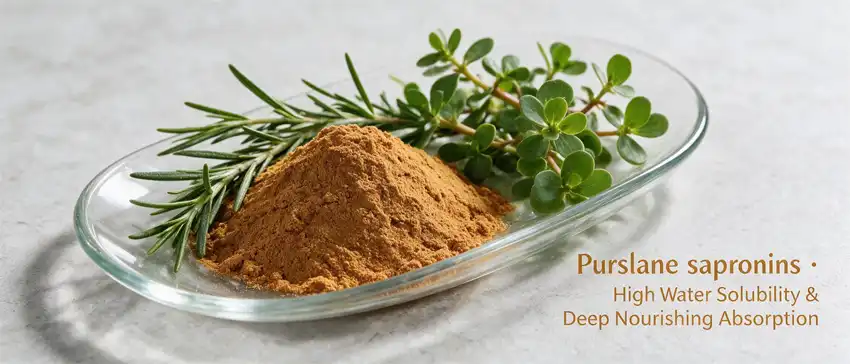
Purslane saponins are a type of natural glycoside. They are amphiphilic, which means that parts of them that are sugar stick to water and parts that are aglycone stick to fat. The way these chemicals are made means they can stick to cell walls and change many things cells do. People in Asia, Europe, and the Middle East have used Portulaca oleracea for hundreds of years to treat skin problems, stomach problems, and inflammation.
Bioactive Profile and Health Benefits
Saponin extracts from purslane have been shown to have many health benefits in new studies. Free radical scavenging mechanisms show strong antioxidant activity in clinical studies, protecting cell structures from oxidative stress. The anti-inflammatory benefits happen by blocking pro-inflammatory hormones and changing immune reactions. This makes the extracts very useful for making goods that support heart health and joints.
Also, early research suggests that it might help protect neurons and keep the metabolism in check, which means that it could be used in areas like cognitive health and weight management. The standardized extract we make has 10% Purslane saponins, which has been confirmed through UV spectroscopy. This makes sure that the potency is the same from batch to batch, which is important for developing reliable formulations.
Comparative Analysis with Other Plant Saponins
Compared to ginseng saponins (ginsenosides), compounds produced from purslane have similar antioxidant properties and are easier to get. This makes them a good choice for recipes that want to save money. Unlike quinoa saponins, which need to be processed in a lot of steps to make them less bitter, purslane extract stays more flavor-neutral in food and drinks. When compared to manufactured methods that separate single molecules, natural extraction keeps the full range of bioactive components, making it more effective.
Quality Factors for Purslane Saponins in B2B Procurement
Critical Quality Metrics
Setting high standards that can't be changed is the first step to successful buying. Purity levels have a direct effect on how well you can dose and how stable your formula is, while strength determines how well your end product works as a medicine. Our normal guideline guarantees a 10% saponin content through UV tests at a wavelength of 543nm. This gives accurate measurements that are in line with international pharmacopeia standards.
Chemical composition analysis is more than just counting up the percentages. Full phytochemical screening finds substances that work well together, such as flavonoids, omega-3 fatty acids, and polysaccharides, which make the total health effects stronger. Consistency from batch to batch makes sure that manufacturing results are reliable and that the shelf life stays the same between production rounds.
Analytical Methods and Testing Protocols
High-Performance Liquid Chromatography (HPLC) is the best way to measure saponins because it separates each substance so that they can be accurately identified and measured. Mass spectrometry is an extra layer of proof that checks molecular structures and looks for possible contaminants. UV spectroscopy is a cheap screening method that works well for regular quality control. We use it for our 10% standardized product.
Suppliers who are responsible give out Certificates of Analysis (CoA) that show that they have tested for microbes, heavy metals, chemical residues, and allergens. These thorough safety checks protect the image of your business and make sure that you follow the rules in all of your markets.
Extraction Techniques and Their Impact
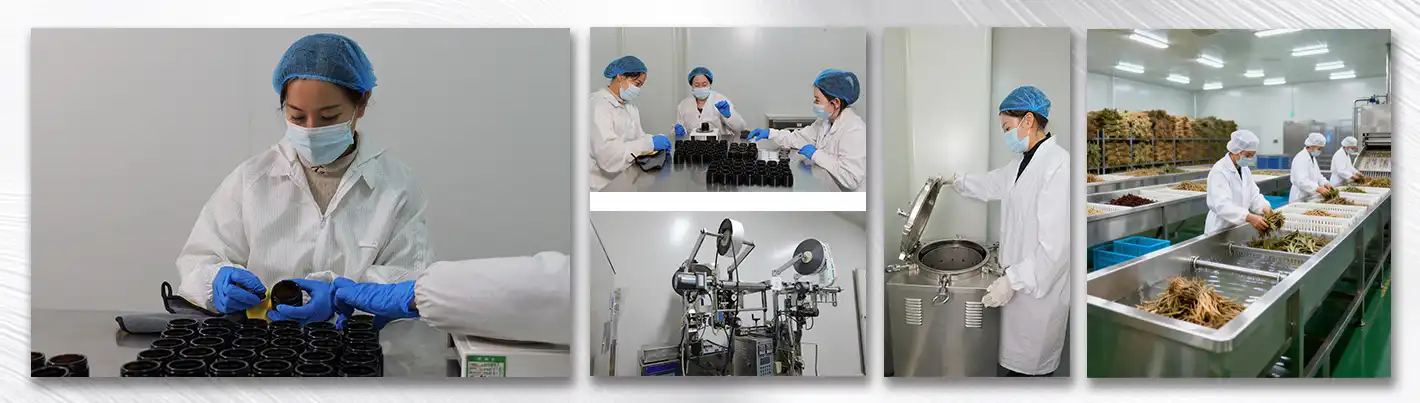
The manufacturing process has a big effect on the quality of the finished product. For the best results, our production uses advanced plant extraction methods that combine a number of different technologies. At the start of the process, carefully chosen raw materials are cleaned, dried, and crushed as part of a pre-treatment step. The most saponin can be extracted using dynamic countercurrent extraction in multi-functional tanks, while the bioactivity is kept.
Plate and frame filtration, centrifugation, and membrane filtration are some of the multistage filtration systems that get rid of plant residues without using chemical solvents that could leave behind residues that aren't wanted. Low-temperature vacuum concentration gently increases the amount of active ingredients, which keeps sensitive chemicals from breaking down when heated. Spray drying technology turns the concentrated solution into a fine powder with particles that are between 100 and 200 mesh. This makes the powder very easy to mix and flow.
We also use supercritical CO2 extraction, which is an advanced method, for high-end uses that need absolute purity. This way completely gets rid of solvent leftovers while keeping all of the bioactive properties. However, it costs more because of the tools needed and the complexity of the processing.
Certifications and Regulatory Compliance
International quality standards show that a provider is dedicated to making high-quality products. Our plant has ISO9001 quality control systems, GMP compliance for making medicines, and FDA registration, which makes it easy to bring goods into the United States. Kosher and Halal licenses make it easier for brands that cater to certain groups of people to sell their products.
These certificates show that strict rules about paperwork, environmental controls, training for employees, and traceability systems are followed throughout the whole production chain. Suppliers who don't have the right licenses pose big problems, like having to return products, getting fined by the government, and having your image hurt, that are much worse which any initial cost savings.
How to Choose the Right Purslane Saponins Supplier
Defining Your Specifications
Partners can work together successfully on Purslane saponins if they can talk about their needs clearly. In addition to the percentage of saponin, you should also think about the moisture content, particle size distribution, bulk density, and solubility characteristics that will affect the next steps in your process. Tell us if you need standard extracts, full-spectrum powders, or amounts that are made just for your recipes.
Pricing and production schedules are affected by the amount that needs to be made. Our flexible capacity lets us handle orders ranging from as little as 1 kg for first tests to multi-ton contracts for well-known products. This flexibility helps your business grow without making you make early promises or carry too much inventory.
Assessing Supplier Trustworthiness
Transparent communication sets trustworthy partners apart from shady sellers. Reputable manufacturers are happy to share detailed process documentation, let facility audits happen, and keep their technical support teams active. Trustworthiness can be shown by customer reviews, the company's name in the industry, and the length of time it has been in the plant extract business.
Production capabilities are a big part of keeping the supply chain stable. When suppliers keep enough goods on hand, they reduce the risk of disruptions during demand spikes and make wait times more predictable. Our office keeps a lot of ready-to-ship items so that they can be sent quickly by express, air freight, or sea freight, based on how quickly you need them and how big your order is.
Verification of the authenticity of a certificate protects against fake documents that are becoming more common in international trade. To keep quality standards high over time, check license numbers against the groups that issued them, ask for recent audit reports, and do regular reviews of suppliers.
Pricing Considerations and Contract Negotiation
The price of purslane saponin is affected by more than just the cost of the raw materials. Higher quality standards need more handling steps, which raises the cost of production. For ongoing certification upkeep, audit fees and compliance investments are included in the end price. Total landed costs are affected by things like unique packaging, how often quality tests are done, and how operations are set up.
Tiered price discounts are often unlocked by making volume commitments, which makes long-term agreements more cost-effective. Cost reduction should be a part of negotiation strategies, but so should supply security, quality consistency, and relationship flexibility. Fixed-price contracts protect you from changes in the market, while index-linked pricing shares spread the risk more evenly when prices of commodities go up and down.
Terms of payment depend on the provider and the amount of the order. We like bank transfer (T/T) plans because they provide clear transaction records and have lower handling fees than other options. To get credit, you usually need to show that you have a good credit history and can afford the payments. For first transactions, you usually need to pay in advance or make a deposit.
Purchasing Purslane Saponins in Bulk: Process and Best Practices
Sourcing Channels and Supplier Verification
When you deal directly with a manufacturer, you avoid the markups that come from middlemen and have the most information about how the product is made. Online B2B platforms are convenient and offer a wide range of suppliers, but users must be very careful to avoid buying fake goods or skills that aren't what they seem to be. Trade shows and industry conferences let people meet in person, which builds trust and makes it easier to have expert conversations that wouldn't be possible online alone.
Some of the things that should be done to make sure are confirming the business license, inspecting the production facility (either virtually or in person), checking with current clients for references, and sending samples to independent labs for testing. You can protect your investment and formulation development timeline by placing small trial orders to make sure that quality claims are true before committing to larger volumes.
Logistics Management and Import Compliance
Using the right packaging keeps the quality of the product safe throughout the complicated international supply chains. For our normal 25 kg/drum design, we use food-grade containers that are filled with nitrogen, vacuum-sealed, and protected from light to keep the saponin stable. Customized packaging can be used for private label arrangements where there are special handling needs or branding choices.
FOB, CIF, CFR, EXW, DAP, and DDP are all delivery terms that we give. These Incoterms make it clear who is responsible for paying for shipping, getting goods through customs, getting insurance, and transferring the risk of delivery between the buyer and the seller.
Inventory Management and Storage
Strategic inventory planning for Purslane saponins weighs the need to keep working capital low against the risk of running out of stock and the need for a minimum order. When you figure out your safety stock, you should take into account things like differences in wait times, how well you can predict demand, and how your sales platforms react to seasonality. Just-in-time methods cut down on carrying costs, but they require a lot of coordination in the supply chain and trust in the suppliers.
Purslane extract stays effective for a long time if it is stored properly. Fine powder that is light brown to brownish should be kept in containers that can't leak and are kept away from light, moisture, and high temperatures. Long-term storage is most stable when it's kept in a refrigerator between 2°C and 8°C, but room temperature is fine for shorter periods of time as long as the humidity is controlled properly.
Innovations and Trends in Purslane Saponins Industry for B2B
Advanced Extraction Technologies
Continuous innovation drives quality and yield gains in the production of plant extracts. Using enzymes to help with extraction breaks down cell walls more effectively than traditional methods. This increases the amount of saponin recovered while decreasing the time and energy needed for processing. Ultrasound-assisted extraction uses acoustic cavitation to break up plant matrices. This makes the process gentler, which protects compounds that are sensitive to heat.
Molecular weight fractionation is made possible by membrane separation technologies, which separate specific saponin subgroups with different biological functions. This ability to improve helps with developing targeted formulations for specific health benefits and positioning premium products.
Sustainability and Green Chemistry
As brands respond to consumer demands and corporate responsibility commitments, environmental awareness plays a bigger role in purchasing decisions. With solvent-free extraction methods, you don't have to worry about dangerous waste streams or residues. Water-based processing uses resources that can be used again and again and is very safe. When compared to traditional organic solvents, supercritical CO2 technology leaves a much smaller mark on the environment because it recycles extraction media.
Sustainable buying methods help farming communities and make sure that raw materials will be available in the future. When compared to wild-harvested materials, which can change with the seasons and run out of resources, cultivation partnerships provide steady, high-quality fuel.
Market Expansion and Application Development
Purslane-derived ingredients are being used in more and more market products because of new scientific proof. Pharmaceutical research looks into saponin compounds to help make medicines that treat inflammatory diseases, metabolic disorders, and heart problems. These extracts are used in cosmetics to make anti-aging serums, protective creams, and soothing lotions that use the skin barrier support and antioxidant properties.
There are a lot of opportunities for growth in the functional food and drink categories. Heart-health messaging is appealing to older people who are worried about their heart health. Anti-inflammatory properties in sports nutrition items help the body heal from activity. Even companies that sell supplements for pets know that they could be used to improve the health of domestic animals.
OEM and ODM Collaboration Opportunities
Because making new products today is so complicated, ingredient sellers and brand owners are working together more and more. Our full range of OEM (Original Equipment Manufacturer) and ODM (Original Design Manufacturer) services helps clients throughout the whole product lifecycle, from coming up with ideas to making the formula better, testing for stability, following government rules, manufacturing, packaging, and shipping.
Custom formulation lets you mix purslane extract with ingredients that work well together, making a product with unique health benefits and a place in the market. Small-batch production lets you test the market and make limited editions without taking on too much inventory risk. Scalable manufacturing grows with the success of your brand, keeping quality the same as volumes go from kilograms to tons.
Conclusion
To find good Purslane saponins for business-to-business uses, you need to carefully consider a lot of things, such as quality standards, the supplier's skills, following the rules, and managing processes. Bioactive compounds from Portulaca oleracea have been shown to be good for your health by science. This makes them more valuable in the nutraceutical, cosmetic, and functional food industries. Standardized specs, like our 10% UV-tested extract, thorough testing procedures, open relationships with suppliers, and flexible partnership structures that support both short-term needs and long-term growth goals are some of the things that make procurement strategies work. As the market keeps growing and extraction technologies get better, it's important to work together with experienced manufacturers to stay ahead of the competition, make sure there is a steady supply, and encourage new product development. Putting money into strict supplier selection and quality assurance systems protects the brand's image in the long run while providing safe, effective goods that meet global market regulations and customer expectations.
FAQ
What is the recommended dosage of purslane saponins for commercial supplement formulations?
In most supplement forms, there is 50–300 mg of standardized purslane extract per serving. Our 10% specification gives you 5–30 mg of active saponins. Dosing depends on the product shape, the health claims that are being made, and the people who are being targeted. Higher ranges are usually used in cardiovascular support formulas, while lower ranges are usually used in combination products with more than one botanical ingredient. We suggest that you test the stability of the drug and talk to regulatory experts to figure out the right dose for your application and the needs of your target market.
Are there any known safety concerns or side effects associated with purslane saponins?
Purslane extracts have been shown to be very safe when taken in standard supplement doses by research. The plain has been used for a long time in traditional ways and is generally considered safe for use in food. Because some medicines might mix badly with others, they might need extra warnings on the labels. People who are pregnant or nursing usually get cautious advice until more clinical studies are done. Although comprehensive toxicology studies support safe consumption, responsible manufacturers keep appropriate warning statements and suggest that people with certain medical conditions talk to their doctors.
How does the bioavailability of purslane saponins compare to other plant-based saponins?
Compounds derived from purslane are better at being absorbed because they have specific glycoside structures and smaller molecular sizes than some other botanical saponins. The ability to dissolve in water makes it easier for the body to absorb, and the natural mix of chemicals that work well together may help with enhanced absorption. Studies on bioavailability show that ginseng saponins are absorbed at the same or higher rates, and they are tolerated better than some plants that are high in saponins and may cause stomach problems. Using improved delivery methods or bioavailability boosters in formulation techniques can make therapies even more effective.
Partner with BioSpark: Your Trusted Purslane Saponins Manufacturer
BioSpark (Xi'an) Biotechnology Co., Ltd. makes high-quality botanical extracts that meet the strict requirements of health supplement brands, nutraceutical companies, and wellness product developers around the world. Our Purslane saponins for sale have a normal 10% strength and come with a full set of quality certifications, such as ISO9001, GMP, FDA registration, Kosher, and Halal approvals. We keep enough in stock so that we can send quickly with a variety of shipping choices, and our OEM/ODM capabilities allow us to create custom formulations that fit your specific market positioning. No matter if you need trial quantities starting at just 1 kg or large-scale production measured in tons, our experienced team can help you with the whole process, from the initial specification to delivering the finished product. Email leao@biosparkcn.com to talk about your purchasing needs, ask for samples, and find out how our dedication to quality, openness, and teamwork can help you improve your supply chain and speed up the development of new products.
References
1. Zhou, Y.X., Xin, H.L., Rahman, K., Wang, S.J., Peng, C., & Zhang, H. (2015). Portulaca oleracea L.: a review of phytochemistry and pharmacological effects. BioMed Research International, 2015, 925631.
2. Uddin, M.K., Juraimi, A.S., Hossain, M.S., Nahar, M.A., Ali, M.E., & Rahman, M.M. (2014). Purslane weed (Portulaca oleracea): a prospective plant source of nutrition, omega-3 fatty acid, and antioxidant attributes. The Scientific World Journal, 2014, 951019.
3. Dkhil, M.A., Moniem, A.E., Al-Quraishy, S., & Saleh, R.A. (2011). Antioxidant effect of purslane (Portulaca oleracea) and its mechanism of action. Journal of Medicinal Plants Research, 5(9), 1589-1593.
4. Simopoulos, A.P., Norman, H.A., Gillaspy, J.E., & Duke, J.A. (1992). Common purslane: a source of omega-3 fatty acids and antioxidants. Journal of the American College of Nutrition, 11(4), 374-382.
5. Gong, F., Li, F., Zhang, L., Li, J., Zhang, Z., & Wang, G. (2009). Hypoglycemic effects of crude polysaccharide from purslane. International Journal of Molecular Sciences, 10(3), 880-888.
6. Xu, X., Yu, L., & Chen, G. (2006). Determination of flavonoids in Portulaca oleracea L. by capillary electrophoresis with electrochemical detection. Journal of Pharmaceutical and Biomedical Analysis, 41(2), 493-499.

Send Inquiry
Related Industry Knowledge
- How to Choose the Best Sea Buckthorn Juice Powder Supplier
- Can Cape gooseberry powder Enhance Your Product Formula?
- What are the key benefits of angelica sinensis extract powder for daily use?
- What are the key benefits of pomegranate seed extract powder for daily use?
- How Does Ginseng Fruit Powder Enhance Product Value?
- Can Konjac Flour Extract Replace Cornstarch in Cooking?
- Coconut Milk Extract Powder: Benefits & Applications Guide
- How does Ilex Leaf Extract Enhance Metabolic Health?
- Kacip Fatimah Extract: Natural Phytoestrogen for Women
- Mimosa Root Bark Extract: Natural Antimicrobial Agent