_1764041963888.webp)
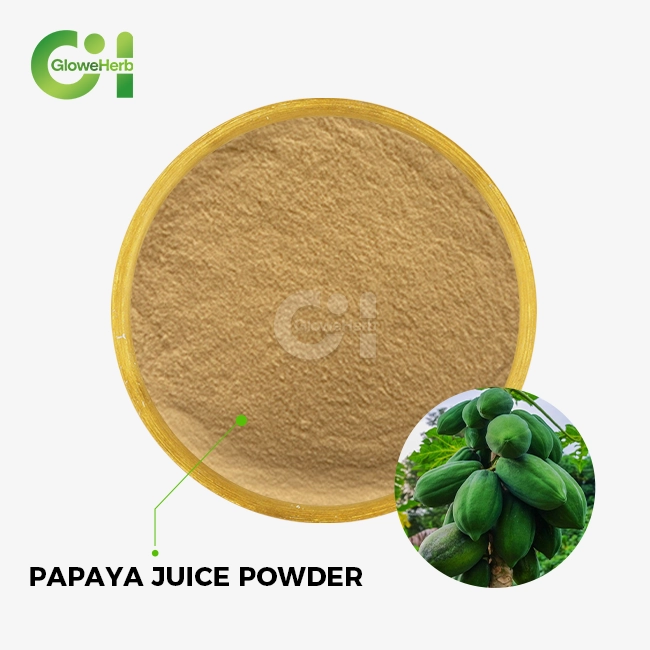
Papaya Juice Powder OEM: Custom Formulation and Packaging Guide
Aug 22, 2026
When evaluating custom papaya enzyme powder solutions for your brand, understanding the strategic advantages of partnering with a specialized OEM manufacturer becomes essential. Papaya juice powder offers substantial market potential across digestive health supplements, beauty-from-within beverages, and functional food applications. Our enzymatic stabilization technology maintains 1500 GDU/g papain activity verified through HPLC testing, delivering consistent bioactive performance that addresses formulation challenges including thermal processing stability and batch-to-batch enzyme consistency—critical factors for brands seeking reliable ingredient partnerships in competitive wellness markets.
Custom Formulation: How to Develop the Ideal Papaya Juice Powder for Your Brand
To successfully differentiate a product, the formulation must be changed to fit the brand's positioning and the needs of the target consumers. Strategic relationships with original equipment manufacturers (OEMs) let brands move beyond generic ingredients and toward their own unique formulas that create hurdles to competition and support strategies for charging higher prices.
Assessing Your Brand's Formulation Requirements
Before you can start building a brand with Papaya juice powder, you need to be clear on your target applications and the enzyme activity levels you want. When making digestive health supplements, brands often need higher papain concentrations than the standard 1500 GDU/g. To meet this need, customization options up to 2000 GDU/g or 3000 GDU/g activity levels are available. Collagen peptides, hyaluronic acid, or ceramides are good extra ingredients that can be added to beauty supplements to help the protective qualities of tropical fruit enzymes. Functional drink companies focus on technologies that make it easier for water to dissolve and hide flavors so that they can be easily added to protein shakes, yogurt bases, or specialty tea drinks without changing the texture.
Understanding the format of your final product—whether it's pills, gummies, powder packs, or ready-to-drink drinks—is essential for determining formulation factors such as particle size distribution, container choice, and stabilization methods. During the pilot production stages of our R&D collaboration process, all of these variables are carefully evaluated to make sure that the final formulations meet both performance requirements and manufacturing scalability requirements.
The Collaborative Development Process
Structured steps are needed to make custom formulation work well, starting with a thorough needs assessment. Sample evaluation usually starts with 1 kg amounts, which allow for thorough testing methods that include checking enzyme activity, solubility performance in target matrices, flavor compatibility assessment, and formulation stability studies under rapid shelf-life conditions. This fast testing method, which can be finished in 10 days, cuts down on development risk and speeds up time to market.
After the first approval, pilot production runs check the manufacturing parameters and set standards for quality control. Executing a non-disclosure agreement protects proprietary formulations. This is especially important for companies that are making new probiotic co-formulations or botanical blends that work well together. Technical documentation packages include full instructions for processing, profiles of how ingredients interact with each other, and suggested handling procedures that make it easy to pass technology to partners in downstream production or private-label makers.
Advanced Formulation Strategies for Market Differentiation
Smart brands use the ability to change enzyme activity as their main intellectual property. Changing the processing parameters lets you precisely control the concentration of papain without affecting the bioactive compounds that work with it. Enzyme stabilization technology is another way that we're different. Our special methods keep 85% of the papain activity intact over a longer shelf life, which solves the problem that enzymes break down during storage and distribution.
New ways to make medicines include probiotic co-delivery methods that use the papain enzyme along with good bacteria to promote overall gut health. By mixing tropical fruit enzymes with bromelain from pineapple or ginger extracts in a smart way, broad-spectrum digestive support products are made that appeal to people who are looking for natural health solutions. For these advanced methods to work, the companies that make the products need to have proven R&D skills and a production system that can be changed to support new ideas that go beyond normal ingredient supply relationships.
Optimizing Packaging Solutions for Bulk and Retail Distribution
Architecture of packaging has a direct effect on the stability of ingredients, compliance with regulations, and how people feel about a brand across all modes of marketing. Strategic package choice balances the need to keep things fresh with the need to save money and promote sustainability, which is becoming more and more important to environmentally conscious customers.
Bulk Packaging for Manufacturing Partners
For normal mass distribution, 25 kg fiber drums with oxygen absorbers, desiccant packets, and aluminum foil inner barriers are used. The headspace is flushed with nitrogen. This multilayer security system takes into account the fact that papain enzymes are easily damaged by water and oxygen, which are important for keeping confirmed GDU activity levels high during long-term storage in warehouses and during international shipping. The specifications for drums meet the weight limits for forklifts to be able to move heavy containers of ocean freight while still being able to stack them correctly.
Manufacturers who need to ship more can use flexible packing options like 50 kg drums or super sacks, which work well in high-throughput production settings. All of the bulk containers have full labels that include batch-specific Certificate of Analysis data, HPLC-verified enzyme activity results, manufacturing date codes, and suggested storage conditions. This information is necessary for incoming material inspection protocols and lot traceability requirements.
Private Label and Retail-Ready Packaging Options
Custom package options like bags, sachets, bottles, and labeled containers for Papaya juice powder are helpful for brands that are making goods for consumers. Vacuum-sealed foil bags are great for powder vitamins because they keep out moisture better than other options. They can also be printed on all sides, making them stand out on the shelf. Single-serve sachets make it easy to dose on-the-go digestive support products aimed at busy professionals and travelers, a group that values convenience more and more.
Sustainability concerns are becoming more and more important in packaging decisions. Compostable film laminates, recycled materials from used goods, and simple design styles are all the environmental values of healthy customers. As part of our package planning services, we help brands tell stories that appeal to people who want to buy things that are good for the environment while also meeting technical standards that protect the integrity of the ingredients.
Regulatory Labeling and Export Compliance
Creating labels in more than one language ensures that they follow the rules in all export markets. According to FDA guidelines, supplement facts panels need to include accurate statements about enzyme activity, serving size, and the right kinds of disclaimers. Allergen labels, GMO information, and approval logos (Kosher, Halal, veggie) meet the needs of consumers who want clear information and meet specific distribution requirements. Our labeling review services make sure that compliance is met before production starts. This keeps mistakes from being too expensive and avoids delays in getting products to market.
Getting ready for exports means getting things like certificates of origin, phytosanitary certificates for farm goods, and customs declaration forms that make the customs clearance process go more smoothly. The different shipping terms (FOB, CIF, CFR, EXW, DAP, and DDP) allow for different buying preferences and transportation needs. With experienced export planning and enough inventory, 15-day delivery times to U.S. targets are possible, and customs clearance rates of 99% or more have been recorded.
Choosing the Right OEM Supplier: Evaluation Criteria and Market Insights
When choosing a supplier, you need to make a strategic choice that goes beyond just looking at prices. You should also think about the supplier's technical skills, quality consistency, and the possibility for long-term collaboration.
Critical Certification and Quality Credentials
Legitimate manufacturing partners keep up-to-date third-party certifications that show they meet international quality standards. ISO9001 quality management systems set up structures for reliable production and ongoing growth. GMP pharmaceutical-grade certifications make sure that the right facilities are built, that equipment is qualified, and that employees have the right training to make dietary supplements. FDA licensing shows that you know the rules and are ready for facility inspections, which is becoming more and more important as U.S. authorities tighten their oversight of food ingredients.
In addition to basic certifications, specialized credentials show that you can get into a market. The NSF-GMP approval is only for companies that make food supplements that meet the quality standards of the U.S. market. Organic approvals, like USDA Organic and EU Organic, let brands that want to sell natural products place themselves as high-end. Verification for Kosher and Halal foods creates specialized delivery networks that serve religiously strict consumers and export markets where following religious diet rules is a must in order to get into those markets.
Production Capacity and R&D Infrastructure
Reliable providers show that they have enough production ability to meet current needs and plan for future growth. If your inventory depth is more than 1,000 tons, it means that you are seriously committed to making and have enough spare capacity to keep supplies from being interrupted when demand changes or the seasons change. Multi-ton production runs with documented batch consistency prove that manufacturing can be scaled up, which is important for brands that expect to grow.
R&D infrastructure separates producers of goods from partners in creation. Dedicated formulation laboratories with HPLC enzyme activity testing, particle size analysis, solubility evaluation equipment, and stability chambers make it possible for people to work together to make new products. Technical staff with degrees in food science and enzyme biochemistry can help with formulation optimization. This is especially helpful when creating new delivery systems or solving problems with processing, such as making sure the product stays stable at high temperatures during pasteurization or extrusion.
Transparent Supplier Evaluation Process
Sample requests are the first step in smart procurement because they let you directly check the quality. Check the enzyme activity against the stated specs using a separate laboratory; any differences could mean that quality control isn't working well or that the information was given on purpose to be false. Solubility testing in target formulation matrices shows success in real-world applications that go beyond what the specification sheet says. Flavor profiling finds bitter or off-notes that you don't want, which may mean you need to add masking agents, which makes the formulation more complicated.
Facility checks for Papaya juice powder, whether they are done virtually or in person, make things clear about how things are made, how quality control works, and how professionally things are run. Pay attention to the steps for receiving raw materials, checking the quality of work in progress, testing finished products, and storing things in the warehouse. Reviewing the documentation should make sure that the batch records are complete and that there are systems in place to handle deviations and look into complaints. These are all signs of a mature quality management culture that goes beyond showing certificates and into the real world.
Ensuring Quality Control and Compliance in OEM Partnerships
Quality assurance covers the whole supply chain, from getting the raw materials to delivering the finished product. At every important step in the process, there must be regular controls.
Raw Material Verification and Traceability
The best fruit for making premium powder is chosen when it is 80–90% ripe, which is the right level of freshness to get the most enzyme activity and nutrient value while avoiding overripe degradation. Supplier qualification systems check farming methods, test for pesticide residues, and provide proof of geographical origin to meet traceability requirements. Before the fruit can be processed, it is tasted, its Brix level is measured to figure out how much sugar it has, and its chemical activity is checked.
Verifying botanical identity with HPTLC stops mixing with cheaper fillers or wrongly identified plant materials, which is an ongoing problem in the industry that is fixed by strict analytical methods. Heavy metal screening focuses on arsenic and lead because tropical fruits tend to bioaccumulate minerals from the soil. Our standards set tight limits below 1 ppm lead to support compliance with California Proposition 65 and the European Union's maximum residue levels. These levels are necessary for U.S. market entry and customer safety.
In-Process Controls and Batch Testing
Overseeing the manufacturing process includes keeping an eye on key control points during the extraction and drying stages. Low-temperature spray-drying methods keep the heat-sensitive papain enzyme while lowering the goal moisture content to below 4.2%, which stops the growth of microbes and caking during storage. The particle size distribution study proves the 120–150 mesh standard, which supports the instant solubility properties that are valued in beverage uses.
Before it can be released, every production batch goes through a full set of tests on the finished product. HPLC enzyme activity testing shows that the papain level is at least 1500 GDU/g, which is what the label says it is and what is expected of it in terms of functional performance. Microbiological safety is ensured by tests like total plate count, yeast/mold enumeration, and pathogen screening (Salmonella, E. coli). Physical testing checks how the powder flows, how consistent the color is, and how well it disperses. These are all factors that affect how well the product is made and how the customer feels about it.
Certificate of Analysis and Documentation Standards
Batch-specific Certificates of Analysis make sure that every package comes with clear proof of quality. COAs include detailed information about the tests that were done on enzyme activity, heavy metals, microbial parameters, moisture content, and physical specs. This helps with planning for recalls by allowing receiving inspection procedures and lot tracking. HPLC chromatograms showing papain quantification methods back up enzyme activity claims technically, meeting the high standards of analytical proof that demanding customers have.
Aside from COAs, documentation packages also include comments about allergens, GMOs, BSE/TSE compliance, and radiation treatment warnings. Safety Data Sheets help safety programs at work by giving knowledge on how to handle things safely and what to do in an emergency. This thorough approach to documentation makes it easier to follow regulations, check quality, and communicate clearly throughout supply lines. These are all signs of professional ingredient providers who care about their customers' success beyond just doing business with them.
Conclusion
When looking for a strategic supplier of Papaya juice powder, you need to look at more than just prices. You also need to look at the partnership's formulation skills, quality stability, and compliance with regulations. Successful brands know that choosing the right ingredients has a big impact on how well their products work, how happy their customers are, and how they can stand out in the market. Custom formulation allows for unique positioning by improving enzyme activity, combining botanicals that work well together, and creating unique delivery systems that are designed to meet the needs of specific wellness applications. Packaging options that balance the need to keep things fresh with the desire to be environmentally friendly help brands tell their stories while keeping the integrity of the ingredients throughout the distribution process. Thoroughly evaluating suppliers based on their licenses, production capacity, and open quality controls lowers buying risks and builds trusting supply relationships that support long-term growth plans.
FAQ
What minimum order quantity is required for custom formulation projects?
Before going to full production levels, custom formulation projects start with 1 kg samples that let the scientists fully test the enzyme's activity, how well it dissolves, the flavors it creates, and how well it works with other ingredients. Standard production minimums usually start at 100 kg, which is enough for small-batch private label launches. For high-volume wholesale orders, 25 kg drum multiples are available to make shipping more efficient in containers. This MOQ structure is open enough to help both new brands trying market ideas and well-known brands that need a steady bulk supply.
How can I verify enzyme activity claims and supplier authenticity?
Ask for Certificates of Analysis that are unique to each batch. These should include HPLC chromatogram data that shows how the papain was measured and the real values that were tested compared to the specs that were given. Verification by an independent third-party laboratory adds to the evidence, and trustworthy providers welcome this kind of scrutiny. Facility certifications from well-known groups like ISO, GMP, and FDA show that the quality system is mature. Customer references from well-known brands give useful information about the quality of reliability and technical support during long-term partnerships.
What lead times apply for standard versus custom orders?
Standard formulation orders with existing specifications ship within 10 days as long as there is enough stock to meet immediate needs. Custom formulation projects that involve changing enzyme activity, using new co-ingredients, or making special packages usually need 30 days to complete. This includes developing the formula, making a test batch, checking the quality, and putting together the paperwork. Depending on production schedules and the level of technical difficulty, there may be rush options for quick market opportunities.
Partner with a Trusted Papaya Juice Powder Manufacturer
BioSpark specializes in making unique Papaya juice powder blends for gut health supplements, beauty-from-within drinks, and functional food uses in North American markets. Our enzyme stabilization technology keeps 85% of the papain activity, which was confirmed by HPLC testing. This solves problems with formulation stability that make products less effective. Our Xi'an plant has a lot of different production options and strict quality controls to help your brand stand out. This is true whether you need higher levels of enzyme activity, help with probiotic co-formulation, or private label development from idea to branded packaging. Email our technical team at leao@biosparkcn.com to talk about your specific formulation needs, get full product specifications, or set up a sample evaluation to start working with us on a custom product.
References
1. Pavan, R., Jain, S., & Kumar, A. (2012). Properties and therapeutic application of papain: a review. Current Research in Chemistry, 4(2), 178-184.
2. Hewajulige, I. G. N., Sivakumar, D., & Thompson, A. K. (2020). Papaya fruit quality management along the commercial supply chain. Food Reviews International, 36(4), 307-329.
3. Santana, L. F., Inada, A. C., & Espírito Santo, B. L. (2019). Nutraceutical potential of Carica papaya in metabolic syndrome. Nutrients, 11(7), 1608.
4. Bala, M., Pratap, M., & Singh, A. (2021). Enzymatic properties and industrial applications of papain: A comprehensive review. International Journal of Food Science and Technology, 56(4), 1563-1574.
5. Amid, A., Ismail, N. A., & Yusof, F. (2018). Expression, purification, and characterization of recombinant papain enzyme for biotechnological applications. Protein Expression and Purification, 142, 52-59.
6. Manzoor, Z., Nawaz, A., & Ahmad, T. (2020). Spray drying of tropical fruit juices and bioactive compounds: Quality retention and technological challenges. Food Engineering Reviews, 12(3), 256-277.

Send Inquiry
Related Industry Knowledge
- Coconut Milk Extract Powder: The Ultimate Plant-Based Dairy Swap
- Coconut Milk Extract Powder: The Ultimate Plant-Based Dairy Swap
- Coconut Milk Extract Powder: The Ultimate Plant-Based Dairy Swap
- Coconut Milk Extract Powder: The Ultimate Plant-Based Dairy Swap
- Coconut Milk Extract Powder: The Ultimate Plant-Based Dairy Swap
- Coconut Milk Extract Powder: The Ultimate Plant-Based Dairy Swap
- Coconut Milk Extract Powder: The Ultimate Plant-Based Dairy Swap
- Coconut Milk Extract Powder: The Ultimate Plant-Based Dairy Swap
- Coconut Milk Extract Powder: The Ultimate Plant-Based Dairy Swap
- How Much Maqui Berry Powder per Day for Visible Anti-Aging Results?
- Is Kidney Bean Flour the Next Trend in Healthy Baking?
- How Effective Is Mimosa Root Bark Extract in Modern Formulas?
- What Are the Key Properties of Logwood Extract Dye?
- How Effective Is Pomegranate Seed Extract Powder for Health?
- What Is Papaya Leaf Extract Powder and How Does It Work?
- How Chamomile Extract Supports Stress and Anxiety Relief?
- Why Ginseng Plant Extract Is a Top Adaptogen Choice?
- Can Tanshinone Danshen Extract Powder Improve Blood Flow?