Liposomal Withania Somnifera OEM: Formulation and Sourcing Tips
Oct 24, 2026
If you're sourcing or formulating a liposomal Withania somnifera product for the U.S. supplement market, you already know the stakes are high. Buyers expect clinical-level absorption, clean labels, and traceable ingredients. Traditional ashwagandha extracts deliver only 5–10% bioavailability, while liposomal encapsulation technology pushes that figure above 80%. That gap represents both a product quality advantage and a genuine commercial opportunity for supplement brands, nutraceutical companies, and OEM buyers looking to differentiate.
Understanding Liposomal Withania Somnifera: Formulation Fundamentals
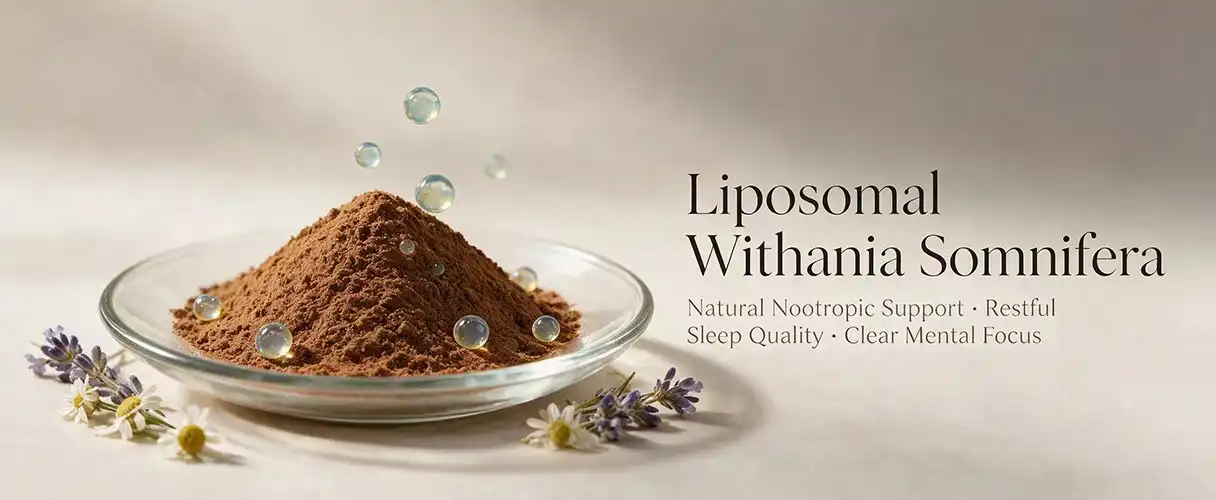
Getting the formulation right is the first step. Liposomal Withania somnifera places ashwagandha active compounds inside phospholipid bilayer vesicles, protecting them from digestive degradation and delivering them directly into systemic circulation.
Nanostructure and Encapsulation Data
The particle architecture matters more than most buyers realize. A well-engineered liposomal ashwagandha product carries a Z-average diameter of 85 ± 5 nm, a PDI of 0.15 ± 0.05, and a zeta potential of −32 ± 3 mV — figures that confirm colloidal stability. The phospholipid bilayer thickness measures 4.2 ± 0.3 nm, and drug loading sits at 5.5 ± 0.5% w/w relative to total lipid. Leakage rates stay below 5% after 12 months at 4°C storage, confirming long-term product integrity.
Active Compounds Worth Standardizing
High-quality Withania somnifera extract contains multiple bioactive classes. Here are the key markers to specify in your OEM brief:
- Withanolide A (≥1.2%): supports neuroprotection and cognitive function
- Withanolide D (≥0.8%): drives immunomodulatory activity
- 12-Deoxysophoranolide (≥0.5%): carries measurable anti-inflammatory properties
- Withanine alkaloid (≥0.3%): produces sedative and calming effects
- Somniferine (≥0.2%): linked to improved sleep quality
- Total phenols (≥4.5%, calculated as gallic acid) and flavonoids (≥2.1%, calculated as rutin)
These standardization benchmarks give procurement teams a concrete quality floor to write into supplier contracts.
Dosage Form Comparison
Liposomal Withania somnifera is available in dry powder (encapsulation rate ≥85%, moisture ≤3%), spray-dried powder (encapsulation rate ≥75%), concentrated suspension (10% active content), and oral liquid formats. Dry powder suits hard-shell capsule and tablet production. Oral liquid formats work well for functional beverage applications. Soft capsule systems use a soybean oil-based dispersion, with each particle delivering 15 mg of standardized withanolide content.
Sourcing Strategies: Choosing the Right OEM Partner and Supplier
Someone who can follow the recipe needs to be found next. There are different ways that different suppliers handle liposomal technology.
Certifications and Traceability Requirements
Anyone who wants to sell in the U.S. has to get GMP's OK. You should also look for ISO certification, proof that organic materials were used, and the ability to keep track of the whole supply chain, from the raw materials to the finished product. Also, for every batch, you should always be able to get heavy metal screening results, records of third-party tests, and a certificate of analysis (CoA).
Manufacturing Hub Considerations
The US, India, and China are the main places that make them. Each one has a different price and shipping time. Since the plant is grown in India, most of the time, Indian suppliers offer good prices on raw Withania somnifera root. A lot of Chinese companies, like BioSpark (Xi'an) Biotechnology Co., Ltd., make GMP-grade goods that are sold in North America, Europe, and Southeast Asia. They use cutting-edge liposomal capsule infrastructure to do this. People who make tools in the U.S. usually have faster wait times, but their prices per unit are higher.
MOQ, Private Label, and Customization
Any business, new or old, that wants to grow should have MOQ structures that are simple to change. It's best to work with an OEM partner that can handle both small-batch runs and high-volume production without having to change the mix. Before you agree to a supply deal, you should be able to stack private-label packaging, custom dosage forms, and formulations with more than one ingredient.
Comparing Liposomal Withania Somnifera to Alternative Forms and Supplements
L-ashwagandha is not the same as other types of the weed. When brands know this, they can confidently put their products in the right category and set good prices.
Liposomal vs. Standard Ashwagandha Extract
These days, people take ashwagandha pills and tablets, which work by letting the herb work on its own. A lot of withanolides are broken down in the gut before they get into the blood. Liposomal withania somnifera is the solution to this problem, and two different studies show that the change in uptake is not small, but rather big. There will be fewer servings per bottle and smaller amounts that work because of this. Your marketing team will also be able to come up with a better tagline.
Liposomal Ashwagandha vs. Other Liposomal Supplements
Some products in this group are most like liposomal curcumin, which most people have heard of. Because they have phospholipids, both of these products are better at being absorbed. Liposomal withania somnifera is an adaptogen, which means it can help your immune system work better, sleep better, and lower your cortisol levels. But curcumin can't say that. This gives brands a clear edge when it comes to positioning.
Pricing and ROI Across Formats
There are drums that hold 25 kg of liposomal powder from Withania somnifera. The withanolide level in these drums can be changed from 1% to 5%. Foil bags that hold ten kg are used to pack food-grade forms that are in line with GB 2760. GMP-grade phospholipids are used as fillers in 5 kg boxes that hold pharmaceutical-grade stuff. When you buy a lot of food- or industrial-grade in bulk, the price per unit drops by a lot. You can make more money as a wholesaler or with a private label brand.
Optimizing OEM Formulation: Best Practices and Innovation Trends
The finished result may not be as good as the recipe if certain things happen during the making process. OEM partners with a lot of experience will plan how to handle these risks.
Encapsulation Efficiency and Stability
To keep the encapsulation rate above 85%, pay close attention to the lipid-to-active ratios, the water conditions, and the extrusion factors. The bilayer stays stable with cholesterol and stops leakage before it happens. Phosphatidylcholine makes the cell membranes connect to each other. It's important that the stability data cover both cold (4°C, 12 months, <5% leakage) and hot (25°C, 6 months, <8% leakage) conditions.
Regulatory Compliance and Label Claims
FDA 21 CFR Part 111 says that vitamin brands in the U.S. must do what they say on the box. Liposomal withania somnifera products that claim to alleviate pain, stress, or sleep all require their own sets of supporting evidence. You should get technical dossiers, safety data sheets, and ingredient paperwork from your OEM partner as long as that's the case. These can be used with NDI notices or GRAS status.
Emerging Formulation Trends
Liposomal devices that release withanolide slowly over 8 to 12 hours are being used by more and more people. Adaptogens like rhodiola or lion's mane mixed with ashwagandha in the form of liposomes are also good. So are versions with a clean label that don't have any extra emulsifiers added. People who want functions to be clear and correct can get what they want in these formats.
Procurement Guidance: How to Successfully Source Liposomal Withania Somnifera for OEM Products
It's not enough to just look at prices when you want to buy liposomal withania somnifera items. Being clear about what you want is good for business in the long run.
Specification Setting and Quality Benchmarks
Things you should include in your buy specification are the maximum amount of heavy metals, the capsule rate, the percentage of withanolide, the amount of moisture, and the range of particle sizes. Based on this paper, you and your provider have agreed on the quality of the work. Without it, it's hard to make a case against differences from batch to batch.
Negotiation and Pricing Models
When it comes to OEMs, price is usually based on how much they buy. If you sign a subscription-based supply contract, you agree to buy a certain amount of things every three months and agree to a price. You won't have to worry about how the prices of raw materials will change. Before you agree to meet production minimums, find out if sources can give you samples.
Lead Time, Inventory, and Import Compliance
The prices will change every 4 to 8 weeks based on how unique and large the order is. There are different import taxes for plant extracts and finished supplements that have different HS numbers. Make sure you know what the classification is before you talk about the landed cost. When you keep enough things in stock to last for 6–8 weeks, the cost of keeping them doesn't go up.
Conclusion
And liposomal withania somnifera is one of the best forms of this adaptogen that supplement brands can get today. It helps the body absorb things better. It's a good high-end product for the U.S. market because it has different dose types, bioavailability gains that can be measured, and the same amount of withanolide. There is a big difference between a launch that goes well and a cycle of costly changes to the formula. You need the right recipe specs and an experienced OEM partner. Know as much as you can about your source and set clear rules for quality. Also, make sure that your deals with them are open.
FAQ
What is the recommended dosage of liposomal Withania somnifera for stress relief?
Clinical studies on ashwagandha extracts standardized for withanolides typically support daily doses of 300–600 mg of root extract equivalent. Because liposomal delivery increases bioavailability significantly — from the 5–10% range seen with conventional extracts to above 80% — effective doses may be lower. Always align dosage with your specific withanolide concentration and consult a formulation scientist before finalizing label claims.
Are there known side effects associated with liposomal Withania somnifera?
Ashwagandha is generally well-tolerated at recommended doses. Reported side effects are uncommon and typically mild, including gastrointestinal discomfort. Pregnant women and individuals on thyroid or immunosuppressant medications should consult a physician. The liposomal delivery system itself — using phosphatidylcholine and cholesterol — does not introduce new safety concerns based on current evidence.
Why does liposomal ashwagandha absorb better than standard capsules?
Standard ashwagandha capsules rely on passive intestinal absorption, where digestive enzymes and stomach acid degrade a large portion of active withanolides. Liposomal encapsulation protects the compounds inside phospholipid vesicles, allowing them to pass through the digestive barrier intact. This mechanism explains the bioavailability improvement from roughly 5–10% to over 80%.
Partner with BioSpark for Your Liposomal Withania Somnifera Supply
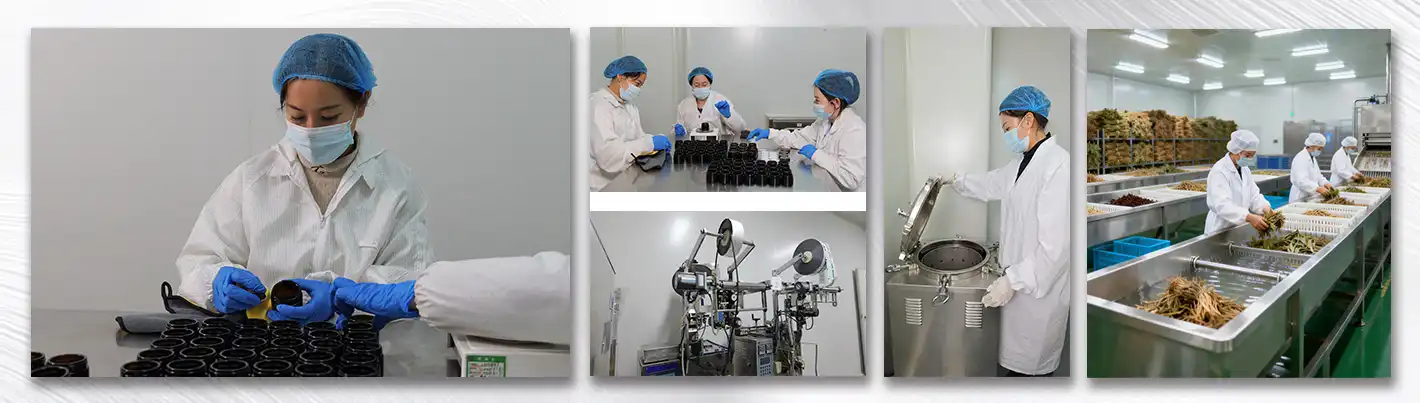
BioSpark (Xi'an) Biotechnology Co., Ltd. is a good company that makes liposomal withania somnifera. They offer full-service OEM and ODM, which means they can make the formula and ship it all over the world. There are distributors from all over North America who make health supplements and work with us. Our production is GMP-certified. Also, batch sizes can be changed, and raw materials can be kept an eye on. Tell us about your goods in a few words or ask for a sample right now. You can email us at leao@biosparkcn.com or visit our website at www.biosparkcn.com.
References
1. Chandrasekhar, K., Kapoor, J., & Anishetty, S. — Indian Journal of Psychological Medicine, 2012.
2. Pratte, M. A., Nanavati, K. B., Young, V., & Morley, C. P. — Journal of Alternative and Complementary Medicine, 2014.
3. Singh, N., Bhalla, M., de Jager, P., & Gilca, M. — African Journal of Traditional, Complementary and Alternative Medicines, 2011.
4. Müller, R. H., Mäder, K., & Gohla, S. — European Journal of Pharmaceutics and Biopharmaceutics, 2000.
5. Bhattamisra, S. K., & Khang, T. H. — Evidence-Based Complementary and Alternative Medicine, 2017.
6. Andrade, C., Aswath, A., Chaturvedi, S. K., Srinivasa, M., & Raguram, R. — Indian Journal of Psychiatry, 2000.

Send Inquiry
Related Industry Knowledge
- How to Buy Banana Juice Powder in Bulk for Your Business?
- Can Wolfberry Peptide Support Beauty Product Formulation?
- How to Source Damiana peptide in Bulk?
- Why Is Banana Juice Powder Popular in Functional Beverages?
- Yellow peach powder Applications in Drinks, Bakery, and Snacks
- Why Is Broccoli Extract Powder Rich in Sulforaphane?
- How Is Barley Sprout Powder Used in Dietary Supplements?
- Can Broad Bean Powder Support High-Fiber Formulations?
- Does Mimosa Root Bark Extract Support Wound Healing?
- Can Oyster Shell Extract Powder Improve Immune Function?