Liposomal Inositol Procurement Guide for Supplement Brands
Oct 25, 2026
If you’re selecting ingredients for a line of luxury supplements, you should be paying considerable attention to liposomal inositol. In this guide, we’ll walk you through what you need to know as a supplement company – from what makes liposomal inositol unusual to how you should assess suppliers, handle logistics, and incorporate it into your product range. The appropriate procurement selections here may directly affect product performance and brand image, whether you are a startup or a well-established nutraceutical firm.
Understanding Liposomal Inositol: Composition, Benefits, and Market Demand
What Sets Liposomal Inositol Apart
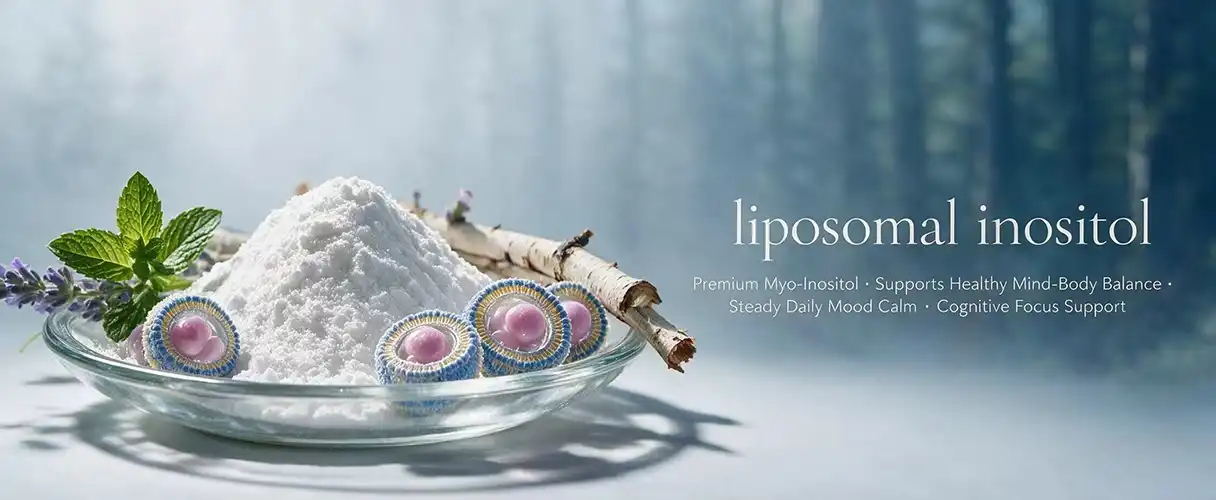
Standard myo-inositol is taken up by osmosis and transport proteins, a slow and restricted mechanism. Liposomal inositol surrounds the active molecule with phospholipid bilayers, which fuse directly with cell membranes. Clinical PK results indicate this increases plasma peak concentration (Cmax) by 4.5 times and area under the drug-time curve (AUC) by 4.2 times, compared to ordinary inositol powder. This is a demonstrable distinction that may be sold to companies competing in the high-efficacy supplement area.
Key Health Applications That Drive Consumer Demand
Liposomal inositol has a shown therapeutic value across a number of high-growth sectors. In a 12-week RCT (n=120), the ovulation rate was 72% in those taking 4g/day vs 45% in the normal inositol group. Insulin resistance was decreased by 48% (reduction in HOMA-IR) vs 32% in the control group. It may be used for PCOS treatment, prenatal fertility assistance, blood sugar control, and anxiety-related conditions—all areas that have a lot of consumer search traffic in the U.S. market.
Market Trends Favoring High-Bioavailability Formats
Consumers are embracing bioavailable, science-based forms. Liposomal delivery technology, which is already well-established in the vitamin C and glutathione sectors, is now gaining interest in inositol-based products. Women’s health, metabolic wellness, and mental health market brands are seeking encapsulated inositol providers for private-label and OEM manufacturing.
Key Procurement Considerations for Supplement Brands
Certifications and Quality Standards
Ensure that your provider is GMP certified, ISO 22000, and HACCP accredited before you make any large orders. We do not compromise on third-party lab testing for purity, microbiological limits, and heavy metals. The raw material should be pharmaceutical-grade myo-inositol and must conform to USP/EP criteria, purity ≥99.9%, chiral purity ≥99.5%. Bacterial endotoxin content should be no more than 0.25 EU/mg. These requirements help safeguard your brand and your ultimate consumer.
Comparing Inositol Forms for Formulation Decisions
Not all inositols are created equal. Here’s a side-by-side comparison you need to know before you lock in your formula:
- Myo-inositol (standard): This is the cheapest option; however, it has a slower absorption rate and a greater incidence of gastrointestinal side effects (15-20%). This is the most appropriate choice for low-budget goods.
- D-chiro-inositol: Synergistic with myo-inositol at a 40:1 ratio; often used with liposomal forms in PCOS therapies.
- Liposomal inositol: Faster onset (Tmax from 3-4 hours to 1.5-2 hours), fewer GI symptoms (<5%), and greater tissue accumulation – notably in ovarian and brain tissue.
This comparison may assist procurement teams in choosing ingredients in line with product positioning and the expectations of the target consumers.
Dosage Formats and Regulatory Considerations
Liposomal inositol comes in a variety of formulations, such as oral liquids, capsules, powders, and gummies. Recommended daily dosages vary from 2–4g for PCOS and metabolic support to up to 12–18g in clinical anxiety regimens. If you are formulating for distribution in the United States, you must comply with the FDA’s dietary supplement labeling requirements (21 CFR Part 101), and you must not make structure/function claims without evidence. Your supplier should offer a Certificate of Analysis (COA) with each batch, including accompanying stability data.
Supplier Selection and Market Research for Bulk Procurement
What to Look for in a Manufacturer
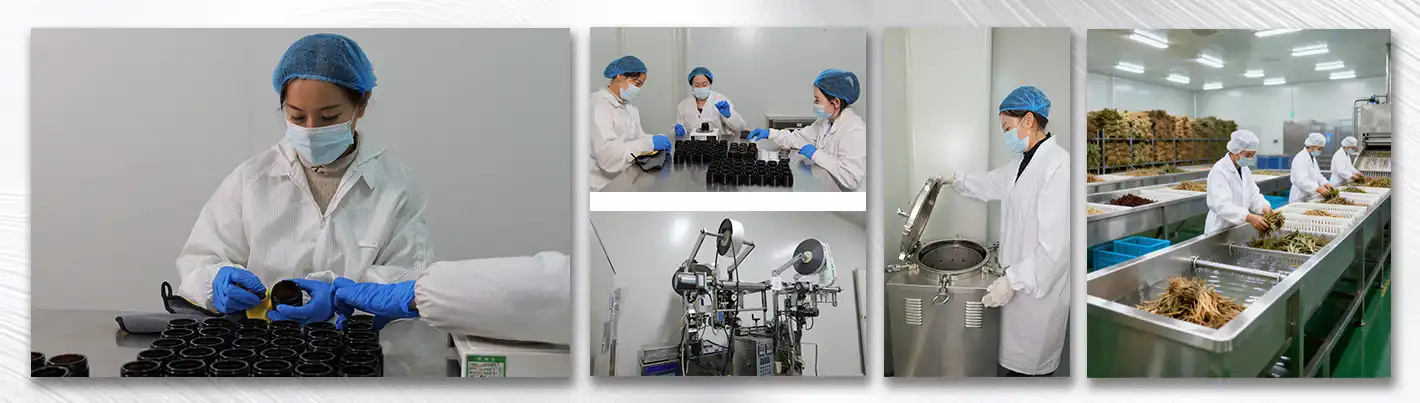
Choosing the proper liposomal inositol producer is more than just pricing. Search for providers with full control over the whole manufacturing process – raw material procurement, liposome preparation, lyophilization, and filling. Key technical specifications to ask for: Average particle size (target: 95±10nm), PDI < 0.12, encapsulation efficiency ≥90%,Residual solvent levels (ether < 10 ppm, ethanol < 100 ppm). Manufacturers that manage 9 key process parameters (CPPs) achieve tight batch-to-batch uniformity.
Regional Sourcing: North America, Europe, and Asia
Each sourcing area has its pros and cons. Suppliers from North America and Europe are usually more conversant with the regulations of the FDA and EFSA but also tend to demand larger premiums. Asian manufacturers, especially those in China with international certifications, may provide affordable prices while satisfying GMP, Halal, Kosher, and Non-GMO requirements. Basically, you need to check credentials yourself and not only rely on the source.
Pricing Factors and Negotiation Strategy
The cost drivers for bulk liposomal inositol include phospholipid quality (EPC vs. DPPC ratios), encapsulation technique, lyophilization procedures, and packaging standards. Here are some practical ways to bargain for better terms:
- Request for tiered pricing depending on order volume (e.g. 10kg vs 50kg vs 100kg+)• Request sample batches before placing full-scale purchases.
- Payment arrangements — net-30 or partial prepayment schemes are typical for well-established customers.
- See whether the provider is providing private label or OEM customisation in the stated pricing.
This enables you to precisely assess price across several providers before you commit.
Practical Guide to Purchasing Liposomal Inositol for Supplement Brands
Ordering Channels and Lead Times
Brands may get liposomal inositol directly from the producer, via B2B platforms, or via a distribution network. Generally, direct sourcing will provide you with better rates and quicker communication. Standard manufacturing lead times are 15-30 business days depending on batch size and customized needs. For time-sensitive launches, air freight is recommended (5-10 business days). Ocean shipping (20 – 45 days) is good for big, non-urgent restock purchases.
Storage and Handling Requirements
Liposomal inositol is sensitive to heat, light, and oxygen. Store at -20°C for a 36-month shelf life for long-term storage. Store in the dark at 2–8 °C after opening. Product is stable for up to 28 days. Liquid formats must be maintained under cold chain conditions (2–8°C) throughout travel. Lyophilized powder may be transported at ambient temperature if packed with oxygen indicators and desiccants.
Integrating Liposomal Inositol Into Your Product Line
Getting the formulation right is more than getting a great ingredient. Collaborate with your supplier’s R&D team to ensure compatibility with co-ingredients such as D-chiro-inositol, alpha-lipoic acid, N-acetylcysteine, and vitamin D3, which are all prevalent in PCOS and metabolic health formulations. Stability testing on your completed dosage form (liquid, pill, or gummy) should be done before launch. A good OEM partner is there to help validate formulations, not only to furnish ingredients.
Conclusion
To find liposomal inositol that's practical, it's about developing a clear process that considers bioavailability science, supplier credibility, regulatory compliance, and supply chain logistics. The clinical evidence is robust enough to make this component a worthy investment for brands in women’s health, metabolic wellness, and mental health categories due to its increased absorption, lower effective dosages, and fewer adverse effects. Select a manufacturing partner that can prove technical depth and verified quality processes, as well as accommodate small-batch testing and large-scale production.
FAQ
Is liposomal inositol safe for use during pregnancy?
Yes. Inositol is an endogenous compound naturally present in the body. Clinical trials and meta-analyses support its safety in prenatal applications, particularly for reducing gestational diabetes risk in high-risk pregnancies. Always confirm your supplier provides pharmaceutical-grade material with full endotoxin and microbial testing documentation before use in prenatal formulas.
How much better is liposomal inositol absorption compared to standard forms?
Data show liposomal inositol delivers a 4.5x increase in peak plasma concentration and a 4.2x increase in AUC versus standard myo-inositol powder. Tissue-level concentrations in ovarian tissue increase by 6–8 times, which is particularly relevant for PCOS-targeted products.
What is the typical minimum order quantity (MOQ)?
MOQs vary by supplier and product format. Many manufacturers set MOQs starting at 1–5kg for samples and 10–50kg for commercial batches. BioSpark offers flexible production capacity to accommodate both startup trial runs and large-volume orders.
What are standard lead times for bulk orders?
Typical lead times are 15–30 business days after payment confirmation, depending on batch size and packaging requirements. Express and air freight options are available for urgent orders.
Can I request a custom formula using liposomal inositol?
Yes. Many OEM/ODM manufacturers support full formulation customization. You can specify the inositol dose, co-ingredients, dosage form (capsule, liquid, gummy), packaging, and labeling. Ask for a development timeline and stability testing protocol before confirming the project.
Partner With BioSpark for Liposomal Inositol Supply
BioSpark (Xi'an) Biotechnology Co., Ltd. is a professional OEM/ODM manufacturer with GMP, ISO 22000, HACCP, Halal, Kosher, and Non-GMO certifications. As a verified liposomal inositol supplier, we support brands from formulation through production and global delivery. Whether you need small trial batches or full-scale production, our team is ready to help. Contact us today to request samples or discuss bulk pricing: leao@biosparkcn.com.
References
1. Nordio, M., & Proietti, E. (2012). European Review for Medical and Pharmacological Sciences.
2. Unfer, V., et al. (2016). Gynecological Endocrinology.
3. Croze, M.L., & Soulage, C.O. (2013). Biochimie.
4. Facchinetti, F., et al. (2020). International Journal of Endocrinology.
5. Carey, M.A., et al. (2018). Journal of Liposome Research.
6. Vucenik, I., & Shamsuddin, A.M. (2003). Journal of Nutrition.

Send Inquiry
Related Industry Knowledge
- How to Choose High-Quality Wolfberry Peptide?
- What Makes Dracorhodin Valuable for Research Applications?
- What Should You Check Before Buying Cape gooseberry powder?
- Does echinacea extract powder help shorten cold recovery time?
- Miltiorrhiza Root Extract Powder Uses: What Is It Good For?
- Is Kidney Bean Flour the Next Trend in Healthy Baking?
- How to Select High-Quality Egg Yolk Fruit Powder?
- Why Choose Natural Blueberry Extract Powder for Supplements?
- How Effective Is Rosehip Extract Powder for Inflammation?
- Miltiorrhiza Root Extract Powder: Antioxidant & Anti-Inflammatory