Liposomal Ferrous Glycinate OEM: Formulation and Quality Guide
Oct 24, 2026
If you’re looking for iron supplement solutions for your brand, liposomal ferrous glycinate is one of the most technically sound choices available on the market today. This article explains the differences between this kind of iron, how OEM manufacturers create it to the highest standards, and what procurement teams need to know before placing an order. Whether you’re a well-established nutraceutical firm or a startup looking to join the supplement industry, knowing the formulation and quality behind this ingredient may lead to better sourcing selections.
Understanding Liposomal Ferrous Glycinate: Composition and Mechanism
Liposomal ferrous glycinate is a chelated iron complex where Fe+ is coordinated to two glycine molecules to create a stable five-membered ring complex. They are in nanovesicles comprised of lipids. This element is too much for iron sulfate; it has two layers.
Active Core: Ferrous Bisglycinate
Iron glycinate (Fe›-PepT1 and other peptide transporters enable bisglycinate to cross the small intestine into the body. This is a common means for dipeptides to enter. Scientists have determined that it is healthier for living organisms than other ferrous salts. It is also chelated, which helps to prevent oxidation better than ionic iron forms do.
The Liposomal Delivery Shell
Phospholipid bilayer vesicles surround the iron glycinate solution. They are generally constructed of DPPC, cholesterol, and DSPE-PEG2000. The extremely tiny shell protects the active substance from stomach acid and prevents it from being released too soon, so it may travel right to the area of the gut where it can be absorbed. The particles are often 60 to 100 nm and are readily taken up by the mucosa.
Why This Matters for Product Development
Those who use iron supplements typically experience tolerance problems. Sickness, bloating, and black stools can contribute to product loss. The liposomal type of iron removes direct interaction with the stomach. It is much simpler for the user, which is good news for firms who wish to provide nutrition items for children, pregnant women, and athletes.
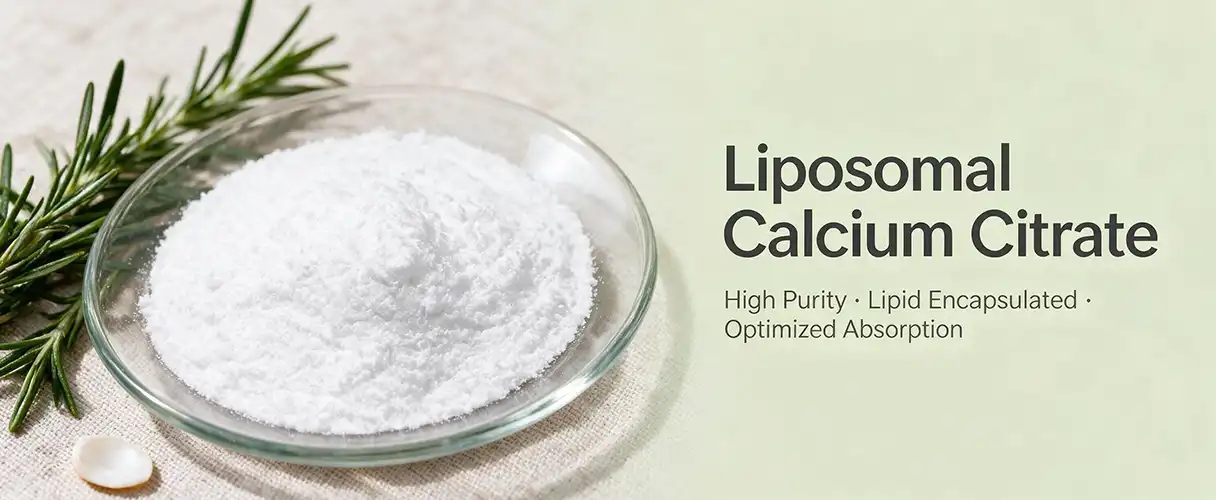
Quality Control and Formulation Standards in OEM Production
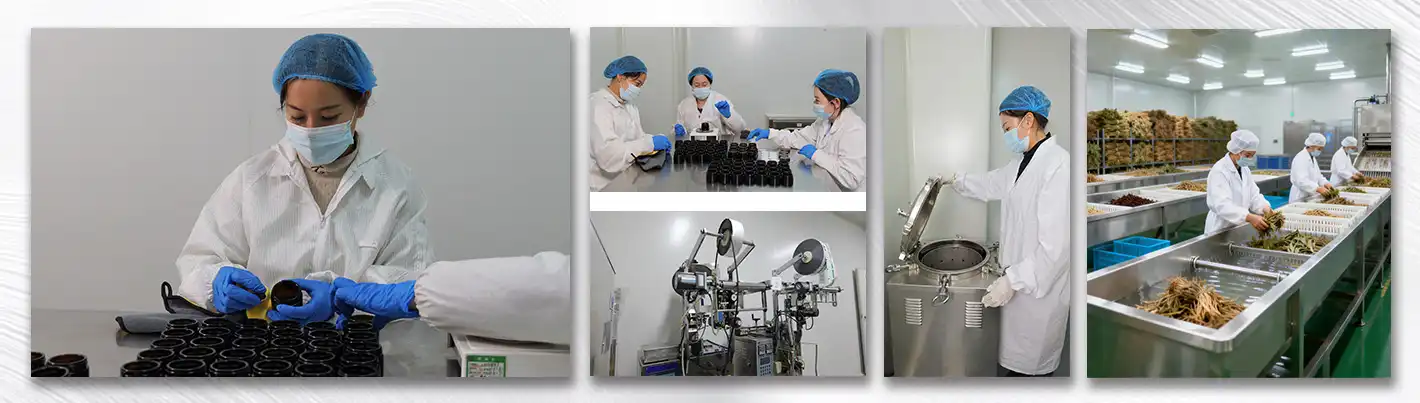
A lot more care has to be taken when making a lot of liposomal ferrous glycinate than when making regular iron pills. A lot of strict rules are followed at every stage of the production process. These rules directly affect how safe and well the finished product works.
Particle Sizing and Encapsulation Rate
Before they are made, liposome solutions are put through polycarbonate screens several times at 50–55°C to make sure the particle sizes are all the same. It has to be less than 0.1 for the polydispersity index (PDI). The encapsulation should work at least 95% of the time if you use HPLC-UV or atomic absorption spectroscopy (AAS) to check. These numbers aren't just claims made by companies; they're quality standards that can be checked and that purchasing teams should ask suppliers to write down.
Stability Testing and Shelf-Life
The freeze-dried form, which is a fluffy, snow-white cake that can be mixed back together to make a clear or slightly cloudy liquid, lasts a lot longer than the liquid forms. As part of the stability methods, Zeta potential, Fe⁺ content (goal: ≥98% using the o-phenanthroline method), peroxide value, and regeneration clarity are all checked. The tests prove that the item stays safe and useful for the length of time it says it will.
Regulatory Compliance: GMP, ISO, and FDA Alignment
Any reputable company that sells liposomal ferrous glycinate should follow cGMP guidelines. When goods enter the U.S. market, they have to be checked for bacterial endotoxins, chemicals that are still present, and purity. An MSDS, a Certificate of Analysis (CoA), and full records of where the raw materials came from should also be asked for by buyers. This is because 21 CFR Part 111 says that the FDA needs this kind of paperwork.
Comparative Analysis: Liposomal Ferrous Glycinate vs. Other Iron Supplements
Iron pills come in many types, but not all of them work the same. These are the main changes that procurement workers should look at when picking a product form:
- Ferrous sulfate is the most common and lowest-cost option. It has poor tolerance—clinical data consistently links it to gastrointestinal complaints in 30–40% of users. Its absorption rate is also sensitive to dietary factors like phytates and calcium.
- Ferrous gluconate offers slightly better tolerance but still lacks a protective delivery mechanism. Bioavailability improvements over sulfate are modest at best.
- Iron bisglycinate (non-liposomal) absorbs better than salt-based forms thanks to its chelated structure, but it still enters the stomach unprotected and may cause mild irritation at higher doses.
- Liposomal ferrous glycinate combines the absorption advantage of amino acid chelation with the protective barrier of liposomal encapsulation. The result is a product with higher effective iron uptake, minimal gastrointestinal disturbance, and strong consumer retention rates—all of which directly support brand loyalty and repeat purchase.
Liposomal iron glycinate is a good choice for high-end supplement lines that want to reach people who are sensitive to certain ingredients. Most of the time, better placement in stores and fewer returns make up for the higher cost of production.
Procurement Strategies for Liposomal Ferrous Glycinate OEM Clients
To find the best liposomal ferrous glycinate maker, you need to do more than just look at price lists. Poor product quality is caused by gaps in sourcing capabilities because this nutrient is hard to make.
Evaluating Supplier Credentials
Make sure you have GMP certificates, test records from a third-party lab, and samples of the product before you place a big order. As usual, a good OEM partner should be able to give you results for sealing efficiency, stability, and batch records. Find out if their facility can do clean filtration (0.22μm) and automated freeze-drying on its own.
Negotiating Volume Pricing and Minimum Orders
When you buy more, most suppliers will give you a discount. Most well-known manufacturers can do both small-batch changes and mass production. Early on, make sure you know the minimum order quantities (MOQs). There are some facilities that can do test runs for new products before they are made for sale.
Logistics and Trade Terms
When shipping to the U.S., air freight is best for important or urgent items because it takes only 5–10 business days. Ocean freight, on the other hand, is best for bigger orders because it takes 20–45 days. The terms FOB, CIF, and DDP are all used in trade. If a buyer doesn't know how Chinese customs work, DDP makes it easier to get a package through.
Future Trends and Innovations in Liposomal Iron Supplement Manufacturing
More and more people are using liposomal iron for things other than treating anemia. Prenatal nutrition, kids' health, and sports performance are some of the areas where demand is growing in North America and Europe.
Nano-Liposomal Technology and Clean-Label Formulation
In order to please people who like clean labels, companies are now moving toward even smaller droplets and natural phospholipid sources such as sunflower lecithin. More and more people are buying high-end products like single-dose ampoules filled with nitrogen and ready-to-drink oral drinks.
Expanded Application Areas
Liposomal ferrous glycinate is being used in new ways to make baby formula, nutrition drinks for pregnant women, and drinks for recovering from sports activities safer and more effective. For these uses, the encapsulation must work consistently, and the stability of the Fe must be proven. These are the things that make capable OEM partners different from plain old suppliers.
Strategic OEM Collaboration
Firms that work closely with the original equipment makers (OEMs) of their goods can get new formulas more quickly. People who buy something tend to help make better products faster and help change the formula more often when they are involved in the early stages of co-development.
Conclusion
Liposomal ferrous glycinate is a big step forward in getting enough iron. It is backed by good science and has real clinical benefits. When a business buys something from another business, they need to find an OEM manufacturer that can consistently make this ingredient to pharmaceutical-grade standards. The best way for buying teams to tell if a seller could be a long-term partner is to look at their transportation skills, encapsulation rate, and Fe⁺ stability. People in the U.S. and around the world want better iron pills, so getting the right mix from the right source is a smart move that will pay off.
FAQ
Is liposomal ferrous glycinate safe for long-term use?
Yes. The chelated iron glycinate core is a well-studied compound, and the liposomal delivery format reduces the gastric exposure that causes most iron-related side effects. Long-term use at recommended doses is generally well-tolerated, particularly compared to ferrous sulfate.
What is the typical dosage in a finished supplement product?
Dosage varies by target population and product format. Most finished products designed for iron-deficient adults deliver 14–28 mg of elemental iron per serving. Manufacturers can adjust elemental iron content per dose during the OEM formulation stage.
How does liposomal iron glycinate pricing compare to standard iron supplements?
Production complexity makes liposomal iron glycinate more expensive than ferrous sulfate or gluconate. However, the higher retail price point it supports in the premium supplement market typically justifies the difference for brands targeting quality-conscious consumers.
Can the product be customized for private-label production?
Yes. OEM manufacturers can customize dosage, product form (freeze-dried powder, oral liquid, capsule), packaging, and labeling to match your brand specifications. Both small-batch and large-volume production runs are possible.
What documentation should I request from a liposomal ferrous glycinate supplier?
Request a Certificate of Analysis (CoA), GMP certification, stability data, encapsulation efficiency reports, and raw material traceability records before finalizing any procurement agreement.
Partner with BioSpark for Your Liposomal Ferrous Glycinate Supply
If you need liposomal ferrous glycinate made by a professional company, BioSpark (Xi'an) Biotechnology Co., Ltd. can do it all for you, from formulating to shipping your order all over the world. We make sure that our goods are of high quality and meet GMP and international standards. We have checked that they retain at least 98% of their Fe⁺ and encapsulate at least 95% of it. We can work with your schedule to meet your production needs by giving you direct technical help and flexible capacity, whether you need a small batch for testing or a big order. Contact our team right away at leao@biosparkcn.com or go to https://www.biosparkcn.com/ to get prices and examples.
References
1. Fabiano, A., Brilli, E., Becucci, L., et al. "New Findings on Iron Bioavailability from Oral Supplementation with Ferrous Bisglycinate Chelate." Journal of Pharmacy and Pharmacology, 2018.
2. Piskin, E., Cianciosi, D., Gulec, S., et al. "Iron Absorption: Factors, Limitations, and Improvement Methods." ACS Omega, 2022.
3. Liguori, G., Liguori, I., & Russo, F. "Liposomal Drug Delivery Systems: From Concept to Clinical Applications." Advanced Drug Delivery Reviews, 2013.
4. Allen, L. H. "Anemia and Iron Deficiency: Effects on Pregnancy Outcome." The American Journal of Clinical Nutrition, 2000.
5. U.S. Food and Drug Administration. "Dietary Supplements: Current Good Manufacturing Practice (cGMP) Regulations." 21 CFR Part 111, FDA, 2007.
6. Kinnunen, P. K. J. "Functional States of Lipid Membranes: A Thermodynamical Approach." Chemistry and Physics of Lipids, 1991.

Send Inquiry
Related Industry Knowledge
- Is Liposomal Vitamin K2 Worth Adding to Your Routine?
- Why Is Bovine Bone Collagen Peptide Popular in Nutraceuticals?
- Is nature artichoke extract effective for cholesterol management?
- What Is the Market Outlook for Tanshinone Danshen Extract Powder?
- What Are the Key Advantages of Barley Sprout Flour?
- How Does Cape Gooseberry Powder Enhance Smoothie Taste?
- What Are the Main Health Benefits of Ginseng Plant Extract?
- Why Radix Rehmanniae Extract Is Rich in Antioxidants?
- Can Ganoderma Extract Powder Reduce Inflammation?
- How Hydrolyzed Rice Extract Enhances Hair Texture?