Is Liposomal Vitamin K2 Worth Adding to Your Routine?
Oct 22, 2026
As a health product maker, nutraceutical distributor, or supplement firm, you’ve no doubt asked yourself the question at some point: Is Liposomal Vitamin K2 worth it? Yes, then it is. Liposomal Vitamin K2 employs phospholipid encapsulation technology to deliver the active ingredient straight to the lymphatic system, bypassing the digestive bottlenecks that may diminish the efficacy of standard dosages of MK-7 or MK-4. In fact, research published in the Journal of Nutritional Biochemistry showed that liposomal delivery methods attain a higher peak plasma concentration than traditional oil-based softgels. This is an excellent solution for bone health, heart protection, and high-quality product composition.
Understanding Liposomal Vitamin K2: What It Is and How It Works
Before you decide whether liposomal vitamin K2 should be in your routine, you need to know what's in the pill.
The Science Behind Encapsulation
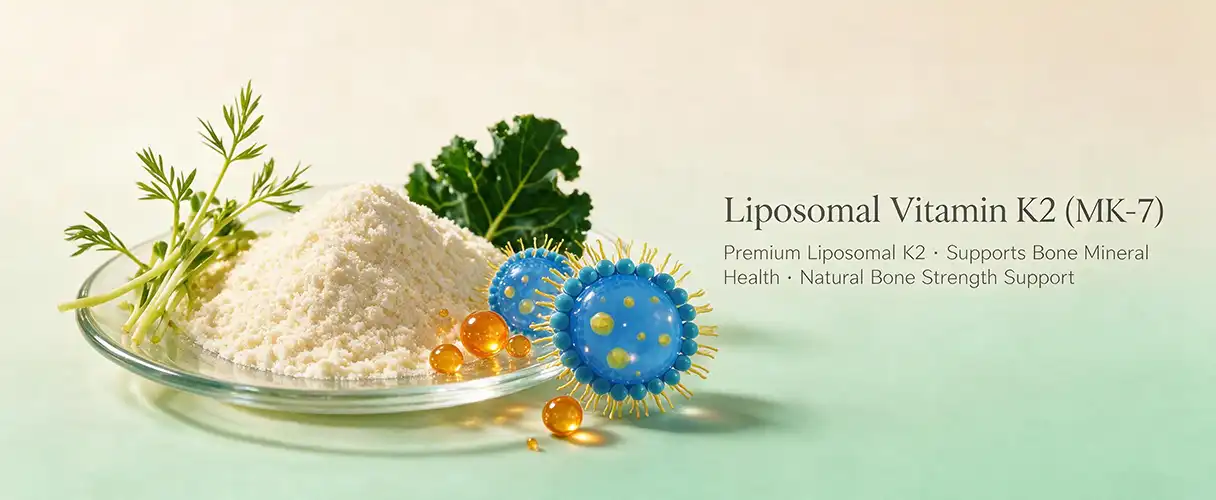
Liposomal vitamin K2 transports a compound known as menaquinone-7 (MK-7) into a phospholipid membrane. Most of this vitamin K2 is extracted from non-GMO sunflower lecithin. The diameter of the nanospheres is around 100-200 nm. Similar to cell membranes, they are taken into the body via the lymphatic system and are not broken down by bile salts. This is particularly true for those over 65, and for individuals who have problems digesting meals, since they tend to create less bile.
How Bioavailability Actually Improves
Normal vitamin K2 softgels require dietary fat to be able to operate. That is one thing liposome K2 does not provide. The phospholipid transport protects the vitamin from being destroyed by the stomach acid before it reaches the wall of the gut. If you manufacture a decent liposomal product, the PDI should be less than 0.3, and the Zeta Potential should be greater than ±30 mV. Both are indications that the particles are actually stable and not just an emulsion.
The D3 Connection: Solving the Calcium Paradox
The D3 Connection: Solving the Calcium Paradox. Best taken with Vit K2 MK-7. D3. D3 absorbs calcium, and K2 activates Matrix Gla Protein (MGP). MGP transfers the calcium to bone tissue instead of arterial walls. There is a genuine medical condition known as the “Calcium Paradox” that occurs when persons take supplemental D3 but do not get adequate K2. This part set solves it. A common preparation is liposomal vitamin K2 with D3 5000 IU D3 to 100 mcg K2.
Comparing Liposomal Vitamin K2 with Other Forms: Making the Right Choice
Not all vitamin K2 products perform equally. Form selection directly affects how well your finished product delivers on its label claims.
MK-7 vs. MK-4: Which Baseline Matters
MK-7 (Menaquinone-7) stays in the blood plasma for a longer period – around 72 hours – than MK-4, which is cleared from the body within hours. Thus, MK-7 is the formulation of choice for liposomal formulations targeting bone mineralization and vascular health. The physiologically active MK-7 isomer is All-Trans. The inactive Cis-isomers give no therapeutic benefit, and hence quality sourcing requires HPLC testing to verify isomer purity.
Where Liposomal Delivery Outperforms Conventional Forms
Standard softgels and powders leave bioavailability up to the luck of your digestive state on any particular day. The basic performance differences are what make liposomal vitamin K2 a better alternative for premium formulations:
- Protection from degradation: The phospholipid bilayer shields K2 MK-7 from oxidation and interaction with mineral excipients that would otherwise reduce potency during shelf life.
- Consistent absorption: Because liposomes do not require dietary fat co-ingestion, product performance stays consistent regardless of whether the consumer takes the supplement with a meal or on an empty stomach.
- Higher Cmax: Clinical data show liposomal delivery achieves significantly higher peak plasma concentration compared to conventional oil carriers, giving formulators a real efficacy advantage they can communicate on packaging.
These differences translate directly into stronger consumer outcomes and better product differentiation in a competitive supplement market.
Cost vs. Performance for B2B Formulators
Liposomal technology does carry a higher raw material cost than standard powders. However, the ability to use lower per-dose quantities while achieving equivalent or superior plasma levels often offsets this. For brands targeting clinical, geriatric, or performance nutrition segments, the price premium is justifiable and often expected by the consumer.
Assessing Safety, Dosage, and Side Effects: What B2B Clients Should Know
Safety Profile and Regulatory Standing
Liposomal vitamin K2 has a well-documented safety record. Vitamin K2 (MK-7) is not associated with toxicity at supplemental doses. The liposomal carrier, when manufactured from non-GMO sunflower lecithin, avoids soy allergens and phytoestrogens. Products manufactured under cGMP standards and verified by third-party labs for heavy metals (via ICP-MS for Pb, Hg, Cd, As) and TOTOX values (lipid oxidation) meet the baseline requirements for most international markets.
Recommended Dosage Ranges
Common formulation targets for liposomal vitamin K2 range from 90 mcg to 200 mcg of MK-7 per daily serving. When combined with D3, the 5000 IU D3 / 100 mcg K2 pairing is well-supported by clinical literature. B2B clients should document these ranges clearly in product labeling and work with their manufacturer to align with the regulatory standards of their target market, particularly for FDA-regulated U.S. products.
Side Effects and Labeling Obligations
Side effects from K2 supplementation are rare. The primary precaution involves individuals taking warfarin or other vitamin K-antagonist anticoagulants, as K2 may interfere with drug efficacy. Product labels should include a clear advisory for this population. Transparent labeling builds consumer trust and reduces liability for distributor and brand partners.
Procurement Insights: Where and How to Source Liposomal Vitamin K2
Certifications to Prioritize
If you are searching for a source of liposomal vitamin K2, you need to make sure that they follow GMP (Good Manufacturing Practice), ISO quality control requirements, and have testing done by a third party. The difference between a true liposomal product and a commercial emulsion may be identified by a Dynamic Light Scattering (DLS) test with a PDI value below 0.3 and the particles between 100 and 200nm in size.
Scalability and Batch Flexibility
For companies that are new to the market or just starting out, it is very important to be able to go back and forth between small test runs and large commercial runs. You should expect a liposomal vitamin K2 producer to have acceptable minimum order quantities and consistent quality from batch to batch. This helps purchasing managers arrange their supplies better.
Quality Control Testing Standards
To ensure a good bilayer structure, procurement teams should ask for TEM photographs, HPLC test results for the purity of All-Trans MK-7, and accelerated stability data (40°C/75% RH), which should show the liposomal shell is still intact when the material is in storage. The percentage of encapsulation efficiency has to be high and > 90% of the capsules should be functional.
Leveraging Liposomal Vitamin K2 in Your Product Portfolio: Applications and ROI
Target Market Applications
Liposomal vitamin K2 is found in three kinds of goods that are quite popular and have more and more consumers. The store’s biggest section is stocked with items for elderly people’s and women’s bone health after menopause. Healthy people over age 40 who seek a healthy heart are in high demand for products aimed at preventing vascular calcification. And last but not least, certain sports nutrition solutions for athletes who need to be healthy without stomach issues and maintain their bones and immune systems robust.
Formulation Combinations That Drive Sales
Liposomal vitamin K2 with D3, Magnesium, and Calcium offers a complete bone and heart support stack that solves a lot of client difficulties with only one item. Brands may charge a higher price for this positioning across many ingredients, and the client does not have to purchase individual supplements.
ROI for B2B Clients
Adding liposomal vitamin K2 to the brand’s products makes them work so effectively that people are more inclined to purchase the brand’s goods again. Bioavailability may be a great marketing point, particularly if you have third-party test data accessible for all your customers to see.
Conclusion
Liposomal vitamin K2 has been shown in clinical studies to be better absorbed than regular vitamin K2 tablets. It may be employed in bone health, heart health, and sports nutrition formulae. If you want to develop supplements, nutraceuticals, or things that genuinely function better, you should have this ingredient as a partner in all of your advanced wellness lines. Not all liposomal products are created equal; thus, it is crucial to purchase from a source that can verify the particle size, isomer purity, and how well the products are packed.
FAQ
What makes liposomal vitamin K2 absorb better than standard softgels?
The fats in regular softgels are broken down by bile salts so that the vitamin can be taken in. Liposomal vitamin K2 is made up of phospholipid nanospheres that skip this step and go straight into the lymphatic system. It doesn't matter what the person eats or how their digestive system works; absorption stays the same.
Can liposomal vitamin K2 be taken without food?
Yes. You don't have to eat fat at the same time as liposomal vitamin K2 because the phospholipid transport makes its own lipid environment. People who don't always eat the same thing or who are fasting can use it.
How do I confirm a supplier is offering true liposomes?
Dynamic Light Scattering (DLS) should be looked into. To be sure that the product is real, the PDI will be less than 0.3, and the particles will be between 100 and 200 nm in size. Most of the time, a PDI value higher than 0.4 means that the formulation is not a structured liposomal one but an unstable emulsion.
What certifications should a liposomal vitamin K2 supplier hold?
You should look for cGMP approval, heavy metal testing (ICP-MS) by a third party, proof of All-Trans MK-7 by HPLC measurement, and information on increased stability at the very least.
Is vitamin K2 safe to combine with Vitamin D3?
You should definitely take them both at the same time. Calcium can be absorbed better by the body with D3 and K2. K2 sends calcium to bones instead of the arteries. It is a well-known way to make products that are good for your heart and bones. This mix deals with the Calcium Paradox.
Partner with BioSpark for Your Liposomal Vitamin K2 Manufacturing Needs
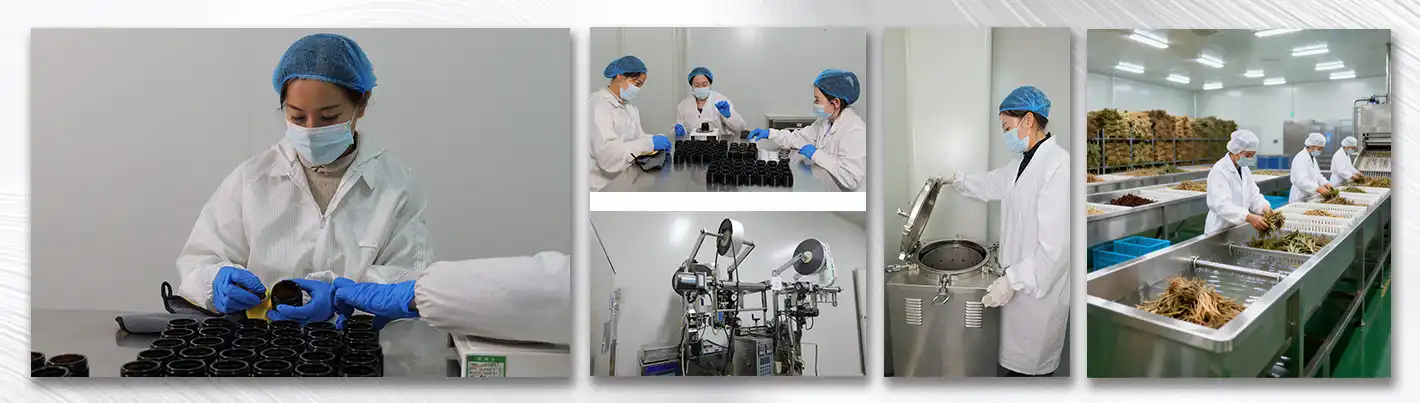
BioSpark (Xi'an) Biotechnology Co., Ltd. is a trustworthy company that creates liposomal vitamin K2 and can assist with all parts of the production process, from formulating to delivering the product. Every step of the way, a third party checks that we're following strict cGMP rules. We can meet your needs with a range of choices, including verified All-Trans MK-7 sourcing and full technical documents, whether you need a small batch for study purposes or a lot of them for mass production. Email leao@biosparkcn.com or visit www.biosparkcn.com right away to get a price from our team.
References
1. Gröber, U., Reichrath, J., Holick, M. F., & Kisters, K. — Vitamin K: An Old Vitamin in a New Perspective — Dermato-Endocrinology, 2014.
2. Knapen, M. H. J., Drummen, N. E., Smit, E., Vermeer, C., & Theuwissen, E. — Three-year low-dose menaquinone-7 supplementation helps decrease bone loss in healthy postmenopausal women — Osteoporosis International, 2013.
3. Schurgers, L. J., & Vermeer, C. — Determination of phylloquinone and menaquinones in food: Effect of food matrix on circulating vitamin K concentrations — Haemostasis, 2000.
4. Allen, T. M., & Cullis, P. R. — Liposomal drug delivery systems: From concept to clinical applications — Advanced Drug Delivery Reviews, 2013.
5. Westenfeld, R., Krueger, T., Schlieper, G., Cranenburg, E. C. M., Magdeleyns, E. J., Heidenreich, S., & Floege, J. — Effect of Vitamin K2 Supplementation on Functional Vitamin K Deficiency in Hemodialysis Patients — American Journal of Kidney Diseases, 2012.
6. Dalmeijer, G. W., Shearer, M. J., Magdeleyns, E. J., Vermeer, C., Beulens, J. W. J., & van der Schouw, Y. T. — Effect of menaquinone-7 supplementation on vascular stiffness in postmenopausal women — Thrombosis and Haemostasis, 2012.

Send Inquiry


Related Industry Knowledge
- Sea Buckthorn Juice Powder vs. Fresh Juice: Which Is Better?
- Purple Alfalfa Juice Powder vs Green Alfalfa Powder: Key Differences
- Why Do Nutritionists Call Maqui Berry Powder the Purple Powerhouse?
- Maqui Berry Powder for Eye Health: Dry Eye & Retinal Protection
- Maqui Berry Powder for Eye Health: Dry Eye & Retinal Protection
- Maqui Berry Powder for Eye Health: Dry Eye & Retinal Protection
- Maqui Berry Powder for Eye Health: Dry Eye & Retinal Protection
- Maqui Berry Powder for Eye Health: Dry Eye & Retinal Protection
- Maqui Berry Powder for Eye Health: Dry Eye & Retinal Protection
- Maqui Berry Powder for Eye Health: Dry Eye & Retinal Protection
- Maqui Berry Powder for Eye Health: Dry Eye & Retinal Protection
- Maqui Berry Powder for Eye Health: Dry Eye & Retinal Protection
- Maqui Berry Powder for Eye Health: Dry Eye & Retinal Protection
- Why Is Tanshinone Danshen Extract Powder Important in Cardiovascular Health?
- Can Konjac Flour Extract Replace Cornstarch in Cooking?
- Can Red Bean Extract Help Detox the Body?
- How Effective Is Rosehip Extract Powder for Inflammation?
- Gotu Kola Extract Powder: Natural Support for Circulation?
- Can Miltiorrhiza Root Extract Powder Improve Blood Flow?