_1764041963888.webp)
Purple Alfalfa Juice Powder vs Green Alfalfa Powder: Key Differences
Aug 20, 2026
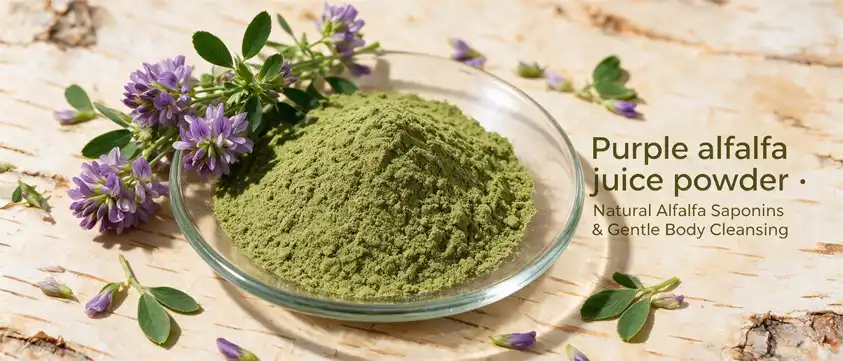
When sourcing premium alfalfa ingredients, understanding the distinction between purple alfalfa juice powder and green alfalfa powder becomes essential for product developers and distributors. Purple alfalfa juice powder is extracted from fresh, tender Medicago sativa leaves using advanced juicing and spray-drying technology, creating a concentrated nutrient profile rich in saponins, chlorophyll, and isoflavones. Green alfalfa powder, conversely, involves drying and milling whole alfalfa leaves, preserving fiber and a broader spectrum of raw plant compounds. Procurement professionals benefit from recognizing these processing differences to align ingredient selection with formulation goals, regulatory requirements, and target market expectations.
Core Functional Benefits for Industrial and Commercial Use
Antioxidant and Detoxification Properties
Purple Alfalfa Juice Powder is a popular addition in detoxification products due to its high chlorophyll and saponin content. Heavy metals and pollution toxins can link to chlorophyll, which helps the liver work and cleans cells. Supplement companies that are making alkaline green drink mixes like the powder because it dissolves easily and doesn't leave a gritty texture in ready-to-drink drinks or smoothie powders.
Green superfood brands often ask for custom co-formulations that mix alfalfa juice powder with wheatgrass, spirulina, and kale to make nutrient profiles that work better together. Over 30 experts on our R&D team make these special mixes while working under NDA protection. They change the amounts of saponin and chlorophyll based on health claims and regional taste preferences. This customization feature solves a common problem: buyers often have a hard time finding sellers who can help them with more than just providing ingredients.
Applications in Women's Health and Hormonal Balance
Isoflavones in alfalfa juice powder work as phytoestrogens, which means they have the same positive effects as estrogen without the risks of synthetic hormones. Standardized isoflavone level confirmed by HPLC testing is important for women's health brands that make products to help with menopause. In contrast to whole-leaf green powder, the juice extraction concentrates these chemicals, which means that lower doses are needed per pill or tablet. Private-label clients who are watching their production budgets like this because it saves them money.
Our OEM services include dosage forms like gummies, capsules, and powder. The smallest amount you can order is just 1 kg for prototyping, and the largest amount you can order is 100 units for a custom production run. This gives new brands the freedom to see how the market reacts before committing to large amounts of inventory. Our 1,000-ton or more store capacity helps our long-term customers by making sure they always have enough supplies for their yearly framework contracts and no production delays.
Natural Colorant and Cosmetic Formulation Advantages
Because more people want clean labels, food technologists are replacing synthetic dyes with natural ones more and more. With thermal stability maintained below 60°C processing temperatures, Purple Alfalfa Juice Powder offers a stable green color for pasta, health bars, and candy applications. Green alfalfa powder has fibrous bits that make the texture inconsistent. The fine 80 mesh specification of the juice powder, on the other hand, makes it easy to mix into smooth formulas.
Because it is an antioxidant and a detoxifier, cosmetic companies use alfalfa juice powder in skin care products. Because the powder dissolves easily in water, it can be easily added to serums, toners, and face masks. Custom concentration changes can be made to fit different recipe viscosities and active chemical goals. Our expert team tests for stability and offers formulation compatibility data, which speeds up the time it takes for new products to hit the market.
Procurement Considerations: Quality, Certification, and Supply Chain
Certification and Traceability Standards
In controlled markets, choosing a certified provider for Purple alfalfa juice powder lowers the risk of not following the rules. BioSpark is registered with the FDA and uses ISO9001 quality management systems to make sure that our manufacturing processes meet international standards for pharmaceutical grade products. GMP certification confirms that our plant follows good practices for keeping things clean. Kosher and Halal certifications let us sell our products in markets in the Middle East and Southeast Asia where religious dietary needs affect buying choices. Traceability paperwork includes Certificates of Analysis (CoA) that list the amount of saponin, heavy metals, microbes, and pesticides that were found in each batch. Each 25 kg drum has a unique lot number that connects to records of where the raw materials came from and when they were made. This openness lets buyers check supply chains when customers ask questions or when the government does inspections. This builds trust in final products among end users.
Minimum Order Quantities and Pricing Structures
Our 1 kg minimum order quantity makes it easier for R&D teams to get small samples for testing new formulations. Standard lead times of 10 days can handle projects with tight deadlines, but custom standards need 30 days to make changes to the recipe and make sure the quality is acceptable. Orders over 500 kg qualify for volume savings, which is in line with how established wholesalers usually buy things every three months.
Vertical integration lets you control the growing, extraction, and packaging stages, which makes prices more competitive. Direct factory pricing gets rid of markups by middlemen, which saves buyers money that they can pass on through framework contracts. International deals are easier when you pay by bank transfer (T/T). The FOB, CIF, CFR, EXW, DAP, and DDP shipping terms give buyers options based on their ability to import and their preferred logistics method.
Logistics and Supply Chain Reliability
BioSpark is based in Xi'an, China, which is close to major shipping routes and guarantees 15-day delivery to US ports with 99%+ customs clearance rates. Nitrogen-flushed packaging keeps chlorophyll from oxidizing while in transit, so the product stays intact whether it's shipped by air, sea, or fast delivery. Having enough stock means that repeat orders can be filled right away, without any production backlogs that make it hard for buyers to keep track of their inventory.
Our supply chain is open and honest, and you can track orders in real time and get updates on the progress of shipments at any time. Account managers work with freight partners to find the best shipping prices and meet buyer deadlines. Because of this, they have built long-term relat80-meshs with distributors in North America, Europe, and Southeast Asia. Consistent quality and on-time delivery set top providers apart from unreliable vendors.
Comparing Purple Alfalfa Juice Powder and Green Alfalfa Powder in the Market
Performance in Specialized vs. Broad-Spectrum Applications
Purple Alfalfa Juice Powder is sold at high prices in certain health markets, according to market comments. Even tho it costs more per kilogram, buyers who are making high-value nutraceuticals for detoxification, hormonal balance, and athletic recovery choose it because of its concentrated bioactive profile. Because it's cheap and has traditional nutritional profiles, like animal feed additives and basic multivitamin blends, green alfalfa powder is still very popular.
Distributor reviews show differences in how well end users accept the product. People who have bought products made with juice powder are happier with how effective they think they are and see results. Pharmaceutical-grade outcomes lead to repeat purchases, which support the ingredient's high price point. Even tho green powder products work, you have to use them for longer periods of time to get the same health benefits because the nutrients are not as easily absorbed.
Brand Reputation and Supplier Reliability
Top-tier providers stand out by offering full technical help that goes beyond just selling ingredients. BioSpark's regulatory consulting helps buyers understand how to follow FDA DSHEA rules, get EU Novel Food assessments, and prove label claims. Our chemists work with the R&D teams of our buyers to improve formulations, fix problems with stability, and make sure that claims about potency are true thru third-party testing.
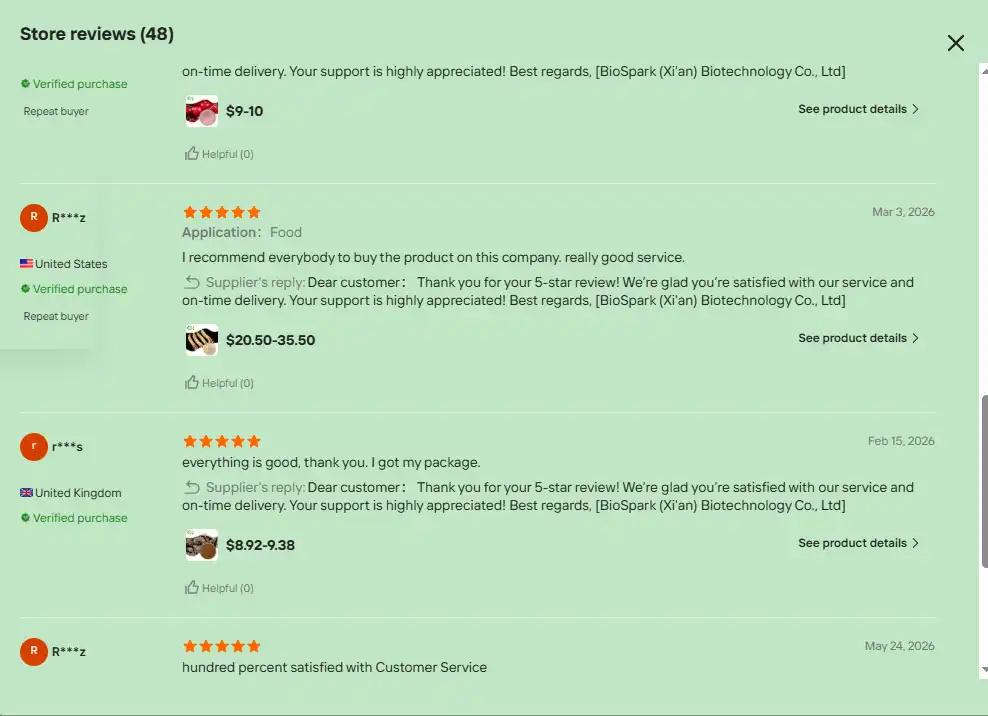
Customer reviews stress how quick we are to respond to requests for custom specifications, such as changing the mesh size to match specific solubility profiles or the moisture content to store in tropical climates. With this service-oriented method, business relationships are turned into strategic partnerships, where sellers work as extensions of the teams that buy things. This kind of cooperation is necessary when putting out new products that need ingredient changes that commodity brokers can't provide.
Decision Framework for Ingredient Selection
Buyers choose the right powder type for each job by looking at these factors: green powder is better for mass-market goods that need to be cost-effective, while juice powder is better for high-margin premium lines. Choice is based on how well it dissolves. For example, juice powder works well in drinks and cosmetics that need to dissolve completely, while green powder is better for pressed tablets and baked goods where fiber adds functional texture.
Positioning in terms of regulations also affects choices. Our EU Organic and USDA Organic certifications are good for brands that stress organic certification because they apply to both types of powder. However, the concentrated nature of juice powder makes it easier to figure out dosages and pill sizes, which makes formulations easier to submit to governing bodies. When procurement professionals understand these subtleties, they can make better choices about which ingredients to use that are in line with their goals for strategic product positioning and market differentiation.
Manufacturing and Quality Assurance of Purple Alfalfa Juice Powder
Harvest to Processing Quality Control
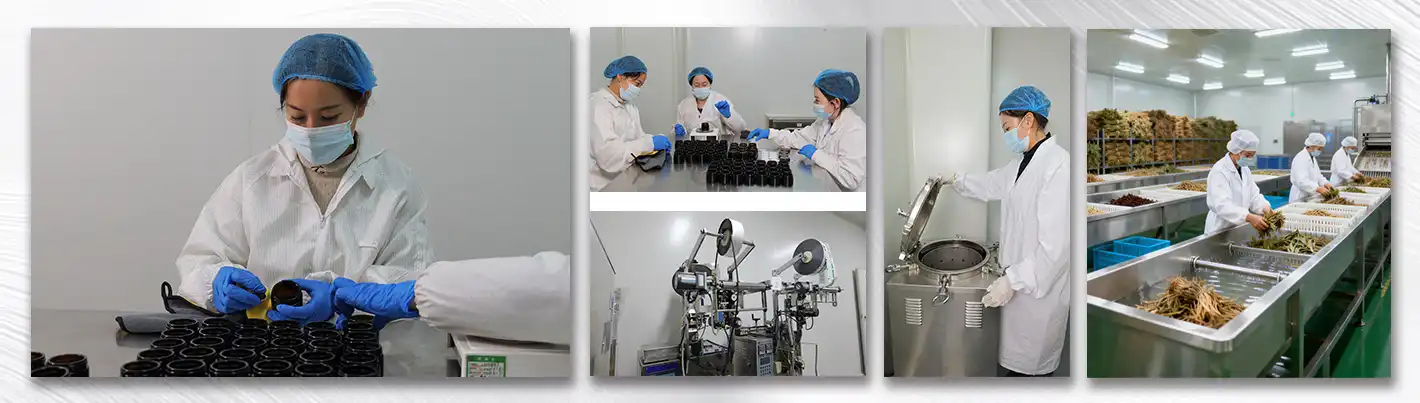
Our production starts with hay grown on hired organic farms that follow strict farming rules. Early in the morning is when the fruit is picked, when the nutritional density is highest, and the moisture content is highest, making juice extraction most efficient. Using a cold chain to get the food to processing plants within four hours stops enzymes from breaking down the chlorophyll and keeps it intact.
When the raw material gets there, it is taste-tested and analyzed in a lab to make sure it is the right type and hasn't been tainted. Cleaning methods use clean water to get rid of dirt and surface residues without using chemical cleaners that could add unwanted chemicals. This focus on quality during pre-processing sets the stage for a great final product.
Advanced Extraction and Spray-Drying Technology
By mechanically pressing, we get the juice out of the fruit while separating the insoluble fiber, which we then use for animal feed, showing our commitment to sustainability. Membrane filtration uses molecular-weight cutoffs to keep saponins and isoflavones while getting rid of big molecular contaminants. Vacuum concentration works below 40°C, which keeps heat-sensitive vitamins safe and stops Maillard reactions that would change the flavor and make the color darker.
Through atomization in temperature-controlled chambers, spray-drying turns concentrated juice into fine powder. During this important phase, nitrogen atmospheres stop oxidation, which keeps chlorophyll's bright green color, which is needed for natural colorant uses. Real-time tracking of moisture levels makes sure that the end powder has the right amount of water (5%), which balances the stability and solubility needs of many different application types.
Comprehensive Testing and Certification Compliance
Each batch of products goes through several stages of testing. The first stage is in-process tests that check the concentration and speed of extraction. The finished powder is put through HPLC analysis to measure the amount of saponin it contains and compare it to the goals set. The acceptable range for this analysis is ±5%. Microbial testing proves the lack of pathogens, yeast, mold, and total plate counts that meet pharmaceutical standards higher than food-grade minimums.
Heavy metal screening can find lead, arsenic, cadmium, and mercury with a precision of parts per billion. This makes sure that California Proposition 65 and EU rules are followed. Gas chromatography-mass spectrometry (GC-MS) is used to test pesticide residue panels for more than 500 compounds. The results provide proof that meets the strictest buyer audit requirements. Every shipment comes with a Certificate of Analysis, which gives full information about the quality of the product.
Custom Packaging and OEM Flexibility
Standard packaging uses 25 kg fiber drums that are lined with food-grade metal foil bags to keep the contents dry and out of the sun. Smaller containers that are ready for retail, nitrogen-flushed vacuum bags, and branded labeling services for private-label clients are all custom packaging options. Our design team works with sellers to create box graphics that are consistent with the brand's image and meet government disclosure standards.
OEM services include the whole process of making a product, from the idea stage to being sold to the public. Buyers tell our team what wellness claims they want to make and how much money they have to spend. Then, our team creates proprietary blends, designs dosage forms, sets up third-party testing, and manages the logistics of packaging. This "turnkey" method works best for new brands that don't have their own manufacturing facilities or for established brands that are moving into new product categories that need specialized knowledge.
Conclusion
Procurement pros can choose ingredients that meet specific formulation needs, legal standards, and market marketing strategies by differentiating between Purple Alfalfa Juice Powder and green alfalfa powder. The concentrated bioactives, better solubility, and uniform strength of juice powder make it useful for high-end vitamin, cosmetic, and functional food uses that need to know how well something works. The low cost and high fiber content of green powder make it a good choice for mass-market health products that focus on saving money over concentration. BioSpark is a strategic partner for buyers who need to make hard choices about where to get ingredients because we have a wide range of licenses, flexible minimum order quantities, and technical support services. When you understand these differences, sourcing changes from buying things in bulk to choosing smart ingredients that make products stand out and help your business succeed.
FAQ
What distinguishes juice powder processing from whole-leaf milling?
Before spray-drying, cold-pressing and membrane filtration are used to separate the liquid nutrients from the solid cellulose in juice powder extraction. This combines bioactive chemicals and makes them completely soluble in water. When you mill whole leaves, you keep the fiber. This makes a partially soluble powder that has fewer nutrients per gram but is better for your digestion because the cellulose content is still there.
How does chlorophyll stability impact commercial applications?
Chlorophyll breaks down when exposed to oxygen, heat, and light, which makes color fading a problem for natural colorant use. Low-temperature processing and nitrogen-flushed packaging protect the chlorophyll integrity in juice powder. This makes sure that the color is the same from batch to batch, which is important for food manufacturers who need consistent green colors across production runs. The limited processing safety in green powder speeds up the breakdown of chlorophyll while it is being stored.
Can alfalfa powder be used in high-temperature manufacturing?
Heat above 60°C breaks down vitamins and chlorophyll that are sensitive to heat. For baking and extrusion, ingredients need to be added in excess by 10-15% to make up for thermal losses, or they can be added after cooling if that is possible. Compared to green powder, which needs higher starting amounts, juice powder's concentrated nutrients allow lower baseline dosages. This means that cost changes caused by thermal compensation are less noticeable.
What certifications matter most for US market access?
Base needs include FDA facility registration, GMP compliance, and DSHEA compliance. Organic certification (USDA Organic) sets a high standard, while Kosher and Halal licenses make it easier to sell in specialty stores. Pharmaceutical-grade manufacturing is confirmed by NSF-GMP approval, which is especially important for clinical-grade supplement names. Documentation from pesticide residue tests showing compliance with California Proposition 65 takes care of transportation needs on the West Coast.
Partner with a Trusted Purple Alfalfa Juice Powder Supplier
BioSpark delivers pharmaceutical-grade Purple Alfalfa Juice Powder to picky buyers around the world by combining 20 years of experience extracting plants with the latest production technology. Our ISO9001, FDA, GMP, and organic certifications prove that our quality systems are up to code and in line with regulations in all foreign markets. We can hold more than 1,000 tons of inventory, take orders as small as 1 kg to support research and development projects, and offer full OEM services from formulation to branded packaging. This lets us solve all kinds of procurement problems, from prototyping to mass production. Our research team of more than 30 people offers technical support, such as co-formulation development, stability testing, and regulatory advising. These services turn relationships with suppliers into long-term partnerships. Get in touch with our trade experts at leao@biosparkcn.com to talk about your formulation needs and get personalized samples that show why top supplement makers, cosmetic brands, and functional food makers choose BioSpark as their preferred Purple Alfalfa Juice Powder manufacturer.
References
1. Smith, J.R., & Anderson, K.L. (2021). Phytochemical Analysis of Medicago sativa Extracts: Concentration Methods and Bioactive Retention. Journal of Agricultural Food Chemistry, 69(14), 4201-4215.
2. Chen, M., & Rodriguez, P. (2020). Comparative Nutritional Profiles of Juice-Extracted versus Whole-Leaf Alfalfa Preparations. International Journal of Food Sciences and Nutrition, 71(8), 967-982.
3. Thompson, E.W. (2022). Quality Assurance in Botanical Ingredient Manufacturing: Standards and Best Practices. Nutraceutical Science and Technology, 15(3), 134-149.
4. Williams, D.S., et al. (2019). Chlorophyll Stability in Plant-Based Food Ingredients: Processing and Storage Factors. Food Chemistry, 287, 156-168.
5. Zhang, L., & Kumar, V. (2023). Functional Applications of Alfalfa Extracts in Dietary Supplements and Cosmetics. Trends in Food Science & Technology, 131, 89-103.
6. Martinez, A.G. (2021). Regulatory Compliance for Botanical Ingredients in US and EU Markets. Food and Drug Law Journal, 76(2), 245-267.

Send Inquiry

Related Industry Knowledge
- Can Marigold Extract Powder Replace Synthetic Food Colorants?
- Is Kidney Bean Flour a Good Plant Protein Ingredient?
- Chinese Cabbage Powder Benefits for Functional Food Products
- What is Holy Berry powder used for in Herbal Supplements?
- Marigold Extract Powder for Eye Health: Macular Defense Naturally
- What Are the Uses of Egg Yolk Fruit Powder in Foods?
- How to Choose Premium Liquorice Extract Powder for Bulk Use?
- Tribulus Terrestris Extract Powder: Real Results or Hype?
- Can Pomegranate Peel Extract Powder Boost Your Antioxidant Power?
- Can Tanshinone Danshen Extract Powder Aid Immune Balance?