_1764041963888.webp)
How to Evaluate Wolfberry Peptide Purity and Quality?
Sep 19, 2026
The first step in determining wolfberry peptide purity is knowing what you are really purchasing. We enzymatically hydrolyze Lycium barbarum L. fruit to get high-quality wolfberry peptide, which is composed of small-molecule peptides (<2000 Da) with verified bioactivity. To objectively assess quality, procurement buyers should request HPLC-verified purity data (80% minimum is the industry benchmark), review the Certificate of Analysis (CoA), confirm molecular weight distribution, and ensure that active compounds such as zeaxanthin, betaine, and Lycium barbarum polysaccharides are present and quantified. Certifications like GMP, ISO 9001, and FDA certification provide an extra layer of assurance.
Understanding Wolfberry Peptide and Its Quality Challenges
Before placing a bulk order, it helps to understand why quality variation exists in the market and what real risks that creates for your product line.
What Makes Wolfberry Peptide Different from Crude Extracts
Wolfberry peptide is not a regular goji berry extract. Produced from the controlled enzymatic breakdown of wolfberry protein into short-chain, bioavailable peptides. This technique retains co-occurring actives, polysaccharides, zeaxanthin dipalmitate, carotenoids, and betaine in a composite functional matrix. Crude extracts do not have this peptide selectivity and have irregular absorption characteristics.
Common Quality Risks in B2B Procurement
The provenance of the raw material has a major impact on ultimate quality. Wolfberries from uncertified growing areas may have high levels of pesticide residues and/or poor polysaccharide levels. Beyond sourcing, adulteration using cheaper plant proteins or synthetic amino acid mixes is a reported issue. Buyers who omit third-party lab testing generally don’t learn of these problems until formulation failures happen.
Why Purity Percentage Matters to Your Product
A wolfberry peptide ingredient, 80% purity verified by HPLC, provides uniform dosage and predictable bioactivity. Lower purity inputs generate unpredictability that damages product claims and causes regulatory exposure – a critical risk when selling into the US dietary supplement industry under FDA restrictions.
Key Criteria to Evaluate Wolfberry Peptide Purity and Quality
Once you understand the hazards, you need a clear checklist of what excellent looks like. These are basic assessment criteria that every procurement expert should use before accepting a supplier.
Certificate of Analysis and Specification Review
A proper CoA should include purity percentage (target: ≥80% by HPLC), molecular weight range (usually <2000 Da), moisture content, heavy metal limitations, and microbiological counts. It should be a fine powder with a light orange-red to light brown color and have the unique goji berry scent, which is a visual and olfactory marker of real carotenoid content. Any deviations from these criteria should be followed up.
Bioactive Compound Verification
Authentic goji berry peptides have measurable zeaxanthin, polysaccharides from Lycium barbarum, and betaine. Request documentation that these co-actives have been tested and found to be present. That is what makes a whole-fruit synergistic product different from an isolated peptide fraction with no accompanying phytochemistry.
Supplier Certifications and Manufacturing Standards
Verified certificates are a must! Look for ISO9001 (quality management), GMP (manufacturing practice), Kosher, Halal, and FDA registration as baseline standards. These certifications prove the supplier has verified, verifiable procedures, not simply self-reported quality claims.
Methods and Tools to Systematically Test Wolfberry Peptide Purity
Knowing which lab methods apply to wolfberry peptide testing protects you from both supplier misrepresentation and your own formulation mistakes.
HPLC as the Primary Testing Standard
The standard analytical approach for validating the purity of goji berry peptide is High-Performance Liquid Chromatography. It separates peptide fractions by molecular weight and shows the presence of fillers or breakdown products. If a provider is claiming 80% purity, the CoA should clarify that the testing technique was HPLC, not some colorimetric assay that is less exact.
Mass Spectrometry and Amino Acid Profiling
Mass Spectrometry (MS) gives a peptide fingerprint for further confirmation to ensure the amino acid sequence profile is compatible with wolfberry protein origin. This level of testing is especially important for purchasers shopping for premium eye-care or immune-support applications where functional claims need to pass regulatory scrutiny.
Pre-Shipment and On-Site Inspection Tools
Portable near-infrared (NIR) spectrometers may be used on-site to check powder appearance, moisture, and gross composition before accepting a shipment. Heavy metal contamination may be identified at the receiving dock using rapid screening tests. These tools should be used as a first-line check rather than a substitute for comprehensive CoA documentation.
Comparative Evaluation: Wolfberry Peptide vs Other Peptides
Not all peptide ingredients are equivalent, and procurement decisions benefit from a clear comparison of what wolfberry peptide offers relative to alternatives.
Wolfberry Peptide vs. Collagen Peptides
Collagen peptides primarily target skin structural support through hydroxyproline-rich sequences. Wolfberry peptide, by contrast, contributes zeaxanthin directly to the macular region of the retina — a mechanism collagen cannot replicate. For eye-care formulas targeting screen-related visual fatigue or blue light protection, goji berry peptide provides a functionally distinct and scientifically supported benefit that collagen cannot substitute.
Wolfberry Peptide vs. Other Berry Extracts
Bilberry extract and acai-derived ingredients carry antioxidant value, but neither delivers zeaxanthin dipalmitate nor the polysaccharide-peptide synergy characteristic of Lycium barbarum. In immune-modulation applications — where LBP (Lycium barbarum polysaccharides) activate macrophages and T-cells — wolfberry peptide's composite profile justifies its premium positioning against single-compound berry ingredients.
Powder Form vs. Liquid Formulation Considerations
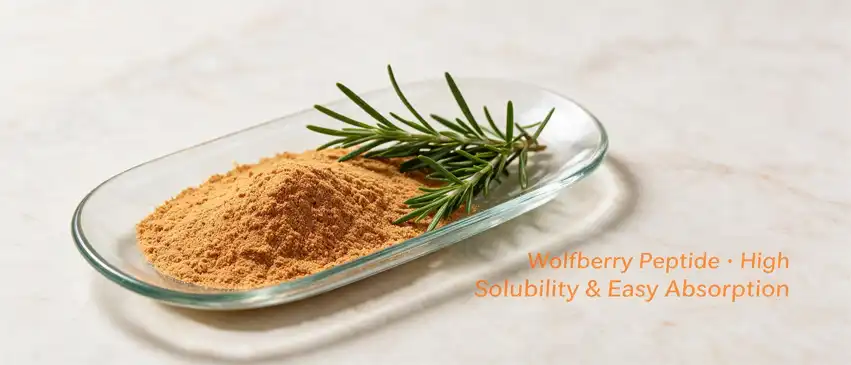
Our product is supplied as a fine powder with excellent water solubility — it dissolves to form a transparent or semi-transparent orange-red solution. This solubility profile makes it straightforward to integrate into capsules, tablets, functional beverages, and RTD formats. Liquid wolfberry peptide concentrates exist but introduce stability and shelf-life concerns that powder format avoids.
Best Practices for Sourcing High-Quality Wolfberry Peptide in Bulk
Quality evaluation does not end with lab results. The way you structure a supplier relationship determines whether that quality is repeatable across every order.
Verify Certifications and Request Pre-Purchase Samples
Before going to volume, ask for a sample with a complete CoA, stability data, and third-party test results. The minimum order amount at BioSpark is 1 kilogram. This provides you with sufficient material to do in-house formulation testing and independent lab verification before moving up to a complete 25 kg drum purchase.
Negotiate Terms That Protect Quality Continuity
Contracts should specify supply of batch-specific CoA, approved specification limitations, and stated rejection mechanisms. You may match your import process with the delivery terms — FOB, CIF, CFR, EXW, DAP or DDP — that are flexible. Payment by bank transfer (T/T) with verified stock availability would minimize the shipping delay. We have stock available and can ship via express, air freight, or sea freight depending on the quantities.
Build Long-Term Supplier Audit Relationships
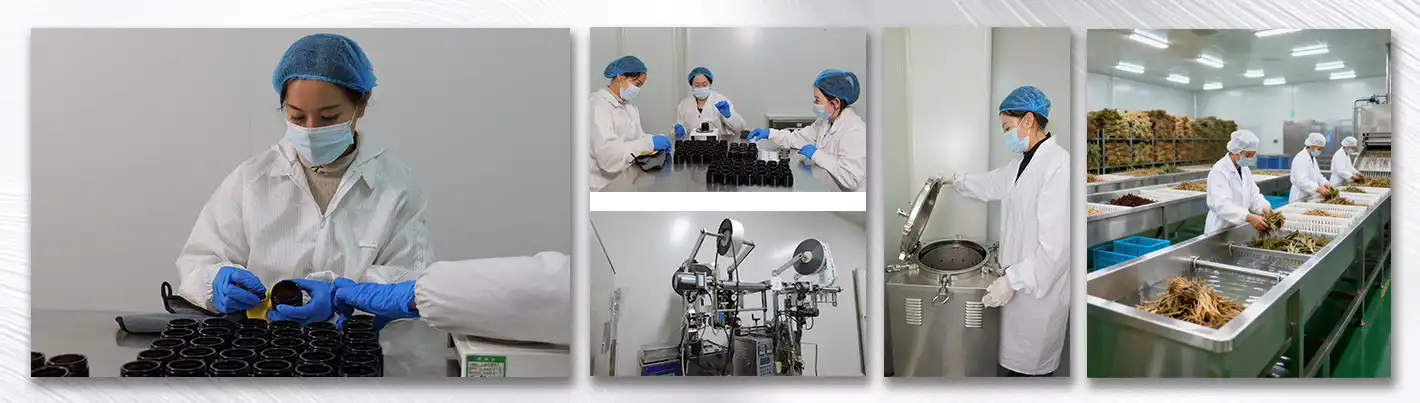
A one-time check is not adequate. Develop a timetable for supplier audits and seek updated certification evidence yearly. We have long term relationships with manufacturers who are ISO9001, GMP, FDA, Kosher, and Halal certified, which provides an auditable paper trail to back your own product compliance documents for the US market.
Conclusion
For the purpose of buying wolfberry peptide in volume, reading a product site is not enough. You need HPLC-certified purity documentation, traceable raw material sources, verified bioactive co-active profiles, and a supplier whose certificates can stand up to independent evaluation. The assessment procedures in this guidance provide procurement teams with the resources they need to make defensible, educated choices, from CoA review to comparative ingredient analysis. With a qualified, GMP-compliant, well-stocked, and adaptable goji berry peptide supplier, you eliminate formulation risk and maintain the quality of your brand’s product.
FAQ
1. What purity level should wolfberry peptide meet for dietary supplement use?
A minimum of 80% purity confirmed by HPLC is the standard benchmark for supplement-grade goji berry peptide. This level ensures consistent bioactive delivery and meets expectations for labeling accuracy in U.S. dietary supplement products.
2. How does wolfberry peptide support eye health specifically?
The ingredient supplies zeaxanthin directly to the macular region of the retina, where it filters blue light and reduces oxidative stress. This mechanism is distinct from general antioxidant effects and is supported by published research on Lycium barbarum carotenoids.
3. Is wolfberry peptide safe for long-term use?
Goji berry peptides derived from Lycium barbarum L. have a well-documented history of use in traditional wellness contexts. Commercial-grade ingredients certified under GMP and ISO9001 with confirmed heavy metal and microbial compliance are considered safe for dietary supplement applications.
4. What is the minimum order for sampling purposes?
The minimum order quantity is 1 kg, which provides enough material for formulation testing, stability assessment, and third-party lab verification before committing to full drum quantities.
5. Can wolfberry peptide be used in OEM formulations?
Yes. OEM and ODM manufacturing services are available, covering capsule, tablet, powder sachet, and functional beverage formats. Custom formulas incorporating wolfberry peptide alongside complementary ingredients are supported from concept through production.
Request a Sample from BioSpark — Your Trusted Wolfberry Peptide Supplier
BioSpark (Xi'an) Biotechnology Co., Ltd. produces HPLC-verified wolfberry peptide at 80% purity, manufactured under ISO9001, GMP, FDA, Kosher, and Halal certification. We ship globally with flexible delivery terms and an MOQ of just 1 kg. Whether you need a sample for formulation testing or a full commercial order, our team is ready. Contact us directly at leao@biosparkcn.com to request your CoA and pricing today.
References
1. Magase, H., & Farnsworth, N. R. (2011). A review of botanical characteristics, phytochemistry, clinical relevance in efficacy and safety of Lycium barbarum fruit (Goji). Food Research International.
2. Cheng, J., Zhou, Z. W., Sheng, H. P., et al. (2015). An evidence-based update on the pharmacological activities and possible molecular targets of Lycium barbarum polysaccharides. Drug Design, Development and Therapy.
3. Li, X. M., Ma, Y. L., & Liu, X. J. (2007). Effect of the Lycium barbarum polysaccharides on age-related oxidative stress in aged mice. Journal of Ethnopharmacology.
4. Mocan, A., Vlase, L., Vodnar, D. C., et al. (2014). Polyphenolic content, antioxidant and antimicrobial activities of Lycium barbarum L. and Lycium chinense Mill. leaves. Molecules.
5. Wetterau, J. R., & Aggerbeck, L. P. (2019). Bioavailability and peptide absorption mechanisms in functional food formulation. Journal of Nutritional Biochemistry.
6. Tang, W. H., Jiang, H., & Huang, S. Q. (2020). Enzymatic hydrolysis optimization and bioactivity evaluation of plant-derived peptides from Lycium barbarum. Food Chemistry.

Send Inquiry
Related Industry Knowledge
- Sea Buckthorn Juice Powder vs. Fresh Juice: Which Is Better?
- Chinese Cabbage Powder Supplier Guide for Global Importers
- Can Cowpea powder Improve High-Protein Food Products?
- How to use the best Tongkat Ali extract powder for maximum results?
- Is Chinese Cabbage Powder Good for Instant Drinks?
- Could Bitter Melon Extract Powder Support Metabolic Health?
- Why Is Maqui Berry Powder Trending in Superfood Supplements?
- Pomegranate Seed Extract Powder for Antioxidant Support
- Ganoderma Extract Powder Trends for 2026 Health Markets
- How Does Ghanaian Seed Extract Support Mental Well-Being?
