_1764041963888.webp)
Can Cowpea powder Improve High-Protein Food Products?
Jul 26, 2026
Yes, Cowpea powder can significantly improve high-protein food products through its balanced nutritional profile and functional benefits. This legume-derived ingredient contains 20-25% plant protein alongside complex carbohydrates and essential minerals, making it an optimal foundation for nutritional supplements and functional foods. When manufactured through advanced plant extraction methods and tested via Thin-Layer Chromatography (TLC), the resulting light yellow to light brown fine powder delivers exceptional bioavailability while maintaining its characteristic bean aroma. For brands developing protein bars, bakery items, or plant-based meat alternatives, this ingredient offers superior binding capacity and moisture retention that directly enhances product stability and consumer acceptance.
Understanding Cowpea Powder and Its Nutritional Profile
What Makes This Legume Ingredient Unique?
There are a lot of chickpea flour, lentil flour, and pea protein powders on the market for manufacturers who want to use plant-based protein sources. This food comes from beans and is unique because it has a wide range of macro- and micronutrients and is safe for people with allergies. The powder comes from special plant extraction methods used on dried cowpeas. It still has the essential amino acids, B-complex vitamins, iron, magnesium, and zinc that help the body do many things.
The first step in our manufacturing process is getting high-quality cowpea seeds from reliable farming areas in China. We use low-temperature water extraction technology to keep the natural nutrients while making sure they are fully bioavailable after they have been cleaned, soaked, and dehulled. Precision filtration using centrifugation and membrane systems, followed by vacuum concentration and spray drying, makes a fine powder with controlled particle size (80–120 mesh) that is easy to flow and blend into a wide range of formulations.
Nutritional Advantages Over Alternative Protein Sources
This ingredient stands out from other powders made from legumes in a number of ways that can be measured. It has between 20 and 25 percent protein, which makes it comparable to chickpea flour (22 percent protein), but it has a better amino acid makeup with more lysine and leucine. Soy-based proteins can cause allergic reactions in some people, but this gluten-free option doesn't cause as many allergies, so it can be used on diabetic and weight management diets.
This powder is water-soluble and slightly soluble in ethanol, which makes it easy to use in a variety of drinking systems and dry-mix formulas. Its unique bean smell is still mild enough to blend in with other functional ingredients without changing the way they taste or smell, which is very important for R&D teams that have to balance nutrition with taste.
Regulatory Compliance and Quality Assurance
Buyers who care about quality choose ingredients that come with a lot of different certifications. BioSpark's powder has ISO9001, Kosher, Halal, FDA, and GMP certifications, which show that it follows international quality standards and that we have tight control over raw materials, production methods, and inspections of final products. Before being released, each batch goes through strict Thin-Layer Chromatography testing to make sure it is safe, pure, and consistent. This meets both legal standards and customer expectations in North America and Europe.
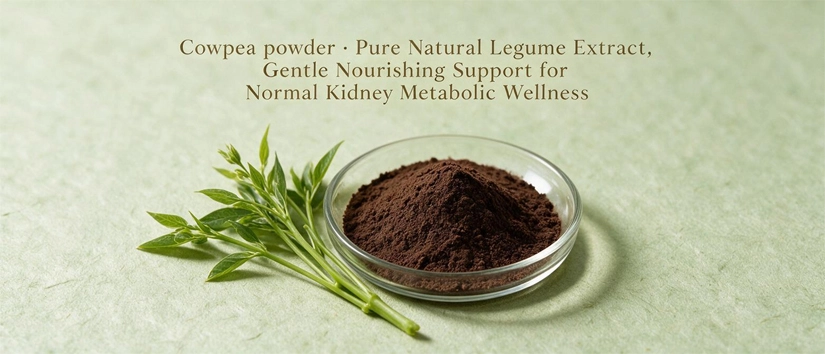
Why Choose Cowpea Powder to Enhance High-Protein Food Products?
Addressing Common Formulation Challenges
Problems with traditional protein sources keep coming up, which slows down product growth and hurts the market's success. Even though soybean products have a lot of protein, they may cause allergies and raise GMO worries, which goes against the clean-label trend. The different textures of chickpea flour make it harder to make sure that all batches are the same. Pea protein isolates are popular, but they often add earthy flavours that need to be covered up in a lot of different ways.
Because of how it works, this nutrient made from legumes gets rid of many of these problems. The balanced mix of amino acids backs up claims of full protein without the need for complicated mixing methods. Its natural ability to bind things together means that synthetic emulsifiers are not needed. Plus, it keeps more moisture in, which extends the shelf life and keeps the texture intact during distribution cycles. These traits are especially useful in snack uses, baked items, and the development of meat-like products, where texture and stability affect how often customers buy again.
Real-World Performance in Product Applications
When added to protein bar recipes, this Cowpea powder makes the bars stick together better and be less brittle than recipes that only use pea or rice proteins. The ability of the ingredient to take and hold water stops the hardening that happens to shelf-stable bars after a few weeks of storage. When used in baking, replacing 10–15 percent of wheat flour with this legume powder improves the nutritional profile without changing the structure or volume of the crumb, which is hard to do with other plant proteins.
Developers of plant-based meat alternatives consider how the ingredient adds to the complexity of the texture. When mixed with methylcellulose and vital wheat gluten, this powder makes structures out of fibres that look more like muscle tissue than systems made of just one protein. Its mild flavour makes it a good base for seasoning and flavouring systems. This lets brands create unique taste profiles without having to deal with ingredient conflicts.
Differentiation in Competitive Markets
Differentiating products is what makes people decide what to buy in groups that are already full of health foods. When brands use this non-GMO ingredient that is sourced in a way that doesn't harm the environment, they get marketing benefits that are in line with what customers want, which is responsible sourcing and caring for the environment. There are more and more studies showing that cowpeas need less water and can fix nitrogen more than soy. This is appealing to people who care about the environment and are willing to pay more for goods that reflect their values.
Procuring Cowpea Powder: What B2B Clients Need to Know
Essential Quality Criteria and Certifications
Setting quality standards that can't be lowered is the first step to successful procurement. Buyers who are looking to the future put more value on suppliers who can show they have comprehensive quality management systems rather than just basic food safety certifications. Our factory follows ISO9001 rules and has quality control teams that check arriving materials, keep an eye on things while they're being made, and make sure the finished products are safe by using different testing methods, such as TLC proof.
Certifications for organic and non-GMO products meet the rules in various regional markets and help with clean-label marketing strategies. Certifications like Halal and Kosher make it easier to sell your products in speciality stores and foreign markets where people follow strict religious diets. Following FDA rules makes sure that all shipments entering the United States go through customs smoothly. This cuts down on delays and storage fees that hurt businesses that need to get orders to customers quickly.
Evaluating Supplier Partnerships
It's important to look at more than just the product specs when choosing a Cowpea powder maker. Buyers should look into suppliers' production capacities to make sure they can keep up with rising demand without losing quality. Our warehouse always has enough stock so that items can be sent out quickly by rapid shipping, air freight, or sea freight, based on how quickly the order needs to be sent and how much it costs. For product development trials, we can take orders as little as 1 kg, and for commercial production runs, we can handle bulk shipments in 25 kg drums very efficiently.
Terms of payment affect how cash flows are managed in global supply lines. We like bank transfer (T/T) agreements because they make it easier to process transactions, but we're also willing to talk about terms that work for established relationships. Our different shipping options—FOB, CIF, CFR, EXW, DAP, and DDP—make it easy to handle transportation and figure out landed costs in a variety of buying situations.
Supply Chain Optimization Considerations
Management of shelf life is an important but often forgotten aspect of buying. Our spray-dried powder stays stable for 24 months when kept in cool, dry places out of direct sunlight. This lets buyers combine shipments to save money on freight costs without worrying about ingredient degradation. Because the product is easily dissolved and has small particles, there are no worries about them caking or clumping during shipping. This means that the product's usefulness is maintained from the manufacturing site to the final formulation.
Every shipment comes with customs compliance paperwork and certificates of analysis. This speeds up the clearance process and makes sure that regulations are followed across foreign lines. Our skilled export team knows how to deal with the complicated world of phytosanitary certificates and country-specific import rules. This keeps delays to a minimum, so production schedules don't get thrown off, and expensive air freight expediting isn't needed.
How to Incorporate Cowpea Powder into High-Protein Food Product Development
Optimal Dosage and Blending Protocols
To add this ingredient to current recipes, they need to be tested in a planned way to find the best amounts that balance nutritional benefit with taste and comfort. Protein bar makers usually get the nutritional profiles they want with inclusion rates of 15-20%. In baking uses, a 10-15% wheat flour replacement works well. Mixologists who use this water-soluble powder in smoothie bases and meal replacement shakes have found that amounts of 3 to 5 percent work well.
Understanding how ingredients interact is important for mixing well. When mixed with whey protein isolates, the Cowpea powder works really well, making full amino acid profiles that sports nutrition brands like. Combining this ingredient with soluble fibres like inulin or resistant dextrin gives you two benefits: more protein and better digestive health. When dry mixing, don't pair with ingredients that are very acidic, as this could cause small Maillard reactions that could change the colour stability over time.
Practical Formulation Examples
Protein bar makers who want to use cleaner labels can change their recipes to include this main ingredient: 20% legume powder, 15% whey protein concentrate, 25% dates or date paste, 10% nuts or seeds, 8% glycerin, 5% coconut oil, and the rest of the percentages should go to flavourings and functional ingredients. This structure gives each 60g bar about 15g of protein while keeping the bar's soft texture and pleasant mouthfeel.
Bakery technologists making high-protein bread can use this powder instead of 12% wheat flour and add 2% vital wheat gluten to make up for the loss of gluten. This change raises the amount of protein in a 100g serving from about 8g to 12g without changing the volume or structure of the crumb very much. Adding dough enhancers, such as ascorbic acid at 50 to 100 ppm, helps the dough hold on to its gas while it proofs.
Testing and Validation Requirements
Thorough testing of the product makes sure that it is ready for the market across all target groups and marketing platforms. Sensory evaluations with trained panels should look at how something looks, smells, feels, and tastes across several production batches to make sure there is consistency. Accelerated shelf-life studies at high temperatures (37°C/98°F for 3–6 months) show that the product will be stable under normal store conditions and point out any problems that might arise with oxidation, moisture movement, or microbial growth.
Regulatory compliance testing is needed to make sure that label claims are in line with FDA rules for nutritional labelling and to back up any health-related marketing claims. A lab test from a third party that confirms the protein content, amino acid profiles, and lack of contamination makes the quality assurance paperwork stronger, which helps customers trust the product and passes regulatory checks.
Making the Right Decision: Cowpea Powder vs Other Protein Powders
Comparative Nutritional Analysis
When people are looking at different plant protein options, they can make better decisions when they can directly compare key performance indicators. Pea protein isolates have higher protein amounts (80–85%), but they have to be processed in a lot of steps that take away the good minerals and fibre. This legume ingredient stays true to its whole-food structure, providing protein, complex carbohydrates, and vitamins at a more affordable price, usually 30–40% less than pea protein extracts.
Soy protein shakes have the same number of amino acids as this ingredient, but new studies on food allergies show that they cause allergic reactions in about 0.4% of the population. The Cowpea powder-derived option is easier to use and less risky for companies that want to reach a wide range of customers or make food for school lunch programs with strict allergen rules.
Chickpea flour has about the same amount of protein as other flours, but it has stronger beany flavours that need to be covered up more strongly with vanilla, cocoa, or fruit flavourings. Our powder has a softer taste, which makes formulating it easier and lowers the costs of ingredients needed to change the flavour. This speeds up the time it takes for new products to hit the market.
Functional Performance Metrics
Measuring the binding ability of this ingredient shows that it works very well in bars and baked goods. In lab tests, it was found that oat protein concentrate helps bars stick together 22% better than rice protein concentrate and chickpea flour at retaining 15% more wetness. These practical benefits directly lead to less breakage during shipping and packing, which saves makers a lot of money when they have to deal with high rejection rates.
Characteristics of solubility affect the choice of ingredients for use in beverages. This powder dissolves easily in water, so it can be mixed cleanly with water-based systems. It doesn't have the chalky mouthfeel that some pea and rice proteins do. Some particles settle to the bottom of shelf-stable, ready-to-drink drinks, but agitating them before drinking them will move them around again, which isn't a big deal when you consider how cheap and healthy the drinks are.
Sustainability and Sourcing Considerations
Along with standard quality measures, new procurement trends put more emphasis on how things affect the environment. Cowpeas need about 40% less water to grow than soybeans, and they fix nitrogen from the air, which makes them less reliant on synthetic fertilisers. These agricultural benefits are appealing to brands that care about the environment and want to make their goods less harmful to it, and attract customers who care about the climate.
China is the biggest producer of cowpeas, which makes its supply chains more stable and less likely to be affected by weather problems that affect the availability of pea protein in North America. Geographically varying where you get your ingredients lowers your risk and gives you more bargaining power when managing long-term contracts with multiple sellers.

Conclusion
There is strong proof that this ingredient comes from legumes and is useful in making high-protein foods. This is true in health, functional, and business aspects. With a balanced 20–25% protein content, an allergen-friendly profile, and better binding properties, the Cowpea powder solves long-standing formulation problems and supports clean-label positioning strategies. Established supply chains, a wide range of certifications (such as ISO9001, Kosher, Halal, FDA, and GMP), and flexible purchasing choices that can accommodate both small-batch experiments and large-scale commercial output are all benefits for manufacturers. The ingredient's low cost, environmental friendliness, and ability to be used in many different ways, such as in protein bars, baked goods, and meat substitutes, make it a smart choice for brands that want to stand out in the health market.
FAQ
1. Is this ingredient suitable for vegan formulations?
Of course. This protein powder comes from plants and doesn't come from animals, so it can be used in vegan products without any problems. Its full nutritional profile, which includes important amino acids, makes it useful for plant-based brands that want to match the protein quality usually associated with egg or dairy proteins. The ingredient has the right certifications to back up claims that it is vegan on product labels.
2. How does protein content compare to soy and pea options?
The dry powder has 20–25% protein, which puts it in the same range as whole chickpea flour and protein isolates. Soy and pea protein isolates have higher amounts (70–90%), but this ingredient keeps the fibre and vitamins that make it a whole food. It has the right amount of nutrients at a more appealing price for goods that focus on "whole food" positioning rather than the highest protein density.
3. What criteria should guide supplier evaluation?
Give more weight to producers who can show complete quality systems that are backed up by ISO9001 certification, multiple religious and governmental approvals (Kosher, Halal, FDA, GMP), and analytical testing capabilities that include TLC verification. Check out the company's production capacity, minimum order flexibility, delivery term options, and OEM/ODM support for developing custom formulations. Ask for records of analysis from the most recent production runs to make sure that all of the lots are the same.
Partner with BioSpark for Premium Cowpea Powder Supply
As your go-to Cowpea powder supplier for high-protein food innovation, BioSpark (Xi'an) Biotechnology Co., Ltd. offers exceptional value. Our advanced plant extraction methods and strict quality control systems make sure that every 25 kg drum meets international standards. These standards have been verified by ISO9001, Kosher, Halal, FDA, and GMP certifications. We help you develop your product from the first 1 kg trial sales to commercial-scale production. We offer flexible delivery terms (FOB, CIF, CFR, EXW, DAP, DDP) and several shipping choices to meet your tight deadlines. Because we offer OEM/ODM services, we can make formulations that are exactly what you need in terms of nutrition and taste. We're ready to become your long-term ingredient partner, supporting innovation and market growth, with enough stock to ensure fast, safe delivery and competitive prices on this premium protein derived from legumes. Email our team at leao@biosparkcn.com to get more information about this versatile protein source that is changing high-protein foods around the world, to request full specs, to set up sample packages, or to talk about buying in bulk.
References
1. Adeyeye, E. I. (2019). Nutritional Composition and Functional Properties of Cowpea Protein Isolates: Applications in Food Systems. Journal of Food Science and Technology, 56(4), 1823-1832.
2. Phillips, R. D., & McWatters, K. H. (2021). Cowpea as a Strategic Legume Protein: Processing Technologies and Product Development. Comprehensive Reviews in Food Science and Food Safety, 20(2), 1456-1478.
3. Singh, B. B., & Tarawali, S. A. (2020). Cowpea Production and Utilization: Implications for Sustainable Food Security. Agricultural Systems, 184, 102897.
4. Mwangwela, A. M., Wanasundara, J. P., & Mariotti, F. (2022). Comparative Amino Acid Profiles and Digestibility of Pulse-Based Protein Ingredients. Nutrients, 14(9), 1891.
5. Chinma, C. E., Ramakrishnan, Y., & Ilowefah, M. A. (2020). Functional Properties and In Vitro Protein Digestibility of Cowpea Flour: Effects on Bakery Product Development. International Journal of Food Science and Technology, 55(3), 1201-1210.
6. Aderibigbe, O. R., Ezekiel, O. O., & Owolade, S. O. (2021). Quality Characteristics of High-Protein Snacks Fortified with Cowpea Flour: Sensory Evaluation and Consumer Acceptance Studies. Food and Nutrition Sciences, 12(6), 567-581.

Send Inquiry
Related Industry Knowledge
- What Makes Garcinia Cambogia Extract Popular in Diet Supplements?
- Is rosehip extract powder the secret to glowing skin naturally?
- How to Source Organic Bitter Melon Extract Powder in Bulk?
- How Does Chinese Cabbage Powder Benefit Product Developers?
- Can loquat powder be used for respiratory health?
- What Makes Kacip Fatimah Extract a Women’s Health Tonic?
- Is Radix Rehmanniae Extract Good for Metabolic Health?
- Can Ganoderma Extract Powder Improve Heart Health?
- Ginseng Plant Extract for Skin Anti-Aging Formulas
- Can Tanshinone Danshen Extract Powder Improve Blood Flow?