_1764041963888.webp)
How to Choose the Best Yam Juice Powder Supplier
Aug 31, 2026
Selecting the right yam juice powder supplier can determine whether your product formulations succeed or fail in competitive markets. As a procurement manager working with functional food manufacturers and dietary supplement brands, I've learned that yam-derived ingredients are no longer niche products. The standardized polysaccharide content in yam juice powder makes it an ideal ingredient for digestive health supplements, infant nutrition formulas, and even skincare applications. Choosing the best supplier involves more than comparing price sheets; it requires evaluating certifications, understanding extraction technologies, and confirming supply chain reliability. This guide walks you through the essential factors buyers must consider—from understanding procurement needs and market dynamics to evaluating supplier credentials and matching solutions to specific applications—helping you make informed, confident decisions.
Understanding the Decision Scenario for Yam Juice Powder Procurement
Clarifying Your Volume and Application Requirements
Before you can buy something, you need to be clear on what you need. Depending on the type of business, the volume needs are very different. If you are just starting out with a new beverage brand, you might need small batches of as little as 1 kg to test your recipes. On the other hand, well-known supplement makers usually need 500 kg or more every three months to keep production going. The planned use directly affects the choice of source. For meal replacement shakes, food manufacturers focus on making them water-soluble and flavorless. Skincare formulators try to make healing creams with smaller particles and more allantoin. Infant feeding brands have high sanitary standards that go above and beyond what is required for food-grade products. It is much easier to find a supplier if you know whether you need standardized polysaccharide extract or custom concentrations.
Navigating the Current Supply Landscape
There are many types of suppliers in the current supply landscape, such as companies that make raw materials, trading companies, and companies that make specialized botanical extracts. Manufacturers who are in charge of the whole extraction process usually have more consistent batches that are easier to track. Trading companies may have low prices, but they don't always have the expert support to help with formulation problems. Botanical extract suppliers with specialized research and development skills are very helpful when making custom blends with probiotics or adaptogens. Some common problems with sourcing Yam juice powder are differences in the amount of polysaccharides in different batches, caking caused by moisture during storage, and problems with the supply chain during busy harvest times. Buyers can ask the right questions during seller qualification if they know about these problems.
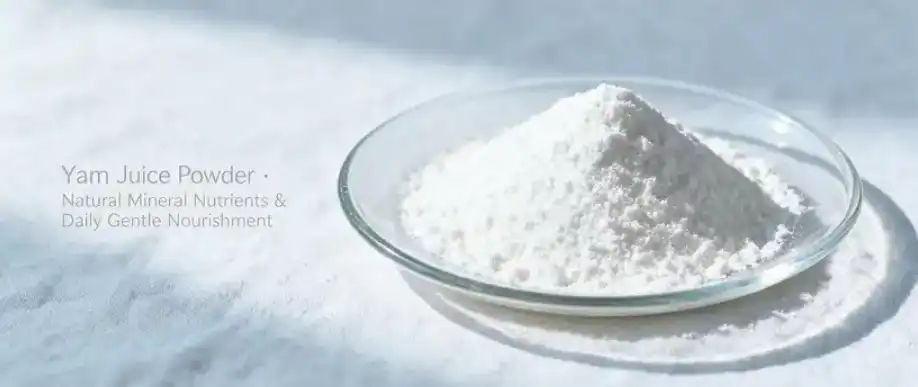
Establishing Core Criteria to Screen Yam Juice Powder Suppliers
Quality Certifications and Testing Standards
Quality and certification are the most important parts of evaluating a supplier. For the U.S. market, FDA registration and GMP certification are basic standards that show agreement with production rules. ISO9001 certification means that quality management is done in a planned way, while NSF-GMP certification covers the specifics of how to make dietary supplements. Kosher and Halal approvals make it easier for brands that want to reach a wide range of consumers to get into new markets. If there are already certificates on file, ask for more current Certificates of Analysis (COA) that show the real test results. The COA should say that the amount of polysaccharides meets the requirements, which are usually 50% when tested by UV spectrophotometry. Heavy metals must be tested for because roots can take in lead and arsenic from the soil. To follow California Prop 65, lead levels must be less than 0.5 µg/day for standard portion amounts. Total plate counts for microbes should be less than 10,000 CFU/g, and pathogens like Salmonella and E. coli should not be present.
Supply Chain Reliability and Logistics Capabilities
Reliability in the supply line is just as important as quality standards. Efficient lead times tell the difference between suppliers who are responsive and those who slow down production. Yam juice powder in stock should typically ship within 10 days of order confirmation. For custom formulas or certain polysaccharide concentrations, it may take 30 days, which is fair considering the steps needed for extraction and testing. Your landed costs and inventory plans are directly affected by the shipping choices you make. If a supplier offers more than one shipping term, like FOB, CIF, and DDP, you can use that information to find the best transportation costs for your imports. Being able to handle both large orders and small sample amounts shows that the supplier is mature. You should be able to order a 1 kg sample for testing without having to go through a lot of trouble. When you're ready to start production, you can switch to 25 kg drums or bigger.
Before finalizing any supplier relationship, these reliability factors deserve careful examination:
- Inventory Depth: Suppliers who keep more than 100 tons of raw materials on hand can handle changes in harvest times without affecting your production schedule. This buffer is very important when demand goes up quickly without warning or when bad weather causes crop yields to drop.
- Packaging Integrity: The nitrogen-flushed aluminum foil lining inside the fiber drums stops the foil from oxidizing and absorbing water. Polysaccharides are hygroscopic, which means they can clump together when they come in contact with moisture. This can affect how well they dissolve in your products.
- Customs Clearance Track Record: Shipments tend to get through customs more quickly when they come from suppliers who have established U.S. shipping lanes and 99%+ customs clearance rates. Customs delays can stop your production line and hurt your ties with customers further down the line.
These supply chain elements work together to ensure you receive consistent material exactly when production schedules demand it.
Price Evaluation and Total Cost of Ownership
When figuring out prices, you shouldn't just look at unit costs, but also at overall quality and service. The price of 50% polysaccharide yam extract powder on the market right now runs from $18 to $32 per kilogram FOB China, based on the size of the order and the certification needs. But the lowest price often means that you have to cut corners somewhere else. Include freight, customs duties, warehousing costs for bulk orders, and possible losses from quality failures in your total cost of ownership calculation.
A provider charging $24/kg with a stable 10-day lead time for Yam juice powder may be a better deal than one charging $20/kg with a 45-day lead time and variable polysaccharide content. Instead of pressing for price cuts that can't be kept up, which could lead to quality cuts, negotiation strategies should focus on long-term promises to buy a lot of things.
In-depth Analysis of Supplier Capabilities and Market Reputation
Verifying Production Experience and Technical Credentials
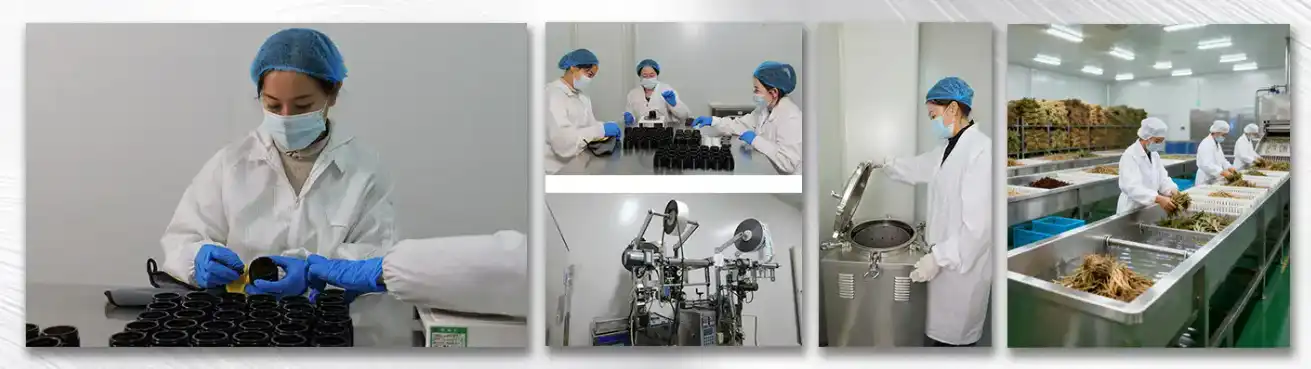
To check a supplier's credentials, you can look at their production experience by looking at facility inspection reports or audit results from a third party. Suppliers with 5A-grade production sites have put money into infrastructure like clean rooms, quality control labs, and standard production lines. Reviewing a business's reputation by customers gives you useful information that goes beyond what the ads say. Look for the supplier's name along with words like "quality issue" or "delivery delay" to find possible red flags. As governmental attention grows, compliance with environmental standards becomes more important. For EU and USDA Organic certifications, sustainable farming methods and chemical-free processing methods must be proven. When suppliers work with well-known organic names, it means that their systems have been thoroughly checked by a third party.
Innovation Capacity and R&D Support
The ability of a supplier to come up with new ideas adds a lot of value to a business beyond just providing goods. Spray drying isn't as good at keeping heat-sensitive polysaccharides safe as newer processing methods like low-temperature vacuum concentration. This difference in scientific terms has a direct effect on the bioactivity of the goods you make. Customized blends are another area of innovation. Can the seller mix Yam juice powder with other ingredients that work well together, such as probiotics for gut health supplements or plant sterols for heart health supplements? You can get unique goods to market faster with private label options. When a supplier offers full OEM services, from formula development to branded packaging, they are essentially acting as an outsourced production partner. Partners who can solve formulation problems are different from simple ingredient vendors because they have access to research and development help through university partnerships or dedicated research teams (30+ researchers at top-tier suppliers).
Matching Supplier Solutions to Your Business Needs
Aligning Supplier Types with Your Business Model
Different groups of buyers have different needs that should be taken into account when choosing a seller. Small OEM makers usually put customization options and easy sampling at the top of their list of priorities. To protect your secret formulas, you need suppliers who will sign non-disclosure agreements (NDAs) and offer minimum order quantities starting at 1 kg for testing. You can change the amount of polysaccharides to 30% or 70% depending on your needs. This gives you more freedom in the preparation process than with standard 50% extracts. Large food makers need reliable, high-volume supply chains with yearly contracts that lock in prices and delivery times. These buyers care more about how many raw materials the supplier has on hand than about custom formulation services. Suppliers who keep more than 1,000 tons of stock on hand can commit to delivering 5,000 kg every three months without having to worry about supply.
Distributors need to be able to consistently get approved lines of products that are right for the markets in their areas. Multiple certifications, like ISO9001, FDA, GMP, Kosher, and Halal, let one SKU serve a wide range of customers without having to manage multiple certified products. More and more, retailers and brand owners need approved organic choices to meet customer needs and charge higher prices. Your supply chain will be less complicated if you work with suppliers who take care of the whole process, from certifying organic farms to preparing Yam juice powder according to EU or USDA rules.
Risk Mitigation Through Sampling and Trial Partnerships
Sample orders and trial periods are two ways to lower the risk of buying before committing to large orders. Ask for 1 kg samples so that you can try their solubility, taste, and stability in your unique formulation matrix. The powder should dissolve completely in water at room temperature in two minutes, leaving behind very little solid matter. For consumer-facing items, color consistency between batches is important. To see how different the colors are, ask for samples from three different production batches. The smell and taste should have mild, yam-like notes without any off-flavors that could mean the food has been contaminated or oxidized. Trial periods with 100 kg pilot orders let you test production in the real world before going to full commercial volumes. During this step, keep an eye out for problems with caking, how the product mixes with other ingredients, and how long it lasts on the shelf.
Summarizing Key Principles to Finalize Your Supplier Choice
Prioritizing Verification Over Marketing Claims
Verified quality certifications, not marketing brochures, are what is used to choose a supplier. To make sure the status is still valid, ask for current certification papers that have issue and expiration dates that can be seen. When dealing with sellers you don't know, contact the certifying group directly to make sure the goods are real. Supplier transparency includes more than just certificates. It also includes photos of the facility, flowcharts of how the work is done, and the supplier's willingness to host virtual or real-life facility tours. Suppliers who share group production records and test reports from a third party show that they are sure of their quality systems. When your logistics are in sync with your production schedule, you can avoid costly line downtime. Find your recall point by adding the supplier's stated wait time to the average rate of consumption and then adding a safety margin for delays that you didn't expect.
Evaluating Innovation and Support Infrastructure
When your product line changes, it pays to value your supplier's ability to come up with new ideas and help you with problems. Suppliers with their own technical service teams can help with recipe problems like sticking in damp places or problems with how other active ingredients work together. When going global, regulatory backing for target market registration is very important. Suppliers who know how to handle FDA GRAS reports, EU Novel Food paperwork, and Asian market registrations can help you get into new markets faster. The total cost of ownership includes more than just the price of the invoice. It also includes consistent quality that keeps batches of Yam juice powder from being rejected, on-time delivery that keeps production going, and technical support that helps with formulation problems. A seller may charge 15% more per kilogram, but they may get the product to market 20% faster and reject no quality checks, giving you better value overall.
Conclusion
To find the best Yam juice powder provider, you need to carefully look at a lot of different factors. Quality certifications are a good start, but they need to be checked with up-to-date paperwork and validation by a third party. Your product's effectiveness and batch stability are directly affected by how well you know how to use extraction methods and standardize polysaccharides. Your production schedules stay on track based on how reliable your supply chain is, which can be seen in inventory depth, lead time performance, and logistics flexibility. On top of these basics, innovation ability and R&D help set strategic partners apart from commodity providers. The best seller ties strike a balance between low prices and extra services that add value, such as custom formulation, help with following rules, and proactive quality communication. By using the criteria in this guide, you'll be able to confidently find suppliers and form partnerships that help your business grow and make your products better.
FAQ
What certifications are essential when sourcing yam juice powder for the U.S. market?
For dietary supplement applications, FDA registration and GMP certification are the minimum requirements. NSF-GMP certification is highly valued by brands that care about quality and is special to supplement production. ISO9001 shows that quality management is done in a planned way, and Kosher and Halal certifications help businesses reach more customers. For organic product lines, you need to be certified by USDA Organic or a similar organization. Always check heavy metal testing for compliance with California Prop 65, especially for amounts of lead and arsenic in Yam juice powder.
How can I verify the polysaccharide content in sample batches?
Ask for the Certificate of Analysis that shows the polysaccharide concentration test results from the UV spectrophotometry. As per the specification, the results should be at least 50%, and they should usually be between 50 and 55%. For large projects, you might want to have third-party testing done by separate labs. For botanical extracts, testing methods should be in line with USP, EP, or ChP standards. Consistency from batch to batch is more important than a single sample having a slightly higher content.
What are typical lead times and minimum order quantities?
Standard wait times for in-stock items are between 10 and 15 days from the time an order is confirmed until it is shipped. Custom recipes with changed amounts of polysaccharides or mixes of other ingredients usually need 30 days. Different suppliers have different minimum order amounts. For samples, it's 1 kg; for small production batches, it's 25 kg; and for yearly framework deals, it's 500 kg or more. Reliable providers can handle small orders at first to help with product development without pressuring customers to commit to large orders too soon.
Partner with BioSpark for Premium Yam Juice Powder Supply
BioSpark (Xi'an) Biotechnology Co., Ltd stands ready to support your product development with pharmaceutical-grade yam juice powder manufactured under strict quality protocols. Our 50% polysaccharide extract is standardized through UV spectrophotometry, ensuring batch-to-batch consistency that prevents formulation surprises. We maintain comprehensive certifications including ISO9001, FDA registration, GMP, Kosher, Halal, and EU Organic to serve diverse market requirements. Our 30+ member R&D team collaborates with university laboratories to develop custom formulations—whether you need adjusted polysaccharide concentrations for infant nutrition or co-formulations with probiotics for digestive health supplements. With 1,000+ tons of raw material inventory, we deliver reliable supply chains with 10-day standard lead times and flexible order quantities starting at just 1 kg for initial testing. As an experienced yam juice powder manufacturer, we offer complete OEM/ODM services including formula development, stability testing, and regulatory documentation support for U.S. market entry. Contact our team at leao@biosparkcn.com to request samples, discuss your specific application requirements, and discover how our quality-focused approach can strengthen your product portfolio.
References
1. Zhang, L., & Wang, M. (2021). Polysaccharides from Dioscorea opposita: Extraction, characterization, and bioactive properties. Journal of Functional Foods, 85, 104628.
2. Chen, H., Zhang, Y., & Lu, B. (2020). Quality control and standardization of yam polysaccharide extracts for nutraceutical applications. Food Chemistry, 312, 126066.
3. Thompson, R. D. (2022). Supplier selection criteria for botanical ingredients in the dietary supplement industry. Natural Products Insider, 18(3), 45-52.
4. Liu, J., Wang, S., & Zhou, X. (2021). Mucilage polysaccharides from Chinese yam: Structural features and functional applications. Carbohydrate Polymers, 251, 117067.
5. Anderson, K. M., & Stevens, P. L. (2020). Regulatory considerations for importing botanical extracts into the United States market. Regulatory Affairs Journal, 31(2), 112-119.
6. Yang, W., Huang, Q., & Chen, F. (2022). Processing technologies for preserving bioactive compounds in yam-derived functional ingredients. Food Processing and Preservation, 46(4), e16421.

Send Inquiry
Related Industry Knowledge
- Gardenia fruit powder vs. extract: Which Is Better for Your Needs?
- Can Cowpea powder Improve High-Protein Food Products?
- Is Coconut Milk Extract Powder More Cost-Effective Than Canned?
- Is Coconut Milk Extract Powder More Cost-Effective Than Canned?
- Is Coconut Milk Extract Powder More Cost-Effective Than Canned?
- Is Coconut Milk Extract Powder More Cost-Effective Than Canned?
- Is Coconut Milk Extract Powder More Cost-Effective Than Canned?
- Is Coconut Milk Extract Powder More Cost-Effective Than Canned?
- Is Coconut Milk Extract Powder More Cost-Effective Than Canned?
- Is Coconut Milk Extract Powder More Cost-Effective Than Canned?
- Is Coconut Milk Extract Powder More Cost-Effective Than Canned?
- Is Coconut Milk Extract Powder More Cost-Effective Than Canned?
- Fulvic Acid Powder in Detox Programs: Does It Work?
- Why Choose White Kidney Bean Extract Powder for Supplements?
- Why Do Brands Prefer Organic Holy Berry Powder Today?
- What Are the Key Properties of Logwood Extract Dye?
- How to Choose High-Quality Papaya Leaf Extract Powder?
- Bulk Ilex Leaf Extract Supplier for Industry Use
- Maca Extract Powder for Cognitive and Mood Benefits