How to Choose Organic Chaga Mushroom Extract Suppliers
Nov 02, 2026
It is one of the most important considerations a supplement brand or nutraceutical firm can make when choosing the proper source of organic chaga mushroom extract. The quality of your final product is strongly related to the purity of your raw materials. When looking for organic chaga mushroom extract, a bioactive substance from Inonotus obliquus found on wild birch trees in Siberia, Northern Canada, or China’s Changbai Mountain, purchasers should look to certifications, testing methodologies, production capacity, and transparency in the supply chain. This article guides you through the important factors to help you make a confident, educated purchase choice.
Understanding the Organic Chaga Mushroom Extract Market
The mushroom extracts business is expected to be valued at more than $35 billion by 2030. Clearly, the need for helpful mushroom ingredients is rising globally. It uses organic chaga mushroom extract to stimulate growth. It’s loved for plenty of ORAC values, a consistent supply of beta-glucans, and skills that enable the body to adapt.
What Is Organic Chaga Mushroom Extract?
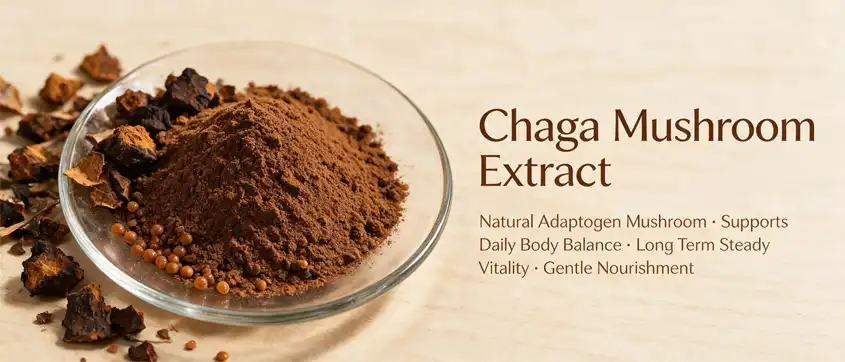
Organic Chaga Mushroom Extract is a powerful bioactive material obtained from the sclerotium of the Inonotus obliquus fungus. The plant is extracted twice, once with hot water and once with ethanol. This is not raw chaga powder. This causes the chitinous cell walls to come apart, and chemicals like melanin, beta-glucans, and betulinic acid are released to the surface. This technique ensures that the powder is absorbed better than just raw powder alone. That’s why it’s the greatest approach to create high-grade supplements.”
Available Forms and Specifications
Organic chaga mushroom extract is normally sold as a fine dark brown powder, liquid, or flakes that may be dissolved in water. The most significant demands are polysaccharide levels of 30 to 50 percent, beta-glucan levels over 20 percent, and melanin levels above 25 percent. If you are looking to purchase, ask for a Certificate of Analysis (COA) for each batch. That is because the terms on the packaging inform you how powerful the product is and how it works.
Market Challenges Buyers Face
The problem with that bunch is that the standard is always changing. Levels of active compounds may vary widely if they are gathered from the wild. Some goods are approved as organic in more than one area, like the USDA and the EU. That makes them tougher to purchase. If you’re not confident about the supply chain, or notice anything that doesn’t appear appropriate, you can acquire phony or incorrect organic chaga mushroom extract.
Core Criteria for Evaluating Organic Chaga Mushroom Extract Suppliers
Evaluating a supplier properly means going beyond a product brochure. You need documented evidence of quality systems, regulatory standing, and production scale.
Certifications That Matter
USDA Organic and EU Organic certifications certify that the raw material was farmed or wild-harvested without the use of synthetic pesticides, irradiation, or banned compounds. GMP (Good Manufacturing Practice) accreditation ensures continuous quality controls inside the manufacturing plant. ISO 22000 or ISO 9001 certifications indicate robust food safety management systems. Any reputable source of organic chaga mushroom extract should have at least two of these certifications.
Third-Party Testing and Analytical Standards
Ask for third-party lab results on beta-glucan content, heavy metals screen (lead, arsenic, mercury, cadmium), microbiological limits, and pesticide residue panels. Good suppliers audit at the batch level, not merely do periodic audits. This paperwork protects your brand and meets FDA dietary supplement requirements under 21 CFR Part 111, which demands certification of identification, purity, strength, and composition.
Production Capacity and Supply Consistency
A supplier capable of accommodating both small-batch trial orders and large-scale manufacturing gives your brand the freedom to develop without having to change partners. Ask about their minimum order quantity (MOQ), lead times, and how they manage inventories in the warehouse. For dependable year-round supply of organic chaga mushroom extract, we recommend sustainable wild-harvesting partnerships or cultivation sources with good inventory management.
Comparing Supplier Offerings and Services
It's possible to compare service companies based on how good their service is, how much it costs, and how much it can be changed.
OEM and Private Label Capabilities
Good organic chaga mushroom extract suppliers not only sell it but also assist with OEM and ODM. Part of it is offering you options of dosage forms such as capsules, powders, and tinctures. Another step is developing private label products and ensuring sure you have all the papers you need for your target markets. For companies interested in chaga supplement development, choose suppliers with their own R&D teams and create products in tried and reliable techniques.
Pricing Transparency and Payment Terms
Prices that are cheap are vital to companies, but they shouldn’t be the main consideration when making judgments about them. You should be able to see how to pay straight away, and no two orders should have the same price. You may pay net 30, T/T, or against a PO. Experienced sellers have transparent pricing for their organic chaga mushroom extract and no hidden fees for things like reformulating or completing regulatory papers.
Logistics, Packaging, and After-Sales Support
Plant extracts must be packaged to guard against temperature and moisture fluctuations during an international shipment. Make sure the firm you choose can assist with export regulations, customs documentation, and tracking your items. Good after-sales service, such as timely communication, means to resolve conflicts, and technical support is a key part of why purchases are made again and again.
How to Conduct Due Diligence and Supplier Verification
You can't fully evaluate something without checking it out for yourself. There is a set way that many people who work in buying do things before they place their first order.
Request and Test Samples Independently
Always try a little bit of organic chaga mushroom extract before you purchase large quantities of it. They should be sent to another certified lab to have their names verified and how well they work reviewed. The supplier’s COA must match the actual goods and must not be modified or tampered with in any manner before going on to the next stage. It also provides your quality team with real-time information on the size, color, and dissolution of particles.
Verify Reputation Through Traceable Evidence
More emphasis is placed on what customers say and on completed and verifiable case studies. “Look for suppliers who have sold to other countries and who have been to trade shows like SupplySide West and Vitafoods Europe. They should also partner with highly renowned businesses. Businesses that have won awards or been supported by prominent bodies in the industry are more likely to be honest about their products and how they get them.
Conduct Facility Audits—Virtual or On-Site
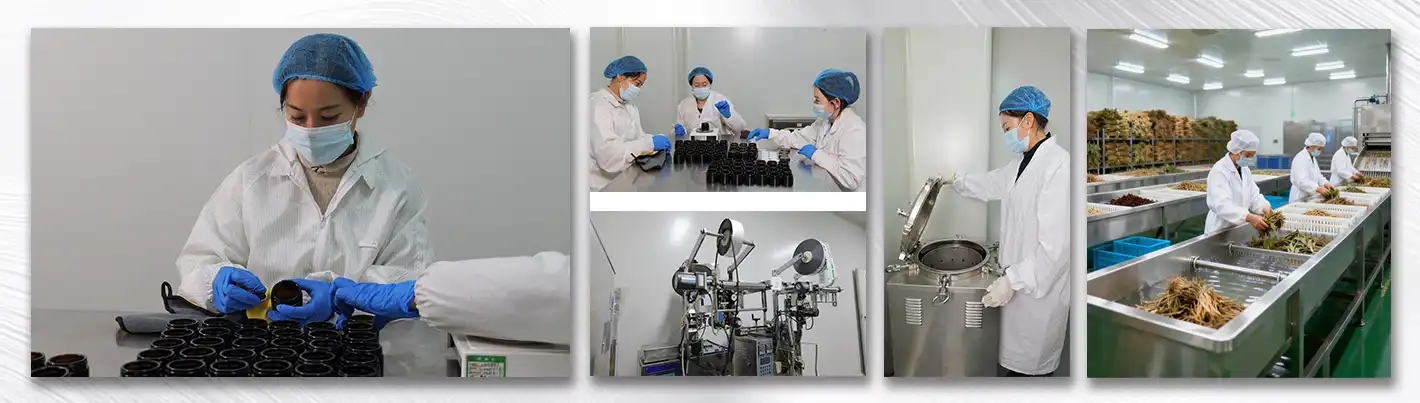
Even if you just view it online, you get a decent impression of how a supplier cleans their facility, establishes standards for their equipment, and examines the quality of their work. "A person who is confident in their business won't mind being looked into. This way, the records of where the wild organic chaga mushroom extract was harvested reveal the origin of the raw ingredients. That’s how much control they have over where the food comes from.
Tailored Procurement Strategies for Different B2B Buyer Profiles
You should keep in mind that different types of buyers have different needs when you plan your sourcing.
The most important things for most wholesalers and distributors are how prices are set and how stable the supply chain is. They need to be able to count on a steady flow of goods, make sure they always have the right amount of stock, and package them in a way that shops in the area can use. You can't talk about set prices or wait times at this level.
People who make OEM and private label goods need to work together more with the company that gives them organic chaga mushroom extract. Their end-brand clients want them to work together on formulas, back up any health claims they make with proof, and strictly adhere to the licensing rules those clients set. Being able to get in touch with someone and managing your account well are both very important.
A buying manager or procurement engineer will want to see contract terms that lower risk in the supply chain. As proof that they are following the rules, they keep records of qualified suppliers and contract terms. There needs to be an easy way for them to get help if there are service problems and to access full technical files.
For each kind of buyer, these are the most important parts of the process:
- Distributors and wholesalers: Stable supply, volume pricing, market-ready packaging for their organic chaga mushroom extract orders, and consistent lead times across seasonal cycles.
- OEM/ODM manufacturers: Custom formulation support, certification alignment, full-process documentation, and flexibility across product forms like capsules, powders, or tinctures.
- Procurement managers: Audit readiness, traceability records, regulatory dossiers, and clear contract terms for long-term supplier agreements.
Orders from sellers and producers of organic chaga mushroom extract always come with the same amount, at the same price, in the same way, and with the same amount of time to wait. As an OEM/ODM maker, you can get help with making unique formulas, making sure that all of your paperwork is in order, and making products in different forms, such as pills, powders, or medicines.
These people are in charge of buying things. They need to make sure that checks can be done, that contract terms are clear, and that there are records of who paid for what.
Conclusion
It is not enough to locate the chaga organic chaga mushroom extract that costs the least per kilogram. The best vendor is the one with verifiable certificates, steady quality goods, flexible manufacturing capacity, and excellent customer service post-sale. Read this guide, test samples, compare service offerings, and ensure your purchase approach suits your consumer profile. This might allow you to create a long-term connection with a provider. “This is always the case when you start a new line of products or make an old one bigger. Choosing your suppliers properly may preserve your company and the quality of all your products, from raw materials to completed items.
FAQ
1. What certifications should I require from an organic chaga mushroom extract supplier?
At minimum, look for USDA Organic or EU Organic certification, GMP compliance, and ISO 22000. These confirm that the organic chaga mushroom extract meets international standards for purity, safety, and manufacturing consistency.
2. How can I verify the authenticity of an organic chaga mushroom extract?
Request a third-party COA that includes beta-glucan content, polysaccharide levels, heavy metal screening, and pesticide residue results. DNA barcoding and HPLC testing can confirm species identity and rule out fillers or substitutes.
3. What are typical lead times for bulk orders?
Most established suppliers fulfill bulk orders of organic chaga mushroom extract within 15–30 business days for standard specifications. Custom formulations or OEM packaging may require 4–8 weeks depending on complexity and order volume.
4. Can small brands place small-batch orders?
Yes. Many suppliers accommodate trial or small-batch orders to help new brands validate formulations before scaling. Confirm the MOQ during initial discussions to avoid surprises.
Partner With BioSpark for Certified Organic Chaga Mushroom Extract
The chaga mushroom extract sold by BioSpark (Xi'an) Biotechnology Co., Ltd. is good enough for professionals, and the company can do both OEM and ODM work. You can also pick the size of your order, and they keep a close eye on quality. Their work is also backed by foreign certifications. Organic chaga mushroom extract is something we make, so brands can trust us to help them make the product and send it to customers. You can get a sample or a discount by emailing leao@biosparkcn.com right now.
References
1. Géry, A., Dubreule, C., André, V., et al. "Chaga (Inonotus obliquus), a Future Potential Medicinal Fungus in Oncology?" Journal of Gastrointestinal Cancer, 2018.
2. Glamoclija, J., Ciric, A., Nikolic, M., et al. "Chemical Characterization and Biological Activity of Inonotus obliquus." Journal of Ethnopharmacology, 2015.
3. Shashkina, M. Y., Shashkin, P. N., & Sergeev, A. V. "Chemical and Medicinal Value of the Fungus Inonotus obliquus." Pharmaceutical Chemistry Journal, 2006.
4. U.S. Food and Drug Administration. Current Good Manufacturing Practice (CGMP) Regulations for Dietary Supplements: 21 CFR Part 111. FDA, 2007.
5. Grand View Research. Functional Mushroom Market Size, Share & Trends Analysis Report. Grand View Research, 2023.
6. Smith, J. E., & Sullivan, R. "Medicinal Mushrooms: Their Therapeutic Properties and Current Medical Usage with Special Emphasis on Cancer Treatments." Cancer Research UK, 2002.

Send Inquiry
Related Industry Knowledge
- Which Banana Juice Powder Specifications Matter Most to Buyers?
- How Does Spray-Dried Banana Juice Powder Perform in Formulations?
- Bovine Bone Collagen Peptide for B2B Nutraceuticals
- Damiana Peptide for B2B: Quality and Sourcing Guide
- What Makes Dracorhodin Valuable for Research Applications?
- Why Use Yam Juice Powder in Instant Beverage Mixes?
- Can White Kidney Bean Extract Powder Support Healthy Weight Loss?
- Spinach Juice Powder for Vegan and Organic Food Products
- White Willow Bark Extract Powder: Bulk Supply Buying Guide
- Why Ghanaian Seed Extract Is a Top Choice in Functional Foods?