How to Choose a Vine Tea Extract Supplier
Nov 01, 2026
Choosing the right vine tea extract supplier is one of the most consequential decisions a nutraceutical brand or supplement company can make. Vine tea extract, sourced from Ampelopsis grossedentata, is gaining significant commercial attention for its high Dihydromyricetin (DHM) content, antioxidant activity, and liver-support properties. To make a sound procurement decision, buyers must assess supplier certifications, product purity, supply chain transparency, and OEM/ODM capabilities. This guide walks you through each step so you can source with confidence.
Understanding the Vine Tea Extract Market and Buyer Needs
Small steps are being taken to make the market for plant products bigger all over the world. Because it contains so many flavonoids, especially DHM (Ampelopsin), vine tea extract is unique among plant-based ingredients. Depending on how it was made, the extract can be anywhere from 50% to 98% pure.
What Is Vine Tea Extract?
It comes from the Ampelopsis grossedentata plant in southern China, and its leaves are used to make vine tea extract. It is mostly made with a flavonoid called DHM. An alcohol residue called acetaldehyde is broken down faster. This keeps the liver from getting hurt by inflammation. Because of this, DHM vine tea extract is great for adding to functional drinks, pills that help you get over a hangover, and foods that are good for your liver.
Key Health Benefits Driving Demand
A study that came out in 2012 in the Journal of Agricultural and Food Chemistry found that DHM can turn on alcohol dehydrogenase (ADH) and acetaldehyde dehydrogenase (ALDH). These are two very important enzymes that help break down alcohol. Vine tea extract is not only good for the liver, but it is also anti-inflammatory, antioxidant, helps control blood sugar, and remains stable in complex food matrices, making it useful in a variety of product categories.
Identifying Your Product Specifications
Before you talk to a supplier, you should know exactly what you need. Do you need caps or powder in bulk? Do you need DHM to be a certain purity (50%, 98%, etc.)? Do you need conventional or organic sources? Does the seller have to follow all the rules set by the FDA for dietary supplements, the EU for novel foods, and other groups? It saves time and keeps procurement from going in the wrong direction if these guidelines are clear from the start.
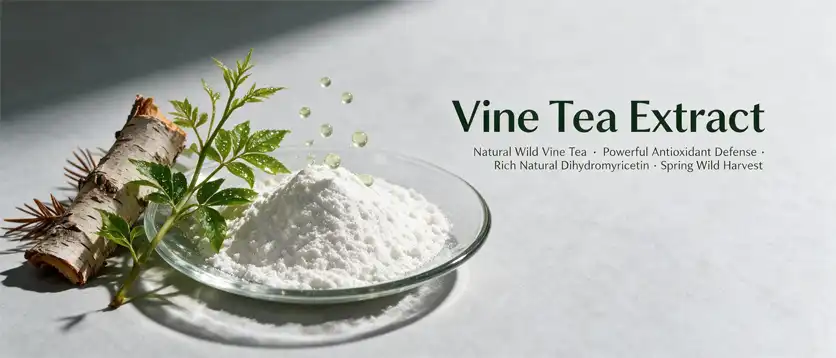
Core Criteria to Evaluate When Choosing a Vine Tea Extract Supplier
The review process can begin once you know what you need. Not every company that sells vine tea extract does a good job, so you need to be very careful with quality checks.
Quality Certifications and Lab Testing
If you buy vine tea extract from a reputable business, they should give you a Certificate of Analysis (COA) that has been checked by a third-party lab. Check these important things:
- DHM assay by HPLC: Chromatogram fingerprints must match Ampelopsis grossedentata reference standards to rule out adulteration with synthetic DHM or alternative flavonoid sources.
- Heavy metal limits: Lead < 3.0 ppm, Arsenic < 1.0 ppm, Cadmium < 1.0 ppm, Mercury < 0.1 ppm—in line with USP and ICH guidelines.
- Microbiological safety: Total Plate Count < 1,000 CFU/g; absence of Salmonella and E. coli per USP <2021>/<2022>.
- Particle size: 95% passing 80 mesh to guarantee consistent dissolution in blending operations.
It is important to make sure that the chromatogram fingerprints for the plant Ampelopsis grossedentata match the reference standards for DHM in order to rule out contamination with synthetic DHM or other flavonoid sources.
Food should have no more than 3.0 parts per million (ppm) of lead, 1 part per million (ppm) of arsenic, 1 part per million (ppm) of cadmium, and 0.1 parts per million (ppm) of mercury.- According to USP [2021 and 2022], the total plate count must be less than 1,000 CFU/g, and there can't be any Salmonella or E. coli.- To make sure the mixture dissolves evenly, the grain size must go 95% of the way through an 80-mesh screen.
GMP Compliance and ISO Certification
If a business-to-business buyer wants to buy vine tea extract for a controlled market, they need to do this. People who won't provide full lab records from a third party should be fired right away.
Pricing, MOQs, and Payment Terms
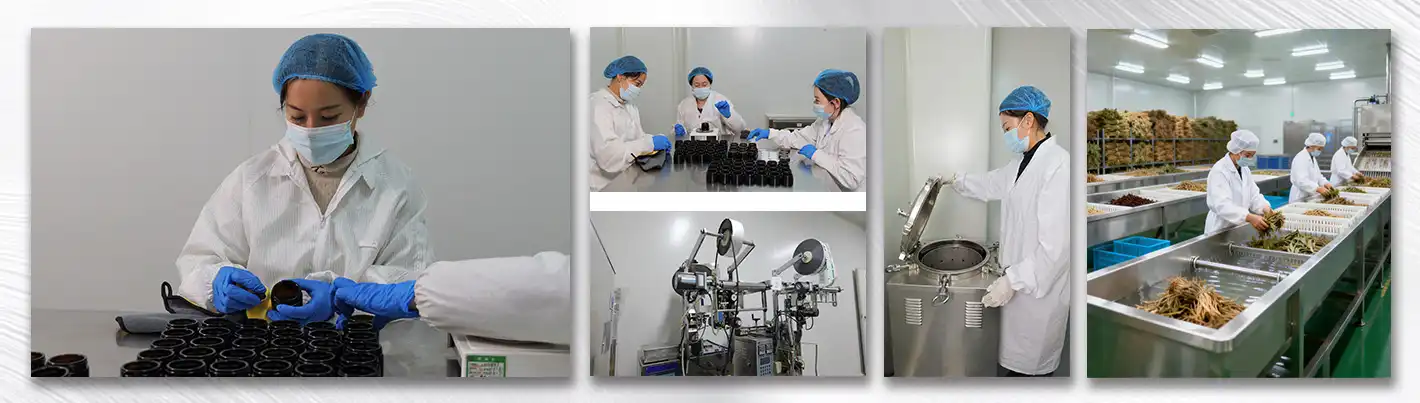
Companies that create vine tea extract for the US supplement market have to follow cGMP, which stands for “current Good Manufacturing Practices.” These are specified by the FDA in 21 CFR Part 111. If the procedure is ISO 9001 accredited, you may be more certain that it is being overseen. Always ask for documents of a facility audit or do a firsthand factory check before signing a contract. The level of DHM in vine tea extract makes a considerable impact in terms of pricing. DHM extracts that are 98% pure are more expensive per kilogram than DHM extracts that are 50% pure. Make sure you know the MOQ (minimum order quantity) before you submit your purchase. When a company is young or still developing its goods, certain suppliers may not be able to fulfill the minimum order amounts. Frequently, corporations will pay each other via letters of credit or payment plans that are spaced out over time.
Comparing Vine Tea Extract Suppliers and Products: Practical Insights
There isn't one plant product that is better than the others. Check out how vine tea extract stacks up against other ingredients in the same group. It will help you market your product right and show you why you picked the sources you did.
Vine Tea Extract vs. Other Antioxidant Botanicals
Antioxidants include EGCG from green tea, OPC from grape seed, and EGCG from white tea. But the difference with vine tea extract is that it possesses DHM, which protects the liver in 2 ways that the other choices don’t. The comparison of the ability of various vine tea extracts to scavenge DPPH radicals indicates that DHM-standardized vine tea extract is better in treating liver disorders than conventional green tea extract. For organizations wanting to attract consumers aiming to reduce weight or take care of their liver, vine tea extract is the more feasible choice.
Powder vs. Capsule Formats
Companies that need to be able to modify how they create goods should acquire powder in bulk. That’s because it’s easy to add to beverages, nutritious meals, tablets, and capsules. If you don’t have a lot of equipment on hand, it’s a good idea to utilize pre-encapsulated grape tea extract. The powder form is often more beneficial and less expensive per unit. Capsules make it easy to manufacture things farther down the line, but they make it tougher to personalize.
Evaluating Supplier Reputation
You may also learn about a supplier’s track record by reading reviews by prior customers, checking out reviews on a third-party B2B platform, or reviewing case studies. Ask the individuals you know for names at a small market. If a corporation only sells in their own nation, you should not purchase from them. Buy from one that has sent supplements to the US, EU, or other tight markets.
How to Verify and Integrate a Vine Tea Extract Supplier into Your Supply Chain
Once you have a short list of sources, make sure you check them all out in a planned way. That way, you can keep making things and protect your brand.
Request Samples and Run Pilot Orders
Always ask to view several samples before buying a lot of anything. You may get certified lab work done in or out of your organization to assist you in testing products yourself. A pilot order lets you evaluate things like how consistent your manufacturing is, how excellent your packing is, and how dependable your shipping is without risking a lot of money. A pilot order is often 10-20% of your intended volume.
Conduct Factory Audits and Verify Documentation
Another thing the creator or a reliable third party can do is do a site audit. It verifies the working environment is as indicated in the certificates. Check with the organizations that provided the GMP certifications, export permits, and any organic clearances. Before shipping food to the US, ensure sure the firm appears on the FDA's list of food facility exporters.
Build a Long-Term Supplier Relationship
“I think there should be proper standards for communication and working to maintain quality over time. Define explicit guidelines for how you will treat batch quality, lead times, and batch consistency requirements. This is everything to be put on record. It’s about being transparent about changes in where the commodities originate from or new recipes and reviewing every 3 months so that everyone is on the same page as the firm develops.
Conclusion
You have to explore beyond pricing lists to locate vine tea extract for your company. “Buyers should vet the supplier, look for certifications, and ask for data from a third-party lab before buying anything. They should also taste and check the reputation of the brand. You may get a vine tea extract standardized to include DHM, a well-known compound with science behind it. If you partner with a supplier that can provide consistent quality and follows all the requirements, you have a strong chance your product will perform well in US and global markets.
FAQ
1. Is Vine Tea Extract Safe for Use in Consumer Products?
Yes. DHM from vine tea extract has a well-documented safety profile in peer-reviewed literature. Typical dietary supplement dosages range from 150 mg to 600 mg per serving. No significant adverse effects have been reported at these levels. However, buyers should ensure their finished product complies with applicable regulations in their target market, including FDA DSHEA requirements for the US.
2. Which Certifications Are Most Important When Vetting a Supplier?
For US and international markets, prioritize: GMP (FDA 21 CFR Part 111), ISO 9001, third-party COA from accredited labs, and USDA Organic certification if sourcing organic vine tea extract. These documents verify product safety, manufacturing integrity, and traceability.
3. How Can I Verify the Authenticity of Vine Tea Extract?
Request HPLC chromatogram data alongside the COA and cross-reference the peak profile against published Ampelopsis grossedentata reference standards. Authentic DHM vine tea extract produces a characteristic fingerprint that synthetic or adulterated materials cannot replicate accurately. Transparent suppliers provide this documentation without hesitation.
Partner with BioSpark for Premium Vine Tea Extract Supply
Vine tea extract from BioSpark (Xi'an) Biotechnology Co., Ltd. has received GMP approval and has been tested by a third party. It comes in the form of pills and bulk powder, and the purity level of DHM ranges from 50% to 98%. We make a lot of OEM/ODM goods for customers in the US and around the world and can test them out in small amounts. Email our team at leao@biosparkcn.com to get samples or talk to a buyer about what you need.
References
1. Liang, J., et al. "The Protective Effects of Dihydromyricetin on Alcoholic Liver Disease." Journal of Agricultural and Food Chemistry, 2012.
2. Shen, Y., et al. "Dihydromyricetin as a Novel Anti-Alcohol Intoxication Medication." Journal of Neuroscience, 2012.
3. Chen, S., et al. "Antioxidant and Anti-inflammatory Activities of Ampelopsis grossedentata Leaf Extract." Food Chemistry, 2018.
4. U.S. Food and Drug Administration. Current Good Manufacturing Practice (cGMP) Regulations for Dietary Supplements, 21 CFR Part 111. FDA, 2007.
5. European Food Safety Authority (EFSA). Scientific Opinion on Dihydromyricetin from Vine Tea as a Novel Food Ingredient. EFSA Journal, 2021.
6. Huang, X., et al. "Bioavailability and Metabolic Pathways of Dihydromyricetin in Human Subjects." Nutrients, 2020.

Send Inquiry
Related Industry Knowledge
- How Does Dracorhodin Support Wound Healing Research?
- Where to Buy Bulk Yam Juice Powder for Import?
- Hami Melon Powder Benefits for Beverage and Dessert Formulas
- What Makes Premium Broad Bean Powder Different?
- White Kidney Bean Extract Powder: Appetite Control & Satiety Science
- Is Coconut Milk Extract Powder More Cost-Effective Than Canned?
- Is Coconut Milk Extract Powder More Cost-Effective Than Canned?
- Is Coconut Milk Extract Powder More Cost-Effective Than Canned?
- Is Coconut Milk Extract Powder More Cost-Effective Than Canned?
- Is Coconut Milk Extract Powder More Cost-Effective Than Canned?
- Is Coconut Milk Extract Powder More Cost-Effective Than Canned?
- Is Coconut Milk Extract Powder More Cost-Effective Than Canned?
- Is Coconut Milk Extract Powder More Cost-Effective Than Canned?
- Is Coconut Milk Extract Powder More Cost-Effective Than Canned?
- Is Coconut Milk Extract Powder More Cost-Effective Than Canned?
- How to Use Garcinia Cambogia Extract for Best Fat-Burning Results?
- Looking for Premium Cowpea Powder Supplier Worldwide?
- Is Rhizoma Chuanxiong Extract Good for Circulation?
- Can Ganoderma Extract Powder Improve Heart Health?