How Does Liposomal Zinc Glycinate Support Immunity?
Oct 23, 2026
Liposomal zinc glycinate delivers zinc straight to cells more efficiently than regular zinc supplements to enhance immunity. Glycinate chelation helps maintain zinc stable and mild on the stomach and liposomal encapsulation (a lipid bilayer shell that averages 80-150 nm) helps protect the zinc-glycine chelate from digestive degradation. This structure enables a larger percentage of zinc to enter the circulation in its intact form. Research published in Nutrients (2021) reveals that liposomal administration boosts zinc bioavailability by up to 40% compared to unencapsulated forms. Liposomal zinc glycinate is thus a promising contender for immune health formulations.
What Is Liposomal Zinc Glycinate?
Before diving into its immunological advantages, it’s helpful to understand what makes this substance physically and functionally unique.
The Zinc-Glycinate Chelate
The Zinc-Glycinate Chelate: When Zn 2+ links to two glycine molecules, it creates a stable chelate called zinc glycinate. This chelated structure is resistant to early dissociation in the stomach, which reduces the discomfort frequently associated with inorganic zinc salts, such as zinc sulfate.
The Liposomal Shell
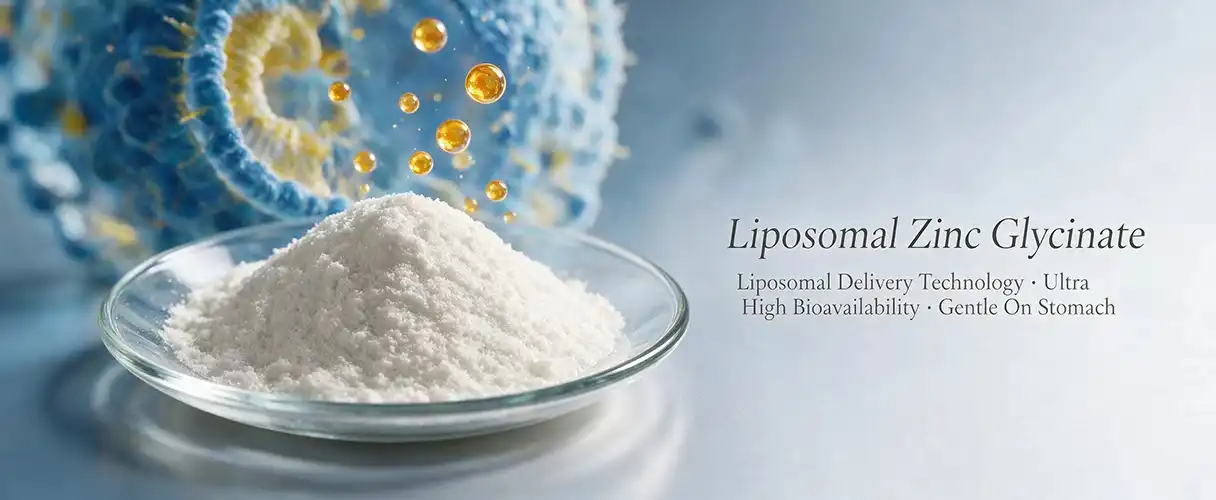
The lipid bilayer consists of highly purified soybean phosphatidylcholine, cholesterol, and PEG-modified phospholipid (DSPE-PEG). The use of PEG offers a hydrophilic surface to promote suspension stability. The hydrophilic interior cavity of these nanovesicles is loaded with zinc-glycine chelate. These nanovesicles are generally 80–150 nm in diameter, and the encapsulation rate is > 85%.
Physical Appearance and Forms
The freeze-dried result is a white or off-white loose cake. It looks like a transparent milky colloidal solution when it is in liquid form. Both forms are easy to reconstitute, providing producers flexibility in manufacturing capsules, single-dose oral liquids, and functional drinks using liposomal zinc glycinate.
How Liposomal Zinc Glycinate Works to Boost Immune Function
With knowledge of how liposomal zinc glycinate works, procurement experts are able to confidently challenge product claims.
Zinc's Role in the Immune System
Zinc is involved in over 300 enzymatic activities, and a shortage may lead to reduced T-cell generation, decreased natural killer cell activity, and a weakened skin barrier. A 2020 review in Frontiers in Immunology indicated minor zinc shortage may lower cytokine signaling effectiveness by 30–50%.
Glycinate Chelation and Absorption
The glycine carrier facilitates the transfer of zinc across intestinal membranes using amino acid transport routes, avoiding the competitive absorption that impedes ionic zinc. This means more dependable zinc absorption per dosage, a quality advantage that is in high demand by businesses developing evidence-based immune solutions.
Liposomal Delivery and Cellular Uptake
Liposomes merge with intestinal cell membranes immediately via endocytosis. The zinc-glycine payload is shielded inside the vesicle until cell contact, limiting breakdown in the stomach acid environment. This delivery channel enhances antioxidant enzyme activity (superoxide dismutase) and DNA repair activities that enable long-term immunological resilience.
Comparing Liposomal Zinc Glycinate with Other Zinc Forms
Not all zinc supplements are the same. “Procurement teams should assess each type of raw material in terms of their target market and product claims. Here’s a head-to-head comparison of the most prevalent kinds of zinc supplements:
- Zinc sulfate is the cheapest per unit but has the greatest risk of gastrointestinal issues. Clinical Trial Reference 4: JAMA. 1987. About 11% of patients experienced nausea. It is still appropriate for lower-margin items where tolerability is not as important.
- The mechanism of picolinic acid transport allows for modest bioavailability of zinc picolinate. Research shows similar absorption to zinc citrate, but without the membrane-fusing benefit of liposomal administration.
- Zinc citrate is milder than sulfate and is more accepted; however, absorption still varies from person to person, depending on their digestive health.
- Liposomal zinc glycinate is better tolerated gastrointestinally and delivers more regulated cellular distribution. Higher unit cost is compensated by lower doses needed and greater product differentiation in premium SKUs.
Such variances matter when you are constructing tiered product lines. If a company is targeting health-conscious adult customers or children’s nutrition, the tolerance and absorption profile of liposomal zinc glycinate will be valued above a regular zinc salt.
Safe Dosage, Potential Side Effects, and Quality Considerations
When the correct volume and quality are present, both the consumers and the companies selling to them profit.
Recommended Dosage Guidelines
The NIH recommends that adult males should consume 11 mg of zinc per day, while adult women should consume 8 mg of zinc each day. The majority of liposomal zinc glycinate tablets contain 10 to 25 mg of elemental zinc per day. The recommended daily allowance for people is 40 milligrams of copper. If they take in more than this, their bodies will cease taking in copper.
Known Side Effects
Liposomal zinc glycinate is safe to ingest at the doses that are reported to be safe. Eating too much may lower your HDL cholesterol. It could make you ill too. Some individuals say that chelation and encapsulation have less severe adverse effects than inorganic zinc salts. This is because they don’t interact directly with the stomach as much.
Quality Assurance Standards
Manufacturers and sellers of the product should be able to demonstrate that the product was tested for: bacterial endotoxin levels, particle size and distribution (DLS technique), Zeta potential, encapsulation rate (ICP-OES or atomic absorption spectroscopy), purity, and particle size and distribution. To purchase anything from someone else, you have to provide evidence of things like ISO 22000, FDA registration, and FSSC 22000.
How to Procure Liposomal Zinc Glycinate for Business Needs
Selecting the correct ingredient is as crucial as finding the right production partner.
Evaluating Manufacturers and Suppliers
A reputable liposomal zinc glycinate producer should be able to provide full-batch Certificates of Analysis (COA), unambiguous traceability of raw materials, and evidence of how they create their product. Ask especially about their encapsulation rate uniformity from batch to batch and how they do stability testing for completed items.
Available Product Forms and Packaging
Good vendors will offer several final forms for your formulation needs. Experienced manufacturers will provide you with the following main alternatives:
- Freeze-dried powder is perfect for capsules, tablets, and powdered drinks; it provides a long shelf life and simple shipment.
- Liquid oral solution – suitable for single-dose ampoules and oral sprays; ideal for pediatric and clinical nutrition applications.
- Bulk granules – the kind utilized in sachets and stick packs that are popular in the sports nutrition and men’s health sectors.
Each shape serves a different channel, from luxury drugstore brands to direct-to-consumer health items. Choosing the proper format early on simplifies downstream manufacturing and minimizes reformulation expenses.
Shipping and Trade Terms
Good liposomal zinc glycinate suppliers offer multiple Incoterms (EXW, FOB, CIF, DDP) as well as diverse modes of freight including express courier (DHL/FedEx/UPS) for samples, air freight for mid-volume time-sensitive orders, and ocean freight for affordable large-scale procurement. Establish normal lead times at the time of inquiry.
Conclusion
Liposomal zinc glycinate promotes immunological function and supplies zinc in the body’s natural pathways for absorption. You know how bioavailable it is with 80-150 nm nanovesicles, an encapsulation rate of >= 85%, and glycinate chelation. This makes it superior to most zinc tablets on the market. Companies and consumers should acquire this kind of zinc because it is easily monitored, it has plenty of documentation, and it has excellent clinical backing. People will trust you more, and the outcome will be better.
FAQ
Is liposomal zinc glycinate safe for long-term use?
Yes, at doses within NIH-established upper limits (≤ 40 mg elemental zinc/day for adults). Because glycinate chelation reduces gastric irritation, long-term tolerability tends to be better than with inorganic zinc forms. Regular monitoring of copper levels is advisable with daily supplementation.
How does liposomal zinc glycinate compare to regular zinc in immune support?
Liposomal zinc glycinate delivers zinc via lipid vesicles that fuse directly with intestinal cells, improving absorption consistency. Standard zinc salts depend more heavily on gut pH and competing minerals. The difference becomes especially noticeable in populations with compromised digestion, such as elderly adults and post-surgical patients.
What should I check when selecting a supplier?
Verify the supplier's encapsulation rate (≥ 85% is industry standard), batch-to-batch particle size consistency (80–150 nm), third-party COA documentation, and regulatory certifications. Established liposomal zinc glycinate suppliers should also offer OEM/ODM services, including private-label formulation support.
What markets benefit most from this ingredient?
Immune health supplements, children's nutrition, prenatal products, sports recovery, skin health formulas, and clinical nutritional support products are the highest-demand categories for liposomal zinc glycinate in the U.S. market.
Partner with BioSpark for Premium Liposomal Zinc Glycinate Supply
BioSpark (Xi'an) Biotechnology Co., Ltd. handles the whole OEM/ODM process and helps brands find a trustworthy liposomal zinc glycinate maker. We can make freeze-dried powder, liquid, or bulk crystals in any quantity you need. Before a lot is sent out, it goes through strict COA tests. You can email our team at leao@biosparkcn.com or visit https://www.biosparkcn.com/ to get samples, prices, or help with a plan.
References
1. Wessels, I., Maywald, M., & Rink, L. (2017). Zinc as a Gatekeeper of Immune Function. Nutrients.
2. Marreiro, D. N., Cruz, K. J. C., Morais, J. B. S., et al. (2017). Zinc and Oxidative Stress: Current Mechanisms. Antioxidants.
3. Prasad, A. S. (2008). Zinc in Human Health: Effect of Zinc on Immune Cells. Molecular Medicine.
4. Allen, L. H. (2020). Zinc and Micronutrient Supplementation in Children. Frontiers in Immunology.
5. Rink, L., & Gabriel, P. (2000). Zinc and the Immune System. Proceedings of the Nutrition Society.
6. Gammoh, N. Z., & Rink, L. (2017). Zinc in Infection and Inflammation. Nutrients.

Send Inquiry
Related Industry Knowledge
- Where Are Purslane Saponins Commonly Used?
- Bovine Bone Collagen Peptide for B2B Nutraceuticals
- Is Kidney Bean Flour a Good Plant Protein Ingredient?
- Coconut Milk Extract Powder: The Ultimate Plant-Based Dairy Swap
- Coconut Milk Extract Powder: The Ultimate Plant-Based Dairy Swap
- Coconut Milk Extract Powder: The Ultimate Plant-Based Dairy Swap
- Coconut Milk Extract Powder: The Ultimate Plant-Based Dairy Swap
- Coconut Milk Extract Powder: The Ultimate Plant-Based Dairy Swap
- Coconut Milk Extract Powder: The Ultimate Plant-Based Dairy Swap
- Coconut Milk Extract Powder: The Ultimate Plant-Based Dairy Swap
- Coconut Milk Extract Powder: The Ultimate Plant-Based Dairy Swap
- Coconut Milk Extract Powder: The Ultimate Plant-Based Dairy Swap
- Can pomegranate peel extract powder help boost natural immunity defense?
- Can rosehip extract powder improve collagen production effectively?
- How Effective Is Mimosa Root Bark Extract in Modern Formulas?
- Papaya Leaf Extract Powder: What Do Studies Really Show?
- Is Apple Peel Extract Powder Good for Skin Whitening?
- Why Chamomile Extract Is a Top Natural Antioxidant?