Can Silkworm Pupa Peptide Support Healthy Aging?
Oct 14, 2026
Yes – and the scientific basis for it is more compelling than you may imagine. Silkworm pupa peptide is a bioactive protein hydrolysate produced from the pupae of Bombyx mori by enzymatic hydrolysis. It is absorbed quickly and effectively, and over 85% of its peptide chains are under 1,000 Daltons. Research suggests it decreases oxidative stress, assists in collagen production, and helps retain muscle mass—all three are key factors in good aging. For supplement brands and nutraceutical firms, this ingredient offers a data-backed potential worth serious consideration.
Understanding Silkworm Pupa Peptide and Its Role in Healthy Aging
What Is Silkworm Pupa Peptide?
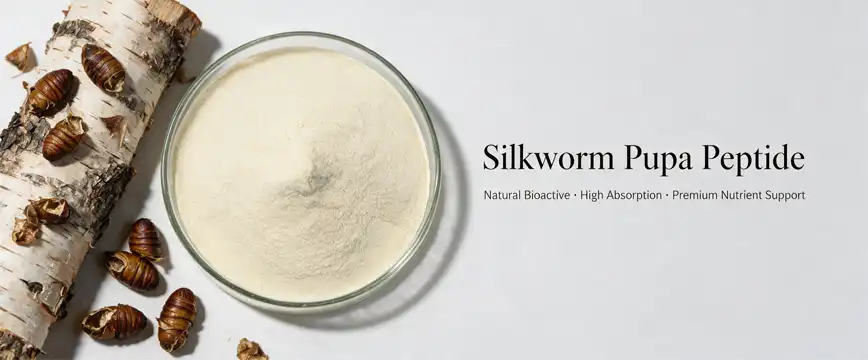
Silkworm pupa peptide is a product of regulated enzymatic degradation of silkworm pupa protein. The remaining powder is yellowish to light brown and contains 90% total protein and 75% peptide. It is soluble in water at 20°C and stable from pH 3.0 to pH 8.0 even at temperatures as high as 120°C. These features make it function exceptionally well in many types of supplements and beneficial meals geared toward elderly people.
How Does It Interact With Aging Biology?
With age, the cells are more susceptible to oxidative damage, collagen is renewed more slowly, and the strength of the muscles declines (sarcopenia). Silkworm pupa peptide addresses all three. It may scavenge DPPH and ABTS radicals and, thus, protect cells against harm from free radicals. Its high levels of branched-chain amino acids (BCAAs) such as leucine, isoleucine, and valine assist in building muscle. The collagen-related peptide fractions make fibroblasts work harder, slowing down aging at the molecular level.
Why B2B Buyers Should Pay Attention
Nutraceutical businesses and supplement dealers need to identify an ingredient that has bioactivity and unambiguous safety evidence. Silkworm pupa peptide is cholesterol-free and ISO 22000 and HACCP compliant. It also passes the most demanding heavy metal and microbe criteria (Lead 0.5 mg/kg, Arsenic 0.3 mg/kg, TPC 1,000cfu/g). This is a high-end ingredient suitable for control in the United States’ increasing market for excellent aging.
Health Benefits of Silkworm Pupa Peptide in Aging Support
Antioxidant and Anti-Inflammatory Activity
Two of the most well-known processes that cause living things to age are chronic low-grade inflammation and oxidative stress. The antioxidant capacity of the silkworm pupa peptide was determined by DPPH and ABTS tests. This may involve scavenging reactive oxygen species (ROS) to preserve skin fibroblasts, mitochondrial activity, and DNA integrity. All of these are key challenges in anti-aging formulation research.
Skin Elasticity and Collagen Synthesis
The protein peptide from silkworm pupa is rich in amino acids related to collagen and helps skin metabolism and rejuvenation. Studies reveal it may help improve skin flexibility, reduce the appearance of fine wrinkles, and strengthen the structure of the dermis over time. Standard marine collagen peptides have a greater total molecular weight than silkworm-origin peptides. This implies they are absorbed more rapidly, which might imply that benefits are felt more immediately by end-users.
Muscle Maintenance and Bone Health
Anti-sarcopenia is one of the most prominent therapeutic effects of silkworm pupa peptide for the elderly. It is rich in BCAA’s, which assist in building muscle without straining elderly individuals whose digestive systems are not functioning well. It also contains calcium and zinc, which are minerals that are directly connected to bone density. As it promotes muscle and bone health, it’s an appropriate option for aged nutrition formulae and therapeutic enteral products.
Comparing Silkworm Pupa Peptide to Alternative Nutraceuticals
Silkworm Pupa Peptide vs. Collagen Peptides
A lot of people use traditional bovine or marine collagen peptides, but silkworm pupa peptide has benefits that they don't have. Its molecular weight is more consistently below 1,000 Daltons, which lets it be absorbed almost instantly by the intestines. It also gives you a fuller balance of important amino acids, including BCAAs, which are usually missing from regular collagen peptides. This is an important technical difference for brands that want to stand out in the crowded market for collagen supplements.
Silkworm Pupa Peptide vs. Whey Protein
Whey protein is still the standard for supplements that help muscles recover. But silkworm pupa peptide has special benefits for groups that are easily hurt. It doesn't separate into different phases in acidic RTD drinks, which is a problem that whey isolates often have. It also doesn't need many enzymes to be broken down, so it's good for older people or people with metabolic stress who have limited digestive capacity. This versatility is really helpful for people who are making products for both performance and health nutrition markets.
Organic vs. Conventional Sourcing
The quality of the source has a direct effect on the uniformity of the peptides and the trustworthiness of the brand. Organic silkworm pupae that were raised without being exposed to pesticides lower the chance that the end product will be contaminated with chemical residues. When looking for suppliers of silkworm pupa peptide, buyers should ask for amino acid analysis certificates, HPLC-verified molecular weight distribution data, and GC-MS reports proving the removal of odor compounds. These are all standard quality indicators in responsible buying.
Procurement Guide for Silkworm Pupa Peptide: What B2B Buyers Need to Know
Supplier Certifications and Traceability
When buying a lot of silkworm pupa peptide, the first thing you should look at is the supplier's certifications. Check for ISO 22000, HACCP, and any regional GMP licenses that your target market might care about. It should be possible to follow the process from the raw silkworm pupae to the finished powder output and keep all the records. If you buy silkworm pupa peptide from a reputable company, they will give you batch-specific certificates of analysis (CoAs) that show the amount of protein, peptide percentage, molecular weight distribution, heavy metals, and microbes in each batch.
These are the main quality standards that a buying team should ask any silkworm pupa peptide supplier to meet:
- Molecular weight distribution: HPLC confirmed that ≦85% of the molecular weight is below 1,000 Daltons
- Protein content: At least 90% when dry
- Peptide content: ≥75% of the peptide amount was confirmed by nitrogen analysis
- Heavy metals: Lead less than 0.5 mg/kg and arsenic less than 0.3 mg/kg by ICP-MS
- Microbiology: TPC <1,000 cfu/g, Salmonella and E. coli not present
These rules must be followed by all brands that want to sell in FDA-regulated U.S. markets. Making sure of them right away saves your brand and lowers the chance of delays at customs or product returns.
Pricing, MOQ, and Sample Orders
The wholesale price of silkworm pupa peptide depends on the purity grade, the batch size, and the packaging requirements. Most reputable manufacturers can handle both small R&D orders and large commercial runs, which helps with the development of products in stages. Before you commit to a production order, ask for a formal sample with all the paperwork. This is how things are usually done, and any real silkworm pupa peptide for sale will come with expert help.
Regulatory Compliance for the U.S. Market
Following the FDA's dietary supplement rules under DSHEA is necessary when bringing bioactive peptides into the United States. Make sure that your provider can show proof of their GRAS status or novel food compliance, if needed. A clear supply chain with proof that the raw materials come from food-grade silkworm pupae will make the regulatory submission process a lot easier.
How to Integrate Silkworm Pupa Peptide Into Your Product Line
Application Formats and Formulation Flexibility
Silkworm pupa peptide has good performance in skin serums, capsules, tablets, and RTD beverages. It dissolves entirely in water and is stable in all pH and heat settings, so it may be used with sour beverages without affecting the appearance. It works well with Vitamin C and hyaluronic acid for round face health in oral beauty products. In therapeutic nutrition, it is a natural addition to powdered medicinal diets designed to assist those with sarcopenia.
OEM/ODM Collaboration Opportunities
A good OEM/ODM partner can help you get your product to market quicker and with less risk. A trusted partner can assist you with ideation, bespoke blending, regulatory challenges, label design, and logistics—all in one spot. This is particularly useful for new firms that want to market a silkworm pupa peptide product but don’t have the means to create it themselves. The minimum purchase quantity is variable, and private label options are available, making this ingredient suitable for new and established enterprises alike.
Market Positioning for Aging-Focused Products
The U.S. market for healthy-aging supplements is growing every year. This is mostly driven by baby boomers and older millennials seeking proof-based nutritional assistance. Insects are farmed in a sustainable fashion; the silkworm pupa peptide is safe and has advantages for skin and muscles, so brands have a unique narrative to tell when they base a product on it.
Conclusion
It's not simply a fashionable ingredient; silkworm pupa peptide offers significant advantages. This protein contains a high-quality amino acid profile, demonstrable antioxidant activity, and has been demonstrated to be stable under challenging formulation circumstances. For B2B buyers in the supplement and nutraceutical industry, it tackles many aging concerns simultaneously: immune function, muscle preservation, skin health, and bone health. The substance is technically sound and doesn’t have any difficulties with the law. It’s a terrific addition to any line of goods fighting aging.
FAQ
1. Is silkworm pupa peptide safe for long-term use?
Yes, safety data supports its use in long-term food supplement use. It doesn't have any cholesterol, follows ISO 22000 and HACCP rules, and goes through strict heavy metal and microbe tests. Still, people who are known to be allergic to insects should talk to their doctor before using it because it is possible for the product to contain insect proteins.
2. How does it differ from collagen peptides for skin health?
While both are good for your skin, silkworm pupa peptide has more amino acids, including BCAAs that collagen peptides don't normally have. Because it has a lower average molecular weight, it is absorbed more quickly, which may help skin become more stretchy and firm more quickly.
3. Should I choose powder or capsule format for B2B production?
The powder version gives you more options for how to make the product and lower costs per unit when you buy in bulk. Capsules are easier for people to use and give the right amount of medicine. Depending on the market you want to reach, powder is often better for professional nutrition goods, while capsules are more common for store supplements. A good OEM partner can give you advice based on the goals you have for your product.
Partner With BioSpark for Your Silkworm Pupa Peptide Sourcing
BioSpark (Xi'an) Biotechnology Co., Ltd. is a professional company that makes silkworm pupa peptides. They offer ISO 22000-certified production, full traceability, and OEM/ODM services that are adaptable for brands of all sizes. We're here to help you at every step, whether you need small amounts for research and development or large amounts for sale. To get samples and prices, email our team at leao@biosparkcn.com right now.
References
1. Ryu, Y., et al. "Antioxidant and Anti-aging Properties of Silkworm Pupa Protein Hydrolysates." Journal of Medicinal Food, 2020.
2. Kim, S. K., & Wijesekara, I. "Development and Biological Activities of Marine-Derived Bioactive Peptides: A Review." Journal of Functional Foods, 2010.
3. Yi, L., et al. "An Overview of the Nutritional Value of Edible Insects and Application as Food and Feed." Journal of Insects as Food and Feed, 2016.
4. Zhu, R., et al. "Enzymatic Hydrolysis of Silkworm Pupa Protein and Evaluation of Functional Properties of the Hydrolysates." Food Chemistry, 2017.
5. Moro, T., et al. "Protein Ingestion, Muscle Protein Turnover, and Sarcopenia in Older Adults." Nutrients, 2021.
6. Korhonen, H., & Pihlanto, A. "Bioactive Peptides: Production and Functionality." International Dairy Journal, 2006.

Send Inquiry
Related Industry Knowledge
- Why Import Purple Alfalfa Juice Powder for Supplement Production?
- How to Use Coconut Milk Extract Powder in Hot and Cold Drinks?
- Why is Angelica sinensis extract powder popular in herbal supplement markets?
- How fast does pomegranate peel extract powder show visible wellness effects?
- How to Find Reliable Ginseng Fruit Powder Suppliers?
- How Is Purple Cabbage Powder Used in Dairy Products?
- Can gardenia fruit powder be used as a natural food coloring?
- How Effective Is Saffron Extract Powder 10:1 for Stress Relief?
- Marigold Extract Powder: Market Trends & Insights
- Are Spirulina Extract Tablets Good for Detoxification?