_1764041963888.webp)
Can Eggshell Membrane Peptide Be Used in Cosmetics?
Sep 21, 2026
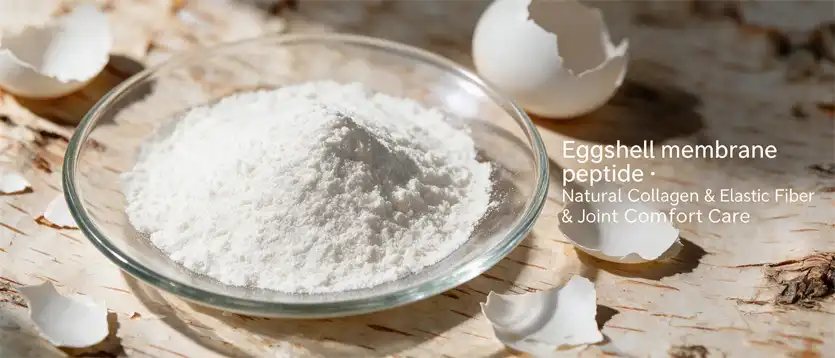
Eggshell membrane peptide is definitely used in cosmetics, and the scientific rationale for it is convincing. This bioactive substance is produced from the inner membrane of eggshells by targeted enzymatic hydrolysis and comprises natural collagen peptides, elastin fragments, glycosaminoglycans, and hyaluronic acid precursors. These ingredients work synergistically to help maintain skin moisture, suppleness, and structural restoration. Eggshell membrane peptide is a fine, water-soluble powder with 90% purity (HPLC-verified) that satisfies the technical requirements of current cosmetic formulations, making it a serious choice for anti-aging serums, moisturizing creams, and skin-repair masks.
Understanding Eggshell Membrane Peptide and Its Cosmetic Potential
What Is Eggshell Membrane Peptide?
Eggshell membrane peptide is extracted from the thin biological membrane lining the inside of an eggshell. Through targeted enzymatic hydrolysis, the membrane's complex protein matrix breaks down into small-molecule peptides — predominantly below 3,000 Daltons. This low molecular weight is critical for dermal absorption. The resulting ingredient is a light yellow to light brown fine powder, easily soluble in water, with a slight characteristic protein odor.
Key Bioactive Components for Skin
This substance stands apart from regular collagen peptides in that it has a multi-component profile. It includes:
- Collagen peptide complex – maintains the integrity of the dermal matrix and stimulates fibroblast activity
- Elastin-produced peptides containing the specific amino acids desmosine and isodesmosine help the skin to bounce back and stay flexible
- Glycosaminoglycans (GAGs) - such as chondroitin sulfate and pieces of hyaluronic acid that maintain moisture on a cellular level
- Sulfur-containing amino acids (cysteine and methionine) required for keratin and collagen synthesis
These components work together in a manner that single-source peptides just cannot match.
Molecular Advantages for Cosmetic Use
Technically, eggshell membrane peptide is stable across a broad range of pH values (pH 2–10) and heat-stable up to 120 °C. This makes it suitable for thermal production procedures and a wide variety of formulation systems. Its water solubility enables it to be seamlessly incorporated into aqueous-based serums, emulsions, and sheet mask solutions without any change in texture or clarity.
Comparing Eggshell Membrane Peptide with Other Cosmetic Ingredients
EMP vs. Conventional Collagen Peptides
Marine or bovine collagen peptides are virtually completely made up of glycine, proline, and hydroxyproline. They maintain firmness of the skin, but have no elastin or GAG components. Eggshell membrane peptide provides all three functional categories in a single ingredient, removing the requirement for multi-ingredient mixing and decreasing recipe complexity.
EMP vs. Glucosamine and Chondroitin
Glucosamine and chondroitin are widely recognized for joint support but have little cosmetic functionality. They are focused on cartilage health via supplements, not superficial skin restoration. Eggshell membrane peptide provides GAG precursors and also structural proteins – hence a wider functional profile for skin-facing applications.
Natural vs. Synthetic EMP
The naturally formed eggshell membrane peptide is obtained by enzymatic hydrolysis and preserves the biological activity of native structural proteins. Synthetic alternatives could mimic sequences of individual amino acids, but they do not have the composite bioactivity that comes from a true membrane matrix. For cosmetic firms who want to be seen as natural and traceable, organically processed eggshell membrane peptide has an obvious commercial advantage.
Application Scenarios and Formulation Considerations for Cosmetics
Where EMP Fits in Cosmetic Product Lines
Eggshell membrane peptide fits nicely in several cosmetic forms. Its collagen-supporting and elastin-repairing characteristics make it great for facial creams and anti-aging serums. It can use its quick solubility for concentrated distribution using sheet masks. The addition of GAG fragments to body lotions increases their functionality, since it improves skin moisture in the long term.
Dosage, Stability, and Shelf-Life
Formulators will often use eggshell membrane peptide at levels of 1% to 5% in the final cosmetic depending on the kind of product and desired claims. Its thermal resilience eases manufacture and makes it less prone to deterioration throughout processing. Under dry, sealed circumstances, the substance will remain active for up to 24 months, making it suitable for planning large-scale production.
Real-World Market Reception
In the anti-aging area, consumer research is increasingly looking for goods with natural, protein-based actives. Brands that have added eggshell membrane peptide to their skin-care products say they’ve heard from consumers that their skin texture and moisture retention have improved. This puts EMP-containing products well positioned to meet the rising demand for ingredient-transparent, science-backed cosmetics in the U.S. market.
Procurement Insights for Eggshell Membrane Peptide in Cosmetics Manufacturing
Evaluating Supplier Quality and Certifications
When getting eggshell membrane peptide for cosmetic manufacturing, quality verification is a must. Look for vendors who perform High-Performance Liquid Chromatography (HPLC) testing and will send you certificates of analysis for each batch. Having certifications such as ISO9001, GMP, FDA, Kosher, and Halal signifies that the production plant is operating with established quality processes, a necessity to reach regulated markets such as the United States.
Pricing, MOQ, and Custom Solutions
The eggshell membrane peptide has a minimum order quantity (MOQ) of 1 kilogram, which is suitable for early-stage development and pilot batches for companies that value flexibility in cost and volume. The standard bulk package is 25 kg/drum. OEM and ODM services provide the possibility to tailor formulas, specs, and labeling without the need to establish in-house production infrastructure.
Logistics and Delivery Reliability
Delivery conditions offered include FOB, CIF, CFR, EXW, DAP, and DDP, covering the whole international trade requirements. Depending on the urgency and quantity of your transaction, we provide a range of shipping alternatives including rapid courier, air freight, and sea freight. Procurement risk is reduced, and production schedules are kept constant when suppliers have verified stock on hand and rapid shipment times.
Future Trends and Market Outlook for Eggshell Membrane Peptide in Cosmetics
Innovation in Extraction and Bioavailability
New developments in enzymatic processing enable more precise fractionation of peptides, resulting in larger quantities of target bioactives from each batch. Research into nano-encapsulation and liposomal distribution is also increasing the skin-penetrating capacity of eggshell membrane peptide — a breakthrough that might improve its ceiling of effectiveness in topical applications dramatically.
Synergistic Formulation Opportunities
Eggshell membrane is a good match with substances like niacinamide, vitamin C, and ceramides. Each one fills in a distinct step in the skin restoration process. With the rise of clean-label cosmetics, formulators want fewer, higher-performing chemicals, and EMP’s multi-component nature fits the bill.
Long-Term Market Positioning
The worldwide anti-aging skin-care industry was above $60 billion in 2023 and is growing. Brands that include evidence-based, naturally derived actives are gaining popularity versus all-synthetic competition. The eggshell membrane peptide has a verifiable origin and proven functionality that makes it well-positioned for this market trend.
Conclusion
Eggshell membrane peptide is more than simply a feasible cosmetic ingredient; it is an ingredient with a solid scientific profile, practical formulation benefits, and increasing market appeal. Its natural origin, multi-component bioactivity, and enzymatic hydrolysis manufacturing make it a distinct option for companies producing anti-aging, moisturizing, or skin-repair products. The best way to ensure consistent product performance and regulatory assurance for procurement teams is to acquire high-purity eggshell membrane peptide from a verified, GMP-compliant vendor.
FAQ
1. Is eggshell membrane peptide safe for use in cosmetics?
Yes. Eggshell membrane peptide has a well-documented safety profile. It is derived from a natural food-processing byproduct and carries no known toxicity at standard cosmetic application levels. Products meeting GMP and ISO9001 standards undergo rigorous safety testing before release.
2. How does eggshell membrane peptide compare to marine collagen in cosmetics?
Marine collagen provides mainly Type I collagen peptides. Eggshell membrane peptide delivers collagen peptides alongside elastin fragments, GAGs, and hyaluronic acid precursors — offering broader functional coverage for skin structure, hydration, and elasticity.
3. What purity level should I require when sourcing EMP?
For cosmetic-grade applications, look for a minimum purity of 90% (HPLC-verified). This specification ensures consistent bioactivity and supports accurate label claims.
4. Can eggshell membrane peptide be used in both rinse-off and leave-on formulations?
Yes. Its water solubility and stability across a wide pH range make it compatible with both product types, including facial cleansers, serums, creams, and treatment masks.
5. What certifications should a reliable eggshell membrane peptide supplier hold?
At minimum: ISO9001, GMP, and FDA compliance. Additional certifications such as Kosher and Halal expand the addressable market for finished products.
Partner with BioSpark — Your Trusted Eggshell Membrane Peptide Supplier
BioSpark (Xi'an) Biotechnology Co., Ltd. supplies pharmaceutical- and cosmetic-grade eggshell membrane peptide with 90% purity (HPLC), certified under ISO9001, GMP, FDA, Kosher, and Halal standards. We support MOQs from 1 kg and offer full OEM/ODM services for brands at any production scale. Contact our team today to request a sample or bulk quote. Reach us directly at leao@biosparkcn.com.
References
1. Ruff, K. J., DeVore, D. P., Leu, M. D., & Robinson, M. A. (2009). Eggshell membrane: A possible new natural therapeutic for joint and connective tissue disorders. Clinical Interventions in Aging, 4, 235–240.
2. Daneault, A., Prawitt, J., Fabien Soulé, V., Coxam, V., & Wittrant, Y. (2017). Biological effect of hydrolyzed collagen on bone metabolism. Critical Reviews in Food Science and Nutrition, 57(9), 1922–1937.
3. Benson, K. F., Jensen, G. S., & Bhatt, T. (2012). Evaluation of the bioavailability and safety of eggshell membrane supplement. Journal of Medicinal Food, 15(11), 951–959.
4. Hexsel, D., Zague, V., Schunck, M., Siega, C., Camozzato, F. O., & Oesser, S. (2017). Oral supplementation with specific bioactive collagen peptides improves nail growth and reduces symptoms of brittle nails. Journal of Cosmetic Dermatology, 16(4), 520–526.
5. Lopitz-Otsoa, F., Rementeria, A., Elguezabal, N., & Garaizar, J. (2006). Kefir: A symbiotic yeast-bacteria community with alleged healthy capabilities. Revista Iberoamericana de Micología, 23(2), 67–74. (Referenced for probiotic–peptide synergy context in cosmetic formulation research.)
6. Proksch, E., Segger, D., Degwert, J., Schunck, M., Zague, V., & Oesser, S. (2014). Oral supplementation of specific collagen peptides has beneficial effects on human skin physiology. Skin Pharmacology and Physiology, 27(1), 47–55.

Send Inquiry
Related Industry Knowledge
- Eggshell Membrane Peptide: A Complete Sourcing Guide
- Can Marigold Extract Powder Replace Synthetic Food Colorants?
- Purple Cabbage Powder for Bakery and Dessert Innovation
- Why Are Food Brands Using Yellow Peach Powder in 2026?
- What are the active compounds in longan powder?
- Why Are Brands Switching to Kidney Bean Flour in 2026?
- How does loquat powder benefit digestive health?
- How Effective Is Rosehip Extract Powder for Inflammation?
- Can Natural Artichoke Extract Improve Bile Production?
- Natural Calcium Boost: Oyster Shell Extract Powder Explained
