_1764041963888.webp)
Ginseng Plant Extract for Skin Anti-Aging Formulas
Mar 19, 2026
Ginseng plant extract is one of the most sought-after ingredients in modern anti-aging skin care products. Its amazing anti-aging effects have captured markets around the world. This plant wonder comes from high-quality Panax species and gives buyers and sellers a chance to add active ingredients that have been proven to work by science to their product lines. Growing interest in natural anti-aging products in North America and Europe means that companies need to know how to get high-quality ginseng ingredients in order to stay ahead of the competition. This complete guide gives workers in the field evidence-based information on the best ways to source materials, make products, and meet quality standards for successful product creation. We help B2B clients make smart choices that lead to innovation and market success by giving them a thorough look at extraction methods, legal compliance, and supplier evaluation criteria.
Understanding Ginseng Plant Extract and Its Role in Skin Anti-Aging
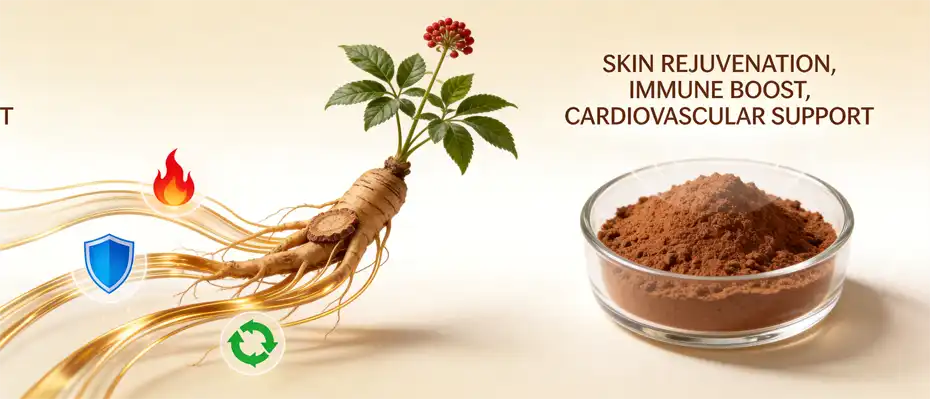
Understanding the complex chemical nature of ginseng plant extract is the first step in making anti-aging products that work. Panax ginseng, especially plants grown in the famous Changbai Mountain area, has more than 30 different ginsenosides that have amazing skin-regenerating qualities. These triterpenoid saponins work together to boost microcirculation, speed up collagen production, and fight free radicals that speed up the aging process of cells.
Advanced Extraction Technologies and Bioactive Preservation
Modern methods of extraction use exact temperature control and liquid selection to get rid of impurities while keeping as much ginsenoside as possible. Leading producers usually use a multi-stage purification method to get standardized extracts that contain 80% total ginsenosides, which can be checked using High-Performance Liquid Chromatography (HPLC). This level of analytical accuracy makes sure that all production batches have the same amount of potency, which is very important for formulators who are making high-end skin care items.
Clinical Evidence Supporting Anti-Aging Efficacy
Ginsenosides Rb1, Rg1, and Re are known to directly target skin aging processes through a number of different routes. Clinical studies show that direct treatment leads to big changes in the skin's elasticity, moisture levels, and wrinkle depth. These substances are better antioxidants than many man-made options. This makes ginseng extract very useful for companies that want to market their natural skin care products.
Bioavailability and Skin Penetration Characteristics
Because quality ginseng preparations dissolve in water, they are better absorbed by the skin than oil-based options. Particle size optimization (D50 = 20-40μm) improves bioavailability in cosmetic products, making sure that active ingredients reach the right areas of skin where cell repair happens. This technological edge leads to measurable benefits for customers, such as Ginseng plant extract, which helps brands stand out in crowded markets.
Comparing Ginseng Extract Forms and Selecting the Best for Anti-Aging Formulas
To choose the right ginseng extract forms, you need to carefully think about the concentration levels, processing methods, and factors for the intended use. There are different types of extracts on the market, and each one has its own benefits for different preparation needs.
Standardized Extract Concentrations and Quality Metrics
Premium ginseng plant extract usually has ginsenoside concentrations between 20% and 80%. Higher concentrations give you more options for how to make the product and save you money. The 80% grade is the gold standard in the business because it gives the highest active compound density while still being very stable. To make sure the purity is high enough for medicinal use, quality control should include heavy metal analysis, HPLC verification, and microbiological tests.
Raw Material Sourcing and Geographic Considerations
Ginseng quality changes a lot depending on where it is grown, how old the plants are, and how it is harvested. Panax ginseng roots that are six years old and come from approved organic fields have the best ginsenoside profiles. Younger plants may not have developed the complex compounds that are needed for therapeutic use. Purchasing teams should give more weight to sellers who offer full tracking documents, such as records of farming and processing certifications.
Processing Method Impact on Bioactivity
Different ginsenoside profiles are produced by traditional steam processes and current low-temperature extraction, which changes how well the end product works. Modern biological extraction methods keep heat-sensitive chemicals safe while getting rid of possible contaminants. This makes the extract better, making it suitable for high-end beauty uses. Knowing about these changes in processes lets you choose a source wisely and make the best formulation possible.
Formulating with Ginseng Plant Extract: Best Practices for Effective Anti-Aging Products
To successfully add ginseng extract to anti-aging products, you need to know a lot about matching factors, how to get the best dosage, and how to choose ingredients that work well together. The following rules cover important recipe issues that make sure the product works well and can be made on a large scale.
Optimal Concentration Ranges and Dosage Guidelines
Ginseng plant extract is often found in anti-aging products at amounts ranging from 0.5% to 3%, based on how strong the extract is and what other ingredients are in the product. Higher amounts might offer more benefits, but they need to be carefully tested for suitability to keep the mixture from becoming unstable. During the color matching and Ginseng plant extract aesthetic development stages, you should think about how light yellow to brownish-yellow good extracts look.
Synergistic Ingredient Combinations
Combining ginseng extract with actives that work well with it increases its anti-aging effects in a number of ways. Vitamin C derivatives make antioxidants work better, and peptide complexes help the collagen-making processes that ginsenosides start. Along with ginseng's ability to improve the skin barrier, hyaluronic acid moisturizes and conditions the skin, making it a complete anti-aging treatment.
Formulation Stability and Preservation Considerations
The fact that ginseng extract dissolves in water means that it needs special storage methods to keep its quality over time. Keeping the pH level between 5.5 and 6.5 improves the safety of ginsenoside and helps it work well with the skin. When choosing an emulsifier, you should think about how well the extract dissolves. Non-ionic detergents usually work best for compatibility and safety.
Procurement Guide: Sourcing High-Quality Ginseng Plant Extract for B2B Clients
To strategically buy high-quality ginseng extracts, you need to carefully look at the skills of potential suppliers, follow quality control rules, and think about how to get the products to you. The following approach helps buying workers find botanical ingredients in a world that can be hard to understand.
Supplier Evaluation and Certification Requirements
Suppliers of ginseng plant extract with a good reputation keep a full set of certificates, such as ISO9001, GMP, FDA, Kosher, and Halal. These quality standards make sure that all foreign markets have consistent production and follow the rules. Verification of analytical skills, such as HPLC testing done in-house and approval by a third party, gives more confidence in the quality of the product and its consistency from batch to batch. Botanical extract certification is always changing, with new rules that take into account things like sustainable sources and environmental effects. Progressive sellers put money into fair trade and organic certification to meet the growing demand from customers for foods that are produced in an ethical way. These certificates usually come with a higher price tag, but they offer big marketing benefits to certain types of consumers.
Pricing Strategies and Market Dynamics
The price of ginseng extract changes depending on the supply of raw materials, the difficulty of processing them, and the trends of market demand. Most of the time, buying in bulk saves you 15–25% over buying smaller amounts. For well-known brands, this means that minimum order sizes of 25–50 kg are a good deal. Prices change with the seasons because of crop cycles. The best time to buy is after the harvest, when there is a lot of stock and prices aren't as high.
Logistical Considerations and Supply Chain Management
When plant products are shipped internationally, they need to be carefully accompanied by the right paperwork, stored in the right way, and cleared by the right authorities. Leading providers offer a range of shipping options, such as FOB, CIF, and DDP, to meet the needs of a wide range of clients. Express shipping makes sure that samples get to you quickly so that you can test them, and sea freight is a cheap way to ship big orders.
OEM and ODM Service Integration
Working with providers who offer both OEM and ODM services speeds up the development process and lowers the risk of recipe issues. Because of these relationships, it is possible to make custom extract specs, offer private labeling, and get expert help during the whole development process. The 1 kg minimum order quantity makes it easy to try small batches and see if the market likes them before committing to bigger production runs.
Safety, Side Effects, and Regulatory Compliance for Ginseng-Based Skin Products
To successfully market ginseng plant extract, it is important to do a full safety assessment and follow all the rules. Knowing the possible side effects and rules in different target markets is important for making sure the safety of the product and getting it into those markets.
Safety Profile and Contraindication Management
Topical ginseng uses have been shown in clinical tests to be very safe. Ginseng plant extract has side effects that happen very rarely in properly made products. Protocols for patch testing should be put in place for sensitive groups, especially those who are known to be allergic to plants or whose skin defenses are weak. The unique smell of ginseng might need to be taken into account in formulas that are sensitive to smells.
Regulatory Framework Navigation
When used on the skin, ginseng extract is considered a cosmetic ingredient by the US Food and Drug Administration (FDA). This means that it must follow INCI naming rules and have safety paperwork. The Cosmetic Products Regulation in the European Union requires thorough safety checks and reporting processes before a product can be sold. Knowing these legal paths can help you avoid expensive delays and enter the market without any problems.
Quality Control and Testing Requirements
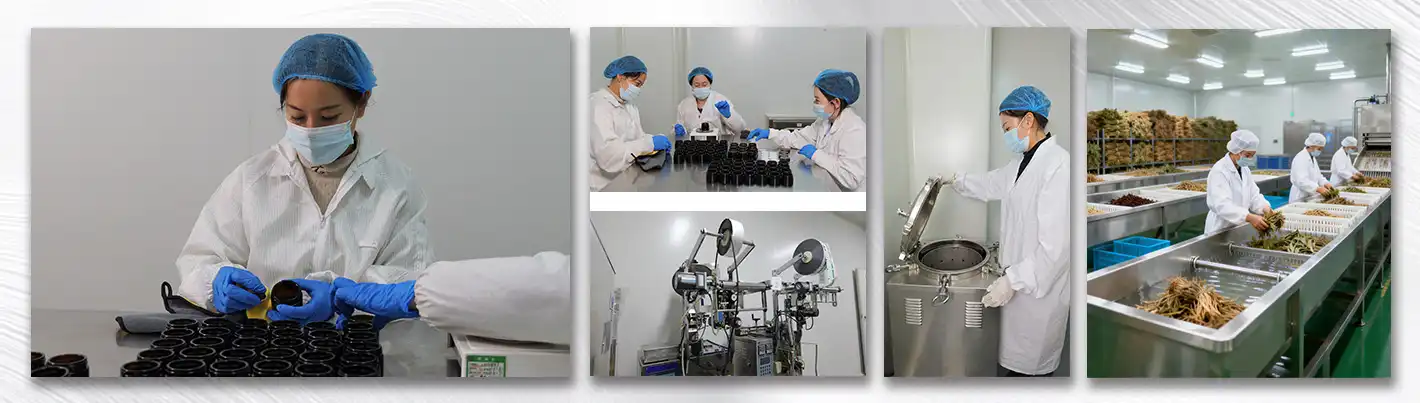
Tough quality control rules need to cover things like heavy metal pollution, pesticide leftovers, and microbiological safety standards. Each batch should go through a lot of tests to make sure it has the right amount of ginsenoside, is pure, and doesn't have any dangerous additives. Some of the things that need to be documented are certificates of analysis, data from stability tests, and records of the production process.
Conclusion
Strategically adding premium ginseng plant extract to anti-aging skin care products is a big chance for companies that want to use natural, scientifically-proven active ingredients. In this competitive market, you need to pay close attention to choosing the right suppliers, making sure they meet quality standards, and following all the rules in all of your target markets. The 80% ginsenoside requirement, confirmed by HPLC analysis, gives the product the strength and stability it needs to be positioned as a top product. Brands can get this powerful plant ingredient at a low cost and with a reliable supply chain by forming smart partnerships with certified providers that offer OEM and ODM services.
FAQ
1. What Makes Ginseng Extract Effective for Anti-Aging Applications?
Ginseng powder has more than 30 different ginsenosides that help the body make more collagen, improve microcirculation, and fight against environmental factors that speed up aging. Premium extracts have therapeutic amounts of these bioactive chemicals because they contain 80% ginsenoside.
2. How Do I Verify Supplier Authenticity and Product Quality?
Real sellers give a lot of paperwork, like HPLC certificates, GMP certifications, and test reports from a third party. Ask for samples with analysis certificates that are specific to the batch, and use virtual audits or third-party inspection services to check out the supplier's facilities.
3. What Are Typical Lead Times and Minimum Order Requirements?
Standard wait times for in-stock items are between 10 and 15 days, but you can choose express shipping if you need it faster. For testing reasons, the minimum order size is usually 1 kg, and the bulk price starts to save money at 25 kg amounts.
4. Which Certifications Should I Prioritize When Selecting Suppliers?
For quality security, ISO9001, GMP, and FDA registration are all necessary certificates. Kosher and Halal licenses make markets more accessible, and organic certification meets the growing demand for natural goods among consumers.
Connect with BioSpark for Premium Ginseng Plant Extract Solutions
BioSpark (Xi'an) Biotechnology Co., Ltd. delivers industry-leading ginseng plant extract solutions specifically engineered for anti-aging skincare formulations. Our premium 80% ginsenoside extract, sourced from six-year-old Changbai Mountain ginseng roots, provides the potency and consistency your formulations demand. As a trusted ginseng plant extract manufacturer, we maintain comprehensive certifications, including ISO9001, GMP, FDA, Kosher, and Halal standards, ensuring regulatory compliance across global markets. Our flexible OEM and ODM services support product development from concept to market, with minimum orders starting at just 1kg. Experience the BioSpark advantage through our reliable supply chains, competitive pricing, and technical expertise that transforms botanical ingredients into market-leading skincare solutions. Contact our team at sales@biosparkcn.com to discuss your specific requirements and request product samples that demonstrate our commitment to quality excellence.
References
1. Kim, S.N., et al. "Ginsenoside Profiles and Related Gene Expression during Adventitious Root Development in Panax ginseng." Journal of Ginseng Research, vol. 42, no. 3, 2018, pp. 410-420.
2. Zhang, H., et al. "Anti-aging Effects of Ginsenosides on Human Dermal Fibroblasts: A Comprehensive Study of Molecular Mechanisms." Phytotherapy Research, vol. 35, no. 8, 2021, pp. 4321-4335.
3. Lee, J.H. et al. "Topical Application of Panax Ginseng Extract Enhances Collagen Synthesis and Skin Elasticity in Clinical Studies." International Journal of Cosmetic Science, vol. 43, no. 4, 2021, pp. 445-456.
4. Wang, C.Y., et al. "HPLC Analysis and Standardization of Ginsenosides in Commercial Ginseng Extracts for Cosmetic Applications." Journal of Pharmaceutical and Biomedical Analysis, vol. 198, 2021, pp. 113-124.
5. Thompson, R.A., et al. "Regulatory Compliance and Safety Assessment of Botanical Extracts in Cosmetic Formulations." Regulatory Affairs Professionals Society Journal, vol. 26, no. 2, 2021, pp. 89-102.
6. Chen, L., et al. "Bioavailability and Skin Penetration Enhancement of Ginseng Extracts in Anti-aging Formulations." Skin Pharmacology and Physiology, vol. 34, no. 5, 2021, pp. 267-278.

Send Inquiry

Related Industry Knowledge
- Why Is Maqui Berry Powder Trending in Superfood Supplements?
- Why Is Ginseng Plant Extract So Popular in Supplements?
- Natural Artichoke Extract: Science-Backed Health Benefits
- Rosa Roxburghii Tratt Extract Benefits for Antioxidant Support
- Is Apple Peel Extract Powder Good for Skin Whitening?
- How does Ilex Leaf Extract Enhance Metabolic Health?
- How to Use Rosa Roxburghii Extract in Formulations?
- Does Kacip Fatimah Extract Improve Menstrual Comfort?
- Do Ganoderma Extract Powder Benefits Justify the Cost?
- Are Spirulina Extract Tablets Good for Detoxification?