_1764041963888.webp)
Blackberry Fruit Powder vs Fresh Berries: Which Is Better?
Aug 29, 2026
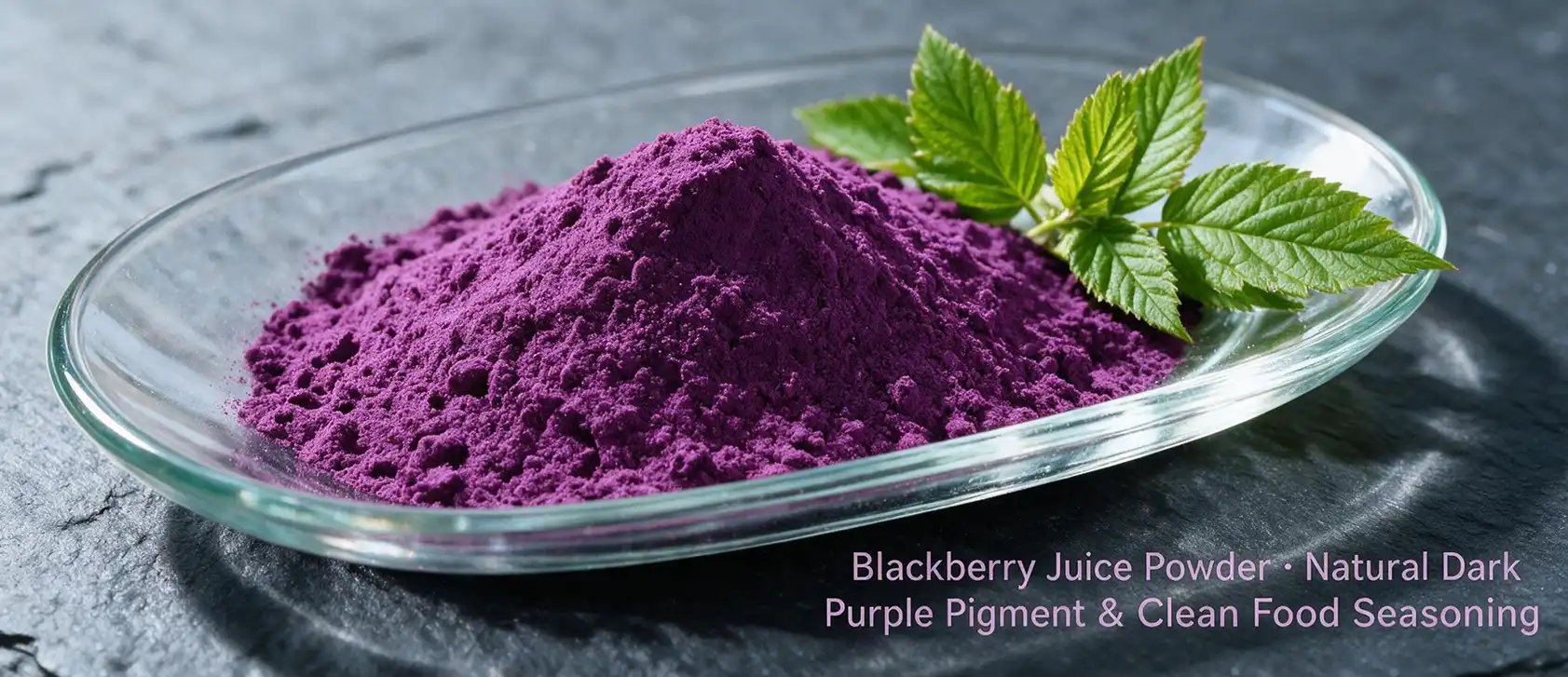
When comparing blackberry fruit powder to fresh berries, the answer depends on your specific production needs and application goals. Blackberry fruit powder offers concentrated anthocyanin content, extended shelf stability, and exceptional manufacturing versatility, making it the preferred choice for B2B formulations requiring consistent quality, year-round availability, and simplified logistics. Fresh berries excel in direct consumption scenarios but present significant challenges for industrial-scale operations, including perishability, seasonal pricing volatility, and cold chain dependency. This comparison clarifies which format aligns with your procurement strategy.
Key Differences Between Blackberry Fruit Powder and Fresh Berries
Knowing these important differences helps you make smart purchasing decisions that have a direct effect on the efficiency of your supply chain and the quality of your products.
Shelf Life and Storage Logistics
Blackberries should be refrigerated between 32°F and 35°F within three to five days of being picked. If they are not, they need to be processed right away or sent thru a cold chain, which makes operations more difficult and costs more. Even frozen berries lose 15–30% of their anthocyanin content over the course of 6 to 12 months because of enzyme activity and damage to the ice crystals.
When kept in moisture-barrier packaging (25 kg nitrogen-flushed aluminum foil drums), Blackberry fruit powder stays stable for 24 months when kept below 25°C. This longer shelf life gets rid of seasonal buying problems, cuts down on inventory waste, and helps with smart bulk buying for yearly framework contracts. The fine powder format takes up much less warehouse space than the same amount of fresh or frozen fruit. This makes storage more efficient and lowers the cost of real estate for large-scale operations.
Nutrient Bioavailability and Standardization
The process of separation focuses on anthocyanins and makes them more bioavailable by breaking down cells, which would have to happen anyway. HPLC testing makes sure that every batch meets the 15% anthocyanin standard. This lets supplement makers do accurate dosing estimates, which is needed to meet FDA and GMP label claim accuracy requirements.
Fresh berries have different amounts of nutrients depending on the variety, the type of soil, the weather, and when they are picked. This lack of consistency makes it harder to standardize formulations for products that need certain levels of antioxidant potency. The high ORAC values of our powder also show that it has a high level of free radical reduction, which is due to the fact that the drying temperatures were carefully controlled to stop oxidative breakdown.
Manufacturing Integration and Dosing Precision
The 80–120 mesh grain size of Blackberry fruit powder makes it easy for automatic capsule filling machines, pill presses, and beverage mixing systems to use. The measured uniformity lets formulators reach their desired anthocyanin levels with simple weight-based formulas. Fresh berries, on the other hand, need to be homogenized, pasteurized, and often have extra stabilizers added, which makes the ingredients more complicated and the paperwork needed by regulators.
The powder's unique sweet and sour blackberry smell stays the same during processing and storage, giving consistent sensory profiles that fresh fruit can't promise when heated, frozen, or shipped over longer distances. This stability is especially helpful for clean-label brands that market their goods as having real fruit taste without any added chemicals.
Procurement and Cost Efficiency Analysis
When B2B buyers are trying to manage margin pressures and quarterly procurement budgets, economic factors have a big impact on the format they choose.
Price Stability and Bulk Purchasing Advantages
Fresh blackberry prices change a lot depending on the time of year. During the summer, when harvests are at their best, blackberries cost $3–5 per kilogram in bulk, but when they aren't in season, they can cost $12–15 per kilogram. This volatility makes it harder for makers with continuous production plans to make yearly budgets and cost predictions.
Our Blackberry fruit powder has stable prices because it is available all year long because we keep enough in stock. The low minimum order size of just 1 kg makes it easier to test and develop the product for the first time. Also, the standard packaging size of 25 kg drums means that buyers who buy in bulk can save money on the cost per unit. Because they are concentrated, you only pay for the active ingredients and not the 85–90% water that is in fresh berries. This means that you get more for your money.
Supplier Certification and Quality Assurance Systems
Professionals in charge of buying things have to check the credentials of suppliers to make sure they follow the rules in all of their target markets. Our Blackberry fruit powder has many certifications, such as ISO9001, Kosher, Halal, FDA registration, and GMP compliance. It meets the basic requirements for export to North American and European markets, which have strict quality standards for natural colorants and antioxidant supplements with a clean label.
Each package comes with a Certificate of Analysis (COA) that shows the anthocyanin content and a heavy metal screening report to make sure it meets California Prop 65 requirements. Microbiological testing also makes sure there are no Salmonella or E. coli present. When compared to fresh fruit imports, which need phytosanitary certificates and cold chain verification at every border crossing, this package of paperwork makes clearing customs easier and speeds up market access.
Shipping Logistics and Lead Time Optimization
We offer a range of flexible shipping terms, such as FOB, CIF, CFR, EXW, DAP, and DDP, to work with different ways of buying things internationally. There are different ways to ship things, such as express courier for samples (1 kg delivered in 3–5 days), air freight for urgent medium-volume orders, and sea freight for cheap bulk shipments. Standard lead times of 10 days for stock items and 30 days for special formulas make it possible to plan production in a way that is reliable.
When compared to powder shipments at room temperature, fresh berries require more expensive air freight and refrigerated containers, which raise landed costs by 40 to 60 percent. When cold chain equipment is taken away, wholesalers and makers save a lot of money. This is especially true when they serve multiple regional sites or work in markets with limited cooling capacity.
Health Benefits and Application Suitability
Both forms are good for you because they contain antioxidants, but the best choice for certain types of products depends on the purpose.
Antioxidant Capacity and Functional Health Applications
Because Blackberry fruit powder has a lot of concentrated anthocyanins, as high ORAC values that help lower oxidative stress, which is a major cause of aging, inflammation, and cell damage. The main anthocyanin, cyanidin-3-glucoside, has been shown to help macular health in clinical studies. This makes the powder perfect for making eye health supplements that target digital eye strain and vision problems that come with getting older.
The ellagic acid in the nutrient helps with beauty-from-within uses, and studies show that it might help skin flexibility and collagen production when mixed with vitamin C and other co-factors. This makes Blackberry fruit powder a good choice for ingestible skin care products, a category that is growing 12–15% a year in North American markets as people look for more natural ways to take care of their looks.
Regulatory Compliance and Safety Profiles
In the United States, our manufacturing processes follow DSHEA rules. In the European Union, they follow Novel Food rules when they apply. The standard format makes it easier to list ingredients in supplement fact panels and cosmetic ingredient lists. However, when fresh fruit is added, the labeling needs to be more complicated to cover processing methods and possible allergens.
Safety testing methods make sure that there are no pesticide levels that are higher than the limits set by EU Regulation 396/2005 and FDA tolerances. This is very important for organic goods and brands that want to appeal to people who care about clean labels. The powder's low moisture content (≤5%) naturally stops the growth of microbes without the need for preservatives. This is in line with the clean-label formulation principles that health-focused brands are demanding more and more.
Format-Specific Application Guidance
Blackberry fruit powder is great for uses that need accurate doses, long-lasting storage, and concentrated release of bioactives. The powder's ability to flow and compress helps supplement pills and tablets work better. Manufacturers of functional drinks like this ingredient because it dissolves easily and has natural coloring properties that don't need artificial dyes. Cosmetic formulators like that the powder stays stable in emulsion systems and works with formulas that don't need preservatives.
Fresh berries can still be eaten right away, added to whole fruits where texture is important for product identity, and used in cooking where the fresh look justifies the cold chain investment. Usually, these situations aren't used in business-to-business (B2B) situations, where making things quickly and following rules easily determines purchases.
How to Choose the Right Blackberry Form for Your Business
When choosing a strategic format, you need to weigh a number of factors against your individual business needs and market positioning.
Quality Standards and Integration Requirements
Under GMP conditions, companies that make cosmetics, functional foods, or dietary supplements need ingredients that work well with their current production systems and quality control tools. When compared to processing fresh fruit, which introduces variables in homogenization, pasteurization verification, and microbial control, Blackberry fruit powder's standardized mesh size, consistent flow characteristics, and verified anthocyanin content simplify the development of standard operating procedures and lower the risk of batch failure.
Companies that want to get USDA Organic certification, Non-GMO Project proof, or specific allergen-free claims should make sure that the paperwork their suppliers give them meets the standards of the certification body. Our testing methods and tracking systems help with these proof processes by making the whole supply chain clear, from the material that is used to the packaging that it comes in.
Industry-Specific Decision Framework
Nutraceutical brands that put a high priority on clinical claim support benefit from uniform anthocyanin concentrations that make dosing consistent across production runs. This supports marketing messaging and structure-function claims. Blackberry fruit powder is a natural purple-red colorant that doesn't contain any chemical dyes. It stays stable in acidic environments (pH 3.0-4.5), unlike synthetic options that may change color or form crystals.
When cosmetics designers make antioxidant serums or creams, they need ingredients that have been shown to be stable in both oil-in-water and water-in-oil emulsions and that work with preservation systems. Our research and development team helps with co-formulation, which takes these technical factors into account. They are backed by university shared laboratory partnerships that shorten the time it takes to make a product.
Supplier Evaluation and Sample Testing Protocols
Before committing to large purchases, procurement teams should ask for samples to be tested internally to see how they dissolve in the intended matrices, how stable the color is under relevant storage conditions (like light exposure and temperature cycling), and how well they work with current formulas. Our minimum order of 1 kg makes it possible to do complete testing without having to spend a lot of money. We also offer technical data sheets that list the physicochemical properties, suggested usage levels, and regulatory status.
Setting up supplier relationships that include signing an NDA protects proprietary formulations during co-development processes. This is especially helpful for brands that are coming up with new combinations that could help them stand out from the competition. Long-term framework deals with clear quality standards and volume promises secure better prices and a steady supply chain that helps businesses reach their growth goals.
Conclusion
For B2B procurement settings that prioritize manufacturing speed, legal compliance, and cost predictability, Blackberry fruit powder clearly has an edge over fresh berries. Standardized 15% anthocyanin content, confirmed by HPLC testing, gives consistent functional performance in supplements, beverages, food, and beauty uses. Longer shelf life (24 months), standards for ambient storage, and easier transportation get rid of the need for a cold chain, which simplifies operations and lowers costs. Access to markets around the world is made easier by certifications like ISO9001, FDA, GMP, Kosher, and Halal. Fresh berries can still be eaten right away and used in whole-fruit recipes, but they can't compare to the benefits of powdered forms in terms of manufacturing integration, ingredient standardization, and supply chain optimization that are key to long-term business success.
FAQ
Does blackberry powder provide the same nutritional value as fresh berries?
Blackberry fruit powder has a lot of concentrated beneficial substances, like anthocyanins, ellagic acid, and vitamins C and K, that are much higher in concentration than fresh fruit. The uniform 15% anthocyanin content, which was confirmed by HPLC, is about 10–15 times higher than the quantity found in fresh berries. By breaking down cell structures, the extraction method improves solubility, which could mean better absorption than with whole fruit. Some water-soluble vitamins may lose a little of their potency during processing, but the total antioxidant capacity (ORAC values) stays very high because of the high anthocyanin content.
Is blackberry powder safe for skincare product formulations?
When purchased from sources that meet cosmetic-grade quality standards, Blackberry fruit powder is suitable for use in cosmetics. Our product follows the rules for cosmetic ingredients set by the FDA and has paperwork to back up the safety assessment requirements. Anti-aging formulas can benefit from the antioxidant qualities of the anthocyanin content, and the powder's fluidity makes it easy to mix into serums, creams, and emulsion systems. Before going into mass production, manufacturers should test the stability of their specific formulations to make sure that they are compatible with color preservation systems and will keep the color.
What certifications should I prioritize when sourcing blackberry powder?
Priority certifications include ISO9001 for quality management systems, GMP compliance for following best practices in production, and FDA registration to show compliance with regulations and gain entry to the U.S. market. Kosher and Halal approvals help goods that are aimed at certain groups of people or regional needs reach more customers. Verification of HPLC testing makes sure that active compounds are all the same, and documentation of heavy metal screening and microbiological analysis makes sure that the product is safe. Organic approval makes a clean name more valuable, but it needs to be priced higher based on how much the target market is willing to pay.
Partner with a Trusted Blackberry Fruit Powder Manufacturer
Invest in a Reputable Blackberry fruit powder Supplier. For B2B buyers, BioSpark provides high-quality Blackberry fruit powder that is supported by extensive certifications and a history of reliable supply. Our standard 15% anthocyanin specification (HPLC-verified), low minimum order quantities (starting at just 1 kg), and ability to make custom formulations help with product development from the first idea to mass production. We keep enough in stock to guaranty 10-day wait times for normal specs. Our OEM/ODM services can also be used to meet specific concentration needs, dosage form preferences, and packaging customizations. Our technical team helps with co-formulation, stability testing, and regulatory documentation, which speeds up the process of entering the market. Email us at leao@biosparkcn.com to get samples, talk about your specific application needs, and find out how working with an experienced Blackberry fruit powder provider can help you expand your product line and save you time and money on buying things. We offer a range of delivery options, such as FOB, CIF, CFR, EXW, DAP, and DDP, and accept payment via bank transfer (T/T), which makes international trade easy.
References
1. Rodriguez-Mateos, A., Heiss, C., Borges, G., & Crozier, A. (2014). Berry bioactive compounds and cardiovascular health. Journal of Agricultural and Food Chemistry, 62(18), 3842-3851.
2. Basu, A., Rhone, M., & Lyons, T. J. (2010). Berries: emerging impact on cardiovascular health. Nutrition Reviews, 68(3), 168-177.
3. Jennings, A., Welch, A. A., Fairweather-Tait, S. J., Kay, C., Minihane, A. M., Chowienczyk, P., & Cassidy, A. (2012). Higher anthocyanin intake is associated with lower arterial stiffness and central blood pressure in women. The American Journal of Clinical Nutrition, 96(4), 781-788.
4. Oszmianski, J., & Wojdylo, A. (2005). Comparative study of phenolic content and antiradical activity of strawberry fruit, blackberry, and raspberry. Journal of Agricultural and Food Chemistry, 53(10), 4196-4203.
5. Skrovankova, S., Sumczynski, D., Mlcek, J., Jurikova, T., & Sochor, J. (2015). Bioactive compounds and antioxidant activity in different types of berries. International Journal of Molecular Sciences, 16(10), 24673-24706.
6. Wu, X., Beecher, G. R., Holden, J. M., Haytowitz, D. B., Gebhardt, S. E., & Prior, R. L. (2006). Concentrations of anthocyanins in common foods in the United States and estimation of normal consumption. Journal of Agricultural and Food Chemistry, 54(11), 4069-4075.

Send Inquiry
Related Industry Knowledge
- How Does White Kidney Bean Extract Powder Block Carbs Naturally?
- Coconut Milk Extract Powder: The Ultimate Plant-Based Dairy Swap
- Coconut Milk Extract Powder: The Ultimate Plant-Based Dairy Swap
- Coconut Milk Extract Powder: The Ultimate Plant-Based Dairy Swap
- Coconut Milk Extract Powder: The Ultimate Plant-Based Dairy Swap
- Coconut Milk Extract Powder: The Ultimate Plant-Based Dairy Swap
- Coconut Milk Extract Powder: The Ultimate Plant-Based Dairy Swap
- Coconut Milk Extract Powder: The Ultimate Plant-Based Dairy Swap
- Coconut Milk Extract Powder: The Ultimate Plant-Based Dairy Swap
- Coconut Milk Extract Powder: The Ultimate Plant-Based Dairy Swap
- Does papaya leaf extract powder help support healthy blood function?
- Why Is Ghanaian Seed Extract Gaining Global Attention?
- Why Is Broad Bean Powder Trending in Plant-Based Markets?
- What is the shelf life of snow lotus powder supplements?
- Looking for Trusted American Ginseng Extract Powder Exporters?
- Why Baicalin Extract Is a Premium Functional Ingredient?
- Why Choose Yacon Root Extract for Weight & Metabolic Support?
- How Does Baicalin Extract Support Immune Function?