_1764041963888.webp)
Blackberry Fruit Powder OEM: Custom Solutions for Brands
Aug 19, 2026
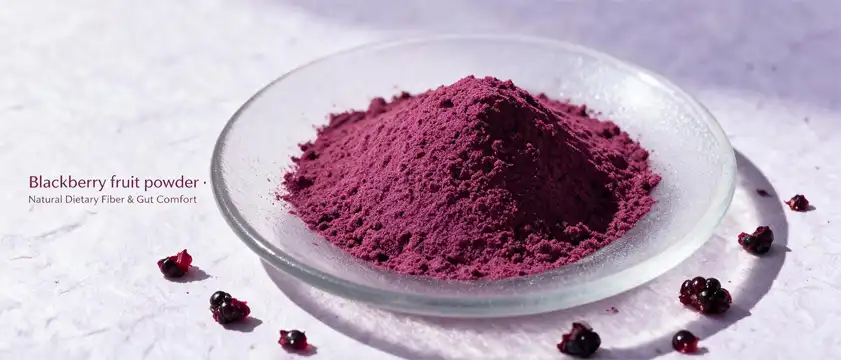
When sourcing blackberry fruit powder for your brand, partnering with a specialized OEM manufacturer unlocks opportunities to create differentiated products that resonate with today's health-conscious consumers. Our premium blackberry anthocyanin-rich powder, standardized to 15% anthocyanins through HPLC verification, provides a consistent foundation for formulating supplements, functional beverages, natural colorants, and cosmetics. With flexible customization options starting from just 1 kg minimum order quantities and comprehensive regulatory support including FDA, GMP, Kosher, and Halal certifications, brands can confidently develop products tailored to diverse market needs while maintaining exceptional quality standards throughout production and distribution.
How to Choose the Right Blackberry Fruit Powder OEM Partner
When choosing an OEM manufacturer, you need to look at both their technical skills and their business reliability. The first step in the relationship should be to make sure that everyone understands what your brand needs, such as the anthocyanin concentration goals, the planned uses, and the regulatory areas.
Evaluating Essential Certifications and Compliance
Certifications not only show the basic level of quality, but they also decide who can enter a market. ISO9001 shows that quality management is done in a planned way, and GMP approval shows that good manufacturing practices, which are important for making dietary products, are followed. Kosher and Halal certifications make it easier for brands that want to sell to a wide range of people to do so without having to change their recipes. When you register with the FDA, you're making sure you follow U.S. laws, like the stricter California Prop 65 heavy metal standards.
In addition to certificates, you should ask for thorough Certificates of Analysis that include chromatograms from HPLC testing. This shows that the 15% anthocyanin substance that was said to be present is not just a claim, but a proven fact. When suppliers use High-Performance Liquid Chromatography, it shows that they are investing in accurate analysis, which sets quality makers apart from commodity sellers.
Assessing Customization Capabilities and Production Flexibility
Premium OEM partners let brands change the amount of anthocyanin by 10% to 25%, which lets them make different price levels of products. A supplement company might use a 10% concentration for its entry-level products and a 25% concentration for its high-end eye health products.
Check out the R&D facilities of the company. Companies that work with universities can help with co-formulation by combining blackberry anthocyanins with substances that work well together, such as vitamin C for better bioavailability or collagen for beauty-from-within goods. With this technology relationship, sellers are no longer just transactional providers, but strategic partners.
Multiple dose forms are one way that production diversity shows itself. It's easier to get what you need because top makers can make the same Blackberry fruit powder recipe as capsules, gummies, tablets, or ready-to-mix powders. Executing an NDA should be standard practice. This would keep secret formulas from getting out to competitors.
Verifying Supply Chain Reliability and Logistics Competence
Inventory depth is very important. Suppliers who keep 1,000-ton inventories can quickly fill urgent orders without having to wait for production to catch up. This is a huge benefit during product launches or times of the year when demand goes up. Check their normal wait times, which are usually 10 days for stock formulations and 30 days for custom specs. Also, look at how well they've done with different shipping methods, like express, air freight, and sea freight.
Understanding the terms of service shows how well you know how to run your business. Expert exporters offer a range of Incoterms, such as FOB, CIF, CFR, EXW, DAP, and DDP, so you can choose the one that best fits your needs in terms of logistics costs and customs duties. Direct shipping to the U.S. with delivery times of 15 days and 99% customs clearance rates gets rid of the supply risks that plague providers with less experience.
Custom Solutions in Blackberry Fruit Powder Manufacturing: What Brands Need to Know
Customization is more than just changing the amounts of anthocyanins. Strategic partnerships with original equipment manufacturers (OEMs) allow full product differentiation through new formulations, specialized processing, and changes made for each market.
Tailored Formulation Development
Brands that want to stay ahead of the competition often need to combine ingredients in unique ways. A company that makes functional drinks might need to improve its water solubility so that its drinks don't settle in ready-to-drink forms. This can be done with special microencapsulation techniques that keep 95% anthocyanin retention and make the dispersion better. This unique stability solves the problem of color loss in places where acidic drinks are present.
Beauty companies that make collagen products that you eat can use co-formulation services that combine blackberry anthocyanins and hyaluronic acid to make skin health claims that are more convincing. The natural vitamin C in the Blackberry fruit powder boosts collagen production, which is the scientific basis for combination products that cost a lot.
Advanced Processing and Stabilization Technologies
Problems with color stability often limit the uses of natural pigments. Modern membrane separation methods can raise the quality of polyphenols by 20%, making colors stronger while lowering the amount that needs to be used. This increase in concentration has a direct effect on cost-effectiveness calculations for food manufacturers who are replacing synthetic dyes.
Protecting goods from UV and light damage is very important for those that come in clear packages. Leading OEM makers use protective technologies that keep the product's bright purple color throughout its shelf life. This lets customers know that the product is still fresh. This technical ability sets products that keep their good looks apart from competitors that turn brown too quickly.
Regional Formula Adaptation and Market-Specific Solutions
The U.S. market wants formulas that are in line with DSHEA and have certain labeling standards. At the same time, they also want proof that they are in line with California Prop 65. OEM partners with a lot of experience to keep regional formula databases up to date. They change the specifications for base powder to meet these needs so brands don't have to figure out complicated regulatory landscapes on their own.
Customizing packaging brings the brand's personality to every interaction with a customer. For trade customers, there are options like 25 kg drums in bulk with nitrogen-flushed aluminum foil protection. For consumers, there are eco-friendly packing options like gift boxes and labeled sachets that allow the brand to be presented consistently across all channels of distribution. Custom packaging also extends the shelf life, and using the right barrier materials will keep the powder's quality for the full 24-month shelf life when kept below 25°C.
Blackberry Fruit Powder vs Other Fruit Powders: Making an Informed Comparison
When making buying decisions, it's helpful to know how blackberry powder stacks up against other berry ingredients, since each has its own nutritional profile and set of functional properties.
Nutritional and Functional Distinctions
Blackberry fruit powder has a balanced anthocyanin profile, with cyanidin-3-glucoside being the main anthocyanin. It has a deep purple color and is stable at pH levels between 3.0 and 4.0. Because of this, it works especially well in acidic foods and drinks like yogurt and fruit juice, where other anthocyanin sources might turn blue and look bad.
Blackberry powder usually has more ellagic acid than blueberry powder. Ellagic acid is a polyphenolic compound that is good for cell health. This difference in composition leads to different marketing stories. For example, blackberries naturally focus on their antioxidant benefits, while blueberries focus on their links to brain health.
Acai powder costs more because it is said to come from the Amazon, but it has the same amount of anthocyanins. Blackberry powder has similar antioxidant ORAC values and is easier for people to get. This lets brands meet their nutritional goals while keeping their retail prices low. In North American markets, consumers are also more familiar with the unique blackberry flavor profile than with the more controversial acai taste.
Cost Considerations and Supply Chain Stability
Sourcing economics have a big effect on how well a product can sell. Blackberries are grown all over the world in temperate areas. This creates a diverse supply chain that protects brands from crop failures in some areas. This regional spread is different from sources that are closer together, like acai, where supply problems can affect the whole market.
Standardized anthocyanin content confirmed by HPLC testing gets rid of the recipe doubts that come with whole fruit powders, where natural differences between harvests mean that the formula needs to be changed all the time. The 15% specification makes costs and effectiveness consistent, which is important for brands that make label claims.
Strategic Ingredient Selection Framework
Leading supplement brands usually look at berry powders on four levels: how they vary nutritionally, how reliable their supply chain is, how much they cost, and how they tell their marketing story. Even tho it costs more, a high-end eye health brand might choose 25% anthocyanin blackberry powder because the concentration backs up higher dose promises. On the other hand, a mass-market smoothie mix might focus on the usual 15% guideline, which strikes a good balance between price and real berry content.
Choosing between organic and conventional products is often based on which shopping outlets are most important, not on which is better for you nutritionally. Organic certification is becoming more and more of a requirement for entry into natural food stores. Mainstream outlets, on the other hand, are still more open. Brands can offer organic versions of their products while keeping the formulas the same. This is possible with OEM partners who handle both certification streams.
Maximizing the Benefits of Blackberry Fruit Powder in Your Products
Strategic application development takes raw materials and turns them into finished goods that are so appealing that customers want to buy them again and again.
Supplement and Nutraceutical Applications
Anthocyanins from blackberries are the main active ingredient in antioxidant products, which is their most direct use. Most recipes have between 100 and 300 mg of powder per dose, which equals 15 to 45 mg of measured anthocyanins. This dose range fits with studies that look at how bioavailable anthocyanin is and backs up structure-function claims that are legal in the U.S.
More and more eye health products contain blackberry anthocyanins along with lutein and zeaxanthin, making them more complete macular support goods. The anthocyanins' ability to bind to retinal tissue supports these combos scientifically, especially when backed up by clinical research that looks at how anthocyanins are distributed after being eaten.
Beauty-from-within products use the powder's vitamin C and anthocyanins to help collagen and protect against photoaging with antioxidants. Blackberry fruit powder is often mixed with marine collagen, hyaluronic acid, and biotin in these formulas. This makes complete beauty vitamins that fight many signs of aging at the same time.
Functional Beverage Development
Superfruit smoothie mixes work well with the powder because it mixes easily with water and have a sweet-tart flavor that goes well with other berry flavors. The 80–120 mesh particle size makes sure that the feel is smooth and not gritty, which is a common problem with fruit powders that are rougher. Brands can make instant mixes that only need water to be added. The natural sugars provide a light sweetness without the need for refined sugars.
Anthocyanins can help your body heal from exercise through antioxidant routes, which is why they are used in sports nutrition. After a workout, drinks with blackberry powder, protein, and electrolytes taste good and offer health benefits, making them stand out in the crowded sports nutrition market.
Because the powder doesn't break down easily in acidic environments, it works well for adding to fruit juices and wellness shots, where the pH level is usually between 3 and 4. Because it is stable, it doesn't change color as some anthocyanin sources do, so the purple color stays nice throughout the shelf life.
Food Industry and Natural Colorant Uses
More and more bakeries with clean labels are using fruit and veggie extracts instead of synthetic colors. When added to frostings, fondants, and doughs, blackberry powder gives them a bright purple color and antioxidants that help with nutritional marketing. The powder doesn't change when baked at temperatures up to 120°C, which is better than some liquid extracts that break down at high temperatures.
Both coloration and flavor enhancement are useful in dairy products like yogurt and ice cream. Because the powder doesn't dissolve completely in fats, it can be spread out evenly in cream-based products, giving them a uniform color that doesn't streak. There are regulatory benefits because the powder only needs to say "blackberry powder" instead of "color added" disclaimers.
Storage and Handling Best Practices
To keep the quality of the ingredients, you need to pay attention to the surroundings. Keep packages that haven't been opened cool and dry, below 25°C, and out of direct light, which breaks down anthocyanin faster. Once containers are opened, seal them back up quickly to keep air out and think about moving to smaller containers as your supply runs out to stop headspace from oxidizing.
Because the powder absorbs water, controlling moisture is very important. When the relative humidity is above 60%, caking can happen, and when the wetness level is too high, microbes can grow. Standard packaging in nitrogen-flushed aluminum foil bags takes care of these issues, but facilities should always keep an eye on the conditions in the storage area.
If you handle it right, the shelf life will last the full 24 months. Using FIFO inventory rotation and dating all opened containers makes sure that the quality of each production batch is the same.
Conclusion
Choosing the right Blackberry fruit powder OEM partner is a key part of making a successful product. It affects everything from the quality of the ingredients and compliance with regulations to the ability to make changes and the stability of the supply chain. Standardized anthocyanin-rich blackberry powder is a key ingredient in supplements, drinks, foods, and products because the U.S. market values clean labels, natural ingredients, and formulas that are backed by science. Brands gain the most from OEM partnerships that include more than just manufacturing. These partnerships should also include working together on research and development, protecting formulas through non-disclosure agreements, adapting to local regulations, and having flexible production minimums that allow for both testing and mass production. The technical skills that are combined, such as HPLC verification, advanced stabilization technologies, and full approvals, make sure that products are ready for the market and meet customer standards as well as legal requirements across all distribution channels.
FAQ
How long will Blackberry fruit powder last, and how should it be kept?
If you store Blackberry fruit powder in its original nitrogen-flushed aluminum foil bags, it will stay good for 24 months. It is best to store things in cool, dry places that are below 25°C and have a relative humidity of less than 60%. Direct light speeds up the breakdown of anthocyanin, so stay away from it. Once it's opened, keep it out of the air as much as possible and move it to smaller containers as you run out to keep it from oxidizing.
Can blackberry powder formulations be customized for organic certification?
Customization for organic certification is possible, but only if the blackberries come from certified organic sources and are processed in facilities that are approved for organic processing. The process of getting certified usually adds two to three weeks to the normal lead time. Brands that want to sell to natural food stores often keep parallel standard and organic SKUs with the same formulas to get their products to as many people as possible while keeping costs low in price-sensitive channels.
What are the minimum order quantities for custom OEM production?
The minimum order amount changes based on the level of customization. Standard formulas with stock specs start at 1 kg, which is perfect for trying and developing the formula for the first time. Custom anthocyanin concentrations or specialized co-formulations usually need at least 100 kg to justify setting up a production line. Private label finished goods like pills or gummies usually need at least 10,000 to 50,000 units, but this depends on how complicated the dosage form is.
Partner with BioSpark for Premium Blackberry Fruit Powder Manufacturing
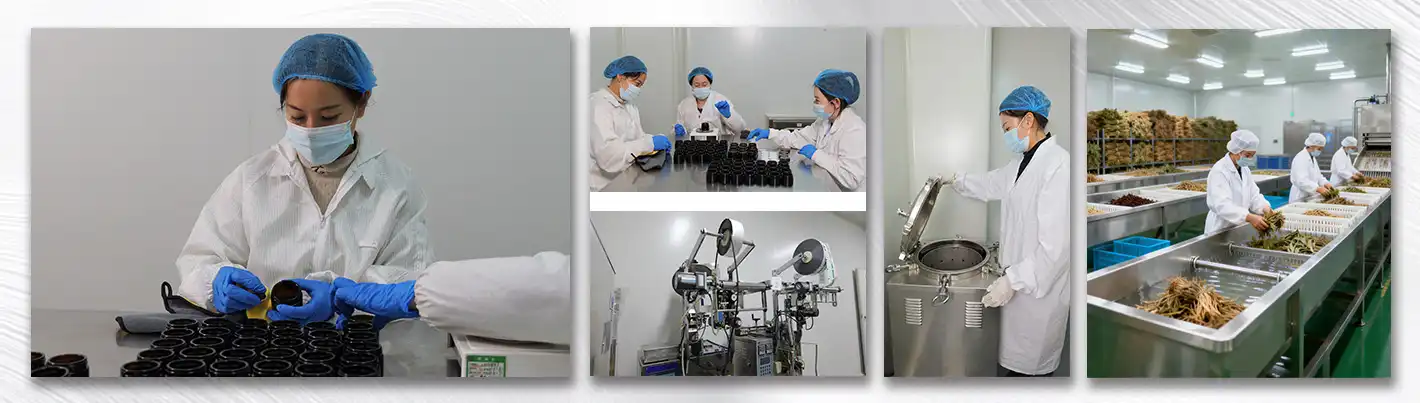
BioSpark (Xi'an) Biotechnology Co., Ltd. offers full OEM and ODM services that can turn your ideas for Blackberry fruit powder into goods that are ready to sell. Our advanced plant extraction facilities make 15% anthocyanin powder that is HPLC-verified and has great batch stability. Our R&D team helps with co-formulation, which is the process of combining berry anthocyanins with ingredients that work well together to make the product more effective. With full certifications from the FDA, GMP, ISO9001, Kosher, and Halal, we make sure that your formulations meet all the rules for markets around the world. Our production is flexible enough to handle projects ranging from 1 kg samples to large commercial orders. We offer a range of delivery options and offer reliable 15-day U.S. shipping. As a seasoned seller of powder with a sizable inventory, we take away any concerns about supply while strictly adhering to NDA guidelines to safeguard your secret recipes. Email our team at leao@biosparkcn.com to talk about your unique needs and ask for samples that show how committed we are to quality.
References
1. Wallace, T. C., & Giusti, M. M. (2019). Anthocyanins in Health and Disease. CRC Press, Taylor & Francis Group.
2. Khoo, H. E., Azlan, A., Tang, S. T., & Lim, S. M. (2017). Anthocyanidins and anthocyanins: colored pigments as food, pharmaceutical ingredients, and the potential health benefits. Food & Nutrition Research, 61(1), 1361779.
3. Routray, W., & Orsat, V. (2018). Microwave-Assisted Extraction of Flavonoids: A Review. Food and Bioprocess Technology, 5(2), 409-424.
4. Fang, J. (2014). Bioavailability of anthocyanins. Drug Metabolism Reviews, 46(4), 508-520.
5. Bendokas, V., Skemiene, K., Trumbeckaite, S., & Stanys, V. (2020). Anthocyanins: From the Field to the Antioxidants in the Body. Antioxidants, 9(9), 819.
6. Kalt, W., Cassidy, A., Howard, L. R., & Krikorian, R. (2020). Recent Research on the Health Benefits of Blueberries and Their Anthocyanins. Advances in Nutrition, 11(2), 224-236.

Send Inquiry
Related Industry Knowledge
- Can Gardenia fruit powder Be Used in Beverage Applications?
- How Is Yellow peach powder Made Without Losing Nutrition?
- Purple cabbage powder Shelf Life, Storage, and Packaging Guide
- Is Loquat powder the Right Choice for Your Next Product Line?
- How to Use Coconut Milk Extract Powder in Hot and Cold Drinks?
- Fulvic Acid Powder in Detox Programs: Does It Work?
- Can Marigold Extract Powder Support Vision Health?
- Inositol Pearl Extract for Mood and Emotional Support
- Broccoli Extract Powder for Hormone Balance & Metabolism
- Can Baicalin Extract Improve Skin Texture & Elasticity?