Best Liposomal Withania Somnifera Supplier: A Buyer’s Guide
Oct 26, 2026
If you are obtaining liposomal Withania Somnifera for your supplement brand or distribution company, then this guide is for you. The worldwide ashwagandha market was valued at USD 895 million in 2023 and is expected to continue to rise, driven by the need for stress support and sleep health products. But not all formats are the same. Liposomal Withania Somnifera, in a phospholipid bilayer carrier, provides active withanolides with an increase in bioavailability from the standard ceiling of 5–10% to over 80%. The choice of the manufacturer of this formulation strongly impacts your product’s performance, compliance posture, and long-term success in the marketplace.
Understanding Liposomal Withania Somnifera: Science & Benefits
How Liposomal Encapsulation Works
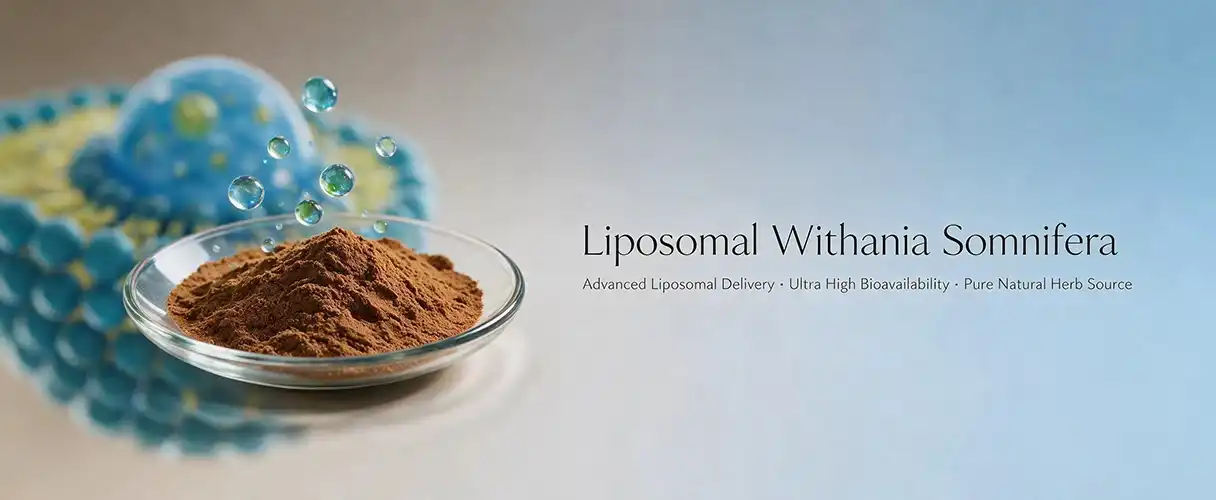
The active ingredients in Liposomal withania somnifera are stored in lipid vesicles that look like the membranes of human cells. There are 85 ± 5 nm Z-average particles in the structure of the product, with a PDI of 0.15 ± 0.05 and a zeta potential of -32 ± 3 mV. This number tells us that the particles are steady and spread out equally. Withanolides don't break down in the digestive system because of the phospholipid membrane, which is about 4.2 ± 0.3 nm thick. They can get to the bloodstream whole.
Active Compounds Worth Knowing
What makes liposomal withania somnifera useful depends on the kind of withanolide it has. Important parts are 12-deoxywithanolide (≥0.5%, reduces inflammation), Withanolide A (≥1.2%, protects neurons), and Withanolide D (≥0.8%, changes the immune system). When you're tired, alkaloids like withanine (≥0.3%) and somniferine (≥0.2%) can help you fall asleep and sleep better. There are more than 2.1% flavonoids and more than 4.5% phenolics, both of which help the antioxidant action. Formulators have a strong scientific reason to put their products in a certain way based on this range of compounds.
Clinical Evidence Supporting the Format
A 2021 double-blind study published in Medicine found that real ashwagandha root extract dropped blood cortisol by 27.9% over 60 days compared to a fake substance. With liposomal release, this works even better because the active ingredients stay safe as they go through the digestive system. The pill has 5.5 ± 0.5% drug by weight, and after 12 months at 4°C, the loss stays below 5%. This shows that the capsule is stable enough to be used in business.
Comparing Liposomal Withania Somnifera Products: Making an Informed Choice
Liposomal vs. Conventional Ashwagandha
Ashwagandha extract that comes in capsules or tablets is only bioavailable 5–10% of the time. This is because it doesn't dissolve well in water and is broken down quickly on the first pass. The bowels receive more than 80% of the liposomal withania somnifera, which circumvents these issues. For buyers between businesses, this means lower doses that work, smaller finished product sizes, and better results for customers. All of these things make reviews of the product better and make people more likely to buy it again.
Product Form Options for Different Applications
What forms are out there? Procurement teams should know this before they make big purchases. These are the main kinds of goods you should check out:
- Dry powder (encapsulation rate ≥85%, moisture ≤3%): Best suited for capsule and tablet manufacturing where precise dosing and flow properties matter.
- Spray-dried powder (encapsulation rate ≥75%, moisture ≤5%): A cost-effective alternative for high-volume runs, compatible with blending into functional food matrices like adaptogenic smoothie mixes.
- Concentrated suspension (active content 10%): A ready-to-formulate base for oral liquids and functional beverages, often paired with natural flavor systems to manage bitterness.
- Soft capsule fill (soybean oil-based, 15 mg standardized withanolides per unit): Ideal for premium-tier supplement lines targeting sleep and stress categories.
The best way to use dry powder (encapsulation rate ≥85%, moisture ≤3%) is to make capsules and tablets, which need to be dosed and flowed precisely.- Spray-dried powder (encapsulation rate ≥75%, moisture ≤5%): a cheap way to make a lot of it that can be mixed into functional foods like drink mixes that help your body respond.
Comparing Quality Tiers: Industrial, Food, and Pharmaceutical Grade
This soft capsule fill, which is made from soybean oil and has 15 mg of withanolides per unit, is great for high-end supplement lines that help with stress and sleep.
How to Choose the Best Liposomal Withania Somnifera Supplier for B2B Purchasing
Quality Certifications That Matter
People who want to buy liposomal withania somnifera must make sure that the company has GMP approval. You should also look for ISO certification, heavy metal testing by a third party, herbicide residue panels, and certificates of analysis (CoAs) that include particle size data, zeta potential, and withanolide content measures. The raw Withania somnifera root is more valuable for brands that want to appeal to people who like clean labels because it is certified organic.
Supply Chain Stability and Delivery Capacity
The manufacturer’s production should have no problem keeping up with your order rounds. Be careful to get lead times for short test runs and big production runs. Good suppliers usually have a lot of stock, allow you to monitor each batch in real time, and have established partners to distribute items throughout the globe. Good indicators of the maturity of a business are the timely delivery and dispatch of items to North America and Europe.
OEM and ODM Customization Flexibility
A lot of vitamin brands need more than just raw materials. As an OEM or ODM service, a good liposomal withania somnifera manufacturer should be able to do everything, from changing the recipe to designing private label packaging and delivering finished goods. To make sure the quality of the batches stays the same, make sure the service provider can handle both small test runs and large-scale production. Get samples of the formulas before you place a big order.
Procurement & Ordering Process: Smooth Transactions and After-Sales Support
Placing Bulk Orders Efficiently
Businesses mostly sell ashwagandha in the form of capsules to other businesses. People can place orders with them through platforms for direct inquiry or sourcing. For first tests, the MOQ for forms made for pharmaceuticals is normally between 5 and 10 kg. T/T is usually the way to pay. 30–50% is due when the goods are shipped, and the rest is due when they are delivered. For standard specifications, lead times are usually between 2 and 4 weeks. For custom formulations, they are usually between 4 and 6 weeks.
Packaging and Shipping Standards
How the product is packed affects how well it stays together during shipping. To keep liposomes safe from light and heat, they need to be wrapped with aluminum foil, include oxygen absorbers, and have options for cold-chain transportation included in the contract. You should make sure that the export paperwork your supplier gives you meets the US FDA's requirements for imports. Phytosanitary certificates, COAs, and MSDS sheets should be part of this.
After-Sales Quality Assurance
In big trade, quality problems do happen after shipping. There should be clear rules for how to settle differences with a reliable liposomal withania somnifera provider. The supplier should also accept re-testing results from a third party and offer replacement or credit terms for batches that don't meet standards. To make sure the quality of your products is good, you should get samples from every batch and keep them for at least as long as the products are on the shelf.
Building Long-Term Partnerships with Liposomal Withania Somnifera Suppliers
Transparency in Data and Documentation
Relationships with suppliers last a long time if both sides are honest with each other. You can expect your liposomal ashwagandha partner to send you up-to-date, stable data, reports on how the raw materials can be tracked, and proof that they are following all the law. If a seller sends out notes about changes to their products, like better encapsulation rates or new standardization data, it shows that they want to keep getting better.
Collaborative Product Development
When making liposomal withania somnifera, the best companies don't just ship their goods; they also help make new ones. When brands use technical consulting services to do things like make formulas better for certain health claims or come up with new delivery forms, they can get an edge over their competitors. Making changes to the recipe for each market and coming up with new labels as part of an OEM relationship helps both parties grow over time.
Staying Ahead of Market Trends
The way liposomes are delivered keeps getting better. Find nanoparticles that are more stable, dry liposomes that can dissolve in water, and mix formulas that use Withania somnifera with other things like saffron extract or phosphatidylserine. Suppliers who fund research and development (R&D) and share technical information can better help your brand figure out how customers' wants will change over time.
Conclusion
If you want to purchase liposomal withania somnifera from another firm, you have to do more than locate the best price per kilogram. That entails using the proper product grade for the application, meeting technical requirements such as particle size and encapsulation rate, and having a supplier that can deliver on time throughout order cycles. The results indicate that the liposomal version of ashwagandha extract is really more effective at getting into the body than conventional ashwagandha extract. You can preserve your business connections and the quality of your products by checking your suppliers’ licenses, their capacity to make adjustments, and how transparent they are about the supply chain.
FAQ
Is liposomal Withania Somnifera safe for long-term use?
An awful lot of study has been done on whether or not ashwagandha root juice is safe. When it comes to safety, the liposomal format is fine because the main carrier lipid, phosphatidylcholine, is something that is naturally found in human cell membranes. People are told the right amount to take, and before they are sold, GMP-made liposomal withania somnifera goods are checked for heavy metals, bacteria, and solvents that are still in them.
How much better is absorption compared to standard ashwagandha?
It takes between 5 and 10 percent of traditional ashwagandha extract for the body to use it. By enclosing the active withanolides in a phospholipid covering that is resistant to digestion, liposomal withania somnifera increases this percentage to more than 80%. This means that formulators can get the same therapeutic effects with less of the active ingredients.
Can I request OEM or private-label packaging?
Yes. When it comes to making liposomal withania somnifera, most well-known companies offer both OEM and ODM services. This includes making the formula just right, designing the packaging to fit a certain brand, and sending out the finished product. There are different minimum order quantities for custom runs from one seller to the next. Make this clear early on in the negotiation process so that it fits with your project plan.
Partner with BioSpark for Reliable Liposomal Withania Somnifera Supply
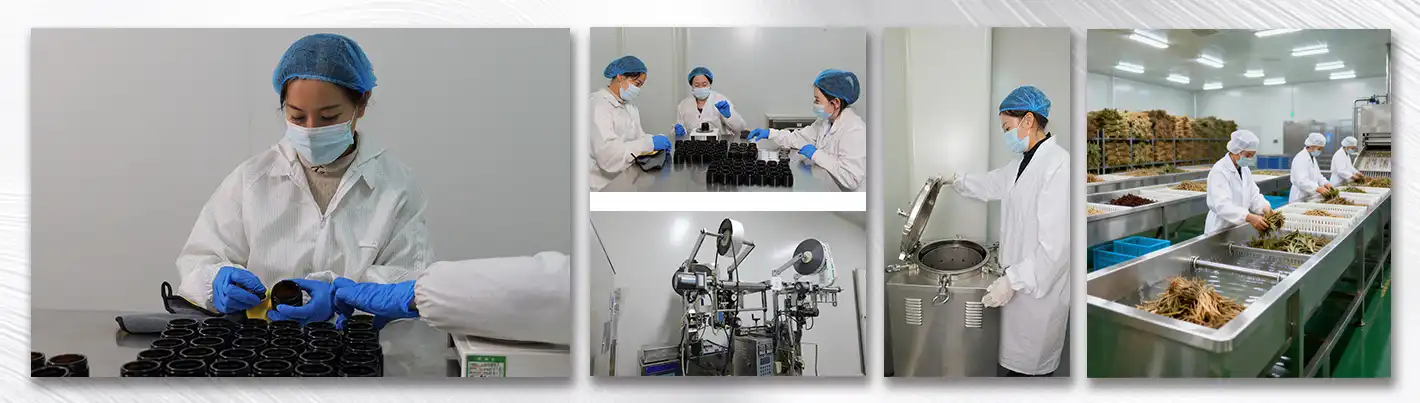
BioSpark (Xi'an) Biotechnology Co., Ltd. makes liposomal withania somnifera, which is used in food and medicine. The places where they work are GMP-approved, and they provide full OEM support. People all over North America and the world trust us to make liposomal withania somnifera. We work with supplement brands, wholesalers, and nutraceutical companies. We can give you a trial or bulk price right away. Just email us at leao@biosparkcn.com or go to https://www.biosparkcn.com/.
References
1. Chandrasekhar, K., Kapoor, J., & Anishetty, S. (2012). A prospective, randomized double-blind study of the efficacy and safety of ashwagandha root extract. Indian Journal of Psychological Medicine.
2. Pratte, M. A., Nanavati, K. B., Young, V., & Morley, C. P. (2014). An alternative treatment for anxiety. Journal of Alternative and Complementary Medicine.
3. Singh, N., Bhalla, M., de Jager, P., & Gilca, M. (2011). An overview on ashwagandha. African Journal of Traditional, Complementary and Alternative Medicines.
4. Choudhary, D., Bhattacharyya, S., & Bose, S. (2017). Efficacy and safety of ashwagandha root extract in improving memory and cognitive functions. Journal of Dietary Supplements.
5. Allen, T. M., & Cullis, P. R. (2013). Liposomal drug delivery systems: From concept to clinical applications. Advanced Drug Delivery Reviews.
6. Wissing, S. A., Kayser, O., & Müller, R. H. (2004). Solid lipid nanoparticles for parenteral drug delivery. Advanced Drug Delivery Reviews.

Send Inquiry

Related Industry Knowledge
- Liposomal Withania Somnifera vs Standard Extract: Key Differences
- What Makes a Premium Liposomal Inositol Supplier?
- Where Is Cherry Fruit Powder Commonly Used?
- Hami Melon Powder OEM: Custom Flavor Solutions for Brands
- Sea Buckthorn Juice Powder OEM: From Formula to Bulk Supply
- How Does Kidney Bean Flour Support Gluten-Free Nutrition?
- Is Yellow Peach Powder Perfect for Bakery Innovations?
- What Makes Barley Sprout Powder Better Than Wheatgrass?
- What Makes Premium Barley Sprout Flour Stand Out?
- Tangerine Peel Extract for Immune Support Products