Why Source Vine Tea Extract from a Specialized Supplier?
Oct 30, 2026
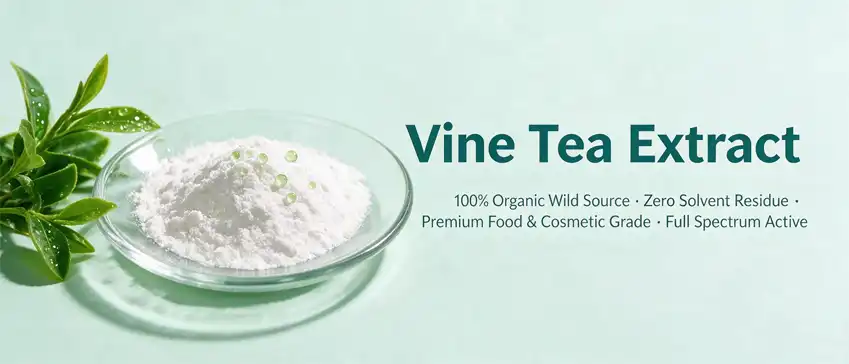
Vine tea extract is a high-value botanical ingredient for health supplement lines that procurement professionals should be considering. This plant-based ingredient is derived from Ampelopsis grossedentata and standardized to Dihydromyricetin (DHM) with purities ranging from 50% to 98% and satisfies a rising market requirement for natural antioxidants, liver support chemicals, and functional food additives. Your choice of a grape tea extract supplier will have a direct influence on the quality of your product, your regulatory compliance, and the stability of your supply chain, all of which will impact the long-term success of your brand in the US and global markets.
Understanding the Value of Vine Tea Extract
Vine tea extract is a unique type of plant extract. Because it has chemicals in it, it's not like most plant extracts on the market right now.
What Is Vine Tea Extract?
Vine tea extract is extracted from the leaves and roots of the south Chinese medicinal plant Ampelopsis grossedentata. It has been used as a traditional herbal tea in rural China for a long time. Experts have now tested the extract for DHM, a powerful flavonoid also known as Ampelopsin that possesses liver-protective and free radical-fighting properties.
Key Bioactive Properties
The DHM in vine tea extract promotes acetaldehyde dehydrogenase (ALDH) and alcohol dehydrogenase (ADH) to work faster. This helps the body get rid of the harmful things drinking does. In 2012, the Journal of Neuroscience published research showing that DHM protected animal models from becoming overly inebriated. Vine tea extract is typically included in functional beverages and tablets because it improves the liver in two ways.
Market Demand and Application Range
The market value of plant extracts was 4.6 billion USD worldwide in 2022, and it is continuously expanding quickly. Vine tea extract is currently utilized in make-up, ready-to-drink functional beverages, dietary supplements, and pre-formulations for medications. This means there is a constant need for companies to purchase a variety of products, ranging from age-defying skin serums to hangover-recovery medications.
Why Choosing a Specialized Supplier Matters
Not every company that sells plants knows how to make vine tea extract consistently at a high level of quality. You can tell the difference between a maker who specializes in one thing and one who trades in many things by how well their products work.
Quality Assurance and Certification Standards
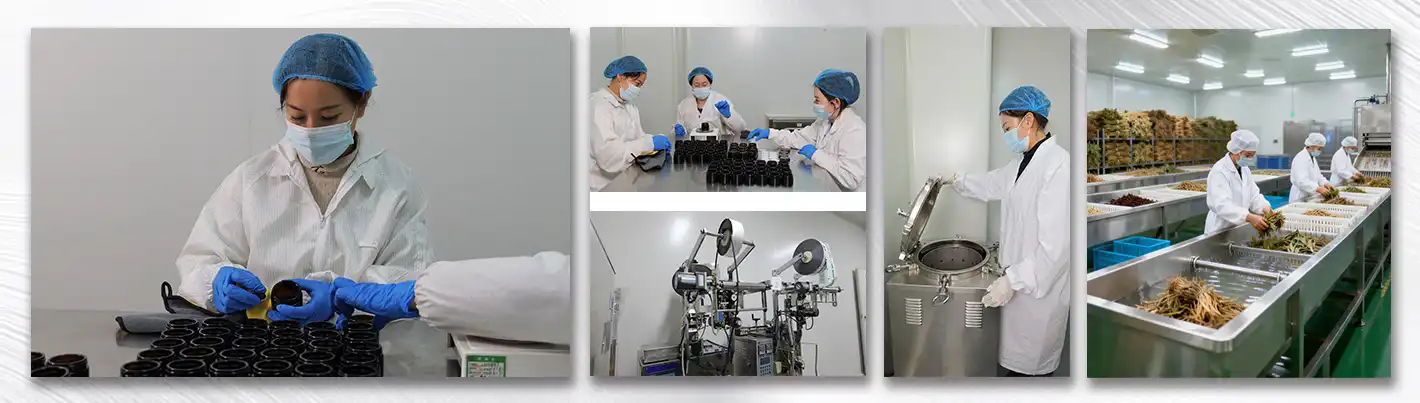
There are competent suppliers of vine tea extract in GMP-certified facilities with proper ISO certificates. They cover everything from acquiring the plants in raw form to testing the extract when it is finished. Key quality checks include a DHM test, which does what it says on the label. Heavy metal screening (Lead < 3.0 ppm, Arsenic < 1.0 ppm, Mercury < 0.1 ppm) and microbiological control with a Total Plate Count below 1,000 CFU/g according to USP guidelines.
Extraction Technology and Consistency
Some vendors spend a lot of money on regulated extraction processes to maintain the DHM purity and remove unwanted chemicals. Particle size range, typically 95% to 80 mesh, has a direct effect on how the extract blends when it is made into a powder or capsule. If a supplier does not have the proper instruments to make vine tea extract, they cannot guarantee every batch will satisfy these criteria.
Regulatory Documentation and Market Entry Support
To sell vitamins, you need to register your company with the FDA, obey Prop 65 in California, and make sure your chemical labels are accurate. Complete documentation packages, including Certificates of Analysis (CoA), Safety Data Sheets (SDS), and country of manufacture records, will be provided by specialists in this field. Getting compliance done today is going to be a whole lot simpler.
Comparative Insights: Vine Tea Extract vs. Other Tea Extracts
When buying products, teams can pick the best ones if they know how vine tea extract compares to other plant tea extracts.
DHM Content vs. EGCG in Green Tea Extract
EGCG is an antioxidant that works differently than DHM and is mostly tested for in green tea extract. Green tea extract rarely contains more than 95% EGCG by dry weight in an industrial setting, while vine tea extract has a maximum DHM level of 98%. Vine tea extract that is high in DHM is better than green tea extract if you want to specifically target liver function and how alcohol is broken down.
Stability in Functional Food Matrices
A lot of the time, white and oolong tea liquids break down quickly in light or heat after being added to food. DHM in vine tea extract can handle heat and light better, which makes it better for functional drink mixes that need to be heated up or kept for a long time. This is an important thing for B2B buyers who make drinks that are ready to drink to know.
Powder vs. Capsule-Ready Formats
Most firms that provide specialist vine tea extract sell many types of their product. “Water-soluble powders are suitable for stick packs and drinks, and fine-milled powders with specific mesh sizes can be directly used in capsule lines. Here are the major styles customers who purchase from companies should look at:
You can easily and cheaply produce a number of supplements using regular DHM powder (50% to 98% purity). The pills are somewhat strong and function as stated. Vine tea extract that does not stick to water. Designed to be blended into beverages, it will not stick to the bottom and will dissolve rapidly.
Brands have to declare “organic-certified extract powder” to grab the attention of health-conscious Americans.
- Standard DHM powder (50%–98% purity): Cost-effective for large-batch supplement production where moderate potency may match product specifications.
- Water-dispersible vine tea extract for beverage applications * Clear dissolving with no sedimentation
- Organic-certified extract powder: Addresses clean-label needs for firms looking to reach health-conscious U.S. customers.
That’s why it’s crucial for sellers to be flexible with product requirements, since each format has its own pricing, lead time, and minimum order quantity.
How to Evaluate and Select the Best Vine Tea Extract Supplier
It's not enough to just compare prices to find the best seller of vine tea extract. You need to follow a structured review method.
Quality Verification Metrics
Obtain third-party HPLC test reports demonstrating that the DHM content matches requirements. The comparison of the chromatographic fingerprint with standards of Ampelopsis grossedentata is vital to ensure that no adulteration with synthetic DHM or cheaper flavonoid alternatives has occurred. Trustworthy vendors would gladly share with you the COA data for a certain batch.
Commercial Terms and Production Flexibility
Notice how they clearly state the costs, minimum order quantity (MOQ), and lead times for manufacture. Having the ability to manage both modest OEM orders (for new firms) and massive production runs (for well-known distributors) provides organizations with several business alternatives from a supplier. High fixed MOQs are generally a hint that a vendor is more interested in generating money than getting to know their clients.
Reputation, Technical Support, and Customization
Look at any documented case studies, report logs, or evaluations you can discover. A true manufacturing partner is different from a transactional vendor since they provide technical help after the sale. They may assist, for example, in testing novel recipes and ensuring that they are stable. Brands may stand out in competitive market sectors with providers who provide private label packaging and bespoke DHM concentration standards.
Maximizing Business Value Through Strategic Sourcing
Working with a specialized vine tea extract supplier brings operational and commercial benefits beyond just securing raw material supply.
Balancing Cost with Quality Integrity
Procurement teams are typically under pressure to buy botanical extracts at the lowest unit price. But poor DHM purity or poor batch consistency results in downstream expenses — failed completed product testing, regulatory holds, and customer refunds. By paying a reasonable price for a confirmed, high-purity vine tea extract, you safeguard your production schedule and brand image at the same time.
Supply Chain Continuity and Risk Reduction
A specialized vine tea extract company has a steady partnership with the producers in the Ampelopsis grossedentata growing areas and provides supply buffer stock and harvest cycle planning. This prevents you from running short on ingredients that disrupt your production schedules – a luxury that B2B purchasers in the U.S. supplement industry can’t afford during high demand seasons.
Co-Development and Product Innovation
In-house R&D capability specialists may partner on innovative formulation development, blending vine tea extract with synergistic substances like milk thistle, NAC, or B vitamins for liver health mixes. The co-development model allows companies to get distinctive goods to market more quickly.
Conclusion
The purchase of vine tea extract from a specialist supplier has actual consequences for the quality of the product, the company’s status with regulators, and its potential to grow. The DHM-rich product of Ampelopsis grossedentata has health benefits that are not usually available from other plants. B2B buyers evaluate suppliers on parameters such as quality control, flexibility of output, regulatory documents, and formulation assistance so that their brands may perform better in the market. One plant ingredient, with the correct supply connection, may provide you with a consistent advantage over your competition.
FAQ
1. What DHM purity level should I specify for supplement formulations?
For dietary supplement capsules targeting liver support or alcohol metabolism, most manufacturers work with DHM purity between 50% and 98%. Higher purity grades (90%–98%) are preferred for clinical-strength products and premium positioning. Mid-range grades (50%–70%) work well for cost-sensitive formulations where DHM is one of several active ingredients.
2. Are there any known side effects associated with vine tea extract?
At recommended dietary intake levels, DHM-standardized vine tea extract shows a strong safety profile in published human and animal studies. Some users report mild digestive sensitivity at very high single doses. For formulation purposes, typical supplement doses range from 300 mg to 600 mg DHM per serving, and formulators should align with current safe intake guidance.
3. How does pricing vary across vine tea extract grades?
Pricing varies based on DHM concentration, certification status (conventional vs. organic), and order volume. Water-dispersible or nano-emulsified formats carry a premium. Requesting tiered pricing quotes from specialized suppliers based on different MOQ levels and specification grades gives procurement teams a clearer cost model for budget planning.
Partner with BioSpark for Premium Vine Tea Extract
BioSpark (Xi'an) Biotechnology Co., Ltd. sells GMP-certified vine tea extract to health supplement brands, nutraceutical companies, and wholesalers in North America and other places. Our team can help you with every step, from keeping track of the raw materials to putting the order together. This is true whether you need a trustworthy company to make vine tea extract for private label programs or large OEM batches. To get samples and prices, email us at leao@biosparkcn.com.
References
1. Shen, Y., et al. "Dihydromyricetin as a Novel Anti-Alcohol Intoxication Medication." Journal of Neuroscience, 2012.
2. Chen, S., et al. "Hepatoprotective Effects of Dihydromyricetin from Ampelopsis grossedentata." Food & Function, Royal Society of Chemistry, 2015.
3. Grand View Research. "Botanical Extracts Market Size, Share & Trends Analysis Report." Grand View Research Industry Report, 2023.
4. United States Pharmacopeia. "Microbiological Examination of Nonsterile Products: Microbial Enumeration Tests." USP-NF, 2022.
5. Liu, T., et al. "Antioxidant Activity and Stability of Dihydromyricetin in Functional Beverage Matrices." Journal of Food Chemistry, Elsevier, 2019.
6. Nutraceuticals World. "The Rise of Plant-Based Liver Health Ingredients in the U.S. Supplement Market." Nutraceuticals World, 2023.

Send Inquiry

Related Industry Knowledge
- Where Is Polygonatum sibiricum peptide Commonly Used?
- Where Is Damiana peptide Commonly Used?
- Purslane Saponins for B2B: Quality and Sourcing Guide
- Sea Buckthorn Juice Powder vs. Fresh Juice: Which Is Better?
- Coconut Milk Extract Powder: The Ultimate Plant-Based Dairy Swap
- Coconut Milk Extract Powder: The Ultimate Plant-Based Dairy Swap
- Coconut Milk Extract Powder: The Ultimate Plant-Based Dairy Swap
- Coconut Milk Extract Powder: The Ultimate Plant-Based Dairy Swap
- Coconut Milk Extract Powder: The Ultimate Plant-Based Dairy Swap
- Coconut Milk Extract Powder: The Ultimate Plant-Based Dairy Swap
- Coconut Milk Extract Powder: The Ultimate Plant-Based Dairy Swap
- Coconut Milk Extract Powder: The Ultimate Plant-Based Dairy Swap
- Coconut Milk Extract Powder: The Ultimate Plant-Based Dairy Swap
- Spinach Juice Powder Supplier Guide for Global Buyers
- Why Are Brands Adding Barley Sprout Flour to Recipes?
- Is longan powder safe for children and the elderly?
- Could Cowpea Powder Enhance Protein-Rich Product Lines?
- Can Marigold Extract Powder Support Vision Health?