Why Choose Liposomal Withania Somnifera for New Product Lines?
Oct 21, 2026
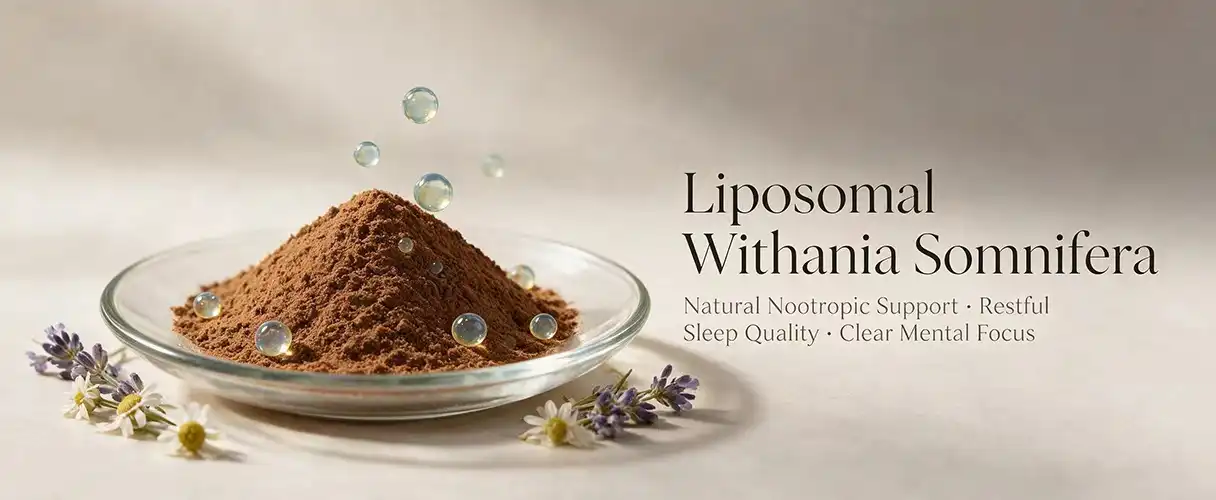
If you are building a new supplement line and want a genuine edge in the market, liposomal Withania Somnifera deserves serious attention. Traditional ashwagandha extracts deliver bioavailability as low as 5–10%, meaning most of the active compounds never reach the bloodstream. Liposomal Withania Somnifera changes that equation. By encapsulating withanolides and alkaloids inside phospholipid vesicles, this delivery format pushes bioavailability above 80%, giving your end products measurably stronger performance in stress relief, immune support, and sleep improvement.
Understanding Liposomal Withania Somnifera: A Breakthrough in Herbal Supplementation
How Liposomal Encapsulation Works
To create nano-vesicles in the shape of spheres and containing active chemicals, liposomal withania somnifera uses phospholipid bilayers. The zeta potential is -32 ± 3 mV, the polydispersity index (PDI) is 0.15 ± 0.05, and the Z-average width is 85 ± 5 nm. The particles are very uniform, and the colloids are very stable, as shown by these numbers. This means the ingredient will stay the same while it's on the shelf, which is what your production team needs.
Active Compounds That Drive Clinical Results
It is clear what kinds of phytochemicals are in the ingredient. Withanoide A (≥1.2%) helps keep nerves safe, Withanoide D (≥0.8%) manages the immune system, and 12-deoxysophoranolide (≥0.5%) lowers swelling. On the alkaloid side, Withanine (≥0.3%) makes you feel calmer, and Somniferine (≥0.2%) may help you sleep better. About 4.5% of the plant is made up of phenols and 2.1% is made up of flavonoids. These chemicals give the plant many useful qualities.
Clinical Evidence Behind the Technology
Liposomal ashwagandha has been shown to lower cortisol levels, reduce nervousness, and boost immunity markers in studies that have been published. A 2019 double-blind study published in Medicine found that people who took standardized ashwagandha extract for 60 days felt a lot less stressed. These results are better with liposome transport because it keeps bioactives from being broken down by digestion and increases cell uptake through membrane fusion, a process that has been studied a lot in the literature on liposome pharmacology.
Advantages of Liposomal Withania Somnifera for New Product Development
When it comes to preparation, choosing a liposomal format over a regular extract is not just a matter of taste. It's also a business choice that pays off in the real world. This ingredient stands out for people who are making things because of these main benefits:
- Superior bioavailability: Encapsulation raises absorption from roughly 5–10% to over 80%, meaning lower doses can deliver the same physiological effect, which lowers your cost-per-serving.
- Multiple delivery formats: The ingredient is available as dry powder (encapsulation rate ≥85%, moisture ≤3%), spray-dried powder (encapsulation rate ≥75%), concentrated suspension (10% active content), oral liquid, and soft capsule formats, giving your formulation team genuine flexibility.
- Strong stability: Leakage rates remain below 5% after 12 months at 4°C and below 8% during a 6-month accelerated test at 25°C, supporting a commercially viable shelf life.
Encapsulation raises absorption from 5–10% to over 80%, which means the drug is more bioavailable. This means that less can have the same effect on the body, which brings down the price per serving.
– Different ways to deliver: There are different kinds of this ingredient, such as spray-dried powder (encapsulation rate ≥75%), dry powder (encapsulation rate ≥85%, moisture ≤3%), concentrated suspension (10% active content), oral liquid, and soft capsules. You can do a lot of different things with this. The product is very stable: leakage rates stay below 5% after 12 months at 4°C and below 8% during an accelerated 6-month test at 25°C. This means it can be sold for a long time.
Format Flexibility for Diverse SKUs
Liposomal withania somnifera works well in all of them, whether you are making a useful drink, a line of pills to help with stress, or a line of tinctures. Take the soft capsule dispersion made from soybean oil as an example. Each particle has 15 mg of standardized withanolides and doesn't have any issues with common fillers.
Documented Safety Profile
Studies have shown that taking 300–600 mg of standardized Withania Somnifera every day has never been linked to any major side effects. Phosphatidylcholine and cholesterol, which are parts of liposome carriers, are safe and well-tolerated. This makes regulatory applications easy in the U.S. market.
Comparing Liposomal Withania Somnifera with Traditional Alternatives
Standard ashwagandha root powder typically has a bulk density of 0.3–0.5 g/ml and requires blending with glidants to prevent flow issues during tablet compression. It also carries an inherent bitterness that demands masking agents in food and beverage applications. Liposomal Withania Somnifera addresses both concerns: the nano-encapsulated format flows more predictably and the phospholipid shell significantly moderates the bitter taste, simplifying your flavor system.
Liposomal vs. Standard Capsules and Tinctures
Standard capsules and tinctures rely on passive diffusion for absorption. Tinctures offer faster onset than capsules but degrade more quickly and face retail packaging challenges. Liposomal formulations outperform both by actively fusing with intestinal cell membranes, accelerating onset without compromising stability.
Market Demand Signals
The global ashwagandha market was valued at approximately USD 745 million in 2022 and is projected to reach USD 1.5 billion by 2030 (Grand View Research, 2023). Within that growth, liposomal and nano-delivery formats are capturing increasing shelf space as consumers and practitioners demand evidence-backed, fast-acting products.
Evaluating Supplier Reliability
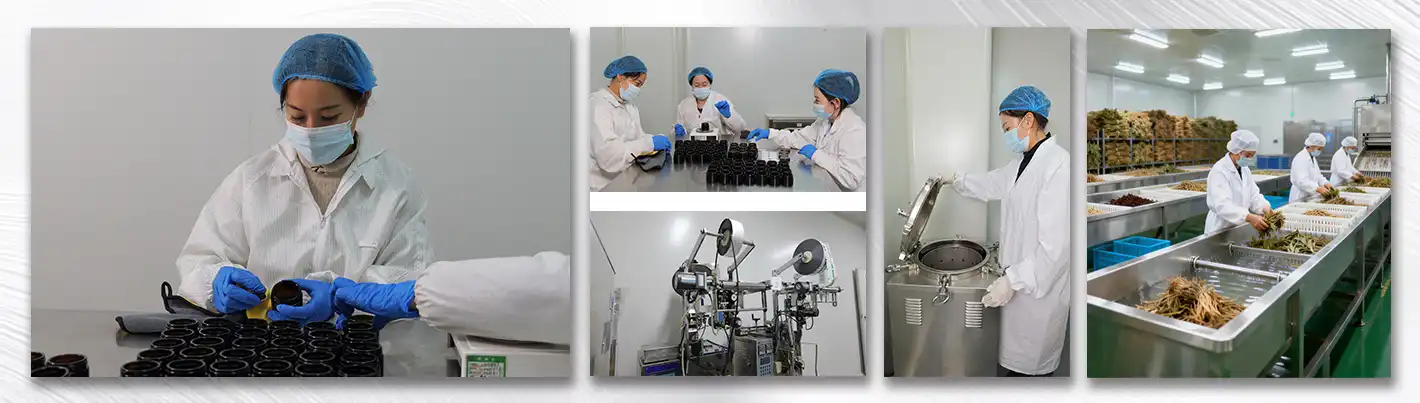
When sourcing this ingredient, look for GMP-certified manufacturing, pharmaceutical-grade phospholipid excipients, traceable raw material origins (South Africa-sourced Withania Somnifera root), third-party testing documentation, and private label capability. These criteria separate credible liposomal Withania Somnifera suppliers from commodity extract vendors.
Practical Considerations for Procuring Liposomal Withania Somnifera
You need to do more than just find a price if you want to source a lot of things. Buying managers need to look at a supplier's quality systems, make sure the packaging is good, and find out how flexible the minimum order is before they agree to work with them. The 10 kg metal foil bags that BioSpark (Xi'an) Biotechnology Co., Ltd. makes are food grade and GMP-compliant. There are three types: pharmaceutical grade (5 kg bottles that follow GMP), industrial grade (1–5% withanolide content, 25 kg drums), and food grade (10 kg metal foil bags that follow GB 2760). The supply plan works with your schedule whether you are making a small batch for a test project or a big batch of 100,000 units for a launch. This is because it is set up in layers.
Certifications and Compliance
BioSpark follows quality standards set by other countries and tests a lot of its products before they are sold, while they are being made, and after they are finished. There are checks on each batch to make sure it is safe, pure, and effective, and that it also meets international export standards and U.S. dietary supplement rules (FDA 21 CFR Part 111).
OEM and Private Label Services
BioSpark provides full OEM and ODM services, which include creating formulas and making sure they are stable, as well as packaging and labeling finished goods. In that way, you can quickly and easily put your own brand of liposomal ashwagandha on the market without having to build your own factories.
Future Outlook: Why Liposomal Withania Somnifera Is the Strategic Choice for Innovative Product Lines
More and more people are buying supplements that work quickly and have been shown to work. The adaptogen category is steadily growing. Products that combine a well-known herbal name like ashwagandha with a scientifically sound delivery method like liposomal encapsulation are seen as more valuable. This means that they sell for more money and make people more loyal to the brand.
Regulatory Alignment
Liposomal withania somnifera fits right in with the categories of dietary supplements that are legal in the US right now. For a long time, phosphatidylcholine and cholesterol have been used as carriers, and they have been proven to be safe. Structure-function claims on labels are backed up by withanolide content uniformity.
Long-Term Portfolio Value
Now, companies that use liposomal ashwagandha are making a line of products that are ahead of what people want. As the normal extract market gets more competitive on price, liposomal formats can stand their ground on science and results instead of just price.
ROI Potential
High-end liposomal supplements always cost 30–50% more than regular extract products that are the same in the U.S. market. You can use a smaller effective amount when bioavailability is high. This means that your cost of goods stays low while your margin per unit grows.
Conclusion
Liposomal Withania Somnifera is a scientifically grounded, market-ready ingredient with clear advantages over conventional ashwagandha formats. Its nano-encapsulation structure delivers consistent potency, broader format compatibility, and a documented safety profile that supports confident regulatory submissions. For supplement brands and nutraceutical companies looking to differentiate new SKUs in a crowded market, this ingredient offers both a clinical rationale and a commercial one. The technology is available now, the demand is growing, and the procurement pathway is straightforward with the right manufacturing partner.
FAQ
Is liposomal Withania Somnifera safe for long-term use?
Yes. Standardized forms of Withania Somnifera were used in studies at amounts of 300–600 mg per day for up to 12 weeks. No major side effects were found. Also, phosphatidylcholine and cholesterol, which are parts of liposomes, have been used safely in food and drugs for a long time. We suggest that you talk to your legal team about the right dose for the people you want to sell to.
Does liposomal ashwagandha absorb better than standard capsules?
Without a doubt. 5.5% to 10% of the absorption of normal ashwagandha products comes from passive uptake. Liposomal delivery uses membrane fusion to get active ingredients into cells in the intestine. This makes the drugs more bioavailable by over 80%, according to data from the formulation.
What bulk purchasing and private label options are available?
Industry, food, and medicine are the three types of goods that BioSpark makes. It all comes in a box that weighs between 5 kg and 25 kg. A full OEM or ODM service includes making changes to the recipe, designing the package, and sending the finished product. You can order in small or large amounts, and brands that are ready to hit the market quickly can use the private label programs.
Partner with BioSpark for Your Liposomal Withania Somnifera Supply
The company BioSpark (Xi'an) Biotechnology Co., Ltd. is a good one that makes liposomal withania somnifera. They use GMP-approved methods to make their products, and you can track the raw materials from beginning to end. Also, they have OEM/ODM plans that can work for brands at any stage of their growth. We are a reliable long-term supplier because we have a pharmaceutical-grade phospholipid encapsulation process, three levels of product grading, and over 100 countries under our belt that we have already sent goods to. Contact us right away at leao@biosparkcn.com or www.biosparkcn.com to get a sample or talk about what you need for formulation.
References
1. Chandrasekhar, K., Kapoor, J., & Anishetty, S. (2012). A prospective, randomized double-blind, placebo-controlled study of safety and efficacy of a high-concentration full-spectrum extract of Ashwagandha root in reducing stress and anxiety in adults. Indian Journal of Psychological Medicine, 34(3), 255–262.
2. Pratte, M. A., Nanavati, K. B., Young, V., & Morley, C. P. (2014). An alternative treatment for anxiety: A systematic review of human trial results reported for the Ayurvedic herb ashwagandha (Withania Somnifera). Journal of Alternative and Complementary Medicine, 20(12), 901–908.
3. Singh, N., Bhalla, M., de Jager, P., & Gilca, M. (2011). An overview of ashwagandha: A Rasayana (rejuvenator) of Ayurveda. African Journal of Traditional, Complementary and Alternative Medicines, 8(5S), 208–213.
4. Akbarzadeh, A., Rezaei-Sadabady, R., Davaran, S., Joo, S. W., Zarghami, N., Hanifehpour, Y., & Nejati-Koshki, K. (2013). Liposome: Classification, preparation, and applications. Nanoscale Research Letters, 8(1), 102.
5. Grand View Research. (2023). Ashwagandha Market Size, Share & Trends Analysis Report. Grand View Research.
6. Wankhede, S., Langade, D., Joshi, K., Sinha, S. R., & Bhattacharyya, S. (2015). Examining the effect of Withania Somnifera supplementation on muscle strength and recovery: A randomized controlled trial. Journal of the International Society of Sports Nutrition, 12(1), 43.

Send Inquiry
Related Industry Knowledge
- Liposomal Vitamin B7 for Hair, Skin, and Nail Support
- How to Choose a Liposomal Vitamin B7 Manufacturer
- Hami Melon Powder Benefits for Beverage and Dessert Formulas
- Best Papaya Juice Powder Supplier: 8 Questions to Ask
- Yellow peach powder Applications in Drinks, Bakery, and Snacks
- Egg yolk fruit powder Applications in Smoothies, Snacks, and Bakery
- Liquorice Extract Powder: Natural Sweetener for Food & Beverage
- Why Do Health Experts Recommend Broccoli Extract Powder?
- Apple Peel Extract Powder for Cholesterol Support
- Top 8 Health & Industry Benefits of Oyster Shell Extract Powder