_1764041963888.webp)
Why Choose Blackberry Fruit Powder for Clean-Label Products?
Aug 22, 2026
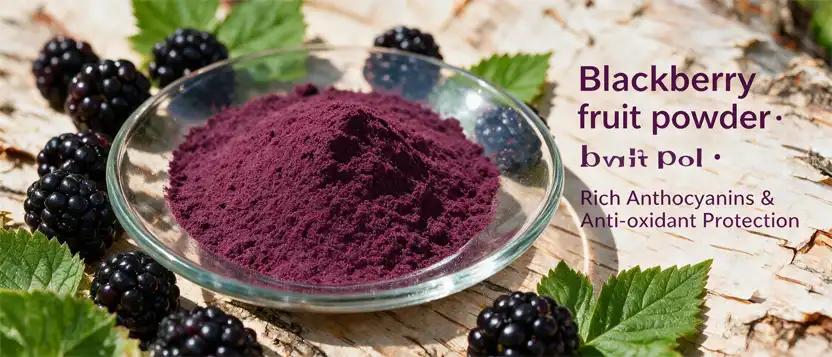
Blackberry fruit powder has emerged as a premium choice for clean-label formulations because it delivers authentic nutritional value without compromising on quality or transparency. In order to get this ingredient from Rubus fruticosus L., advanced plant extraction methods were used. HPLC showed that it has the normal amount of 15% anthocyanins. It is the same strength and color saturation all over. Instead of being made in a factory, blackberry powder has all the phytochemicals that are found in fresh blackberries. It has fiber, vitamin C, vitamin K, and ellagic acid. It also has a clean label, which is something that today's health-conscious buyers expect. This superfruit powder is a great choice for businesses that want to buy natural products that are safe, legal, and meet customer expectations. It can be used in functional drinks, makeup, food supplements, and natural colorants.
Understanding Blackberry Fruit Powder and Its Clean-Label Appeal
What Makes Blackberry Powder a Clean-Label Ingredient
Clean labels are all about being honest, making things easy to use, and using natural materials. This is very clear from blackberry fruit powder, which is made with very little processing that doesn't change the nutrients in the fruit. Because it is taken from plants in a way that concentrates bioactive compounds, no chemicals or man-made fillers are used to make it. The fine, dark purple to reddish-purple powder still smells sweet and sour, so people know it's real.
When buying, managers look at approval standards and the different chemical options; it's easy for them to see why clean labels are good. Because our blackberry fruit powder is certified by ISO9001, Kosher, Halal, FDA, and GMP, it is known to be of high quality all over the world. When brands go into new global areas with these rules in place, it's easy for them to follow the rules. This is especially true in Europe and North America, where rules about clean labels are very strict.
Nutritional Profile That Supports Health Claims
High-Performance Liquid Chromatography is used to set the amount of anthocyanin at 15%. This is the main biological difference between better Blackberry fruit powder and cheaper ones. Free radicals can be stopped very well by anthocyanins, especially cyanidin-3-glucoside, which has a high ORAC number. This item can get rid of free radicals, which has been proven by science. This backs up claims that it keeps cells healthy, makes the immune system stronger, and slows down the aging process.
On top of the anthocyanins, the powder also has ellagic acid, a pigment that helps protect skin and cells. Vitamin K helps your bones stay strong and helps your blood clot. Vitamin C helps the body build collagen and shields against sickness. There is more fiber in foods that help digestion when they hold that fiber. So that formulators can make healthy products without having to focus on just one nutrient, this multidimensional nutritional profile is used.
Comparing Fresh Berries and Powder Forms
Fresh blackberries are good for you, but they go bad quickly, are only available during certain times of the year, and are very wet, which makes them hard to use in commercial formulas. The powdered form gets around these problems by giving you ingredients that can stay fresh for a long time and have a lot of bioactivity. The particle size range of 80 to 120 mesh ensures that the material flows easily during production, whether it's being mixed into capsules, tablets, or beverage systems.
Due to its ability to dissolve in water, Blackberry fruit powder is highly useful for making drinks. It mixes easily in water, making purple colors that look good without leaving behind gritty leftovers. Because it dissolves slightly in ethanol, it can be used in more ways, like in medicines and extract-based products. Because of these useful features and the stable anthocyanin content, the powder gives formulators more options than fresh or frozen berry ingredients.
Core Benefits of Incorporating Blackberry Fruit Powder in Clean-Label Formulations
Antioxidant Capacity for Health-Focused Products
The high ORAC value and 15% anthocyanin content of Blackberry fruit powder make it a better antioxidant ingredient. This uniform potency makes sure that supplements that target oxidative stress work the same way in all production runs. The HPLC testing method gets rid of the differences that come up with fruit powders that aren't standardized. This gives quality assurance teams confidence in the consistency of batches.
Antioxidant supplements are becoming more popular, especially among older people who are worried about the health and longevity of their cells. People who are wary of man-made antioxidants like BHA and BHT will relate to the story of how Blackberry fruit powder got its start in nature. The deep purple color of the ingredient is a visual quality sign that helps people believe that it is naturally strong. This mix of science support and appealing to the senses makes a product stand out in stores that are very competitive.
Natural Colorant Replacing Synthetic Dyes
Synthetic colorants like FD&C Red #40 are being regulated against, which has increased the demand for natural options. Blackberry fruit powder gives ice cream, candies, yogurt, and baked goods bright purple to reddish-purple colors. Anthocyanin pigments are stable across pH ranges that are common in food systems. However, formulators should test their stability for specific uses.
When you compare label statements, the clean-label benefit stands out even more. Brands can say "Blackberry fruit powder" or "colored with blackberries" instead of "Red 40" or "artificial color," which is more in line with what customers want—clear language about the chemicals. This level of labeling clarity often explains higher prices in stores where health-conscious customers are actively looking for natural options.
Functional Benefits Beyond Nutrition
Naturally occurring antimicrobial properties in anthocyanins help keep food fresh. Even tho Blackberry fruit powder shouldn't be used instead of specialized preservative systems, adding it to some recipes might let formulators lower the amount of manmade preservatives they use. This working together of natural preservation and sensory properties makes formulations more efficient, which is good for both clean label credentials and cost structures.
The powder's ability to hold water and fiber content makes baked goods and snack bars more textural. These functional traits help the food keep its moisture and last longer, and they also add to its total nutritional balance. When vitamins and fiber are combined in beauty-from-within formulas, they support both skin health claims and gut wellness positioning, which lets product stories have two benefits.
How Blackberry Fruit Powder Meets B2B Procurement Needs: Quality, Supply, and Pricing
Standardization Through HPLC Verification
When buying ingredients that are high in anthocyanins, analytical verification methods must come first. High-Performance Liquid Chromatography is the best way to measure anthocyanin content because it separates and counts each compound separately instead of using spectrophotometric predictions that might be too optimistic. Each Certificate of Analysis should have chromatogram data showing that the concentration is 15%. This gives tracking that meets legal requirements and answers customer questions.
Standardization by HPLC for Blackberry fruit powder directly affects the stability of a product by making it more consistent. When making products that need exact amounts of anthocyanin, like eye health supplements that need 80–120 mg per day or beauty products that need exact antioxidant concentrations, the 15% content guarantee takes away the need to guess. This accuracy cuts down on expensive reformulation processes and speeds up the time it takes to get new products on the market.
Supply Chain Reliability and Packaging Standards
Our 25 kg drum packaging with nitrogen-flushed aluminum foil liners solves the main problem that anthocyanin ingredients have, which is that they break down over time due to oxidation. The nitrogen atmosphere pushes out oxygen, which would have sped up the breakdown of the pigments. The aluminum foil barrier keeps moisture out and light out. These packing requirements make the shelf life up to 24 months if stored properly, which lowers the risk of running out of stock for buyers who have big responsibilities.
Supply reliability depends on being able to consistently source materials and make things. We can handle both small-scale trial orders and large-scale buying contracts because we keep enough stock on hand and offer a variety of shipping options, such as express, air freight, and sea freight. The minimum order quantity of 1 kg lets product developers test the viability of their ideas without having to spend a lot of money, and the standard packaging of 25 kg meets the needs of high-volume manufacturing.
Delivery Terms Optimized for International Trade
To accurately compare costs when looking at providers, you need to know how to use Incoterms. Our wide range of shipping options, including FOB, CIF, CFR, EXW, DAP, and DDP, gives buyers with different risk tolerances and organizational needs more options. For buyers in North America, DAP terms that include clearing customs make the import process easier and less complicated. When trade routes are well-known and transit times can be predicted, European buyers often choose CIF terms.
Time-sensitive production plans are taken into account by the promise of fast and safe shipping. Reliable lead times keep production from being held up, which can be expensive for companies that make healthy drinks that are releasing seasonal goods or supplements that are working with marketing campaigns. The payment terms for bank transfers are normal for business-to-business transactions, but known clients who need different arrangements can ask for them.
Integrating Blackberry Fruit Powder into Your Clean-Label Product Line
Formulation Guidelines for Different Applications
Blackberry fruit powder is often added to dietary supplements at doses ranging from 500 mg to 2000 mg per serving, based on how much anthocyanin delivery is wanted and how the label claims to be met. Formulators often mix the powder with bilberry extract and lutein to make antioxidant blends that work better together. Combining blackberry anthocyanins with collagen peptides and hyaluronic acid in beauty-from-within products helps skin stay hydrated and elastic in more than one way.
Functional beverage development requires careful attention to solubility and flavor balance. Because the powder dissolves easily in water, it can be quickly mixed into cold water systems, making it good for ready-to-drink drinks and fast shake mixes. The unique sweet and sour smell goes well with berry-flavored products and adds natural flavor intensity, so you don't have to use as many artificial flavorings. When testing for stability, the color should be checked to see how well it stays true under different pH levels and light conditions that are common on store shelves.
Clean-Label Compliance and Regulatory Considerations
To get a clean label, you need to do more than just use natural products. The whole supply chain needs to be open and honest. Documentation that shows how the food was grown and processed can be used to answer questions from customers and pass regulatory audits. Combining our China origin statement with a wide range of approvals makes it easier to follow import rules in all major markets, such as the DSHEA rules for the US and the Novel Food rules for the EU.
Another important aspect of compliance is thinking about allergens. Common allergens like dairy, gluten, soy, and tree nuts are naturally absent from Blackberry fruit powder, which makes it easier to meet allergy declaration standards. Because ethanol doesn't dissolve completely, goods aimed at groups of people who don't like alcohol should check for trace alcohol residues from processing. Usually, these residue amounts are well below the levels required for declaration.
Storage and Stability Best Practices
The right way to store a product has a direct effect on how long the anthocyanin stays in it and how stable the color stays over time. The powder should be kept below 25°C in containers that can't be opened and are out of direct sunlight and places with a lot of humidity. Taking in moisture speeds up the breakdown processes that lower the strength of the pigments and the antioxidants' ability to work. Manufacturers who work in wet areas can keep their ingredients fresh between receiving them and starting production by storing them in climate-controlled areas with dehumidification systems.
When formulators are making products that will last a long time, they should do accelerated stability studies that measure the anthocyanin content at regular intervals while the temperature is high. These studies find possible decay rates and help with choices about when something should go bad. Our OEM/ODM services offer microencapsulation technologies that protect anthocyanins even more in difficult formulation settings, like systems with a lot of water activity or goods that will be exposed to alkaline pH conditions.
Making the Right Purchasing Decision: A B2B Buyer's Guide
Evaluating Supplier Credentials and Capabilities
When choosing a supplier, it's not just about price per unit; it's also about professional help, consistency in quality, and knowledge of regulations. Our ISO9001 certification shows that we have systematic quality management processes in place that stop differences between batches. The GMP approval is special to pharmaceutical-grade production standards that can be used for dietary supplements where the risk of contamination needs to be kept to a minimum. Halal and Kosher approvals help brands reach more religiously sensitive customers in markets around the world and in the Middle East and Southeast Asia.
Comprehensive ingredient suppliers are different from commodity traders because they offer OEM and ODM services. Our research and development (R&D) department can make unique solutions for brands that need anthocyanin concentrations higher than the usual 15%. This could be 10% for cost-effective formulations or 25% for a more premium look. Custom packaging options help brands stand out by using eco-friendly materials, gift boxes, or single-serve sachets that make things easier for customers.
Comparing Blackberry Powder to Alternative Berry Ingredients
Seeing how Blackberry fruit powder stacks up against other berry ingredients, acai powder and blueberry powder are the main options. Although acai's higher price tag comes from its exotic origins, this doesn't always mean that it has more anthocyanins than regular Blackberry fruit powder. Blueberry powder has a flavor that is familiar, but unless it is especially standardized, it usually has smaller anthocyanin concentrations, which makes it harder to figure out how much to use.
Blackberry fruit powder is better because it is a good mix of strength, low cost, and "clean label" appeal. The standardization of 15% anthocyanin gives the concentration needed for claims of effectiveness while keeping the whole-fruit nutritional matrix that clean-label consumers like. It dissolves better in water than freeze-dried alternatives, which might keep their cell structure but don't spread as well in drinks. Because of these technical benefits and the fact that it is cheaper than some foreign superfruits, Blackberry fruit powder is a good choice for both well-known brands and new ones.
Sample Testing and Pilot Production Protocols
Proactive procurement teams do thorough sample evaluations before committing to large-scale purchases. Our fast sampling service sends 1 kg samples within three to five days, so viability studies can be done quickly. Protocols for testing should look at things like color intensity, solubility, flavor compatibility, and stability under the conditions that will be used for storage. Developers of drinks should test their pH stability in a range of sour conditions that are common in juice and smoothie uses.
Before going to full production, pilot runs with small amounts of the product help find any problems that might come up during processing. These tests show how well the ingredients mix, whether they might settle or separate in liquids, and whether they are compatible with other ingredients in the formula. Standard Operating Procedures and quality control checkpoints for manufacturing are based on documentation from pilot runs. This cuts down on the time needed to fix problems during full-scale production starts.
Conclusion
Blackberry fruit powder is a good ingredient for brands that want to stick to clean label standards without sacrificing product performance. The normal 15% anthocyanin content, which has been confirmed by HPLC testing, gives steady antioxidant power that backs up health claims in dietary supplements, functional drinks, and cosmetics. Full certificates like ISO9001, GMP, Kosher, and Halal make it easier to sell your products all over the world and show that you take quality assurance seriously. The properties of natural colorants make them good alternatives to synthetic dyes that are getting more and more attention from regulators. When B2B buyers are looking at suppliers, having technical skills, flexible delivery terms, and OEM/ODM services all in one package makes a complete solution that goes beyond just providing basic ingredients and includes strategic partnerships.
FAQ
What distinguishes blackberry fruit powder from freeze-dried whole berries?
Blackberry fruit powder has uniform amounts of anthocyanins that freeze-dried berries can't match because of the way the plants are extracted. Freeze-drying keeps the fruit's original shape and volatile aromas, but the extraction process gets rid of water and concentrates medicinal substances, which is what makes the 15% anthocyanin requirement possible. When compared to freeze-dried options, which need to be reconstituted or encapsulated into larger particles, the powder form is easier to dose for supplement formulations and dissolves better in beverages.
Are there allergen concerns with blackberry powder?
There are eight main allergens that Blackberry fruit powder does not contain by nature. These are milk, eggs, fish, shellfish, tree nuts, peanuts, wheat, and soybeans. Cross-contamination risks depend on how the manufacturing facility works. Our GMP-certified production environment manages these risks with special tools and cleaning protocols. As part of their supplier approval process, buyers who work with very sensitive people should look at documents about how the facility controls allergens and ask for allergy testing data.
How should I calculate shelf life for products containing blackberry powder?
To figure out how long something will last, stability studies need to be done in conditions that are similar to those found in storage and distribution facilities. When stored below 25°C in nitrogen-flushed packaging, the powder stays stable for 24 months. But the shelf life of a finished product relies on how complicated the recipe is, what the packaging is made of, and how it is stored. Testing for accelerated stability at high temperatures gives information that can be used to estimate degradation rates. Regularly checking the amount of anthocyanin and the strength of the color shows when the standards drop below what is considered okay. This information is used to decide when the food should be thrown away.
Partner with BioSpark for Premium Blackberry Fruit Powder Supply
BioSpark is a reliable company that makes Blackberry fruit powder and has a lot of experience in biotechnology. They provide the quality, stability, and technical help that procurement professionals need for successful product development. Our high-tech plant extraction methods and HPLC testing make sure that the 15% anthocyanin standard meets your needs. Our ISO9001, GMP, Kosher, and Halal certifications make it easier to follow the rules in all global markets. We can help you with anything from small orders of 1 kg to large annual contracts, whether you need standard 25 kg bulk quantities or concentrations that are made just for you through our OEM/ODM services. Email our team at leao@biosparkcn.com to get technical details, sample amounts for testing, or to talk about how we can help you come up with the best formulas for your clean-label products so they do well on the market.
References
1. Wallace, T.C., "Anthocyanins in Cardiovascular Disease Prevention," Advances in Nutrition, vol. 2, no. 1, 2011, pp. 1-7.
2. Khoo, H.E., Azlan, A., Tang, S.T., and Lim, S.M., "Anthocyanidins and Anthocyanins: Colored Pigments as Food, Pharmaceutical Ingredients, and Potential Health Benefits," Food & Nutrition Research, vol. 61, no. 1, 2017.
3. Seeram, N.P., Adams, L.S., Zhang, Y., Lee, R., Sand, D., Scheuller, H.S., and Heber, D., "Blackberry, Black Raspberry, Blueberry, Cranberry, Red Raspberry, and Strawberry Extracts Inhibit Growth and Stimulate Apoptosis of Human Cancer Cells," Journal of Agricultural and Food Chemistry, vol. 54, no. 25, 2006, pp. 9329-9339.
4. Giusti, M.M. and Wrolstad, R.E., "Acylated Anthocyanins from Edible Sources and Their Applications in Food Systems," Biochemical Engineering Journal, vol. 14, no. 3, 2003, pp. 217-225.
5. Rodriguez-Mateos, A., Vauzour, D., Krueger, C.G., Shanmuganayagam, D., Reed, J., Calani, L., Mena, P., Del Rio, D., and Crozier, A., "Bioavailability, Bioactivity and Impact on Health of Dietary Flavonoids and Related Compounds," British Journal of Pharmacology, vol. 171, no. 16, 2014, pp. 3268-3282.
6. Sloan, A.E., "Top 10 Functional Food Trends," Food Technology Magazine, Institute of Food Technologists, April 2020.

Send Inquiry
Related Industry Knowledge
- How Is Yellow peach powder Made Without Losing Nutrition?
- Cowpea powder Bulk Supply for Global B2B Buyers
- How Does Marigold Extract Powder Protect Against Blue Light Damage?
- Maqui Berry Powder for Eye Health: Dry Eye & Retinal Protection
- Maqui Berry Powder for Eye Health: Dry Eye & Retinal Protection
- Maqui Berry Powder for Eye Health: Dry Eye & Retinal Protection
- Maqui Berry Powder for Eye Health: Dry Eye & Retinal Protection
- Maqui Berry Powder for Eye Health: Dry Eye & Retinal Protection
- Maqui Berry Powder for Eye Health: Dry Eye & Retinal Protection
- Maqui Berry Powder for Eye Health: Dry Eye & Retinal Protection
- Maqui Berry Powder for Eye Health: Dry Eye & Retinal Protection
- Maqui Berry Powder for Eye Health: Dry Eye & Retinal Protection
- Maqui Berry Powder for Eye Health: Dry Eye & Retinal Protection
- What makes nature artichoke extract a premium herbal supplement?
- How to use papaya leaf extract powder for the best health results?
- Could Bitter Melon Extract Powder Support Metabolic Health?
- What Is Papaya Leaf Extract Powder and How Does It Work?
- Rhizoma Chuanxiong Extract Benefits for Blood Circulation
- Why Choose Yacon Root Extract for Weight & Metabolic Support?