Why Buy Bulk Phycocyanin Powder for Private Label Products?
Nov 12, 2026
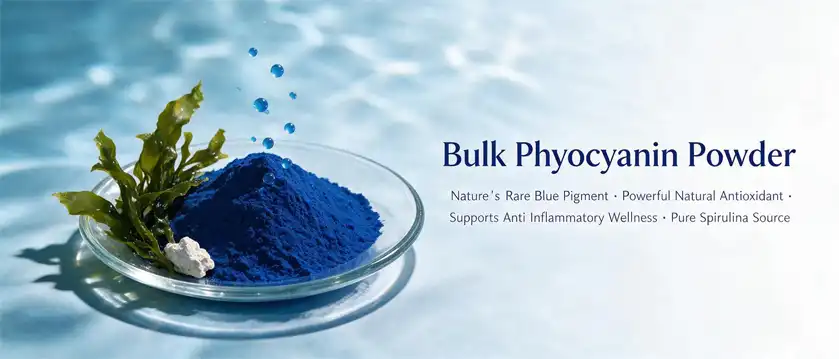
Bulk phycocyanin powder is a natural blue colourant that is less expensive per kilogram and provides enterprises that create their own goods complete control over the ingredients, packaging, and branding. You can produce clean labels with pure blue instead of man-made dyes like Brilliant Blue FCF. Lots of SKUs might have the same ingredient source, whether it's for drink mixes or supplements. The product is produced in consistent quantities, so the quality remains good even as the quantity of orders rises. It’s available to anybody in the U.S. who wants to know all there is to know about supplements before they purchase. It talks about costs, dangers, grades, specifications, how to vet the vendor, and what you need to do to acquire anything." It also illustrates how BioSpark may assist with private label ventures from the first sample to a consistent supply.
Understanding Bulk Phycocyanin Powder for Private Label Brands
What Is Bulk Phycocyanin Powder?
Spirulina, which is also called Arthrospira platensis, is where the blue color and protein complex bulk phycocyanin powder come from. The first step in production is to get biomass from living things. After the water is taken out, the goods are screened, concentrated, dried, tested, and packed. Aqueous extraction and centrifugal separation are the best ways to make things because they don't leave behind chemical solvents. Eriksen's review from 2008 says that phycocyanin is a color that is used in medicine, biotechnology, and food.
“Blue spirulina” is not a food, but a marketing name. When people want to purchase anything, I urge them to look at the technical data sheets, not the product names. This is because they have variable levels of stability, purity, carrier content, and solubility. If it claims it’s natural, organic, vegan, or non-GMO, people should also see verification from the facility where the item was created.
Why Buy Bulk Phycocyanin Powder for Private Label Products?
Buying in bulk rather than individual packets may save you more money. You may also decide how much the retailers charge, how much the wholesalers get, and the profit margins. This source may be used to create several SKUs. Just modify the claims, the packaging, the dose, and the flavour systems for each.
When you have a steady supply, you can plan your production better and not have to worry about running out of stock. This is also a legal option. If foods use only spirulina extract as a colour additive, the FDA doesn’t have to review them. Or, simply put, U.S. businesses may employ blue dyes that are generated from plants, not humans. “It’s better to work with OEM partners who can assist with labelling, formulations, custom concentrations, and particle sizes. If you're buying extra units from the source, verify that they have identical specifications.
Key Benefits and Applications of Bulk Phycocyanin Powder
The component may be used in various sorts of goods, but all need the component to work in a different manner. Phycocyanin powder is sold in bulk form in nutritional supplements, certain cosmetic goods, ice cream, candy, protein drinks, smoothies, and quick non-dairy drink mixes.
The beverage makers should examine the pH, taste, smell, light stability, and the dispersion of the liquid. It is best to add or fill the bulk phycocyanin powder cold after heating, since it starts to degrade around 60 °C. If the dairy is pasteurised before the colour is added, the blue hue will persist longer.
Supplement manufacturers need to test for things like purity, microbiological limits, heavy metals, allergy status, and batch documentation. Cosmetics companies have to ensure their products are safe for the skin and fulfil the standards of the nation they wish to sell in. Various products and various markets promise different things. Before you sell it, test your product. Make sure it works.
Choosing the Right Grade and Supplier
How to Choose the Right Bulk Phycocyanin Powder Grade
Make your choice based on what you want to make, how you want to make it, and where you want to sell it. The color value, which is given as E1% at 618 nm, is at least E6 most of the time. The color gets stronger as the number goes up. One example of this is that E25 is more concentrated than E18. It doesn't change the taste as much, so less of it needs to be added.
Ask each seller how they measure color value, pigment content, and purity when you are comparing different grades of bulk phycocyanin powder. There isn't a direct link between the different ways to find percentages. Also, see how well it breaks down, spreads, reacts with water, heavy metals, and changes in pH, and how well it stands up to heat. Once everything is mixed, test the powder. It may work differently in lab water than in a commercial drink or capsule.
Supplier Evaluation: How to Find the Best Bulk Phycocyanin Powder Supplier
A good one understands how to create products, has quality control that works, and has taken care of orders from foreign nations previously. When dealing with a business, find out if it is a manufacturer, an exporter, a distributor, or a trading organization. Price, tracking, lead time, and technical support will all depend on what kind of company you operate.
There are FDA laws governing dietary supplements. They are called 21 CFR Part 111. The guidelines require food firms to ensure that the ingredients they use are legitimate. That is why it is necessary to get a batch- and lot-specific certificate of analysis (COA) for the product you sold. It should tell you how much water it contains, what colour it is, what bacteria, heavy metals, and allergens are in it, and how long it will last. Also, check out the rules for privacy, test orders, and export support.
Why Work with an Experienced Bulk Phycocyanin Powder Manufacturer?
A manufacturer with a lot of experience handles bulk phycocyanin powder by doing the same things over and over again: looks at samples, makes technical choices, packages, files paperwork, ships, and makes more of the same thing. With this setup, your purchasing, R&D, quality, and logistics teams will be able to work together better.
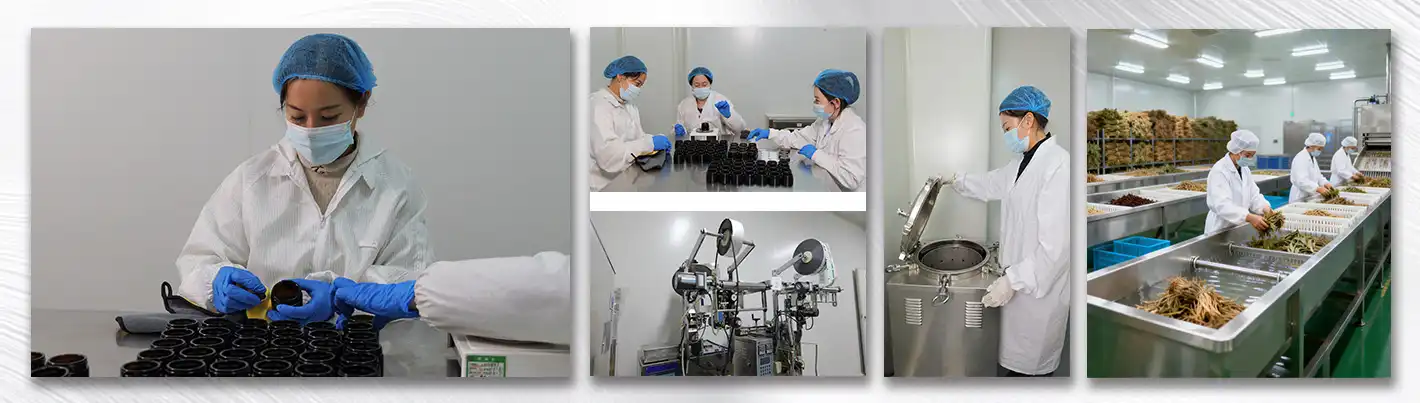
Health goods are researched, planned, made, and sold all over the world by Xi'an BioSpark Co., Ltd. You can get health supplements, plant extracts, functional ingredients, and nutrition formulas from us. We can also help you with OEM and ODM. We can make many things or just a few that are one of a kind. We ship to places like Asia, Africa, the Middle East, and South America.
It is very important for private label brands that the color, the amount of pigment, how well it dissolves, and the ability to keep track of lots stay the same. You shouldn't just look at price when choosing a partner. Also, check out how quickly they answer, how well they solve issues, how much they can do, and how well they handle change.
BioSpark Bulk Phycocyanin Powder: Specifications and Quality Control
Technical Profile
Blue is made of phycocyanin. A protein backbone is joined to open-chain tetrapyrrole chromophores in a way that can't be broken. Adding water to the powder is easy. There is always more than 2.5 purity in high-grade bulk phycocyanin powder (A618/A280). In other words, the protein is clean.
When something's pH level is between 5.0 and 7.5, it is most stable. It can break down and change color if the value is not in that range. The high-grade powder is said to have no more than 1% lead, 0.5% arsenic, and a total plate count of 1,000%. Before you decide what to do, please look at the batch COA to get the exact values for your grade.
Quality Control Testing
Being good is the first step in quality control. To find out how strong the color is, we measure the extinction coefficient at 618 nm. One of the tests that is done is the water extraction test. The ICP-MS checks for heavy metals, the GC-MS checks for solvent residues, and the SDS-PAGE electrophoresis makes sure the proteins are still intact.
Fast light and heat are used to test the stability of the pigment and see how long it will last in different mixes. It was looked into by Martelli and his colleagues in 2014 to find ways to make things more stable at high temperatures. It is important to do these tests for food use, as this study shows. Food can be checked by a third party to make sure it is organic (USDA/EU), halal, kosher, and free of GMOs. This will let your project connect to supply chains around the world when it needs to.
Storage, Heat, and pH Handling
Things like heat, bright light, and acidity fade color the most. The powder can be kept for up to 24 months in a cool (below 20°C), dry, dark place. UV light breaks down chromophores, so keep packages closed and out of direct sunlight.
Temperature, pH, and preservatives can change how stable phycocyanin is, as found by Chaiklahan and others in 2012. In 2005, Jespersen and his co-authors looked into how stable natural blue colorants were in sweets and drinks when they were exposed to light and heat. It's the same in real life as what they show. If you put the protein in drinks with a pH below 4.0, it may settle to the bottom. For places that are acidic, I suggest a stabilized or microcellular form. Add the powder when it's hot and test a small amount before making the whole batch.
Pricing, Risks, and Procurement for Private Label Buyers
Bulk Pricing, MOQ, Packaging, and Shipping Considerations
Bulk phycocyanin powder costs different amounts depending on how pure it is, what colour it is, what grade it is, what certifications it has, how much you order, how it is packed, what tests it goes through, where it comes from, how it is shipped, and where it ends up. When you get rates, you shouldn't just look at prices. Also, look at prices that use the same Incoterm, testing scope, expected shelf life, and package style.
To test and study, a 1 kg sample is enough. It's fine to use 25 kg for pilot production, and bigger amounts are fine for a steady supply. Find out the MOQ right away, because it can change based on grade and customisation. You should choose boxes that don't let water or light in. Also, check the customs papers, insurance, delivery times, and warehouse condition before you ship. You should add to your plan the time it takes to bring things into the U.S.
Common Risks When Buying Bulk Phycocyanin Powder
Something isn't pure, safe, stable, or up to code just because it's a certain colour. Some people buy the wrong grade of drinks or pills, even though normal blue spirulina powder is thought to be the best form of phycocyanin.
Acidic places, heat, oxygen, and long processing times are some of the things that can make it hard to break down and stay stable. Claims about drugs, organic foods, or non-GMOs that aren't backed up make it more likely that people won't follow the rules. Before you place your order, make sure you read over the batch COAs, application data, supply continuity, production capacity, and rules for change control. After that, make a quality agreement based on the quality guidelines that were decided upon. A test run can show most of these issues for a small fee.
Recommended Procurement Process for Private Label Buyers
By using a disciplined strategy, you reduce the risks of technical, legal, and supply chain concerns. Write who you want to purchase your product, what you want to say about it, and how much you believe you can sell in a year. List all the facts you need, such as colour, how easily it dissolves, how much water it requires, allergies, heavy metals, microbiological restrictions, certifications, shelf life, packaging, etc.
Find out how to store the item and get samples, technical data sheets, certificates of analysis (COAs), and other proofs. Last, make sure your main recipe is correct. Prices, lead time, MOQ, payment terms, and how good they are at their job can all be used to compare suppliers. After that, you should agree on a quality plan and move from small-scale production to large sales. BioSpark gives advice on how to make the drug and also transports and packages it to help with all of these steps.
Final Buying Checklist for Bulk Phycocyanin Powder
Do these three things before you place your order:
- Fit and specifications: Make sure the powder can be used in your food, drink, supplement, nutraceutical, or beauty product. You should include colour value, solubility, moisture, microbiological limits, heavy metals, stability, shelf life, and storage conditions in a way that can be measured. This way, every batch you get can be tested against the same written standard that your quality team approves.
- Proofs and Claims: Any claim of being organic, vegan, non-GMO, Halal, or Kosher must be backed up by documents that can be checked and show where the food was made and who it is meant for. Ask for the batch COA, technical data sheet, allergy declaration, and export paperwork. Also, make sure that the lot number on the COA matches the lot number that is being shipped to your warehouse.
- How to trade and get help: Look over the minimum order quantity, price breaks, packing, lead time, Incoterms, payment terms, and shipping method. Then, check the supplier's ability to meet your needs, as well as their support for OEMs, expert service, and response after the sale. A low-price quote doesn't help if the delivery is late or if there are problems during a key product launch for your business.
Your private label launch will stay on track with these checks, and your profit margins will be safe.
Conclusion
Bulk Phycocyanin Powder is a natural blue colourant that private label businesses may utilise to create many SKUs from the same ingredient. You may choose one by its use, grade, and colour value. It has evidence to back it up, including microorganisms, heavy metals, purity and solubility. Fill them cold and store them properly, then do pilot tests to ensure the safety of the findings. Colour stability may be reduced by light, heat (over 60° C), and pH below 4.0. Batch COAs and legitimate pieces of certification with supplier checks make individuals less likely to transgress the regulations. When specifications, Incoterms, and packaging are the same, it is only reasonable to compare pricing. “Write down the steps you take to buy things. For example, you try samples, agree on quality, set up regular orders. This ensures you have what you need.” If a firm is making a purchase, it should consider testing, documentation, and the supplier’s performance. In this manner, they secure the quality of the goods and their revenues.
FAQ
Is blue spirulina the same as phycocyanin?
Not all the time. Spirulina is blue, but the name "blue spirulina" only refers to the pigment-protein complex that is inside it. The COA should say what color it is and how pure it is.
Can I use bulk phycocyanin powder in hot-filled drinks?
Phycocyanin breaks down when heated above 60°C. You can add the powder cold or heat it first and then add it.
How long does the powder last?
If you keep it below 20°C in a dark, dry place, it will last for 24 months.
What is the difference between E18 and E25?
It lets you know how bright a color is. Because E25 is more concentrated, it only needs a small amount to work. It doesn't change the taste either.
Does MOQ change by grade?
Yes. Tell them what you need and how much you buy every year to get a precise number. MOQ can be different for each grade and way it's made.
Which documents should I request?
You should ask for a technical data sheet, a specification, a batch COA, certifications, an allergen statement, and a list of ingredients.
Request a Bulk Phycocyanin Powder Quote for Your Private Label Project
Are you ready to check out some other specs? If you tell BioSpark what you plan to use it for, who you want to buy it for, how much you buy every year, what kind of packaging you want, and when you need it, we'll help you choose the right grade. We also make bulk phycocyanin powder and offer OEM and ODM services. We can handle samples, small orders to test the market, and big orders. You can email leao@biosparkcn.com or visit https://www.biosparkcn.com/ to begin your private label project.
References
1. Eriksen, N. T. Production of phycocyanin—a pigment with applications in biology, biotechnology, foods and medicine. Applied Microbiology and Biotechnology, 2008.
2. Martelli, G., et al. Thermal stability improvement of blue colorant C-phycocyanin from Spirulina platensis for food industry applications. Process Biochemistry, 2014.
3. Chaiklahan, R., et al. Stability of phycocyanin extracted from Spirulina sp.: Influence of temperature, pH and preservatives. Process Biochemistry, 2012.
4. Jespersen, L., et al. Heat and light stability of three natural blue colorants for use in confectionery and beverages. European Food Research and Technology, 2005.
5. Listing of Color Additives Exempt From Certification; Spirulina Extract. Federal Register, 2013.
6. Current Good Manufacturing Practice in Manufacturing, Packaging, Labeling, or Holding Operations for Dietary Supplements. Federal Register, 2007.

Send Inquiry

Related Industry Knowledge
- How to Choose Liposomal Calcium Citrate Suppliers?
- Liposomal Ferrous Glycinate OEM: Formulation and Quality Guide
- What Are the Key Benefits of Polygonatum sibiricum Peptide?
- Coconut Milk Extract Powder: The Ultimate Plant-Based Dairy Swap
- Coconut Milk Extract Powder: The Ultimate Plant-Based Dairy Swap
- Coconut Milk Extract Powder: The Ultimate Plant-Based Dairy Swap
- Coconut Milk Extract Powder: The Ultimate Plant-Based Dairy Swap
- Coconut Milk Extract Powder: The Ultimate Plant-Based Dairy Swap
- Coconut Milk Extract Powder: The Ultimate Plant-Based Dairy Swap
- Coconut Milk Extract Powder: The Ultimate Plant-Based Dairy Swap
- Coconut Milk Extract Powder: The Ultimate Plant-Based Dairy Swap
- Coconut Milk Extract Powder: The Ultimate Plant-Based Dairy Swap
- Why Is Tanshinone Danshen Extract Powder Important in Cardiovascular Health?
- What Is the Science Behind Fulvic Acid Powder Benefits?
- Need Bulk Maqui Berry Powder with Fast Global Shipping?
- Why Is Logwood Extract Still Relevant in Modern Applications?
- What to Look for in White Willow Bark Extract Powder?
- Does Pomegranate Peel Extract Powder Reduce Inflammation?