What Makes Premium Organic Green Tea Extract Powder?
Oct 29, 2026
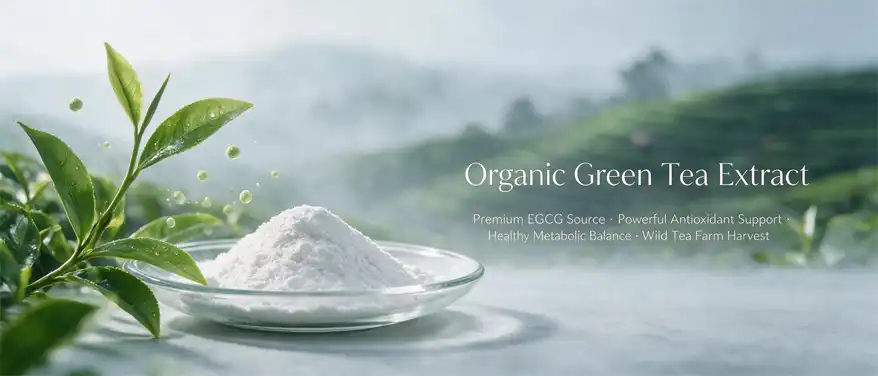
Premium organic green tea extract powder is a concentrated botanical ingredient derived from Camellia sinensis leaves grown without synthetic pesticides or GMOs. Standardized to precise bioactive markers — typically 50%–98% total polyphenols and 45%–50% EGCG by HPLC — it delivers consistent antioxidant potency that raw tea leaves simply cannot match. For B2B buyers in nutraceuticals, functional foods, and skincare, understanding what separates a premium extract from a generic one means fewer compliance risks, stronger product performance, and a more defensible market position. This guide walks you through every decision point.
Understanding Organic Green Tea Extract Powder
Making green tea involves several steps. When you shop, it's important to know the difference between matcha, organic green tea extract powder, and raw leaf powder. If you get them mixed up, you'll waste time and money.
What It Is and How It Differs
Bioactive phytochemicals from Camellia sinensis leaves that have not been fermented with water or food-grade ethanol are extracted to make organic green tea extract powder. Matcha is a powder made from the whole leaf. This extract, on the other hand, has been filtered to remove the fibers. An ingredient that dissolves in water and has a lot of active ingredients is made this way.
Organic Cultivation Standards
It is against the rules for approved organic farms to use chemical fertilizers, herbicides, or pesticides. This method keeps the soil's integrity and gets rid of the residue risks that cause products to be turned down for sale in the US and EU. For something to be certified as organic by the USDA National Organic Program, there must be proof that it was tracked from the farm to the consumer.
Key Certifications to Look For
Organic certifications show that the supply chain meets certain chemical-free standards, which have been checked by a third party. For people in North America who want to buy organic green tea extract powder, they should first look for USDA Organic approval. This will help them avoid problems with fake imports and labels that don't follow the rules.
Critical Quality Dimensions of Premium Organic Green Tea Extract Powder
You can find out how good this group of ingredients is. Not only do I believe what the supplier says, but I also look at four other things.
Certification and Traceability
When you buy from someone who can't show batch-level tracking papers that show where the raw leaves came from and where the finished extract came from, you're taking a chance. Real companies that sell organic bulk green tea extract powder keep farm certificates, records of processing checks, and lab results from a third party for each batch of production.
Purity Standards and Active Marker Specifications
At least 95% total polyphenols (UV method) and at least 45% EGCG (HPLC method) must be present in the best grades. Because non-catechin substances absorb light at the same wavelength, powders that have been mixed or tampered with a lot will give too high a number. It is more reliable to ask for HPLC data that is specific to catechin fractions than to check only with UV light.
Antioxidant Potency and Bioavailability
Based on how much EGCG is present, the ORAC value is found. Good organic green tea extract powder is a lot stronger as an antioxidant than regular extracts that aren't organic. This is because organic farming lowers oxidative stress on the plant, which keeps the catechins' integrity. The Journal of Agricultural and Food Chemistry has studies that show how bioavailable EGCG is depends on how it is extracted and how pure the raw material is.
Packaging and Shelf Life Management
The powder takes in a lot of water and turns brown when it comes in contact with light or water. If you store food below 25°C in a dry, dark place in double-sealed food-grade plastic bags inside fiber drums, it will last for 24 months. Bulk goods suppliers should make sure that their packages are nitrogen-flush packed so that they don't rust while they're being shipped.
How to Choose the Best Organic Green Tea Extract Powder for Your Business
If you want to choose sellers, you should use a structured screening process instead of going with your gut. For products used in cosmetics, nutraceuticals, and functional foods, these are the things I look for:
- Certification authenticity: Get the original certificate number and check it with the USDA or Ecocert, because that's the group that gave it out. Just having a copy PDF is not proof enough.
- Third-party laboratory testing: Heavy metal panels (lead, arsenic, mercury, cadmium), microbe counts, and pesticide residue screens against U.S. Pharmacopeia standards should be on the COA when testing is done by a third-party lab.
- Application-specific grades: When making RTD drinks, grades that dissolve in cold water work best. For capsule and tablet forms, standard grades work best. Before you decide on a volume, make sure you understand the solubility profile.
- Decaffeinated options: Companies that offer supercritical CO₂ decaffeination can lower caffeine levels below 0.5% without breaking down EGCG. This is important for kids' vitamins and other lines of goods that are sensitive to caffeine.
Matching the right grade of organic green tea extract powder to your application at the beginning prevents costly reformulation later. After you're sure of the technical fit, you should check how reliable their delivery is, how flexible their minimum order size is, and how well they can help you make your own products. Relationships last because of clear contracts, fair prices at the start, and quality that stays the same from batch to batch.
Practical Applications and Usage Insights for Organic Green Tea Extract Powder
There are numerous applications for bulk green tea extract powder. When people who work on products know how they are usually used, they can make formulations that work well and follow the rules.
Weight Management Supplements
A 2011 review in the journal Obesity Reviews looked at a lot of different clinical studies and found that adding caffeine to green tea catechins caused small but statistically significant weight loss. A normal dose of weight loss pills has between 250 mg and 500 mg of pure extract.
Skincare and Topical Formulations
Organic green tea extract powder can be used as an active ingredient in sunscreen, serums, and masks since EGCG heals wounds and blocks UV rays. Formulators should change the base system to match the pH range, which is best for stability (3.0 to 6.0). In the United States, cosmetic labels need to have an INCI list because of FDA voluntary guidelines.
Functional Foods and Beverages
Short amounts of heat can bring the powder up to about 80°C, which means it can be used to make hot drinks. It is best to use grades that dissolve in cold water and don't leave behind any sediment at pH 3.5 to 5.0 for clear RTD forms. Between 0.1% and 0.5% w/v is the range for most functional drinks.
Procurement Strategies: Buying Premium Organic Green Tea Extract Powder Online and Wholesale
You should do more than just check prices when you buy in bulk. There are many cheap options on the market that don't pass tests done by outside groups. This means that brands are responsible for problems that happen after the fact.
If you want to buy a lot of organic green tea extract powder, you should get a sample COA and a real sample before you place a large order. Look at the COA and see if the amounts of polyphenol and EGCG match what another lab found. No matter how much they charge, you shouldn't work with suppliers who won't let you check their work yourself.
In this area, discounts for buying in bulk are popular, but you shouldn't start negotiating until you know for sure that the quality is good. Locking in low prices on a low-quality extract can make it hard to prepare and even cause a recall. A reliable company that sells organic green tea extract powder will have clear pricing, the ability to make batches of different sizes, and quality systems that are well-documented. They're not going to force you to buy.
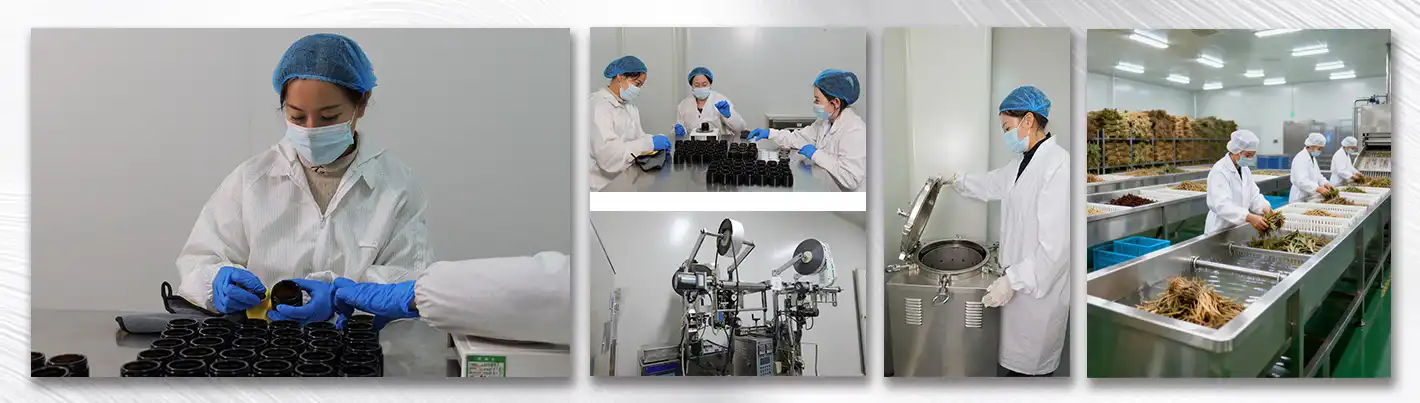
BioSpark (Xi'an) Biotechnology Co., Ltd. manufactures organic green tea extract powder that is certified organic and always has the same amount of EGCG and flavonoids. Finding raw materials, extracting them, checking their quality, and sending paperwork for export are all part of their production process. It can handle both small orders for research and development and big orders for sales all over the world.
Conclusion
There are three things you need to find good organic green tea extract powder: certified products that meet strict standards, suppliers who can back up both of these with clear paperwork, and certified products that are certified. The amount of EGCG in your final product, how it's packed, and how long it lasts all have an impact on how safe it is and how well it does in the market. People who buy something don't have to worry about the costs and risks of following the rules, which can cut into their profits later. There isn't a cheap organic green tea extract element that is the best. There is one that can be defended the most.
FAQ
1. How do I verify that an organic green tea extract powder is genuinely certified?
To make sure the certificate number is correct, ask the certifying body (like USDA NOP or Ecocert) for it and then check it on their public website. You need more than just a copy of the certificate. You should ask for transaction certificates that prove the batch in question is linked to a checked supply chain.
2. Is organic green tea extract powder safe for use in skincare products?
Yes, as long as the pH level stays between 3.0 and 6.0 and the concentrations are right. If you want to, the FDA's cosmetic registry system can check chemicals used in cosmetics in the US. Brands should make sure they are stable and meet INCI name standards before putting them on labels. There is a lot of research in dermatology that shows EGCG can lower inflammation.
3. What is the difference between organic green tea extract powder and matcha powder?
Matcha powder is made from whole leaves that have been ground very finely. It has all the same things as the leaf, like chlorophyll and fiber, but fewer catechins per gram. A standardized amount of polyphenols and EGCG has been added to organic green tea extract powder, which is a concentrated, clean extract. It's easier to measure out vitamins and functional goods when they are made with extract powder because each amount is more potent and dissolves better.
4. Can I get a decaffeinated version?
Yes. The amount of caffeine is lowered to less than 0.5% using supercritical CO₂ decaffeination, but the EGCG stays the same. You can keep the organic certification chain going with this process as long as you use solvents that are okay.
Partner with BioSpark for Certified Organic Green Tea Extract Powder
BioSpark sells pure organic green tea extract powder to supplement brands and shops all over the world. The powder has been certified and comes with specs that are standardized by HPLC and support for OEM and ODM. Our team responds quickly and ships reliably, whether you need a few samples to test or a lot to sell. Email leao@biosparkcn.com to get a sample or a quote for a lot of organic green tea extract powder right now.
References
1. Cooper, R. (2012). Green tea and theanine: Health benefits. International Journal of Food Sciences and Nutrition, 63(S1), 90–97.
2. Hursel, R., Viechtbauer, W., & Westerterp-Plantenga, M. S. (2011). The effects of green tea on weight loss and weight maintenance: A meta-analysis. Obesity Reviews, 12(7), 538–550.
3. Cabrera, C., Artacho, R., & Giménez, R. (2006). Beneficial effects of green tea — A review. Journal of the American College of Nutrition, 25(2), 79–99.
4. Kochman, J., Jakubczyk, K., Antoniewicz, J., Mruk, H., & Janda, K. (2021). Health benefits and chemical composition of matcha green tea: A review. Molecules, 26(1), 85.
5. Perva-Uzunalić, A., Škerget, M., Knez, Ž., Weinreich, B., Otto, F., & Grüner, S. (2006). Extraction of active ingredients from green tea (Camellia sinensis): Extraction efficiency of major catechins and caffeine. Food Chemistry, 96(4), 597–605.
6. USDA National Organic Program. (2023). Organic regulations and certification standards. United States Department of Agriculture Agricultural Marketing Service.

Send Inquiry

Related Industry Knowledge
- Where Are Purslane Saponins Commonly Used?
- What Is Bovine Spleen Peptide and How Does It Work?
- How Are Purslane Saponins Used in Natural Products?
- Eggshell Membrane Peptide: A Complete Sourcing Guide
- How Can Damiana Peptide Enhance Your Product Portfolio?
- Snow Lotus Fruit Powder Benefits: What Buyers Should Know
- Snow Lotus Powder Benefits for Food and Nutraceutical Brands
- Loquat Powder Quality Standards Every B2B Buyer Should Know
- Is Holy Berry Powder Rich in Natural Antioxidants?
- Apple Peel Extract Powder Benefits for Skin & Health