OEM Ashwagandha Leaf Extract: Formulation and Sourcing Guide
Oct 29, 2026
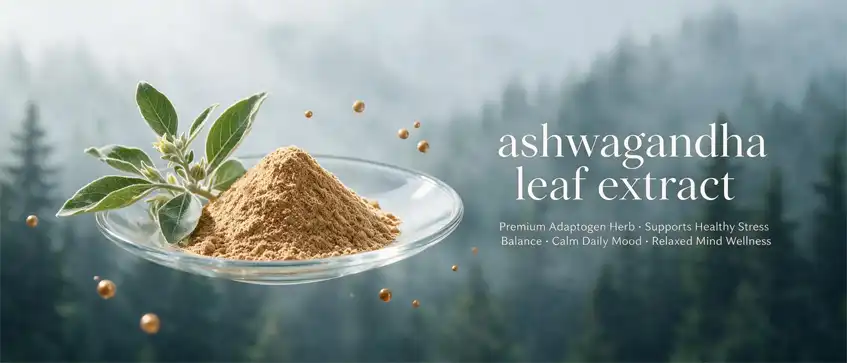
If you are developing a line of supplements or obtaining botanical ingredients at scale, you need to pay considerable attention to ashwagandha leaf extract. This extract is derived from the leaves of Withania somnifera and offers a concentrated withanolide profile that is more potent per gram than many of the root-based alternatives. For North American and other OEM and ODM customers, the difference between a product that sells and one that stalls on the shelf is knowing how to develop, obtain, and quality-check ashwagandha leaf extract.
Understanding Ashwagandha Leaf Extract: Composition, Benefits, and Usage
Bioactive Composition
The ashwagandha leaf extract comprises mostly withanolide glycosides, often found in the range of 5% to 35% (HPLC-UV). Extracts of leaves contain much more withaferin A than extracts of roots alone. This specific set of phytochemicals in the leaf extract has higher antioxidant and adaptogen content per gram. This is a key thing to know when you are looking to locate the greatest pill or capsule fill weights.
Health Benefits Backed by Research
Human trials suggest that standardized ashwagandha powder may help decrease cortisol levels, reduce stress, and alter the immune system. In a 2019 study published in the journal Medicine, patients with severe stress who took 240 mg of ashwagandha powder daily had significantly lower morning cortisol levels. Withaferin A also helps with joint discomfort and reduces inflammation, protecting cells from free radical damage. That’s why ashwagandha leaf extract is a great option for stress, sleep, and energy benefits.
Dosage, Formats, and Safety Notes
For OEM products, the optimum is usually 125 mg to 300 mg of ashwagandha leaf extract per serving. This is inadequate for root powder, which requires 300 mg to 600 mg. People may get their medications as capsules, pills, ready-to-drink liquids, rapid powder mixes, and soft gels. One extremely essential safety concern is that pregnant women should not consume ashwagandha leaf extract. "This needs to be on the label." All the completed products for the US market should comply with the requirements of the Food and Drug Administration (FDA) for food supplements.
OEM Formulation Insights: Best Practices and Comparative Analysis
Leaf Extract vs. Root Extract: Choosing the Right Material
From a formulation standpoint, ashwagandha leaf extract and root extract serve overlapping but distinct purposes. The leaf fraction is richer in withaferin A, which has more potent antioxidant and anti-inflammatory effects. The root extract often contains more alkaloids, which are the preferred ashwagandines for sleep and anxiety applications. This is an important distinction for OEM purchasers to know so that they can match the proper extract to the right product category, whether it is a cognitive performance stack or a nightly recovery recipe.
Powder vs. Capsule: Manufacturing Efficiency
Ashwagandha leaf extract powder has a very high water solubility (>90% in cold water) and is thermally stable (up to 80 °C). These qualities allow for simple incorporation into functional drinks and quick powder mixes without any grittiness or sedimentation. “Capsule formats enhance the accuracy of the dose and the appeal to consumers,” he says. High-potency nootropic stacks may be space-limited, and micro-encapsulated ashwagandha leaf extract enables producers to reach desired withanolide levels within strict weight limits.
Certifications, Adaptogen Blends, and Regulatory Fit
Fit GMP certification and USDA Organic status are no longer optional for brands targeting the North American supplement market—they're expected. Buyers who want to get ashwagandha leaf extract should ensure that the vendors are NSF, ISO 22000, or similarly certified. The combination of various adaptogens, such as rhodiola rosea or lion’s mane mushroom, in one recipe may help the product to have a wider market appeal. Regulatory assessment of mixed adaptogen formulations should ensure ingredients are within tolerable daily consumption criteria established by 21 CFR Part 111.
Strategic Sourcing and Procurement of Ashwagandha Leaf Extract for OEM Clients
Evaluating Suppliers: What to Look For
If a firm that creates other items has to buy ashwagandha leaf extract, they browse around and don’t only look at pricing. Third-party Certificates of Analysis (COAs) and evidence of production must be provided and maintained from the location where the plants were cultivated to the location where the extract is sold. Test reports for each batch should include heavy metal screening data, microbiological limits according to AHPA criteria, and withanolide standardization. They’ll be pleased to provide them to you if you purchase from someone you trust.
Here are the most crucial things to look for when buying Ashwagandha leaf extract:
- Withanolides standardization documentation: COA must include the precise amount determined by HPLC-DAD to ensure potency and batch uniformity.
- Traceability records: Origin of raw leaf material, harvest season, and extraction procedure should be properly recorded and accessible on request.
- MOQ flexibility: Good suppliers may accept trial orders (1–5kg) and large-scale production runs, allowing businesses to test before committing.
- People who purchase from all over the globe are likely to face issues with the supply chain and the risk of someone tampering with your brand. These regulations protect your brand from such perils.
Pricing Structures and Bulk Procurement
The cost of bulk ashwagandha leaf extract depends on the amount of withanolide, whether it is organic or not, and the quantity you buy. Eco-friendly paper costs 20–40% more than conventional paper, yet it makes companies stand out in North American and European markets. If consumers desire consistent pricing, the way to achieve it is via long-term contracts with suppliers. This is due to the changing quantities of raw leaf available with the seasons.
Logistics and Risk Management
Depending on where it’s going and where it’s coming from, every packet of ashwagandha leaf extract takes 15 to 35 days to get there. “Buy up your stock so you have enough extra to last 60 or 90 days if the port is late or the check takes too long. Need export paperwork that meets U.S. Customs rules? Ask the vendors to deliver them to you. This should include phytosanitary certifications and Harmonized System (HS) designations for plant goods.
Quality Assurance and Regulatory Compliance in OEM Ashwagandha Leaf Extract Production
Laboratory Testing Protocols
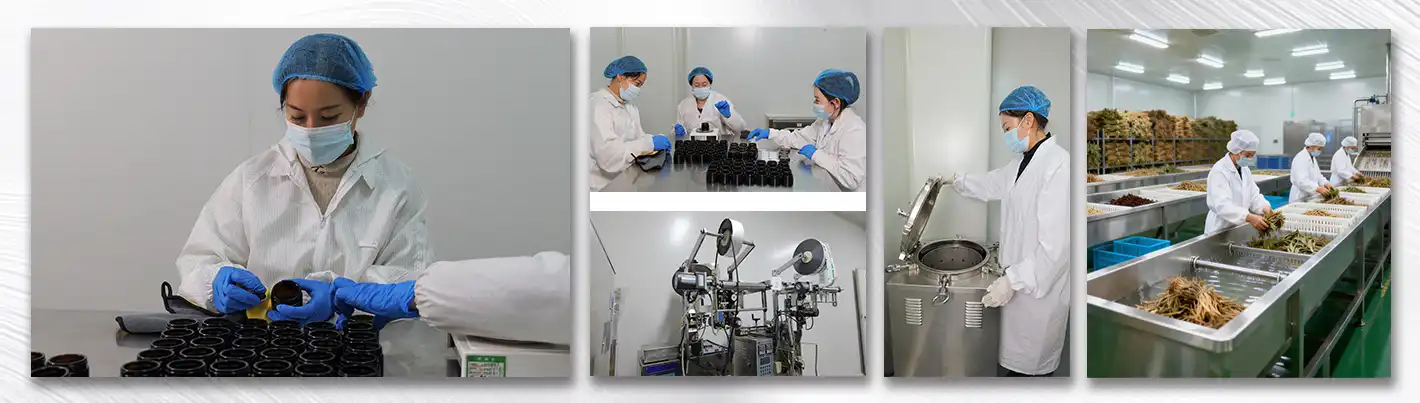
First, they check the ashwagandha leaf juice in the lab to make sure it's good. One way to check for withanolides is with HPLC-DAD, which also checks for any fake chemicals that were added. The ICP-MS test checks to see if the lead, cadmium, mercury, and arsenic levels are lower than what is allowed by California Prop 65 and the EU Maximum Residue Levels. There are more than 400 kinds of pesticides that GC-MS/MS panels can find. This has to be done for items that want to be labeled "clean" or "certified organic."
GMP Standards and International Compliance
Present Good Manufacturing Practices (cGMP) say that every batch of ashwagandha leaf extract should be made in line with 21 CFR Part 111 of the FDA. Follow the rules for plant extracts set by the European Pharmacopeia (Ph. Eur.) if you want to sell your goods in the EU. This test from the USP 467 series checks for residual solvents to make sure that the amount of extraction-grade ethanol or water used during processing is safe for oral supplements.
Labeling and Export Documentation
The scientific name for ashwagandha leaf extract that is sent to the US is Assamese somnifera. On the right stickers, the species name, the lot number, and the part of the plant that is being shipped (the leaf) must all be written. A rule called 21 CFR 101.36 says that fact sheets that are connected to finished products must follow certain steps. So you don't have to wait at customs, you should also get phytosanitary certificates, safety data sheets (SDS), and origin statements ready ahead of time.
Market Trends and Future Opportunities in Ashwagandha Leaf Extract OEM Products
Growth Drivers in the Adaptogen Market
The worldwide market of ashwagandha extract was valued at around USD 870 million. growth rate will be more than 12% annually till 2030. Because more and more people want to be healthier and feel better. This demand is especially prevalent in North America. The US food supplement industry produces more than $50 billion a year. “Ashwagandha leaf extract is a great addition to both clean-label plants – very hot at the moment.
Novel Delivery Formats and Product Innovation
Supplements used to come in capsules, but today they come in useful gummies, liquid drops, and effervescent forms. These novel forms work well with ashwagandha leaf extract, which is simple to combine with water and tastes better once it has been extracted. With so many supplement manufacturers out there, the ones that are first to market with beverages or sweets that relieve stress are always ahead of the pack.
Sustainability and Ethical Sourcing as Brand Differentiators
The more we learn about the origins of things, the more we need to learn about the goods people purchase and the people who sell them. It’s preferable for brands to partner with retailers if businesses get their certified organic ashwagandha leaf extract from firms that are fair trade and eco-friendly. It is also simpler for government officials to cooperate with EU markets, which are quite stringent about green claims, if they have sustainability licences.
Conclusion
Ashwagandha leaf extract is one botanical substance that has the strongest scientific basis that supplement producers may sell in big amounts today. It is good to utilize for creating OEM products since it includes a lot of withanolides and may be supplied in the typical forms. Sellers need to have verifiable permits, simple means of keeping tabs on their products, and pricing that is the same for everyone to make it easier for individuals to purchase. The customers keep purchasing their products — because they trust the firms that are investing in excellent culinary science and stringent quality control.
FAQ
1. How does ashwagandha leaf extract differ from root extract in efficacy?
Leaf extract typically contains higher concentrations of withanolides, requiring a lower dose—around 125 mg—to achieve the adaptogenic effects that 300–600 mg of root extract delivers.
2. Is ashwagandha leaf extract safe for long-term use?
Clinical trials on standardized leaf extracts confirm safety for long-term consumption when withaferin A levels remain within established therapeutic windows. Always include appropriate labeling for contraindicated groups.
3. Does ashwagandha leaf extract taste bitter?
Withanolides carry natural bitterness, but refined extraction methods reduce this significantly, making the ingredient easier to mask in beverage and gummy formulations.
4. What is the shelf life of ashwagandha leaf extract powder?
Standardized ashwagandha leaf extract maintains potency for 24 to 36 months when stored in airtight containers in a cool, dry environment away from direct light.
5. Is the extract non-GMO and vegan-compatible?
Professional-grade extracts use non-GMO leaf material processed via aqueous or ethanolic extraction, making them compatible with vegan and clean-label certification requirements.
Partner with BioSpark for Trusted Ashwagandha Leaf Extract Supply
BioSpark (Xi'an) Biotechnology Co., Ltd. is a well-known business that makes ashwagandha leaf extract. They can help you make the product and ship it all over the world. We have to follow strict GMP rules. You can get all the paperwork you need to sell your goods in the US and EU, and we can make both small and large amounts of them. Email our team at leao@biosparkcn.com to get samples, COAs, or a price quote on a custom formulation.
References
1. Chandrasekhar, K., Kapoor, J., & Anishetty, S. (2012). A prospective, randomized double-blind, placebo-controlled study of safety and efficacy of a high-concentration full-spectrum extract of ashwagandha root. Indian Journal of Psychological Medicine.
2. Pratte, M. A., Nanavati, K. B., Young, V., & Morley, C. P. (2014). An alternative treatment for anxiety: A systematic review of human trial results reported for the Ayurvedic herb ashwagandha (Withania somnifera). Journal of Alternative and Complementary Medicine.
3. Mikolai, J., Erlandsen, A., Murison, A., & Brown, K. A. (2009). In vivo effects of ashwagandha (Withania somnifera) extract on the activation of lymphocytes. Journal of Alternative and Complementary Medicine.
4. Winters, M. (2006). Ancient medicine, modern use: Withania somnifera and its potential role in integrative oncology. Alternative Therapies in Health and Medicine.
5. American Herbal Products Association. (2023). Botanical Safety Handbook (3rd ed.). CRC Press.
6. Grand View Research. (2023). Ashwagandha Extract Market Size, Share & Trends Analysis Report. Grand View Research.

Send Inquiry
Related Industry Knowledge
- Liposomal Vitamin B9 Import Guide for Global Buyers
- Liposomal Withania Somnifera vs Standard Extract: Key Differences
- Can Bovine Spleen Peptide Support Immune Health?
- Is Longan powder the Right Ingredient for Your Next Product?
- How Does Ginseng Fruit Powder Enhance Product Value?
- Can snow lotus powder regulate blood sugar levels naturally?
- What to Look for in White Willow Bark Extract Powder?
- Why Rosa Roxburghii Extract Is Rich in Vitamin C?
- Tribulus Terrestris Extract Powder: Natural Saponin Power
- Why Miltiorrhiza Root Extract Powder Enhances Circulation?