_1764041963888.webp)
What Are the Benefits of Polygonatum sibiricum peptide?
Sep 16, 2026
Polygonatum sibiricum peptide delivers targeted immune support, enhanced energy metabolism, and superior antioxidant protection through small-molecule bioactive peptides derived from traditional medicinal herbs. This plant-based ingredient combines centuries-old wellness wisdom with modern biotechnology, offering brands a scientifically validated solution for formulating immunity-boosting supplements, anti-fatigue products, and functional beverages. With molecular weights below 3000 Daltons, these peptides achieve rapid absorption and bioavailability that conventional extracts cannot match.
Introduction to Polygonatum sibiricum Peptide
Polygonatum sibiricum, also called Siberian Solomon's Seal, has been used in traditional East Asian medicine for more than 2,000 years and is very important. Today, we use plant protein-directed enzymatic hydrolysis technology to turn this botanical heritage into a cutting-edge functional ingredient.
Botanical Origin and Traditional Use
The Polygonatum sibiricum plant comes from mountainous areas in China, Korea, and Siberia. It is in the Asparagaceae family. In the past, people believed that the rhizomes could give people vital energy, boost their immune systems, and help them age healthily. In historical records, it is called a "superior herb" that can strengthen many body systems at once.
Modern Extraction Technology
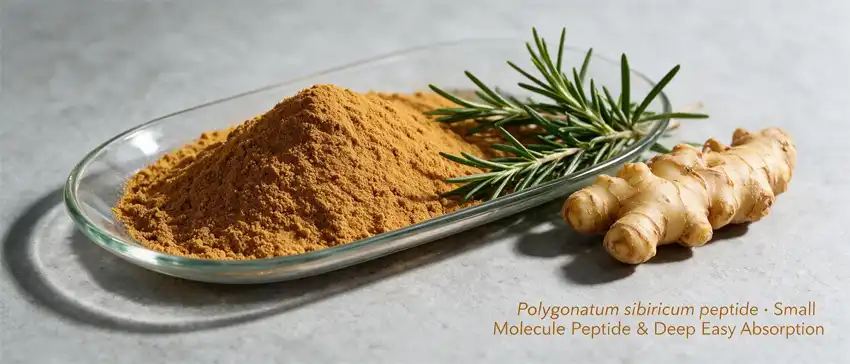
Directional enzymatic hydrolysis is what we use to turn large proteins into bioactive peptides while keeping the plant's natural sugars, oils, and flavonoids. This complex process starts with controlled scalding and a multi-stage chemical treatment using bromelain and papain. It is then extracted dynamically and cyclically at 60–70°C. The result is a fine, light brown to brownish-yellow powder that is 80% pure, as shown by HPLC tests. This meets standards for pharmaceutical-grade powders.
Growing Market Demand
There is a huge demand for plant-based bioactive peptides around the world because health product companies want to use natural ingredients instead of manmade ones. More and more, the functional nutrition market values ingredients that have been used for a long time and have been proven to work by modern science. Peptides from Polygonatum perfectly meet this need, connecting traditional identity with new ideas.
Understanding the Key Benefits of Polygonatum sibiricum Peptide
The bioactive peptide complex is good for your health in many ways, and this is supported by both old knowledge and new studies.
Enhanced Immune Function
Clinical findings show that Polygonatum sibiricum peptide activates macrophages' work and helps lymphocytes multiply. Combining small-molecule peptides with retained polysaccharides makes the dual-active system work better to change the immune system. This multi-part approach improves both innate and adaptive immune responses, which makes it useful for making supplements and products that help the body recover.
Anti-Fatigue and Energy Support
The metabolic effects of the peptide are especially useful for companies that are making sports nutrition and fitness products. It helps the liver store glycogen, gets rid of lactate faster when you work out, and slows the feeling of being tired. People who use energy drinks and healing supplements with this ingredient see effects faster and more clearly than those who use traditional plant extracts.
Antioxidant Protection
Cells are protected against oxidative stress by their ability to remove free radicals. DNA, proteins, and lipids are kept safe from damage by the peptides, which also help the body's natural inflammatory reactions. Because it is an antioxidant, the ingredient can be used in anti-aging products and wellness products that help with chronic stress.
Bioavailability Advantage
Molecular weights less than 3000 Daltons allow for fast absorption through the intestinal wall and direct entry into the bloodstream throughout the body. These small-molecule peptides get to specific cells quickly, while macromolecular proteins take a long time to break down. This better accessibility means that the drug works faster, which gives brands a big edge in the market.
Safety Profile
Toxicology tests and safety studies regularly show that this drug is well tolerated. The ingredient meets strict international safety standards because it is certified by ISO9001, GMP, FDA, Kosher, and Halal, among others. This full compliance with regulations gives procurement professionals peace of mind when they're looking for goods for global markets.
Scientific Insights: Structure, Mechanism of Action & Safety
Knowing about the technical side helps makers improve their manufacturing strategies and get the word out about the benefits of their products.
Advanced Production Process
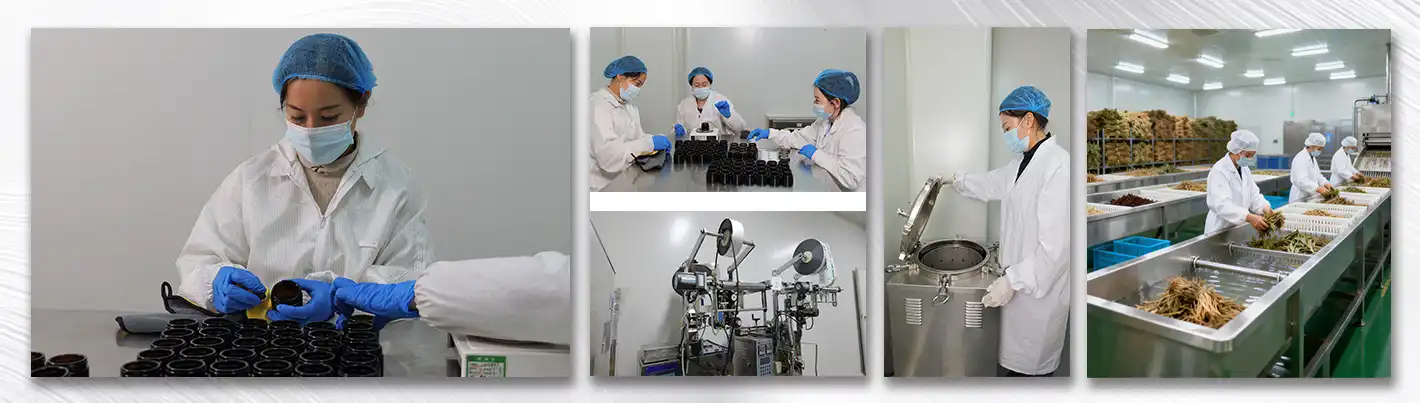
The production process takes into account Polygonatum's high starch and fiber content while extracting as many useful compounds as possible. After the first extraction, we clean the sample by pasteurizing it for a short time at 85 to 90°C for 5 to 10 minutes. This causes the proteins to denature in a controlled way. This makes enzymatic cleavage sites visible without hurting polysaccharides that are sensitive to heat.
Then, gradient enzymatic hydrolysis is done by composite plant proteases, which target specific amino acid sequences. Ultrafiltration membrane systems (5 kDa and 3 kDa cutoffs) separate and clean the target peptide segments while also getting rid of salt and other impurities. Spray-drying at controlled temperatures (160–170°C for the entry and 80–85°C for the exit) stops sugars and peptides from reacting too much with Maillard molecules.
Molecular Composition
There are bioactive peptides, Polygonatum polysaccharides, steroidal saponins, and antioxidants in this ingredient. It is a natural mixture. This complex mixing system has unique amino acids like arginine, aspartic acid, and serine, as well as trace elements like zinc, selenium, and iron that are naturally high in the source plant.
Mechanism of Action
The synergistic mixture works at the same time through more than one route. Peptides change gene expression and cellular signaling directly, while polysaccharides make immune cells' pattern recognition receptors work. Flavonoids help the body's antioxidant system even more, and saponins help membranes open up, and nutrients get into cells. This action on multiple targets explains why they work better than single-component supplements.
Quality Control and Testing
A full analysis of every production batch is done, which includes measuring the molecular weight distribution using HPLC, finding out the amount of total peptides, characterizing the amino acids that make up each peptide, checking for heavy metals, and testing for microbial limits. We also do in vitro cell activity tests that measure the ability of immune cells to multiply and protect against damage. Using low-dose Co-60 γ-ray irradiation for terminal cleaning keeps microbes safe without affecting bioactivity.
Comparative Analysis: Polygonatum sibiricum Peptide vs Other Peptides
When deciding where to get an item, procurement workers should know how this one compares to other options.
Molecular Structure Differences
Collagen peptides are mostly made up of glycine, proline, and hydroxyproline and have a size range of 2000 to 5000 Daltons. Polygonatum sibiricum peptide, which comes from plants, has a wider range of amino acids and is already combined with phytochemical cofactors. Because of this structural difference, they work in different ways. Collagen supports connective tissue, while Polygonatum peptides work on the immune system and metabolism.
Source Sustainability
Animal-derived peptides are worse for the environment than plant-based extraction. Growing Polygonatum needs less water and produces fewer carbon emissions than growing collagen from cows or fish. Plant peptides are better at helping brands meet their corporate responsibility goals when they are trying to show they care about the environment.
Antioxidant Capacity
Comparative studies show that Polygonatum peptides are better at removing DPPH radicals than many single-source plant peptides. This is because they still have polyphenolic chemicals in them. Because of this, they work especially well in formulas that fight oxidative stress and cell aging.
Cost-Effectiveness
Even though Polygonatum peptides are more expensive than basic plant proteins, they are a better deal than specialized marine peptides or growth factors. Because the purity requirement is 80% and the minimum order quantity is only 1 kg, brands can easily start trying new formulas.
Form Factor Considerations
The fine powder form (120–150 mesh) dissolves easily in water and doesn't change the taste much, both of which are important qualities for use in beverages. The steady powder form makes storage and shipping easier than liquid peptide preparations, which need to be kept in a cold chain. Aluminum-plastic wrapping that is vacuum- or nitrogen-filled has a 24-month shelf life if stored correctly.
Procurement Guide: Sourcing High-Quality Polygonatum sibiricum Peptide
When choosing a supplier, you need to pay attention to certain quality indicators and logistical issues.
Essential Supplier Certifications
Reputable makers of Polygonatum sibiricum peptide keep their ISO9001 quality management systems and GMP certifications up to date, which show that their work settings are controlled. FDA registration shows that a product meets the rules for entering the U.S. market, and Kosher and Halal certifications let products reach certain groups of customers. Make sure that the certificates are still valid and cover the specific factory that is making your orders.
Quality Verification Procedures
Ask for Certificates of Analysis (COA) for sample batches that show molecular weight distribution patterns, microbial test results, and HPLC proof of 80% peptide content. Reliable suppliers keep track of batch traceability systems and provide documentation for third-party testing. Find out how they make sure the raw materials they use are real—quality starts with Polygonatum sibiricum that has been checked.
Purchasing Logistics and Terms
Find out the differences between producers who can do direct production and dealers and wholesalers. Direct makers, such as BioSpark, usually offer better prices for large orders and more customization options. Standard packaging comes in 25 kg drums, but OEM services can work with other sizes.
The terms of delivery (FOB, CIF, CFR, EXW, DAP, and DDP) have a big effect on the total cost of land. Sea freight is cheaper for large amounts, while air freight is better for small orders that need to be sent quickly. For getting the first sample, express delivery works. It's still common to pay by bank transfer (T/T), with a 30% deposit due and the remaining 70% due before shipping.
Minimum Order Quantities
Low MOQs from professional providers help with development needs; for example, 1 kg minimum orders let you try out new formulations without having to spend a lot of money. This versatility comes in handy when checking how well ingredients work together or when studying stability before increasing production amounts for business use.
OEM and ODM Opportunities
Brands that want to make their products stand out should look into OEM partnerships. Expert makers can change the concentrations of peptides, mix them with other ingredients that work well together, or create their own delivery methods. ODM services go even further; they offer full recipe development, from the idea stage to making the finished product.
Conclusion
The Polygonatum sibiricum peptide is an interesting mix of old botanical knowledge and new biotechnology. It has been shown to improve immune function, energy metabolism, and antioxidant defense. The ingredient's high accessibility, thanks to small-molecule peptides, polysaccharides, and phytochemicals that work together, gives formulators a lot of options for making new health products. Plant-based bioactive peptides are set to continue growing because global markets value natural, sustainably grown products that are true to culture more and more. Paying attention to seller licenses, quality verification processes, and flexible relationship possibilities is important for procurement professionals who are looking at their choices because it ensures they can get high-quality foods that meet both governmental standards and customer expectations.
FAQ
What dosage is recommended for supplement formulations?
Depending on the purpose, the usual daily dose is between 500 mg and 2000 mg. Goods that help the immune system often have 800 to 1200 mg, while goods that give you energy and fight tiredness may have 1500 to 2000 mg. 300 to 800 mg per serving is usually used in beverages. These ranges come from how peptides have been used in the past, which has been changed to make them more bioavailable. Do stability tests to make sure that the dose works with your individual formulation matrix.
How does bioavailability compare to collagen peptides?
Molecular weights below 3000 Daltons make sure that they are quickly absorbed by the intestines, about the same as hydrolyzed collagen. The peptide dissolves easily in water and doesn't have any complicated secondary structures, which makes it easy to move across cellular walls. Collagen peptides help connective tissue by delivering hydroxyproline, while Polygonatum peptides have effects on more than one system because they contain different amino acids and phytochemical cofactors.
What safety documentation supports regulatory approval?
Full safety tests show that the suggested doses have no negative effects. The ingredient is registered with the FDA, has GMP approval, and has been checked by the ISO9001 quality system. Heavy metal tests (for example, lead, arsenic, mercury, and cadmium), microbe limits (for example, yeast/mold, pathogens, and total plate count), and allergen screening are all part of safety statistics. It has been shown in clinical tolerance studies to be very safe for both oral and topical use.
Partner with a Trusted Polygonatum sibiricum Peptide Supplier
BioSpark (Xi'an) Biotechnology Co., Ltd. is an international company that focuses on high-quality plant-based bioactive ingredients. They have strict quality control methods and know how to handle global shipping. Our Polygonatum peptide is pharmaceutical-grade and meets world standards thanks to its ISO9001, GMP, FDA, Kosher, and Halal approvals. We offer full solutions from the idea stage to mass production, with enough stock to ensure fast delivery and flexible OEM/ODM capabilities to support custom formulations. Email our team at leao@biosparkcn.com to get samples, talk about bulk prices, or look into ways to work together.
References
1. Chen, X., et al. (2021). Bioactive peptides from medicinal plants: Extraction, identification, and biological activities. Journal of Functional Foods, 86, 104716.
2. Wang, Y., & Zhang, H. (2020). Market trends and applications of plant-derived bioactive peptides in functional foods. Food Science and Human Wellness, 9(4), 308-316.
3. Liu, J., et al. (2022). Immunomodulatory effects and antioxidant activities of Polygonatum sibiricum polysaccharides and peptides. International Journal of Biological Macromolecules, 195, 238-247.
4. Zhao, P., et al. (2021). Enzymatic preparation and bioactivity evaluation of peptides from Polygonatum sibiricum. Food Chemistry, 338, 127820.
5. Kim, S. K., & Wijesekara, I. (2020). Development and biological activities of marine-derived bioactive peptides: A review. Journal of Marine Science and Engineering, 8(6), 434.

Send Inquiry

Related Industry Knowledge
- Why Is Purple cabbage powder Popular in Superfood Products?
- Coconut Milk Extract Powder: The Ultimate Plant-Based Dairy Swap
- Coconut Milk Extract Powder: The Ultimate Plant-Based Dairy Swap
- Coconut Milk Extract Powder: The Ultimate Plant-Based Dairy Swap
- Coconut Milk Extract Powder: The Ultimate Plant-Based Dairy Swap
- Coconut Milk Extract Powder: The Ultimate Plant-Based Dairy Swap
- Coconut Milk Extract Powder: The Ultimate Plant-Based Dairy Swap
- Coconut Milk Extract Powder: The Ultimate Plant-Based Dairy Swap
- Coconut Milk Extract Powder: The Ultimate Plant-Based Dairy Swap
- Coconut Milk Extract Powder: The Ultimate Plant-Based Dairy Swap
- Can papaya leaf extract powder support digestion and gut health?
- Can cistanche extract powder support immune system function?
- Can Konjac Flour Extract Replace Cornstarch in Cooking?
- What Are the Key Properties of Logwood Extract Dye?
- Does Pomegranate Peel Extract Powder Reduce Inflammation?
- Rosa Roxburghii Extract for Energy and Anti-Fatigue
- Natural Calcium Boost: Oyster Shell Extract Powder Explained
- Can Tanshinone Danshen Extract Powder Improve Blood Flow?