Vine Tea Extract OEM: Formulation and Private Label Guide
Nov 03, 2026
Looking for a botanical ingredient that has it all? Powerful antioxidant properties, increasing consumer interest, and good clinical support? Vine tea extract should be on your radar… Derived from the plant Ampelopsis grossedentata, this extract is standardized for Dihydromyricetin (DHM), a flavonoid that has shown hepatoprotective and antioxidant effects. In this guide, we will lead health supplement brands, nutraceutical firms, and OEM customers through all they need to know to manufacture, source, and launch a private label vine tea extract product in the U.S. market.
Understanding Vine Tea Extract: Properties, Benefits, and Market Needs
What Is Vine Tea Extract?
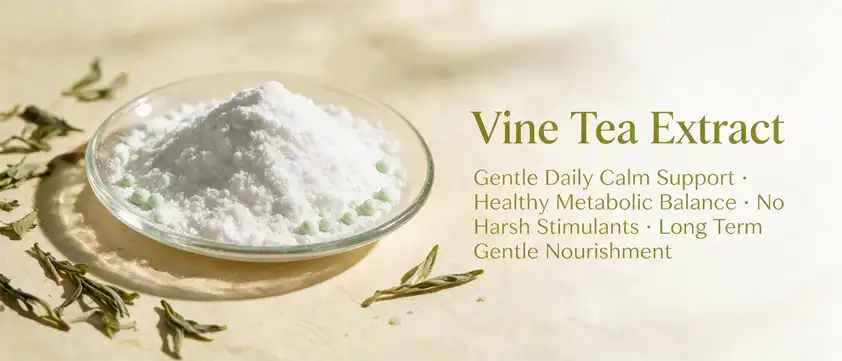
Vine tea extract is extracted from the leaves and stems of a medicinal plant, Ampelopsis grossedentata, which is native to southern China. It contains the active ingredient Dihydromyricetin (DHM), commonly known as Ampelopsin, which is usually standardized to a purity of 50-98%. DHM is a flavonoid with demonstrable ability to protect the liver, regulate blood sugar, and reduce oxidative stress. This ingredient solves a significant vacuum for procurement managers: a natural, high-purity antioxidant that functions consistently across numerous supplement formulations.
Key Health Benefits Supported by Research
The scientific literature consistently reveals three functional domains of relevant action for vine tea extract. A 2012 study in the Journal of Neuroscience demonstrated that DHM increases alcohol dehydrogenase (ADH) and acetaldehyde dehydrogenase (ALDH) activity, resulting in faster alcohol metabolism. Further studies suggest its anti-inflammatory benefits and support for good blood glucose levels, which creates chances to place it in both the liver health and metabolic wellness categories.
Product Formats and Market Fit
The commercial forms of vine tea extract may be divided into three main types:
- Powder (standardized 50%–98% DHM): The most adaptable format, for mixing into capsules, tablets, sachets, and functional drinks. The particle size will be 95% through 80 mesh, which will provide consistent mixing in production blenders.
- Capsules and Tablets: Easy to label and need little client-side processing. These fit within the hangover recovery, liver support, or metabolic health categories of supplement brands.
- Liquid Extracts – Suitable for functional beverages and ready-to-drink wellness shots; some formulation work is needed for stability under acidic pH conditions.
- OEM customers should address the unique shelf-life and bioavailability factors for the various formats with their production partner before finalizing product specifications.
OEM Formulation Essentials for Vine Tea Extract Products
Raw Material Sourcing: Organic vs. Conventional
The initial stage in production of any vine tea extract product is obtaining the raw ingredients. Even high-end stores and companies provide clean labels that are more expensive, such as Ampelopsis grossedentata leaf, that are certified organic. This form of supply provides a new firm with more alternatives in terms of quantity and cheaper pricing when they initially start out. You do not require an HPLC-confirmed Certificate of Analysis (CoA) as long as the label states "DHM". Heavy metal tests (Lead < 3.0 ppm, Arsenic < 1.0 ppm, Cadmium < 1.0 ppm, Mercury < 0.1 ppm) and bacterial standards (Total Plate Count < 1,000 CFU/g; no presence of Salmonella and E. coli*) should also be included.
Stability and Bioavailability Considerations
21 CFR Part 111 is the FDA’s requirements for individuals who create OEM products and market them in the U.S. GMP must be followed. EFSA determines what can and can’t be supplied to Europe. You may trust the vine tea extract seller if they have ISO 9001 accreditation and utilize certified laboratories for third-party testing. Clients should not ask for generic COA sheets in an effort to maintain consistency from one manufacturing run to another.
Vine Tea Extract vs. Competing Herbal Extracts: Positioning Your OEM Product
Antioxidant Comparison: DHM vs. EGCG and Other Flavonoids
Some people check the EGCG levels in green tea extract to make sure it is the best antioxidant for a long time. EGCG is not as good for the liver as DHM from vine tea extract; it has a lower ORAC value per milligram for some reason. Because these two teas don't have any DHM in them, they can't be used instead of formulas that work on the liver or the metabolism of alcohol. Vine tea extract is without a doubt the best way to start a business in the "liver detox" or "hangover recovery" niche.
Organic vs. Conventional: Pricing and Positioning
Most of the time, it costs 20% to 35% more than regular grades of vine tea extract. Some brands say the higher price is worth it because they get their information from clean sources when they market healthy products on Amazon or in stores that sell natural foods. For business-to-business sellers who sell to mass-market or private label shops, 98% pure traditional DHM powder is a great deal. Also, it doesn't make the goods less good.
Selecting the Right Supplement Form for Your Target Market
When it comes to end users, different types of delivery methods work better for different groups of people. This list can help you choose a form:
- Capsules (vegetarian or gelatin): Best for liver support and hangover relief SKUs. Easy to dose, familiar to consumers, and cost-effective to manufacture at scale.
- Effervescent tablets or drink sachets: Ideal for the metabolic wellness and weight management categories, where fast absorption and consumer experience matter.
- Softgels with lipid carriers: Suited for premium lines targeting maximum bioavailability, particularly in diabetes-support or cardiovascular health positioning.
Containers made of vegetables or gelatin: This is the best way to help your stomach and get rid of a hangover. People know what to expect, it's simple to give, and making a lot of it doesn't cost much.- Drink sachets or pills that fizz are great for weight loss and digestive health because they work quickly and make customers happy.
Lipid-based softgels are the best way for high-end lines to get the most bioavailability. This is very important when they are trying to help people with diabetes or heart health.
Sourcing and Procurement: Finding the Right Vine Tea Extract OEM Supplier
What to Look for in a Qualified Manufacturer
When deciding whether to buy vine tea extract from a company, the first thing you should do is look at its certifications. The people you want to sell to may need permission from GMP, ISO 9001, HACCP, Kosher, or Halal. Make sure you get it. Also, where it is important. If the suppliers are in China's Hunan or Guangxi provinces, the supply chain is shorter, and the cost of raw materials is lower. The best places for Ampelopsis grossedentata to grow are also in these provinces. Before you place your first order, ask for a check of the plant or proof from a third party.
Pricing Variables and Negotiation Points
There are several things that can change the price of a lot of vine tea extract. The unit cost depends on the size of the order, the type of certification (50% vs. 98% DHM), the amount of packaging needed, and the quality of the extract (50% vs. 98% DHM). Procurement teams that want to buy vine tea extract from someone should ask for a price that goes up or down based on how much they order. Anyone who makes professional goods will be happy to give you a small batch (usually 100g to 500g) to try before you decide to buy the whole thing.
Private Label and OEM Service Scope
A good OEM partner does more than just make things. The full service should have these things:
- Formulation development and dosage optimization based on your target health claim
- Packaging design and compliance labeling for FDA and FTC requirements
- Flexible production capacity from small trial batches to large-scale commercial runs
- Stable supply chain with documented lead times and on-time delivery performance
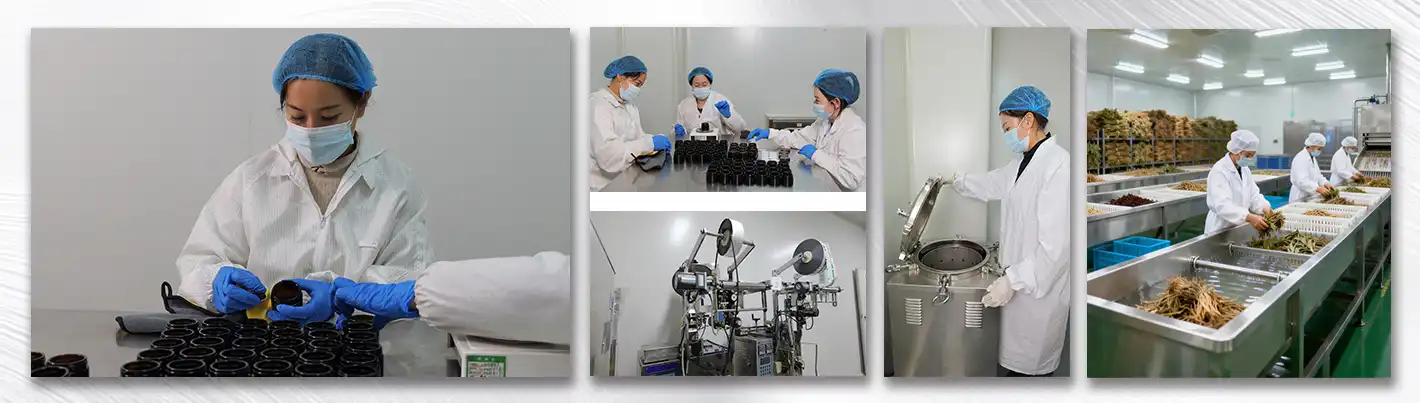
This is everything that BioSpark (Xi'an) Biotechnology Co., Ltd does. They follow GMP rules from all over the world. East Asia, North America, and Europe are some of the places the company has sent things.
Best Practices for Launching Your Vine Tea Extract Private Label Product
Build Credibility Through Transparent Sourcing
Where does the food you consume originate from? Everyone does, whether buying it at a shop or in quantity. Your product site or B2B pitch deck should contain plenty of evidence that your items can be monitored. This includes batch data, source origin certifications, and lab reports from a third party. This will make people trust you more. The companies that sell more are always the brands that tell the genuine story of where their products originate from, not simply state things in a broad manner.
Marketing Channels That Work for Supplement Brands
Three avenues for herbal product businesses to enter the U.S. market: Amazon and e-commerce outlets encourage those searching for “natural hangover recovery”, “liver support capsules,” and “DHM supplement” to click on your adverts.- Shows such as SupplySide West and Expo West are good places to meet individuals who want to purchase your goods and chat to you in person about them. These might be buyers, distributors, or chain stores.
- Information marketing and SEO: By publishing instructional information about ingredients, like this guide, you position your brand as an authority and attract procurement and brand managers to visit your site often.
- Amazon and e-commerce platforms:Use keywords such as “DHM supplement”, “liver support capsules,” and “natural hangover recovery” to optimize listings to capture active search demand.
- Trade shows (SupplySide West, Expo West): Exposure to buyers, distributors, and retail chain purchasers who want to source goods and vendors face-to-face.
- Material Marketing and SEO: Creating educational material on ingredients like this guide helps establish your brand as an expert in the field and provides consistent organic traffic from procurement specialists and brand managers alike.
“What turns a one-time buyer into a friend for life is the tech help and how to get in touch with the buyer once you’ve sold something.” Brands sell more when they invest in educating people.
Conclusion
Vine tea extract is not a distinctive ingredient anymore. People generally choose this herb if they are interested in the functional health market, because of its metabolic benefits, liver support, and vitamins. How well you choose an OEM partner is how well your private label goods will perform. “A good partner will supply approved raw materials, checked quality control, flexible output, and guidance on how to comply with the rules.” You make the DHM as clean as you want it and utilize it as you want it. These decisions will determine how well your product will fare in the long run and how it will perform in the market.
FAQ
1. What is the recommended daily dosage for a DHM supplement?
Most clinical references and supplement manufacturers suggest 300mg to 600mg of DHM per day for liver support and alcohol metabolism applications. Dosage may vary by product format and target health claim. Always align your label dosage with applicable FDA guidelines and consult a qualified regulatory specialist before finalizing claims.
2. How does vine tea extract compare to green tea extract in antioxidant activity?
DHM from vine tea extract shows higher targeted hepatoprotective activity than EGCG from green tea extract. While green tea extract provides broader antioxidant support, vine tea extract provides more specific action on liver enzyme function and alcohol metabolism pathways, making it the preferred choice for liver-focused formulations.
3. What certifications should I require from an OEM vine tea extract supplier?
At minimum, require GMP (FDA 21 CFR Part 111), ISO 9001, and batch-specific CoA documents verified by HPLC. For premium or clean-label markets, Organic certification, Kosher, and Halal credentials add significant commercial value.
4. Can vine tea extract be used in functional beverages?
Yes, but liquid formulation requires pH stability testing. DHM remains stable in neutral to slightly acidic matrices. Working with an experienced OEM partner ensures your beverage formula maintains potency throughout its shelf life.
Partner With BioSpark for Your Vine Tea Extract OEM Project
BioSpark (Xi'an) Biotechnology Co., Ltd. is a reliable company that can make vine tea extract for your private label or OEM project. We have GMP-certified production, MOQs that can be changed, full regulatory support, and a verified DHM supply that lets you keep track of each batch. Our team is ready to help you get your goods on the market, no matter what size your business is. We can help you get a sample or come up with a formula. You can reach us at leao@biosparkcn.com right now.
References
1. Shen, Y., et al. "Dihydromyricetin as a Novel Anti-Alcohol Intoxication Medication." Journal of Neuroscience, 2012.
2. Wang, Y., et al. "Antioxidant and Hepatoprotective Effects of Dihydromyricetin from Ampelopsis grossedentata." Food Chemistry, 2015.
3. Xie, C., et al. "Dihydromyricetin Ameliorates Diet-Induced Obesity and Metabolic Dysfunction." Journal of Nutritional Biochemistry, 2014.
4. United States Pharmacopeia (USP). Dietary Supplements Compendium: Microbiological Testing Standards (USP <2021>/<2022>). USP, 2023.
5. European Food Safety Authority (EFSA). Scientific Opinion on the Safety of Dihydromyricetin as a Novel Food Ingredient. EFSA Journal, 2021.
6. Grand View Research. Botanical Extracts Market Size, Share & Trends Analysis Report. Grand View Research, 2023.

Send Inquiry
Related Industry Knowledge
- How to Choose a Reliable Cherry Fruit Powder Supplier?
- How Does Purslane Saponins Quality Affect Product Performance?
- Why Is Yacon Root Extract Popular in Weight Management Supplements?
- Can Yellow Peach Powder Add Natural Color to Beverages?
- Is Holy Berry Powder Rich in Natural Antioxidants?
- Looking for Trusted American Ginseng Extract Powder Exporters?
- Is Mimosa Root Bark Extract a Sustainable Ingredient?
- Mimosa Root Bark Extract in Premium Skincare Lines
- Tribulus Terrestris Extract Powder: Natural Saponin Power
- Do Ganoderma Extract Powder Benefits Justify the Cost?