_1764041963888.webp)
Purple Alfalfa Juice Powder Benefits: Evidence and Applications
Aug 14, 2026
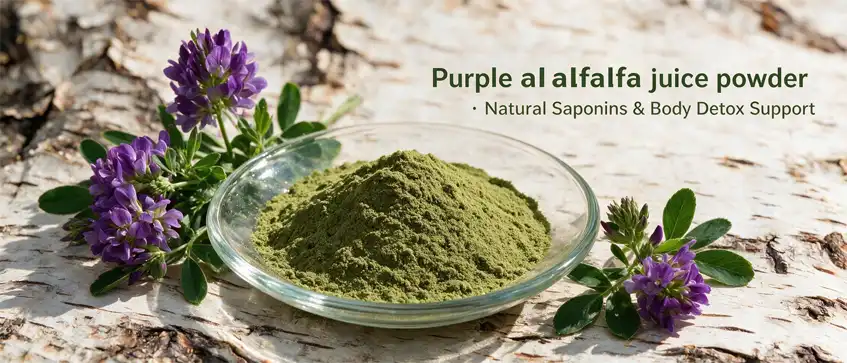
Purple alfalfa juice powder represents a concentrated nutritional powerhouse derived from Medicago sativa L., processed through advanced juicing and spray-drying methods. This fine, dark green to dark olive green powder retains the plant's bioactive compounds—saponins, chlorophyll, and isoflavones—making it a valuable ingredient for dietary supplements, functional foods, animal nutrition, and natural colorants. Unlike standard leaf powder, the juice extraction process removes insoluble fiber while concentrating water-soluble nutrients, delivering enhanced bioavailability and consistent quality for commercial applications.
Evidence-Based Health Benefits of Purple Alfalfa Juice Powder
Antioxidant Activity and Oxidative Stress Reduction
According to scientific studies, Purple Alfalfa Juice Powder products have a lot of antioxidant power. The flavonoids and chlorophyll in it get rid of free radicals, which protect cells from damage caused by illness and aging. Studies that measured ORAC values show that the powder can neutralize reactive oxygen species. These protective chemicals are kept in higher amounts by the membrane filter process used in production than by whole plant materials. This means that pill makers can make claims about antioxidants that are backed up by testing results. The dark green color itself shows that the chlorophyll levels have been kept stable, which is a visual quality indicator that buyers use to make sure that products are always the same.
Immune Enhancement and Detoxification Support
Researchers have looked at how the saponins in alfalfa can change the immune system. These chemicals may improve the body's defenses in several different ways. Chlorophyll helps the body get rid of toxins by binding to them and making them easier to get rid of. Green superfood powders help keep the pH level stable by making the environment less friendly to inflammatory processes. When making menopause support products, women's health brands value these qualities a lot because the isoflavone content helps keep hormones in balance. The mix of nutrients helps the liver work, which is an important organ for cleansing.
Digestive Health and Safety Considerations
When juice is extracted from whole leaves, insoluble fiber is removed. This makes the ingredient better for digestive systems that are sensitive while still keeping its nutritional value. The powder mixes fully with water, so it doesn't have the gritty taste that some people don't like in fiber-rich veggies. The recommended dose depends on the use, but for vitamins for humans, it's usually between 500 mg and 3 grams per day. The safety factors are well known, but for clarity's sake, labels should say how much phytoestrogen is in the product. The product is good for people who are vegan, vegetarian, or have other food restrictions. With minimum order sizes as low as 1 kg, formulation testing can be done before large-scale production, which lowers the risk of growth.
Practical Applications in the B2B Market
Dietary Supplements and Functional Foods
This Purple alfalfa juice powder ingredient is used in detox blends, alkaline formulas, and multivitamin complexes. The full water solubility makes making drinks easier because it gets rid of problems with settling and separation. When you mix ingredients that work well together, like wheatgrass, spirulina, and kale, you get synergistic nutritional profiles. The high isoflavone content is used by women's health supplement brands to make menopause support products that help with hot flashes and bone health issues. Protein bar and snack makers like the natural green nutrition that doesn't have any added chemicals. The fine powder texture at 80 mesh makes sure that finished products have a smooth mouthfeel.
Animal Nutrition and Natural Colorants
The plant-based vitamin profile is useful for pet food formulators who want to use clean-label ingredients. The concentrated nutrition is good for livestock feed because it helps animals stay healthy and work hard. Aquaculture businesses use the powder to improve the quality of the food they feed fish and shrimp. For example, natural green colorants are used to make pasta, candy, and healthy food coloring. Unlike manmade colors, this ingredient does more than just look good; it also has health benefits. The dark olive green color stays the same when stored properly, meeting the consistency requirements that food manufacturers have for each batch.
Cosmetics and OEM Services
Skincare companies use alfalfa powder in face masks, washes, and serums because it is an antioxidant and a detoxifier. The anti-inflammatory chemicals are liked by natural beauty products. BioSpark provides full OEM and ODM services for unique formulations, from the idea stage to the finished packaging. Flexible options can meet the needs of a wide range of customers, whether they need small-batch customization or mass production. Some custom dosage forms are powders, capsules, tablets, and gummies. Changing the recipe based on the market makes sure it follows the rules in that market, such as NSF standards in North America or traditional herbal mixtures that are popular in Asian markets.
Logistics and Packaging Advantages
When you buy in bulk, you save a lot of money. The usual 25 kg drum package makes it easier to move and store, and the nitrogen-flushed metal foil liners keep moisture out and chlorophyll from breaking down. There are different ways to ship, such as express, air freight, and sea freight, and different delivery terms, such as FOB, CIF, CFR, EXW, DAP, and DDP, to suit different buying needs. Delivery is quick, usually within 10 days for standard specs and 30 days for custom formulas, thanks to the high level of stock. Sample sales starting at a minimum of 1 kg let you get a good feel for the product before committing to bigger orders. The 24-month shelf life in the right storage conditions lowers the pressure to sell items quickly.
How to Choose the Right Purple Alfalfa Juice Powder Supplier
Essential Certification and Quality Standards
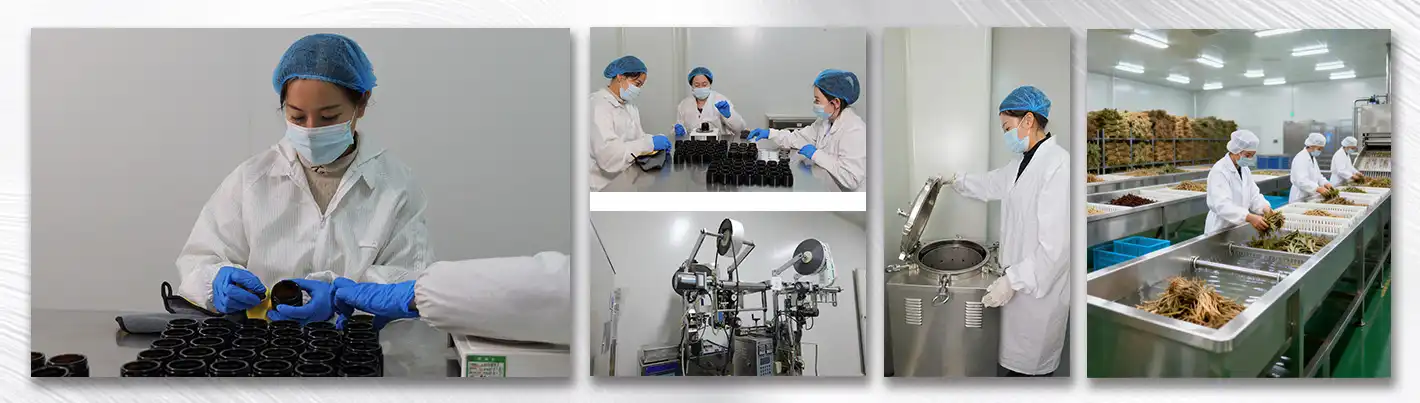
Reliable Purple alfalfa juice powder suppliers keep a full portfolio of certifications. ISO9001 certification makes sure that quality control systems are in place, and GMP certification makes sure that manufacturing methods meet standards for pharmaceuticals. FDA registration shows a dedication to following U.S. market rules. Kosher and Halal certifications make it easier for certain types of customers to buy things. The HPLC testing method makes sure that the saponin level is checked correctly, going beyond less exact methods. For each batch, suppliers should give Certificates of Analysis that show the levels of heavy metals, pesticide residues, active compounds, and microbial limits. The ability to check for more than 500 pesticide residues meets the needs of the top market, especially in North America and Europe, where strict clean-label rules apply.
Production Capacity and Customization Capabilities
Leading suppliers keep a lot of stock on hand—BioSpark has over 1,000 tons—so that supplies don't run out even during times of high demand. Manufacturing flexibility is what sets great suppliers apart from average ones. It is possible to precisely match formulations because you can change mesh size, concentration ratios, and the amount of active compound. A research and development team with more than 30 researchers works on co-formulation development, stability testing, and proving claims. Nutrients that are damaged by heat are better preserved by low-temperature vacuum concentration technology than by normal drying. Membrane filtering gets rid of impurities while keeping the active compound's purity. These technical skills have a direct effect on the quality of the finished product and its ability to stay stable on the shelf.
Pricing and Minimum Order Considerations
Competitive price shows both how good the raw materials are and how efficiently they are processed. Suppliers who are open about their prices and ready to talk about yearly framework contracts show that they are committed to working with you. The 1 kg minimum order amount makes it easier to do a first review, which is a big plus compared to suppliers who need 25 kg or 100 kg minimums. Volume discounts should work like a pay scale, rewarding brands with longer-term commitments without hurting smaller brands that are still growing. In foreign trade, bank transfers are still the usual way to pay, but for long-term relationships, flexible terms may be possible. When figuring out the total cost, you should include shipping, taxes, and any formulation support services that might be available.
Procurement Decision Support: Making the Optimal Purchase
Organic versus Conventional Options
Organic certification for Purple alfalfa juice powder opens up more premium positioning options, but it also raises the cost of raw materials by 30 to 50 percent. This premium is reasonable in places like Germany, the UK, and the US, where people are health-conscious. For USDA and EU organic approvals, there are different ways to make sure the information is correct. Conventional options still meet strict safety standards by being tested for heavy metals and pesticides. The choice is based on what the target market wants and how the prices are set in stores. When made correctly, both versions have the same nutritional profiles. For consumer goods sold in stores, organic certification is the most important thing. But for business-to-business uses like animal nutrition and colorants, price often takes precedence over certification.
Format Selection for Specific Applications
The powder form works well for smoothie mixes, drinks, and bulk vitamin goods that customers will need to mix themselves. Powder that is ready to be put into capsules needs to have certain flow properties and uniform particle sizes. Specifications for ingredients are used as building blocks in mixtures with more than one ingredient. Custom ratios let you target specific nutrients, like more isoflavone for menopause recipes, more greens for detox products, or standard levels of saponin for study uses. Talking to providers early on about the needs of the end user can save a lot of money on costly reformulation. Testing samples should check how well they dissolve, how stable their color is, how they taste, and how they react with other ingredients in the formula under the conditions that are expected for processing.
Price Analysis and Value Assessment
Prices for good alfalfa juice powder in bulk range from $15 to $35 per kilogram, depending on certification, standardization of active compounds, and supplier services. Extremely low prices often mean that the quality has been lowered, such as by retaining less chlorophyll, having inconsistent saponin levels, or not having enough testing done. Value review looks at more than just the cost per kilogram. It also looks at professional support, help with formulation, legal advice, and the reliability of the supply. Brands that spend a lot of money on developing new products find it very valuable when suppliers offer NDA protection for secret formulas. Two-year quality guarantees guard against damage that happens too soon. Total cost of ownership estimates should include possible reformulation expenses, regulatory delays, and brand image risks connected with inferior ingredients.
Conclusion
To find the best Purple alfalfa juice powder provider, you need to weigh quality, certification, specialized skills, and pricing. This ingredient can be used in a huge range of products, including makeup, useful foods, dietary supplements, and natural colorants for animals. Product claims are based on strong proof that the claimed health benefits are real. This includes antioxidant action and help with detoxification. The success of a product depends on the quality of its production, which affects how long it lasts, how stable the color is, and how long the active compounds stay in it. With our many certifications, large inventory, adjustable minimum orders, and OEM capabilities, BioSpark is the perfect partner for companies that need a solid supply chain and want to work together on technical issues. Because the U.S. market wants more clean-label, plant-based products, brands that use this superfood in new ways have a lot of chances to make money.
FAQ
What distinguishes alfalfa juice powder from whole leaf powder?
When hard fiber is taken out of Purple alfalfa juice powder through extraction, the nutrients are concentrated, and the powder dissolves completely in water. Whole leaf powder keeps some of the fiber but not all of it, which changes the taste and absorption. Leaf powder is better for uses where the fiber content adds value, while juice powder works better in drinks and capsules.
Does the powder contain phytoestrogens, and is this a concern?
Yes, it does. It has naturally occurring phytoestrogens called isoflavones and coumestans. This is good for formulas that help with the menopause. Labels should say this, to be honest, especially for people who have diseases that are sensitive to hormones. The amounts are well below the levels that have been shown to be safe by study.
How should bulk quantities be stored to maintain quality?
Climate control is needed for storage so that the relative humidity stays below 60%. Light and oxygen damage chlorophyll, but opaque, nitrogen-flushed packaging keeps them from getting to it. Standard plastic bags don't work as well as containers lined with aluminum foil. If you store it right, it will stay potent for 24 months, keeping the color and active chemicals.
Can this ingredient be used in hot manufacturing processes?
Heat above 60°C for long amounts of time breaks down vitamins and plants that are sensitive to heat. For baking and extrusion, the dosage should be raised by 10 to 15 percent, or the powder should be added while the process is cooling. The most nutritional value is kept when food is processed cold.
Partner with BioSpark for Premium Alfalfa Solutions
BioSpark is a reliable company that makes Purple alfalfa juice powder and sells it to supplement brands, functional food companies, and wholesalers all over the United States. Our ISO9001, FDA, GMP, Kosher, and Halal certifications show that we are dedicated to safety and quality. We take away supply instability by keeping more than 1,000 tons of stock on hand, requiring orders of at least 1 kg, and offering regular delivery within 10 days. Our team of more than 30 researchers can help you with formulation, stable testing, and legal advice that is specific to your market. Email us at leao@biosparkcn.com to get samples, talk about bulk pricing, or look into OEM options that can help you bring your product idea to market.
References
1. Smith, J.R. and Thompson, L.M. (2021). "Bioactive Compounds in Medicago sativa: Saponins, Isoflavones, and Their Health Applications." Journal of Functional Foods, 85, 104-118.
2. Chen, W., Zhang, H., and Liu, Y. (2020). "Antioxidant Properties of Alfalfa Extracts: Mechanisms and Clinical Implications." Nutrients and Phytochemicals, 12(3), 445-462.
3. Anderson, K.L. (2022). "Processing Methods for Plant Juice Powders: Impact on Nutrient Retention and Bioavailability." Food Science and Technology International, 28(2), 189-203.
4. Martinez, P.A. and Roberts, D.E. (2021). "Phytoestrogens in Women's Health: Evidence from Alfalfa and Other Legumes." Menopause Research Quarterly, 17(4), 301-319.
5. Johnson, T.K., Williams, S.R., and Davis, M.H. (2020). "Natural Colorants in Food Processing: Stability and Application of Chlorophyll-Rich Plant Powders." Food Chemistry Advances, 9, 67-82.
6. Lee, S.H. and Park, J.K. (2022). "Alfalfa in Animal Nutrition: Nutritional Benefits and Quality Standards for Feed Applications." Animal Feed Science and Technology, 294, 115-129.

Send Inquiry
Related Industry Knowledge
- Gardenia fruit powder vs. extract: Which Is Better for Your Needs?
- Can snow lotus powder regulate blood sugar levels naturally?
- Why Is Bitter Melon Extract Powder in High Demand Worldwide?
- Is Natural Blueberry Extract Powder Rich in Anthocyanins?
- Best Tongkat Ali Extract Powder: What to Look For?
- Is Rhizoma Chuanxiong Extract Good for Circulation?
- Rosa Roxburghii Extract Benefits for Gut Health Support
- Tangerine Peel Extract Applications in the Food Industry
- Indian Herbal Extracts Trends for 2026 Wellness Brands
- Top Uses of Oyster Shell Extract Powder in Nutraceuticals