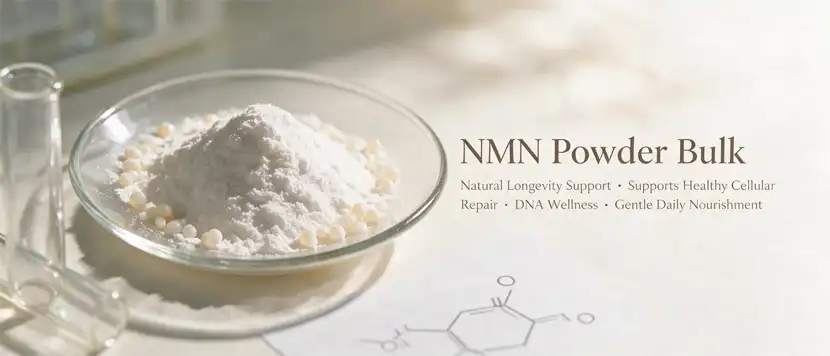
NMN Powder Bulk Import Guide: Documents, Duties, and Compliance
Nov 11, 2026
For an NMN powder bulk import, you need a written specification, shipment-specific documents, a confirmed customs classification, a full landed-cost estimate, and a review of compliance before you place the order. Those are the things you need to buy something in the U.S.: a commercial invoice, a packing list, an SDS, a COA for each batch, and papers for transport. As part of this, checks with the FDA, such as Prior Notice and facility registration, are also done. If you make supplements, sell them, or work with OEMs and want to compare suppliers on more than just price per unit, this guide is for you. Each step in the next parts comes after the last one.
Define NMN Powder Bulk and Prepare the Right Documents
Write a Clear Technical Specification
Before I ask a supplier for a price quote, I write down what the NMN powder bulk material needs to be. Nicotinamide mononucleotide has the CAS number 1094-61-7 and the molecular formula C11H15N2O8P. A molecular weight of about 334.22 finds it. There should be a name for the ²-anomer form because it is the biologically important one. Next, make a list of the product's appearance, moisture limit, heavy metals, microbial limits, packaging, amount, and purpose. Also, write down the target purity and assay method. You can't really trust words like "food grade" if they don't mean what they say. Suppliers can send similar bids when you give them a detailed specification. It also lets your quality team know what they need to accept if there is a dispute.
Core Documents for Every Shipment
When NMN powder bulk is shipped, it should come with a commercial invoice, packing list, batch-specific COA, SDS, bill of lading or air waybill, and certificate of origin. An export declaration can also be made by the person sending the goods. The customs officer will go through these papers line by line, so the item's name, batch number, amount, weight, and information about the exporter must all be the same everyplace. A wrong batch number can cause a container to be held up at the port. You should sign off on the list of documents before they are sent, and a few days before they go, you should ask for draft copies so that your broker can look them over before they go. Keep copies for customs, quality, and government checks.
Extra Documents for OEM and Private-Label Projects
For private-label NMN powder bulk projects, it's not always enough to just buy the raw materials; they usually need more paperwork as well. For some items, you may need stability data, allergen statements, non-GMO statements, halal or kosher certificates, packaging approvals, and a quality agreement that controls changes that needs to be signed. If the raw materials or process change, the impurity profile might also change, even if the label stays the same. This is why we need to control changes. Let's talk about the papers you need for your project right away. BioSpark can help OEM and ODM clients with everything, from making formulas to shipping and packing. Check to see if the certificates you buy are right for your claims and market.
Customs Duties, Taxes, and U.S. Compliance for NMN Powder Bulk
Confirm the HS Code and Customs Entry
When a supplier writes a code on an invoice, I never just trust it. This is because the code affects duty rates, import controls, and the chance of an inspection. In the US, we use the Harmonized Tariff Schedule (HTSUS), and the first six numbers are the same as the ones used in other countries. If you hire a licensed customs broker, they can get your NMN powder bulk to the right place. If you need proof in writing, U.S. People who work for Customs and Border Protection also make choices that you have to follow. If you want to ship something by sea, you will need to fill out an Importer Security Filing and post a customs bond. Several times, extra tariffs on goods made in China have changed. Before you place an order, make sure you know the most up-to-date rates.
Build a Landed-Cost Model
The price per unit doesn't tell the whole story. To get a correct landed-cost model for NMN powder bulk, you need to include freight, insurance, customs duty, brokerage, port or airport fees, testing, plus delivery to your warehouse. There is no federal VAT on goods brought into the US. But the product you sell or finish might be subject to state tax rules. Talk to your accountant about this. When you use uncommon words, you divide up responsibility in different ways. You are in charge of a lot of things at EXW. When someone sells you something FOB, they pay to get it on the ship. In CIF, the main freight and insurance are also included. In DDP, the seller is responsible for delivery and duties. See how much different quotes are for the same amount, packaging, and Incoterm.
FDA Requirements for U.S. Buyers
When it comes to the US, the FDA is in charge of NMN powder bulk that is used in supplements. Companies that make food need to register with the FDA, and people who bring food into the country need to send Prior Notice before the shipments arrive. The Foreign Supplier Verification Program also has rules that many importers must follow. There are cGMP rules in 21 CFR Part 111 that finished supplements must follow. If an ingredient wasn't sold in the U.S. before October 15, 1994, a new dietary ingredient notification may need to be filed. The FDA has said different things about NMN in the past few years, so make sure you read what they have to say now before you launch. Labels can describe how something works and how it's built, but they can't describe disease. Supplier papers don't show that the product is legal to sell, so I suggest that a U.S. regulatory lawyer take a look at it.
Verify Quality and Choose a Dependable NMN Powder Bulk Supplier
Read the COA Line by Line
This is a useful COA for NMN powder bulk. It has the batch number, the way it was identified, the amount of moisture, heavy metals, microbial results, specification limits, test dates, and authorization from quality control. If your COA is blank and doesn't have a batch number, it doesn't tell you anything about your shipment. Compare the written specs and the label on each drum to the COA. Tech sources say that NMN absorbs and dissolves water, so results about water should be carefully looked into. It's also important how the goods are made. It's important to get verified impurity data from the supplier because different methods of enzymatic synthesis, chemical synthesis, and fermentation can leave behind different impurity profiles.
Add Independent Testing and Certificate Checks
When I'm buying NMN powder in bulk for the first time, for high-value shipments, from new suppliers, or to start a private label, I find third-party testing to be most helpful. An authorized lab can use HPLC to make sure the sample is what it says it is and that it is pure. They can also test it for heavy metals and microbes up to your limits. Certificates need the same level of care. The scope, site, and end date of a GMP or ISO certificate are all very clear. It can't be sold in any market. Who has the certificate, what site does it cover, and does it cover the thing you want to buy? Keep a few samples from each lot.
Qualify a Supplier or Manufacturer
Find out if the business makes its own goods or buys them from other businesses. Don't forget to ask for samples, MOQs, lead times, and certificates that are up to date. A trustworthy NMN powder bulk supplier should be able to explain how they test their products, how they keep track of changes, how they handle complaints, and how they handle replacements. It's not a good sign if the certificate details don't match, if the seller refuses to provide samples, if they don't make it clear where the products are made, or if they ask you to pay early. BioSpark (Xi'an) Biotechnology Co., Ltd. finds health products, designs them, makes them, and sells them all over the world, including in North America. No matter how big or small the order is, we can do OEM and ODM work.
Packaging, Shipping, and Storage of NMN Powder Bulk
Choose Protective Packaging
Water is the main thing that can hurt a hygroscopic powder, so you should separate each package in your order. You can use fiber drums, HDPE containers, or sealed foil bags with two layers of polyethylene. Nitrogen-flushed packs don't let as much air in when it makes sense from a technical point of view. Make sure you know the pack size, seal integrity, labeling, and palletization of the goods before you send them. Many things can get broken by a torn liner getting moved. Ask the supplier to send pictures of how the goods are being packed up before they are sent. How it is handled changes based on the size of the pack. For test runs, smaller units work best, while larger drums are better for steady production runs.
Control Transit and Warehouse Conditions
Heat, humidity, and light can damage NMN powder bulk during shipping for a long time. Write down on the purchase order the temperature and humidity ranges you expect, as well as the transit time and any data-logger needs. If you need something quickly or in small amounts, maritime freight is cheaper. To keep the goods fresh, keep them in their original, tightly sealed boxes in a cool, dry, clean warehouse that doesn't get much light. Some technical references say to store things in the fridge, but make sure you follow what the supplier says for your lot. Put all the deliveries in a separate area until the receiving inspection is over.
Match Shelf Life to Stability Data
To find out the shelf life and retest dates, you shouldn't just guess about NMN. You should use stability studies. You should ask the supplier about the test times, the study conditions, and the packaging. Once you know what the rules are, compare them to how you plan to store and move your things. Use "first-expires-first-out" to make sure that older stock ships first. Sort your NMN powder bulk lots by batch number. First, write down the time the drums were opened. Then, close them all the way back up. If you keep good records, you can link any complaint to a certain lot.
Import Workflow, Common Mistakes, and Checklist for NMN Powder Bulk
Follow a Step-by-Step Workflow
I believe you should work in order. Make a list of the requirements for the type, amount, location, packaging, and testing. You should look at the suppliers' certificates, COAs, samples, MOQ, and export experience after making a short list of them. Third, only sign off on samples that have been tested by you or someone else. 4. Talk to trained professionals to make sure you understand the HS classification, the rules for importing, and the labeling. Fifth, sign a contract and purchase order that tells you how to test, what is okay, how to deal with changes, when to deliver, and what to do if something goes wrong. Last but not least, look over the paperwork that was sent before the shipment and hold the goods until the receiving inspection is over. This order makes it easy for each team to find problems quickly while they are still simple and cheap to fix.
Avoid Common Import Mistakes
There are a lot of issues with NMN powder bulk imports that aren't with the product itself but with plans not being kept. It's possible for hidden costs like freight, duty, testing, and storage to show up when you pick the cheapest quote. It doesn't mean that your shipment will arrive just because you accept a generic COA. Lots of people also think that if a product has GMP or ISO certification, it is safe to sell. Another mistake is believing a supplier's HS code without checking it. Having clear written rules for acceptance, testing, packaging, storage, and rejection in the quality agreement will help you avoid these issues. Before making a choice about an order with a higher risk, get a check from someone outside the company and compare the full landed costs.
Use a Pre-Order Checklist
This short list is used by my team before an order to make sure that everyone is on the same page with purchasing, quality, logistics, and regulations.
- Product and supplier: Confirm identity, purity target, intended use, test methods, packaging, shelf life, and storage conditions in writing. Review the supplier's facility information, certificates, samples, batch COAs, export experience, and complaint procedures, then approve a pre-shipment sample against your specification before you release the production order to the factory.
- Shipping papers: Check that the shipment includes the commercial invoice, packing list, batch-specific COA, SDS, certificate of origin, transport document, and any required health or regulatory certificates. Compare product names, batch numbers, quantities, and weights across every page, and send the drafts to your customs broker before the goods leave the origin port.
- Customs and labeling: Confirm the HS code, duty and tax estimates, customs bond, Prior Notice, Importer Security Filing for ocean freight, label content, and claim wording before the order ships. Appoint a customs broker early, because late appointments cause storage fees, and ask your regulatory advisor to review every claim that will appear on finished products.
On top of that, this list can be used to keep track of suppliers and show approval for purchase orders.
Conclusion
NMN powder bulk can be brought into the United States by buyers who don't just look at price. There is a written specification, shipment documents that match, and a COA that is unique to the batch that set the quality standard. It is possible to find out how much each Incoterm really costs in customs classification, bonds, Prior Notice, and a landed-cost model. The FDA has rules that a product can't have before it can be sold. These rules include facility registration, possible review of new food ingredients, and limits on disease claims. Certificates from suppliers don't take the place of that review. The material stays the same after it gets there thanks to testing by a third party, careful supplier qualification, protective packaging, and storage based on stability. A staged workflow and a written quality agreement make it less likely that there will be disagreements, lots that are turned down, and costs that were not expected.
FAQ
Which documents do I need to import NMN powder bulk?
A COA for each batch, SDS, a bill of lading or air waybill, a commercial invoice, and a certificate of origin should all be given to you. Also, you need Prior Notice and a customs entry from your broker for goods coming from the U.S.
How are duties and taxes calculated?
Duty is based on the item's HTSUS classification, how much it was valued, and where it came from. Their job is to confirm the rate. In the U.S., there is no federal import VAT. Before you place an order, you should check to see if there are any extra tariffs on goods from China.
What should a COA include?
It needs to have the batch number, the purity or assay, the way it was identified, the moisture, the heavy metals, the microbial results, the test dates, the specification limits, and the quality approval.
How should I store NMN powder?
Keep it somewhere cool, dry, and out of the light in the box it came in, making sure the lid is tight. Also, make sure to follow the stability data that the supplier gives you. Technical sources say that the powder is hygroscopic and dissolves in water.
Is the MOQ fixed?
No, the MOQ changes based on the destination, packaging, purity, and customization. For the most up-to-date terms, talk to your supplier.
Request an NMN Powder Bulk Quote From BioSpark
BioSpark (Xi'an) Biotechnology Co. is a company that brands, distributors, and OEM partners can go to when they need an NMN powder bulk supplier who offers full OEM and ODM service, flexible batch sizes, and export experience. Email leao@biosparkcn.com with the amount you need, the level of purity you want, where you want it sent, how you want it packaged, what testing you need, and the Incoterm you'd like to use. Our team will get back to you with more information, documents, and lead times. Visit https://www.biosparkcn.com/ to learn more about the NMN powder bulk that we offer.
References
1. Code of Federal Regulations, Title 21, Part 111: Current Good Manufacturing Practice in Manufacturing, Packaging, Labeling, or Holding Operations for Dietary Supplements, 2007
2. Dietary Supplement Health and Education Act, 1994
3. U.S. Food and Drug Administration, Dietary Supplements: New Dietary Ingredient Notifications and Related Issues (Draft Guidance for Industry), 2016
4. U.S. Food and Drug Administration, Foreign Supplier Verification Programs for Importers of Food for Humans and Animals (21 CFR Part 1, Subpart L), 2015
5. International Chamber of Commerce, Incoterms 2020 Rules, 2019
6. U.S. International Trade Commission, Harmonized Tariff Schedule of the United States, 2025

Send Inquiry
Related Industry Knowledge
- How Do Fish Collagen Peptides Compare With Bovine Collagen?
- How to Source Damiana peptide in Bulk?
- Can Banana Juice Powder Improve Flavor and Nutrition?
- Damiana Peptide Supplier Guide for Nutraceutical Brands
- How to Choose Premium Holy Berry powder for Bulk Purchase?
- How to Use Coconut Milk Extract Powder in Hot and Cold Drinks?
- How Does Ginseng Fruit Powder Enhance Product Value?
- Can Broad Bean Powder Replace Artificial Food Additives?
- Could Natural Blueberry Extract Powder Support Eye Health Products?
- Why Is White Kidney Bean Extract Powder Popular Worldwide?