Is Bovine Spleen Peptide Right for Your Wellness Goals?
Nov 07, 2026
Because it comes from animals, is hydrolyzed, and comes from a supplier who gives you clear instructions, tests every batch, and tells you where the peptide came from, bovine spleen peptide can be a good choice. Because it comes from plants and costs less, it's not the best choice if you need strong clinical evidence from humans to back up a claim. The bovine spleen peptide is not a medicine; it is added to food. This guide can help supplement brands, importers, distributors, and OEM buyers in the U.S. make a decision. I talk about how to get bovine spleen peptide, what the proof says, and how to know if it's good.
What Is Bovine Spleen Peptide?
How Bovine Spleen Peptide Is Made
Bovine spleen peptide is obtained via enzymatic hydrolysis under controlled conditions that break down large protein chains into short chains of amino acids. The peptide was then filtered and dried to a powder.
What Is Inside the Powder
Bovine spleen peptide is composed of peptides, free amino acids, and other tiny bits. There are specialised sites that discuss amino acids such as arginine and glutamine, nucleotides, and peptide fragments that have to do with the immune system. The descriptions are from multiple sources; thus, I do not trust them. The size of the peptide is critical for absorption. Daniel published on the PepT1 transporter in the Annual Review of Physiology in 2004. It transports di- and tripeptides across the intestinal wall. Having a list of substances that your batch may include is not enough. You need some assay data telling you what your batch truly contains.
Typical Specification Targets
You commonly see these types of objectives on supplier data sheets for high-grade materials:
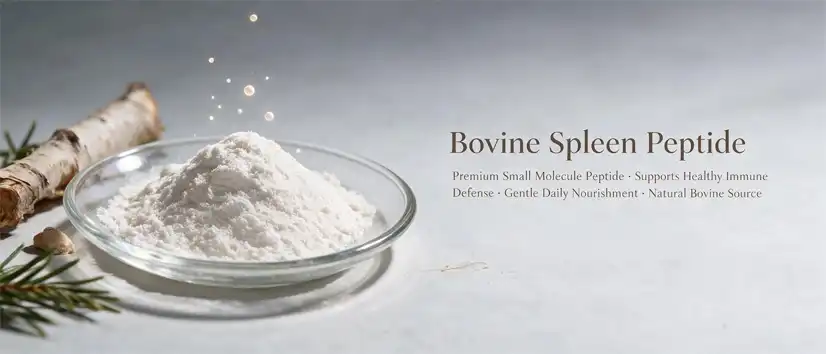
- Appearance and Solubility: White to off-white, free-flowing powder. Water solubility >99% with no precipitation, so suitable for liquid formulations. The powder is hygroscopic, which means it collects moisture from the air. So sealed packaging and dry storage matter throughout manufacture, shipping, and after the bag is opened.
- Molecular weight profile: A representative target will include 85–90% of peptides in the 150–1,000 Dalton range. Intestinal transporters are well suited to handle smaller peptides, and a narrow distribution often results in more predictable behaviour in a formulation. Always check the number against a batch-specific gel permeation chromatography (GPC) report.
- Chemical composition: The main aims are protein of not less than 90% (dry basis), peptide content of not less than 80% (OPA method or GPC), and ash of not more than 6.0%. These values allow you to compare vendors on an equal footing. But your own spec sheet should include the precise limitations and the test techniques.
I constantly compare these objectives to the batch data to ensure they are correct. They provide you with an example request's starting point.
What Are the Potential Benefits and Functions of Bovine Spleen Peptide?
Nutritional Support From Amino Acids and Peptides
When you get right down to it, bovine spleen peptide is just broken-down protein. Wu's book Amino Acids, which came out in 2009, is about amino acids. Proteins and immune cells can't work without them. Bioactive peptides made from food proteins are also being looked at for uses besides nutrition. This study was summarized by Korhonen and Pihlanto in the International Dairy Journal in 2006. A lot of these reviews are about amino acids and peptides that come from food, but not this one aspect. Let's just say that bovine spleen peptide is an ingredient that focuses on protein and nutrition. I will not make any claims of miraculous effects that could only be supported by studies on that one product.
Immune-Related Research Interest
People are interested in things that come from the spleen because it is an immune organ. Immune-related nucleotides and peptide fragments are said to be in some suppliers' goods. Lipopolysaccharides are building blocks for cells that divide quickly. Gil wrote an article for the European Journal of Clinical Nutrition in 2002 about how nucleotides in food may change how the immune system works. That study did not test the bovine spleen peptide itself. It's clear what a U.S. brand needs to learn: immune-related research only gives us a reason to learn more about the ingredient, not permission to say it can cure diseases. According to the Dietary Supplement Health and Education Act of 1994, a supplement's label can say that it helps maintain normal structure or function, but not that it cures disease.
Evidence Limits and Realistic Expectations
The quality of the evidence varies. What works in the lab and in animals doesn't always work in people, and studies on a general spleen extract can't always show that every peptide product works. Some sites make claims about sleep, gut health, or liver health. I didn't find any sources that linked those claims to a well-controlled trial on humans, so I'm not going to say them again as facts. Animal-based supplements are said to make some people sick or give them loose stools. People who are pregnant, sick, or on medicine should first talk to a doctor or nurse. People who are buying something should compare each claim to the proof for that item.
Bovine Spleen Peptide Compared With Other Organ-Derived Ingredients
Peptide Versus Spleen Extract and Whole-Organ Products
Before you buy, ask each seller if the material has been hydrolyzed, extracted, or just dried. Hydrolyzed bovine spleen peptide has a smaller molecular range and is easier to mix and measure.
Powder Versus Capsule Formats
The business case seems different. They may adjust the dosage, add minerals or other ingredients, and produce test batches of varied sizes by using bulk powder. Capsules are the last form, which is handy for firms that wish to sell their goods in retail stores or through private-label channels. The powder may absorb water; thus, it is vital to keep the humidity low and carefully pack the capsules. This is why it is also used in drink mixes and sachets. I suggest that a new firm, if they want to test a concept out, begin with some powder samples. Once they know the flavour, the fill weight, and the stability, there is one last format they may select.
Alternatives and Who May Benefit
If you need strong clinical data from people to support your claim, a regular protein or an ingredient that has been studied more may work better. Bovine spleen peptide shouldn't be used for all projects.
How to Evaluate Bovine Spleen Peptide Quality and Safety
Identity, Traceability, and Batch Consistency
Being good starts with being yourself. As the supplier, you need to show that the raw material is cow spleen, list the country where it comes from, and be able to track each lot back to where it came from. You should ask for an analysis certificate that is unique to your batch. You should be able to see what it looks like, how much water is in it, any heavy metals or solvents that are still there, and when it goes bad. This is important to know because each method gives a different number. See what kind of test was used in the report. Check to see if the powder is just bovine spleen peptide or if it has something else in it too. There are people who can change how much is in a gram. When the results are the same in more than one lot, it means that more than one report is correct.
Safety, Allergen, and U.S. Regulatory Checks
Some problems come up when you use bovine origin. Making sure that the FDA's rule on "prohibited cattle materials" (21 CFR 189.5) and the controls for BSE are being followed together is important. Under 21 CFR Part 111, companies that make dietary supplements have to use good manufacturing practices at the moment. Check to see if the factory that makes the supplements meets this standard. Importers can get help from a customs broker to make sure they know what they need to do for the Foreign Supplier Verification Program and FDA prior notice. It is important to say that the product comes from beef even though hydrolysis breaks up big protein chunks. This is because some people are allergic to proteins from cows. The FDA doesn't check supplements before they go on sale, so it's up to the brand to make sure the labels are correct and safe.
Storage and Stability
Put the powder somewhere cool and dry that isn't in direct sunlight and is closed off. A hygroscopic powder can clump together when it gets wet, making it harder to fill capsules and mix the powder. Get the seller to tell you how long the item will last and what kind of packaging they recommend, such as drums or cartons with sealed inner liners. If the peptide is added to a finished product or the package is changed, you should do your own stability test. Because different parts of the product and the way it's packed can affect how long it lasts. Keep track of the warehouse's temperature and humidity so that you have a clear record if there is a problem with the quality later on.
Bovine Spleen Peptide Dosage, Formulation, and OEM Sourcing
Dosage and Formulation Considerations
The amount of bovine spleen peptide that works for each person varies depending on the other ingredients, the type of peptide, and the individual. The formulators should decide how much to serve after a technical review, stability tests, and regulatory assessment.
U.S. Labeling and Claims
In the US, a supplement label can say something about structure or function as long as the company that made it can back it up. 21 CFR 101.93 says that the brand must include the FDA disclaimer and notify the FDA within 30 days of making the claim public for the first time. There are no disease claims that can be put on supplements, like "treating an infection" or "helping with cancer care." The label should also have a Supplement Facts panel, and it should be clear to the customer that the product comes from cows. In the EU, the UK, and Canada, the rules are different, so you need to check each market on its own. For my part, I believe that the government should review the labels before the art is printed.
Bulk Purchasing and OEM Support From BioSpark
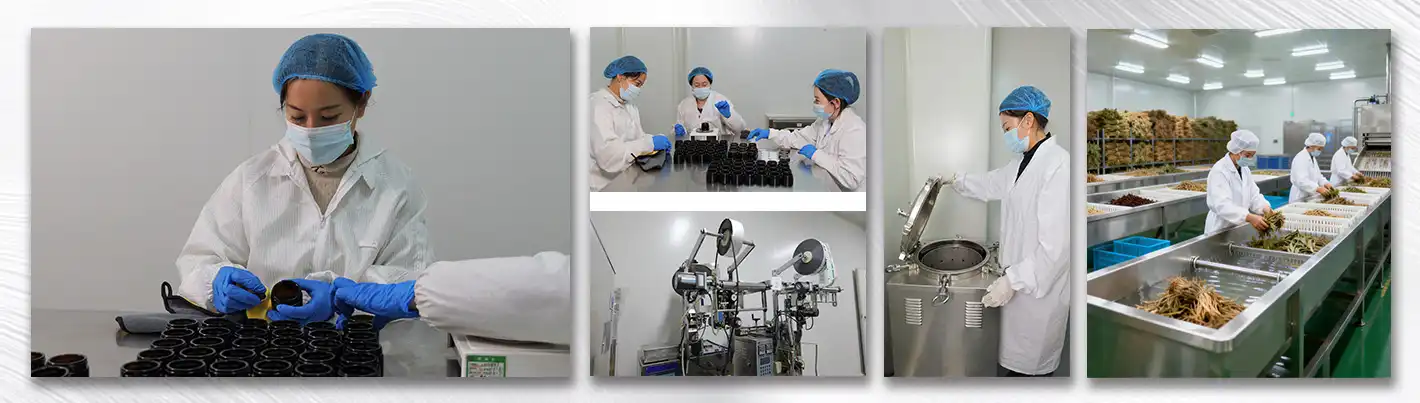
Before you buy bovine spleen peptide, read the specification sheet and make sure you understand the lead time, shelf life, shipping conditions, Incoterms, and payment terms. Remember the minimum order quantity and the specification sheet. When you buy directly from a manufacturer, you might have better technical access and more say over how the product is made. On the other hand, distributors may keep stock in their areas for smaller orders. Take a look at the risk of testing, freight, customs, and a batch being sent back, along with the unit price. BioSpark (Xi'an) Biotechnology Co., Ltd makes health products and sells them all over the world. They do OEM and ODM work that includes coming up with ideas and making things, as well as packaging and shipping them. We are in charge of making sure that raw materials and finished goods are made, inspected, and delivered. It doesn't matter how big or small the order is, as long as it meets their needs. People from the EU, North America, South America, Southeast Asia, and the Middle East work for us.
Conclusion
Buyers who want an animal-derived hydrolyzed peptide ingredient with a measurable molecular profile should look into bovine spleen peptide. It doesn't work well when a project needs protein from plants, strong clinical data from humans for a claim, or the cheapest protein. From a nutritional point of view, studying amino acids, peptides, and nucleotides in general is interesting. However, this particular ingredient is not helpful. The peptide is easier to dissolve than spleen extract and whole-organ products, and it has a clearer profile. For some business needs, powder and capsule forms work better. To get good quality, you need to look at each batch separately, keep track of it, store it correctly, and make sure you follow all U.S. rules about making things, using cow parts, and making claims. It's important to test the product itself to figure out the right dose and formulation. A buyer can be sure of what they think about an ingredient if they check these things.
FAQ
What is bovine spleen peptide used for?
As an organ-derived peptide, bovine spleen peptide is frequently found in supplements, powders, and OEM formulations. How helpful it is will depend on what it's made of and how strong the evidence is.
Is bovine spleen peptide the same as spleen extract?
When you add water to proteins, the chains break down. This tells you more about the peptides than a general extract does.
What dose should I follow?
There is no one dose that works for everyone. Do what it says on the package or what a trained professional tells you to do.
Which documents should I request from a supplier?
Ask for a specification sheet, a Certificate of Analysis that is unique to the batch, records of where the product came from and how it can be tracked, and regulatory documents. Keep the powder cool, dry, out of the light, and closed up.
Can a U.S. brand make immune claims?
Along with an FDA disclaimer and a 30-day notice, the brand can only back up claims about structure and function. It's not okay to make claims about diseases.
Request a Bovine Spleen Peptide Sample From BioSpark
Do you want to test bovine spleen peptide for your next item? BioSpark provides bovine spleen peptides and provides both OEM and ODM services. They can take care of both small and large orders, from making the mixture to shipping it all over the world. For a sample and specification sheet, to talk about bulk supply, or to find out about private label options, send leao@biosparkcn.com your target format, volume, and specification needs. Visit https://www.biosparkcn.com/ to learn more about what we do.
References
1. Dietary Supplement Health and Education Act, 1994
2. Code of Federal Regulations Title 21, Part 111, Current Good Manufacturing Practice for Dietary Supplements, 2007
3. Annual Review of Physiology, 2004: Daniel H., Molecular and Integrative Physiology of Intestinal Peptide Transport
4. European Journal of Clinical Nutrition, 2002: Gil A., Modulation of the Immune Response Mediated by Dietary Nucleotides
5. International Dairy Journal, 2006: Korhonen H. and Pihlanto A., Bioactive Peptides: Production and Functionality
6. Amino Acids, 2009: Wu G., Amino Acids: Metabolism, Functions, and Nutrition

Send Inquiry

Related Industry Knowledge
- OEM Yam Juice Powder: Custom Formulas and Packaging
- Blackberry Fruit Powder vs Fresh Berries: Which Is Better?
- Is Snow Lotus Powder Suitable for Dietary Supplement Products?
- Maqui Berry Powder for Eye Health: Dry Eye & Retinal Protection
- Maqui Berry Powder for Eye Health: Dry Eye & Retinal Protection
- Maqui Berry Powder for Eye Health: Dry Eye & Retinal Protection
- Maqui Berry Powder for Eye Health: Dry Eye & Retinal Protection
- Maqui Berry Powder for Eye Health: Dry Eye & Retinal Protection
- Maqui Berry Powder for Eye Health: Dry Eye & Retinal Protection
- Maqui Berry Powder for Eye Health: Dry Eye & Retinal Protection
- Maqui Berry Powder for Eye Health: Dry Eye & Retinal Protection
- Maqui Berry Powder for Eye Health: Dry Eye & Retinal Protection
- Maqui Berry Powder for Eye Health: Dry Eye & Retinal Protection
- How to Choose High-Quality Fulvic Acid Powder Products?
- What Makes Oyster Shell Extract Powder a Premium Calcium Ingredient?
- What Are the Key Benefits of Ayurvedic Indian Herbal Extracts?
- Why Choose Coconut Milk Extract Powder for Food Formulation?
- What Is Papaya Leaf Extract Powder and How Does It Work?
- How to Use Tribulus Terrestris Extract Powder Safely?