_1764041963888.webp)
How to Choose High-Quality Damiana Peptide?
Sep 16, 2026
Choosing high-quality Damiana peptide requires careful evaluation of purity, sourcing transparency, supplier certifications, and extraction methods. Procurement professionals must verify third-party testing results, confirm GMP compliance, assess bioavailability through enzymatic hydrolysis processes, and ensure suppliers offer traceable raw materials with consistent specifications. Understanding these factors protects product efficacy, regulatory compliance, and brand reputation while securing reliable supply chains in competitive wellness markets.
Understanding Damiana Peptide: Definition, Benefits, and Mechanism
What Makes Damiana Peptide Unique
A special kind of beneficial compound called Damiana peptide is very different from regular Damiana products. Traditional extracts have the herb's natural compounds in their original molecular forms. Peptide formulations, on the other hand, go through targeted enzymatic hydrolysis, a biotechnological process that reduces plant proteins to small-molecule peptides that are usually less than 3,000 Daltons in size. This change greatly improves bioavailability, making it easier for active compounds to pass through intestinal barriers and quickly enter the bloodstream.
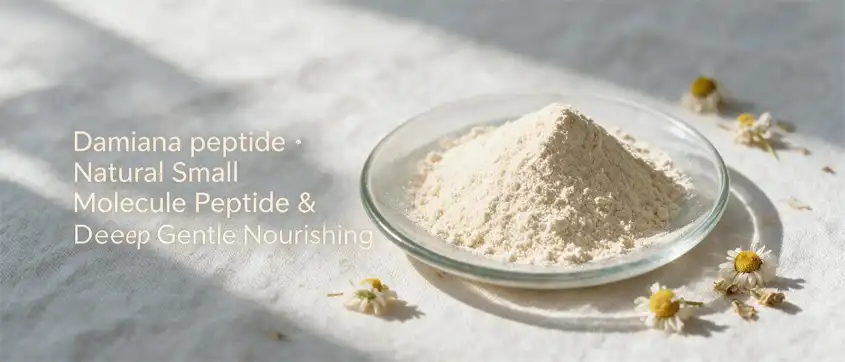
We use plant protein-directed chemical hydrolysis extraction methods that keep the herb's natural beneficial substances, such as flavonoids, benzofluorene derivatives, and steroidal saponins. The 10:1 concentration ratio makes sure that it is strong while keeping the powder's light brown to brownish fine appearance and natural herbal scent. This water-soluble mixture can be used in a variety of product forms, such as capsules, tablets, functional drinks, and powdered vitamins.
Health Applications and Functional Benefits
Based on clinical research and traditional use, Damiana peptide supports a number of health categories that are relevant to modern supplement formulations. Through its interactions with neurotransmitter systems, especially serotonin pathways that control emotional states, the compound shows promise in balancing mood and managing stress. Because of these qualities, it is useful for making goods that help with anxiety and adaptogenic supplement mixes that are aimed at mental health markets.
Another important area where Damiana peptide has a lot of potential is sexual health. It has been used historically as a natural aphrodisiac, and early studies show that it can boost libido and make relationships more sexually stimulating for both men and women. Because it affects the metabolism of testosterone and the balance of hormones in the body, the peptide is often found with maca root, tongkat ali, and other plants in complete sexual wellness formulas.
Molecular Mechanisms and Safety Considerations
Because Damiana peptide is made up of more than one part, it can have synergistic effects on a number of molecular targets. Small molecules called peptides connect with receptors on cells, flavonoids protect cells from damage, and steroidal saponins change the way hormones work. Because it is complex, the ingredient can potentially improve overall effectiveness by working on health issues through multiple pathways instead of just one.
Damiana has been used for a long time in traditional medicine systems, and modern methods of purification get rid of any possible contaminants. As part of our manufacturing process, we use thin-layer chromatography to test the makeup and purity standards to make sure they are met. Certifications like ISO9001, GMP, FDA registration, Kosher, and Halal compliance show that a company is committed to meeting international safety standards. This gives procurement professionals confidence that the company will follow the rules in all kinds of markets.
Key Criteria for Selecting High-Quality Damiana Peptide
Purity and Potency Verification
When judging the quality of any biological ingredient, purity is the most important factor. It has a direct effect on both how well the product works and how safe it is for consumers. A good Damiana peptide should always have the same amount of bioactive peptides, steroidal saponins, and flavonoids, and the levels should be checked to make sure they meet the supplier's requirements. Teams in charge of buying things must get full Certificates of Analysis (COA) from unbiased third-party labs that prove the products are free of contaminants like heavy metals, pesticide residues, and microbes.
Methods of testing are very important. Thin-layer chromatography is a reliable way to find and measure active ingredients. More advanced methods, such as HPLC (High-Performance Liquid Chromatography) and mass spectrometry, provide more accurate results for complex peptide profiles. Suppliers who regularly use more than one analysis method show better pledges to quality than those who only use one testing protocol.
Manufacturing Transparency and Certifications
Understanding the whole process of production, from getting the raw materials to the finished packing, is an important way to reduce risk. Reliable suppliers keep clear records about where the plants come from, when they were harvested, how they were processed, and how they were grown. Our Damiana peptide comes from China, where the plants are grown in a way that keeps environmental contaminants to a minimum and maximizes the production of active compounds.
It is necessary for pharmaceutical-grade supplement ingredients to have Good Manufacturing Practices (GMP) certification. Systematic quality control is used in GMP facilities. This includes calibrating equipment, training staff, keeping an eye on the environment, and keeping records for each batch. These rules keep things from getting contaminated, make sure they can be tracked, and keep things from being repeated, all of which are very important when providing ingredients for customer health goods that are closely watched by regulators.
Physical Form and Packaging Considerations
Both formulation suitability and organizational productivity are affected by physical traits. Fine powder consistency (light brown to brownish coloration) allows for even mixing in multi-ingredient formulations, and water solubility allows for a variety of delivery methods, such as tablets that dissolve quickly in the mouth, drinks, and other oral applications. A small amount of ethanol absorption allows tincture formulas for companies that make liquid supplements.
The security of the ingredients during storage and shipping is directly affected by the packaging. Using food-grade containers with moisture barriers that stop oxidation and degradation, our normal 25 kg/drum setup strikes a good balance between ease of handling and material security. For smaller initial orders or sampling needs, flexible minimum order quantities starting at 1 kg can meet testing needs without committing too much inventory.
Supplier Reliability and Service Infrastructure
Along with product quality, a supplier's managerial skills determine how well a long-term relationship will work. Reliable makers keep enough stock on hand to quickly fill orders without having to wait for long lead times that throw off production plans. Our large enough inventory and quick shipping options allow us to meet both planned buying cycles and urgent restocking needs. This gives our supply chain the freedom it needs in a market that is always changing.
The infrastructure for communication is just as important. Suppliers with helpful customer service, expert help for formulation questions, and clear order tracking systems make it easier to buy things and solve problems before they happen. Language support, time zone support, and dedicated account management all improve the quality of collaboration, especially for international partnerships that span multiple regions.
Comparing Damiana Peptide with Alternative Ingredients and Supplements
Damiana Peptide Versus Traditional Damiana Extract
Knowing the difference between peptide formulations and regular extracts helps purchasing teams choose ingredients that are right for the marketing and effectiveness goals of the product. Traditional Damiana extracts have the herb's bioactive compounds in their natural forms and molecular weights, which means that their bioavailability varies from person to person and depends on their gut health and digestive abilities.
In peptide preparations, plant proteins are broken down into smaller molecular pieces using enzymatic breakdown to get around normal uptake barriers. This method greatly improves bioavailability, which could mean lower doses are needed while beneficial effects are still maintained. The smaller molecular size of peptides also lets them start working faster than regular extracts, which is good for products that claim to work quickly.
Comparison with Complementary Botanical Ingredients
Buying groups often look at Damiana peptide along with other natural ingredients that target related health issues. Maca root (Lepidium meyenii) can help with both sexual health and energy, but it does so in different ways thanks to its different phytochemical profiles. Maca mostly affects hormone balance through adaptogenic pathways. Damiana peptide, on the other hand, changes neurotransmitters to help with mood and stress reactions.
Ginseng types (Panax ginseng and Panax quinquefolius) are well-known adaptogenic ingredients that have been shown to improve energy, brain function, and the ability to handle stress. When you mix ginseng with Damiana peptide, you get products that work better together and address more than one aspect of health at the same time. Asian ginseng traditions and South American Damiana history are two very different cultural backgrounds that make for interesting product stories that appeal to people who want to learn about different plants.
Efficacy, Safety, and Market Positioning
Because it is bioavailable, Damiana peptide is better than many other ingredients, especially for brands that focus on scientific innovation and improved delivery methods. The peptide format fits with growing customer preferences for bioavailable nutrients that are better absorbed, as shown by clinical research or comparing studies.
In general, safety profiles favor botanical ingredients with long histories of use, like Damiana, over newer synthetic compounds that don't have long-term data on human exposure. The combination of this natural source with modern purification technology meets the needs of both consumers and businesses that need constant, contamination-free products that meet high quality standards.
Procurement Best Practices: How to Source and Purchase Damiana Peptide
Supplier Due Diligence and Credential Verification
The first and most important step in buying risk management is to make sure that the buyer can be trusted. Verifying business registration papers, manufacturing licenses, and building inspection records from the right regulatory bodies is the first step in doing thorough due diligence. Real companies easily give out certifications like GMP and ISO9001, as well as documents that show they follow the rules for each product, like FDA registration numbers and organic certifications if needed.
Physical site checks, which can be done directly or by a third-party inspection service, are very helpful for comparing what the paperwork says about the manufacturing conditions to what they really are. By looking at production lines, quality control labs, storage conditions, and hygiene standards, you can learn things about operations that you can't just read about in paperwork. When buying something from another country and you can't go there in person, video tours of the facility, along with independent audit reports from reputable inspection agencies, are acceptable ways to make sure the information is correct.
Pricing Structures and Volume Considerations
Knowing how prices change over time gives you more power in negotiations and helps you make accurate cost predictions. The price of Damiana peptide depends on a lot of things, like the cost of the raw materials, how hard it is to extract, the quality grade, the number of orders, and changes in market demand. Starting at 1 kg, our flexible minimum order amounts allow for initial testing and recipe development. Standard packaging in 25 kg drums meets established production needs.
Larger promises are rewarded with volume discounts, and price levels are usually based on threshold amounts that make manufacturing batch economics work best. Professionals in procurement should look at the total annual needs across all product lines in order to combine orders and get the biggest discounts possible while also keeping inventory costs low and capital allocation efficient. Long-term supply deals that include promises of quantities often keep prices stable and protect against market volatility.
International Shipping and Logistics Optimization
The choice of transportation mode strikes a balance between cost, speed, and order features. Express delivery services like DHL, FedEx, and UPS offer door-to-door convenience that works best for samples and small, urgent orders. They can usually deliver within days, but they charge higher freight rates. Air freight is a good option for modest amounts of goods that need to be delivered faster than ocean freight. Transit time is usually between 5 and 10 working days, which includes clearing customs.
Ocean freight is the most cost-effective way to ship large amounts of goods when there is time flexibility. It can handle both full container loads (FCL) and less-than-container loads (LCL). Transit times of 20 to 45 days need to be planned for ahead of time by adding lead times to production plans and methods for managing supplies. Combining sea-air or sea-land segments in multimodal transport solutions makes the best use of cost-time tradeoffs for certain routes and time constraints.
Quality Assurance and Testing Protocols
Third-party testing gives extra assurances besides the supplier's COAs, lowering the chances of falsifying information, tampering, or misrepresenting the specifications. By hiring certified labs to test new ingredients, you can set objective quality standards before putting materials into production. The testing panels should check the product's identification, measure the amount of active ingredients, look for heavy metals, analyze pesticide residues, and check for microbial contamination in line with the rules of the target market.
Setting up quality agreements with sellers writes down the rules for the supply relationship, including design requirements, testing methods, acceptance criteria, and corrective action procedures. These contracts set standards that can be enforced and protect buyers from getting low-quality materials. They also give suppliers clear goals for consistent performance. Regular quality reviews that look at trends in batch variability, standard compliance rates, and customer feedback patterns allow for proactive quality improvement efforts that keep the supply chain reliable.
Summary and Key Takeaways for B2B Clients
To choose a good Damiana peptide, you need to do a thorough review that covers a lot of important areas. Third-party testing and detailed COAs confirm the product's purity and effectiveness, and GMP certification, facility audits, and traceability documentation show that the manufacturing process is open and honest. This lowers the risks of contamination and inconsistent quality. Supplier operational capabilities, such as the size and depth of their inventory, their knowledge of shipping logistics, and their communication infrastructure, determine the viability of a partnership beyond the quality of the first product.
Comparing one ingredient to others helps formulate drugs in a way that balances effectiveness, solubility, cost-effectiveness, and chances to stand out in the market. Knowing the benefits of peptide formulas over traditional extracts helps with marketing that fits with the brand's image and the tastes of the target audience. Combinations of ingredients that work well together and use the unique properties of Damiana peptide make goods that work better together and help with more than one aspect of health at the same time.
Conclusion
Selecting high-quality Damiana peptide demands rigorous verification of purity through third-party HPLC testing, GMP certification, and full supply chain traceability. Procurement professionals must prioritize enzymatic hydrolysis-derived peptides below 3000 Daltons for optimal bioavailability, supported by comprehensive COAs confirming flavonoid, saponin, and peptide content. These criteria ensure consistent clinical efficacy, regulatory compliance, and brand protection. As a versatile bioactive ingredient, premium Damiana peptide delivers superior mood, stress, and sexual health benefits, outperforming traditional extracts through enhanced absorption and synergistic multi-target mechanisms.

FAQ
What distinguishes Damiana peptide from regular Damiana extract?
The main difference is in the structure of the molecules and how bioavailable they are. Regular Damiana extract has the plant's bioactive compounds in their original forms. On the other hand, Damiana peptide goes through enzymatic hydrolysis, which breaks plant proteins into small molecules that are usually less than 3,000 Daltons in size. This process greatly improves absorption, which could mean that lower doses are needed to get the same effect as before, and the effects start happening faster than with regular extracts.
How can buyers verify Damiana peptide purity and authenticity?
There are several ways to verify something, such as asking for Certificates of Analysis from independent third-party labs that prove the amounts of active ingredients and the lack of contaminants. Testing with thin-layer chromatography or HPLC confirms that the makeup meets the stated requirements. Regulatory registrations and supplier certifications like GMP and ISO9001 give you even more peace of mind. Before a full lab test, a physical inspection is done to make sure the product is real. This includes noticing its unique look (light brown to brownish fine powder), herbal smell, and ability to dissolve in water.
Are there potential side effects or regulatory concerns?
There are good safety reports for Damiana peptide, which is backed by the herb's long history of use. But everyone reacts differently, and buyers should make sure that sellers give them full safety paperwork, including testing data if it's available. Different markets have different rules about how to label products that contain Damiana. In some places, there are limits on how much of the drug can be in the product. By talking to regulatory experts and going over the needs of the target market before formulating, problems with compliance can be avoided that could cause product delays or recalls.
Partner with BioSpark for Premium Damiana Peptide Supply
BioSpark (Xi'an) Biotechnology Co., Ltd. makes high-purity Damiana peptide using new plant protein-directed enzymatic hydrolysis extraction methods that keep bioactive chemicals while making them more bioavailable. Our full OEM/ODM services help supplement brands, nutraceutical companies, and wholesalers all over the world with the whole process, from coming up with a new recipe to delivering the finished product. We make sure that every batch meets strict quality standards by strictly following GMP guidelines and having many international certifications, such as ISO9001, Kosher, Halal, and FDA registration. We keep enough in stock and allow orders as small as 1 kg, so we can meet the needs of both small-scale testing and large-scale production. We also offer a variety of shipping options to keep costs low and speeds high. As a reliable Damiana peptide producer dedicated to supply chain reliability and product excellence, contact our sourcing experts at leao@biosparkcn.com to talk about your unique ingredient needs, get technical specs, and get access to low pricing.
References
1. Journal of Ethnopharmacology (2018). "Traditional Medicinal Uses and Phytochemistry of Turnera diffusa: A Comprehensive Review."
2. Phytotherapy Research (2019). "Bioavailability Enhancement of Plant-Derived Peptides Through Enzymatic Hydrolysis: Mechanisms and Applications."
3. Journal of Psychopharmacology (2020). "Herbal Anxiolytics and Mood Modulators: Clinical Evidence and Neurotransmitter Mechanisms."
4. Nutrients (2021). "Comparative Bioavailability of Botanical Supplements: Impact of Extraction Methods and Molecular Size on Absorption Efficiency."
5. International Journal of Food Sciences and Nutrition (2019). "Quality Control Methods for Herbal Supplements: Analytical Techniques and Regulatory Standards."
6. Evidence-Based Complementary and Alternative Medicine (2020). "Damiana (Turnera diffusa): Pharmacological Activities, Clinical Applications, and Safety Profile Review."

Send Inquiry
Related Industry Knowledge
- Why Is Eggshell Membrane Peptide Gaining Market Demand?
- Best Green Plum Powder for Private Label Beverage Production
- Snow Lotus Powder Wholesale Supplier with ISO Certification
- How Does Chinese Cabbage Powder Benefit Product Developers?
- Where Can You Buy Premium Yellow Peach Powder in Bulk?
- How Is Purple Cabbage Powder Used in Dairy Products?
- Looking for Trusted American Ginseng Extract Powder Exporters?
- What Are the Key Benefits of Gotu Kola Extract Powder?
- Rosehip Extract Powder Benefits: What Does Science Say?
- Are Spirulina Extract Tablets Good for Detoxification?