Bovine Spleen Peptide: A Smart Choice for Immune Support?
Nov 04, 2026
Because it helps the immune system, bovine spleen peptide can be a good choice, but only if the company that makes it checks that the source is reliable and that what they say is true. This ingredient is made from heated and broken-down animal spleen tissue. Proteins are broken up into small chains that can dissolve in water. Food-derived peptides look like a cool topic to study, but there isn't much proof on this ingredient yet, so be careful how you say things in the US. This guide tells you what the ingredient is, how it works in recipes, how to tell if it's good, and where to buy a lot of it from a business you can trust.
Understanding Bovine Spleen Peptide and the Evidence Behind It
What Is Bovine Spleen Peptide?
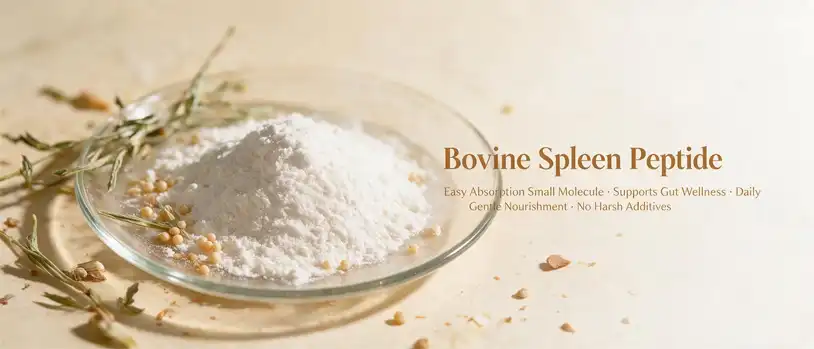
It is possible to make bovine spleen peptide, a part made from bovine spleen tissue, in controlled ways. This is because water breaks down protein chains, making them shorter. Bioactive peptides from food are usually short chains that are between 2 and 20 amino acids long, according to a review published in Foods in 2017. For them to work, the amino acids that make them up must be in a certain order. Most of the time, small peptide chains are easier to dissolve than glandular or whole-organ powders. They also spread out more evenly and allow for more accurate dosing. That helps people who make drinks, bags, or capsules. That being said, hydrolysis doesn't show quality by itself. As well as a full certificate of analysis (COA), someone who wants to buy something needs to record the source and the process. There are many tests that need to be done at the same time.
Specifications to Request on a Technical Data Sheet
There shouldn't be any room for doubt on a technical data sheet. I tell people who are buying something to look at the molecular weight distribution, moisture, ash, microbiological limits, and source species. The ideal bovine spleen peptide powder is white to off-white in color and has good flow. It should also have at least 90% protein (dry), 80% peptide, at least 6.0% ash, and more than 99% water solubility. From what I've read, 85% to 90% of the peptides are between 150 and 1,000 Daltons. Protect the powder by putting it in a dry jar with a lid. This list should always be checked against the batch COA before a lot is signed off on.
Bovine Spleen Peptide Benefits: What Does the Evidence Suggest?
Brands use bovine spleen peptide in immune system boosters, wellness products, and peptide nutrition. The spleen holds iron, amino acids, and nucleotides, among other things. In some ways, these nutrients help the body's defenses. But I'm not sure I can trust the information about how much of an ingredient there is. The final product won't always be the same as the test or small trial. These changes can happen because of the mix of ingredients, the dose, and how well the medicine works in the body. In 2014, Nutrition Research Reviews published a review that said transporters help di- and tripeptides cross the gut wall. Still, there isn't a lot of proof that longer peptides are taken in. If you pick the right words, like "may support normal immune function," you protect both the brand and the customer.
Bovine Spleen Peptide in Formulas: Performance and Format Choices
How Does Bovine Spleen Peptide Work in a Supplement Formula?
Peptides do different things depending on how they are broken down, absorbed, and used by the body, as well as their structure and molecular weight. So, unless there's a study to back it up, I don't believe claims of direct immune activation or effects on certain organs. For the most part, formulators judge bovine spleen peptide by how it works. It matters a lot how well it works with proteins, herbs, minerals, and vitamins, as well as how well it melts, spreads, stores, tastes, and smells. As a simple way to test, our team at BioSpark suggests small-scale tests, reconstitution tests, sensory evaluations, sedimentation checks, and fast or real-time stability studies. Before a pilot run, these steps are taken to check for clumping, bitterness, or color shift.
Bovine Spleen Peptide vs. Spleen Extract and Glandular Supplements
Spleen peptide, gland supplements, and whole-organ powder are not the same thing. Different things exist when it comes to particle size, solubility, molecular composition, standardization, and giving the right dose. Whole-organ powder still has the same shape as the tissue it came from. Some fractions are put together in an extract. Controlled hydrolysis is used to break long chains of bovine spleen peptide powder into shorter ones that are easier to dissolve. Each one is good and bad in its own way. What you want to sell, who you want to buy it, the tools you use, and how you plan to label it are all things that matter. Peptide powder is often a good choice for brands that want a drink or sachet that spreads quickly. It doesn't matter what layout works best as long as it likes where the glands are now. I think you should ask for specs for each format next to each other.
Powder or Capsule Format?
The format changes how the ingredient is seen or heard by the person. Powder can be added to drinks, sachets, and bulk blends. Brands can also change how much powder is served without having to redesign the dosage form. It can be hard to taste or smell ingredients that come from animals, but capsules can help hide those things. Powder blends need to be packed in a way that keeps water out because they soak it up. This is because capsule filling needs good flow and humidity that is kept in check. It doesn't matter what size order BioSpark gets; they can make products in a lot of different ways to meet their clients' needs. Take a moment to feel the capsule. What might work for a brand that sells drinks in one market might not work for a brand that sells drinks in another.
Bovine Spleen Peptide Safety and Quality Checks
Bovine Spleen Peptide Safety, Dosage, and Side Effects
One size doesn't work for all foods. The level of inclusion should be set based on the data from the supplier, the format of the product, how it will be used, a review by experts, and the rules of the market where the product will be sold. Some users say it makes them sick or gives them loose stools. To fix this, companies should deal with allergens, make sure the product tastes good, and keep it away from other products. If you are pregnant, taking medicine, or already have a health problem, you should talk to a nurse or doctor before taking an immune pill. It is against the law to sell finished goods as medicines if you don't have the right permissions.
Documents to Review Before Commercialization
You should look over the documents before you launch. There should be tests for contaminants, heavy metals, and microbes, including for bovine spleen peptide. Along with any certifications the supplier claims, you should also review records of where the food came from and how it was stored. In the US, 21 CFR Part 111 is the current set of rules for how dietary supplements should be made. A food company must check that the ingredients are what they say they are under this part. A supplier COA backs up your receiving checks, but it doesn't take the place of them. The 21 CFR 189.5 rule says that some parts of cattle can't be used to make food for people. People can't eat parts of cows that haven't been checked out and given the all-clear to be used in food. So, you should be very careful when reading papers that come from animals. Before you bring in food that comes from animals, make sure you know the rules. You can talk to a regulatory adviser or standardization broker.
How to Choose a High-Quality Bovine Spleen Peptide Ingredient
First, you need to be able to prove where the beef comes from and keep track of the batches. Next, look for good microbiological limits, stable packaging, low moisture, controlled hydrolysis, and a consistent molecular weight distribution. You should really read the word "purity" carefully. To find out what method, like OPA or GPC testing for peptide content, was used to get each number, like "total protein," "standardized fractions," "moisture," "ash," and "non-protein solids." Ask for samples that are like the whole and check their color, smell, liquefaction, and flow. After that, look at the sample, the commercial specification, and the COA to see if they all list the same production material. Something is wrong if they don't match.
Buying Bovine Spleen Peptide in Bulk
Preparing Your RFQ
Before you can write a good quote, you need to be clear about what you want. If you need small amounts for testing, research, pilot projects, bulk powder, capsules, private-label products, or OEM/ODM development, find out what they are. When you make a good RFQ, you should include the type of product, the specifications you want, the amount you expect to buy, the packaging, the certifications, the destination, the delivery terms, and the paperwork you need. Let the shipper know which warehouse or port the package will go to on its way to the US. They can plan the paperwork and the time it takes to get there this way. Your RFQ will get a better quote if it is more specific. This is because both teams will not have to make as many changes before the sample ships.
MOQ, Lead Time, and Total Landed Cost
When you test, package, or make a lot of something, the MOQ, lead time, and wholesale price change. It's possible that a regular powder would be sent out faster than a private-label capsule, since the latter needs to be tested more and have its artwork checked first. You should look at more than just the price per kilogram of bovine spleen peptide when you compare prices. To make sure everything follows the rules, the quote should include freight, import duties, customs brokerage, paperwork, and testing. This option might cost more in the long run if the review of the documents fails or takes too long. BioSpark can make small amounts or a lot of things, so new businesses can test a recipe before committing to bigger orders.
How to Evaluate a Bovine Spleen Peptide Manufacturer or Supplier
Talk to people you know. They might be able to show you how the process works, let you make changes, help you with technical issues, keep track of batches, and help you plan for long-term supply. They might have stock nearby and be able to get to markets more quickly. Traders may find it hard to keep track of when they get their goods from more than one plant. Where do they get their raw materials, how do they test them, and how consistent is each batch? You should also ask about the minimum order quantity (MOQ), lead times, private label services, and how to handle complaints. If you want to look at a supplier, make sure they have clear specifications, samples that are representative of the whole, claims that can be backed up, batch data that can be tracked, and international paperwork. Also, each market should have technical help during the planning phase, the pilot production, the large-scale production, and the review of the documentation.
Applications and Product Development
Where Bovine Spleen Peptide Fits
In functional foods, beverages, nutritional supplements, and specialized health products, bovine spleen peptide may be useful. Formulas with more than one ingredient, instant drinks, nutrition blends, tablets, and capsules are some of the forms that are used a lot. Supplements like zinc and selenium can be mixed with the powder and put in a capsule. But each mix needs to be tried by itself to be sure it works well with the others. If you're an adult who takes care of your health every day, capsules may be more popular than powders for people who live an active life. How would your customer like to receive it? Then check to see if the ingredient works well in that form.
Private Label, OEM, and ODM
People often mix up these three words. A brand is what you buy when you're done with something. This is known as "private label." OEM means that the company makes the product following the brand's rules and instructions. When a company does ODM, they help come up with the idea and formula for the product. The BioSpark (Xi'an) Biotechnology Co., Ltd. company makes functional ingredients, plant extracts, wellness products, and nutrition formulas (functional ingredients). They also do work for these things as OEM and ODM. Not only do they help with ideas, but they also make the products, package them, and send them out. Find out how much work your team is ready to do on their own to assist you in picking the best model.
A Typical Development Pathway
It takes less time when the way is clear. First, get the ingredients and make sure you have everything you need. After that, put some aside and check them. Then, make sure that the government looks over your bovine spleen peptide product and gives you the green light to package it before you start pilot production and then full-scale production. For brands that make a structure/function claim, they must tell the FDA within 30 days of putting the product on the market and put the standard disclaimer on the label. This law is from 1994. It's still up to the owner of the product and their regulatory team to make sure that all the rules are followed, the labels are correct, and the product is put on the market. Get that team in early so that claims and art don't slow down the launch.
Conclusion
As long as quality and claims are carefully managed, bovine spleen peptide, an animal ingredient that has been hydrolyzed, can be used in immune-support products. It's clear that peptides from food are good for you, but not much else is known about this ingredient. You should use words like "may support normal immune function" instead. There is a link between how well something breaks down, spreads, and stays stable and how well it works. A peptide, an extract, or a whole organ is used for a different reason. Pills and powder both have their good and bad points. A COA, contaminant tests, and records of animal origin are used to make sure that something is safe and legal. When you buy a lot, it's best to have a clear RFQ, compare the total landed cost, and find a supplier who’ll help you with your order and keep track of it. Finally, the person who owns the thing is still in charge of making claims.
FAQ
What is bovine spleen peptide used for?
It's used by brands in health, immune system, and peptide nutrition products. Clarify what you mean by saying things like "may support normal immune function."
How does it differ from bovine spleen extract?
Peptides are made by controlled hydrolysis. They are made up of short chains. But extracts bring out the best in some parts. Check out the details of each one.
Is bovine spleen peptide safe?
Some people who use it say they feel sick to their stomachs. Take a look at the COAs, contaminant tests, and records of animal origin. You should see a doctor if you're sick.
What documents should I request?
Bring proof of where the goods came from, a batch COA, and a technical data sheet. Also, ask for heavy metals and microbiology test results.
Can I order private-label or custom products?
BioSpark can do any job, no matter how big or small. They can do both OEM and ODM work. Send us your format, price, and market to get a quote.
Request a Bovine Spleen Peptide Sample or B2B Quote from BioSpark
Want to know where to buy bovine spleen peptide? BioSpark (Xi'an) Biotechnology Co., Ltd. can work on OEM and ODM projects, and they can handle both small and large orders. They have also sent goods to many markets around the world in the past. We'll get back to you with samples, specs, and a quote if you email leao@biosparkcn.com with your needs. Please describe the purpose, audience, format, expected volume, and packaging needs of your document. Visit https://www.biosparkcn.com/ to find out more.
References
1. Foods, 2017. Daliri, Oh, and Lee, "Bioactive Peptides."
2. Nutrition Research Reviews, 2014. Miner-Williams, Stevens, and Moughan, "Are intact peptides absorbed from the healthy gut in the adult human?"
3. Federal Register, 2007. "Current Good Manufacturing Practice in Manufacturing, Packaging, Labeling, or Holding Operations for Dietary Supplements."
4. Federal Register, 2004. "Use of Materials Derived From Cattle in Human Food and Cosmetics."
5. Dietary Supplement Health and Education Act, Public Law 103-417, 1994.
6. Official Journal of the European Union, 2006. Regulation (EC) No 1924/2006 on nutrition and health claims made on foods.

Send Inquiry
Related Industry Knowledge
- Is Liposomal Zinc Glycinate Better Absorbed Than Zinc?
- Green Plum Powder vs Fresh Green Plum: Which Is Better for OEM?
- Gardenia fruit powder vs. extract: Which Is Better for Your Needs?
- Is Broad Bean Powder a Good Protein Ingredient Choice?
- Does Garcinia Cambogia Extract Help Reduce Cravings Effectively?
- What Makes Oyster Shell Extract Powder a Premium Calcium Ingredient?
- Apple Peel Extract Powder for Cholesterol Support
- What Is Rhizoma Chuanxiong Extract Used For?
- Why Baicalin Extract Is a Premium Functional Ingredient?
- Oyster Shell Extract Powder: Zinc, Taurine & Vital Trace Minerals