_1764041963888.webp)
Blackberry Juice Powder OEM Guide for Custom Formulation
Aug 25, 2026
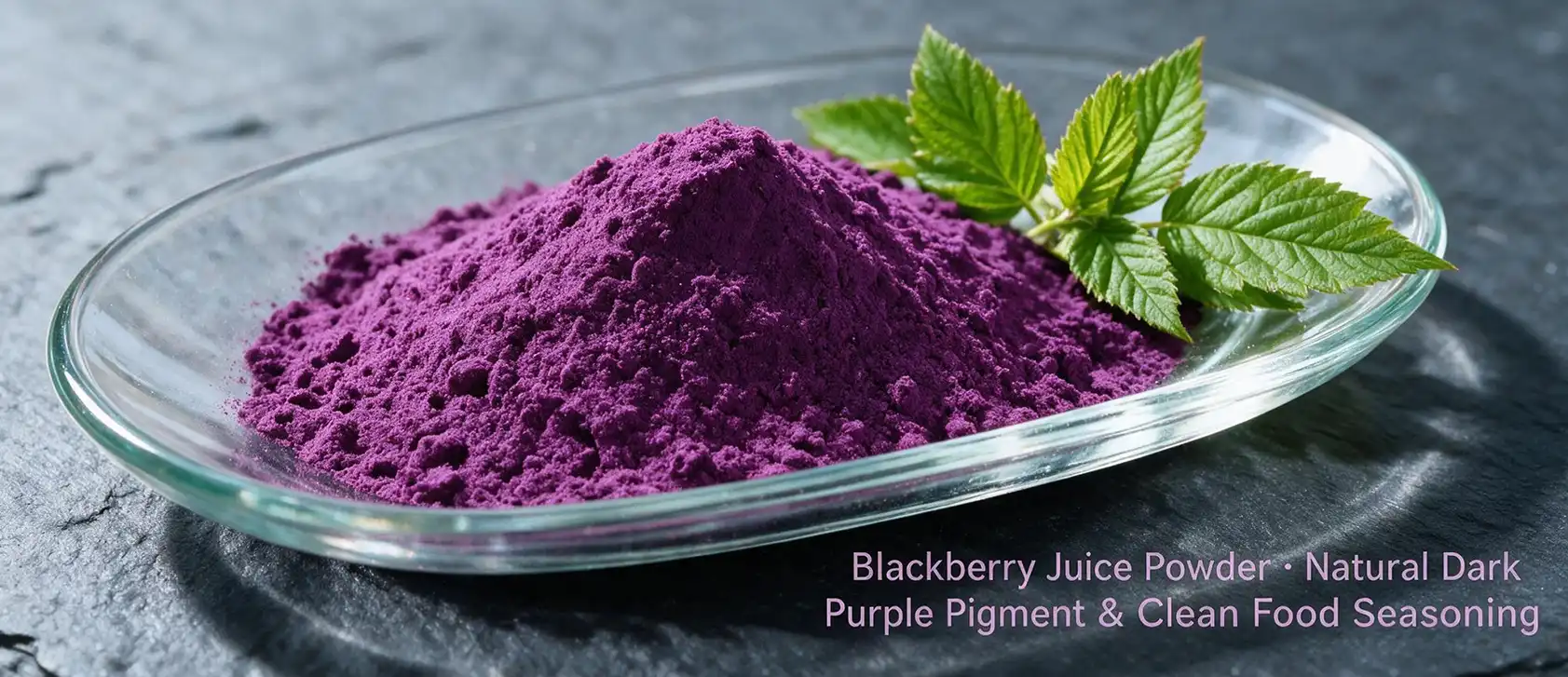
Blackberry juice powder has emerged as a transformative ingredient in the health and wellness industry, delivering concentrated nutrition in a shelf-stable format. For brands seeking to differentiate their products in competitive markets, partnering with the right OEM provider offers access to customized formulations that balance bioactive potency, color stability, and regulatory compliance. This guide walks you through the critical considerations for developing custom blackberry extract formulations, from understanding ingredient specifications to finalizing supplier partnerships that support your long-term growth strategy.
Custom Formulation Challenges and Solutions in Blackberry Juice Powder OEM
Addressing Core Manufacturing Pain Points
When making special Blackberry juice powder recipes, OEM clients often run into three major problems. The biggest problem still is that anthocyanins break down during processing, especially when extracts are added to acidic drinks or foods that have been heated. The second problem is making sure that the color stays the same from batch to batch. This is a must for natural colorant uses where visual consistency has a direct effect on consumer acceptance.
The third problem is color changes that depend on pH. In acidic environments, anthocyanins naturally change color, showing bright reds. In neutral to alkaline environments, they change to purples or blues. Managing these changes is important for companies that make yogurt, baked goods, or drinks that need to meet certain pH levels in order to keep their product appearance standards.
Advanced Processing Technologies
OEM providers with a good reputation deal with these problems using their own special stabilization techniques. One good answer is microencapsulation technology, which keeps 95% or more of the anthocyanin during storage by enclosing bioactive chemicals in safe matrices. In this method, food-grade carriers are used to cover anthocyanin molecules so they are protected from air, light, and changes in temperature.
Membrane separation technology improves the quality of the extract by increasing the amount of polyphenols by about 20% more than normal extraction methods. Because this method uses low temperatures, it keeps heat-sensitive compounds from breaking down. This keeps the full nutritional balance that makes elite extracts different from commodity-grade options.
Quality Control Protocols
Consistency in manufacturing relies on strict quality control measures being used at every stage of production. HPLC testing proves that the amounts of anthocyanin meet the requirements, and certificates of analysis (COA) include chromatograms that show the compound's identity and purity. Heavy metal screening (ICP-MS) is done on each production batch to make sure it meets the limits set by California Prop 65, which is a key requirement for getting into the US market.
Protocols for microbiological tests look for yeast, mold, harmful organisms like Salmonella and E. coli, and the total plate count. These multi-tier verification systems give the paperwork needed for regulatory reports and build trust, which is what keeps OEM relationships going for a long time.
Choosing the Right Blackberry Juice Powder Supplier for OEM Needs
Essential Certification and Compliance Requirements
Before choosing an OEM partner, you should check their basic certifications. ISO9001 approval shows that quality control is done in a planned way, and GMP (Good Manufacturing Practices) compliance shows that production standards for pharmaceuticals are met. For the US market, FDA registration gives buyers more peace of mind, but it's not the same thing as product approval.
Religious licenses make it much easier to get into new markets. Kosher approval makes it easier to sell goods in Jewish communities and appeals to customers who think of kosher standards as a sign of quality control. Halal approval is necessary for markets in Southeast Asia and the Middle East, especially in Indonesia and Malaysia, where it's a requirement to get into the market and not just a nice-to-have.
Evaluating Production Capacity and Supply Chain Reliability
Your production capacity has a direct effect on how quickly you can launch new products and adjust to changes in demand. Suppliers who keep inventory levels of 1,000 tons or more show that they have the operating scale to handle yearly framework contracts and large purchases. This level of inventory also protects against shortages of raw materials, which can happen on occasion in the markets for farming ingredients.
Minimum order numbers (MOQ) show how flexible a supplier is and how willing they are to work with new names. Standard bulk purchases start at 25 kg per drum, but some forward-thinking OEM providers offer MOQs as low as 1 kg for initial testing and formulating. Because of this, brands can test their products thoroughly before committing to larger production runs of Blackberry juice powder.
Lead times are another important factor. Standard formulations should be shipped within 10 days, but custom formulations that need special testing or new combinations of ingredients may take 30 days. Clear information about production schedules helps brands plan their inventory levels and time marketing starts so that products are available.
Delivery Terms and Logistics Optimization
Some of the shipping terms that experienced suppliers give are FOB (Free on Board), CIF (Cost, Insurance, and Freight), CFR (Cost and Freight), EXW (Ex Works), DAP (Delivered at Place), and DDP (Delivered Duty Paid). By knowing these idioms, you can accurately compare the total landed costs of different suppliers and find the cheapest shipping structures for the way you distribute your products.
Shipping methods that are flexible can handle orders of different sizes and levels of urgency. Express shipping services can get small samples to you within days, and air freight is the best way to get medium-sized items quickly and cheaply. Sea freight is still the cheapest way to ship large amounts of goods, but you need to plan ahead because it usually takes 30 to 45 days to get from Asian factories to ports.
Optimizing Your Blackberry Juice Powder Formulation for Target Markets
Customizing Anthocyanin Concentrations for Specific Applications
For different types of products to work at their best, the anthocyanin concentration levels need to be different. Eye health supplements that help the retina usually list anthocyanin concentrations between 15 and 25 percent so that therapeutic doses can be delivered in capsules that are easy to carry. These higher concentrations lower the amount of powder needed for each serving, which makes it easier for customers to follow the directions.
Most of the time, smaller amounts of natural colorants work just fine—5–10% anthocyanin content is enough for most food and drink coloring needs. This specification strikes a balance between color intensity and cost-effectiveness, which is especially important for brands that are competing in markets where price is important. In these situations, color stability is very important because keeping the same color over time has a direct effect on how people see the quality of the Blackberry juice powder.
Co-Formulation Strategies for Synergistic Benefits
Anthocyanin extracts work better when mixed with antioxidants that work well with them. When combined with grape seed extract, resveratrol, or astaxanthin, it makes full antioxidant combos that anti-aging product brands like. These mixes let brands stand out by using multi-mechanism formulations that are backed by scientific reasons for how they work together.
The development of traditional medicine is another area that is growing. Traditional herbal medicines can be turned into easy-to-use instant powders and capsules by OEM partners who know about different cultures. This method keeps traditional knowledge while changing delivery forms to meet the needs of modern consumers who want ease of use and consistent doses.
Regulatory Compliance Across Key Markets
Dietary Supplement Health and Education Act (DSHEA) compliance is needed to get into the US market. This law controls structure-function claims and labeling rules. In premium segments, clean label positioning is now required rather than optional, as customers actively seek non-GMO verification and clear ingredient sourcing. To follow California Prop 65, heavy metal testing with tight lead and arsenic limits is needed. Failures in this area cause costly delays in reformulation.
European markets have their own rules, and EC Regulation 1333/2008 controls the use of natural colorants. This rule sets the allowed amounts of use and marking needs for food additives, such as colorants produced from plants. EU organic approval attracts high-end buyers and gets higher prices, but it needs detailed supply chain paperwork from the farm to the final packaging.
Finalizing Your OEM Partnership and Procurement Strategy
Sample Evaluation and Technical Testing
Full sample review is the first step in thorough screening. Ask for 1 kg samples to be sent to a lab for tests to see how well they dissolve, how stable the color is across pH ranges (3.0-7.0), and how stable they are at high temperatures under the conditions you specify for processing. To shorten the shelf life of samples, store them at high temperatures (40°C) for two to four weeks and then compare how much anthocyanin they retain to samples that were stored in perfect conditions.
Third-party laboratory verification is an independent way to prove what a seller says about their Blackberry juice powder. Send samples to approved labs for HPLC anthocyanin measurement, heavy metal screening, and microbial research. Independent testing, which usually costs between $500 and $1,500 per comprehensive panel, keeps expensive quality failures from happening and sets standards for ongoing quality monitoring.
Negotiating Terms and Protecting Intellectual Property
For custom formulation partnerships to work, the contracts must be clear. Non-disclosure agreements (NDAs) keep secret mixtures from getting out without permission. This is especially important when talking about specific anthocyanin ratios, stabilization methods, or co-ingredient combinations that make your goods stand out. As a matter of course, trustworthy suppliers are happy to sign NDAs.
When it comes to payment, bank transfers (T/T) are usually the best option. For new orders, 30–50% deposits are required, and the rest must be paid before the shipment. With established ties, you may be able to get net-30 or net-60 terms, which will help you better control your cash flow. Talk about framework deals for expected yearly amounts to get better prices and guaranteed capacity allocation during busy production times.
Building Long-Term Collaborative Relationships
Successful OEM relationships go beyond just buying things and include working together to come up with new ideas. Suppliers with research labs connected to universities can give you access to new technologies for extraction, new ways to keep things stable, and cutting-edge formulation science. These partnerships shorten the time it takes to make a new product and give you a competitive edge by giving you access to secret ingredient specifications.
Partnerships are stronger when people talk about market trends, changes in regulations, and customer tastes on a regular basis. When suppliers share information about the industry, it helps you predict changes in the market and make changes to formulations before your competitors do. When you work together with your suppliers, they become strategic partners who help your long-term success instead of just people who fill your orders.
Conclusion
Custom Blackberry juice powder formulations give brands strong ways to set their goods apart in the natural health market, which is very competitive. To be successful, you need to work with OEM providers who offer technical know-how, quality systems, and ways for people to work together to come up with new ideas. You can set up your brand for long-term growth with reliable ingredient supply chains by carefully evaluating potential suppliers based on their certification standards, production capabilities, and formulation flexibility. Putting money into thorough due research and building strategic partnerships pays off in the long run through stable product quality, following the rules, and responding to the market.
FAQ
What shelf life can I expect from blackberry juice powder?
When kept below 25°C in low-humidity areas with nitrogen-flushed, vacuum-sealed packing, properly made extracts stay stable for 24 months. Under ideal keeping settings, anthocyanin retention rates stay above 90% during this time. Microencapsulation technology makes stability even better, retaining 95% or more of the substance even in less-than-ideal storage conditions.
How does blackberry powder compare to fresh juice in formulations?
Concentrated Blackberry juice powder provides consistent amounts of anthocyanin that are hard to achieve with fresh juice because its bioactive content changes with the seasons. Powders don't need to be kept cold, so they're cheaper to ship, and they stay stable on the shelf longer than fresh juice does. Most of the time, the ratio of 1 kg of powder to 20–33 kg of fresh berries is between 1:10 and 1:33.
What differentiates organic from conventional blackberry extracts?
To get organic certification, farming methods must not use synthetic fertilizers and pesticides, and this must be proven through detailed supply chain documentation. Organic extracts cost 30–50% more than regular ones, but they appeal to high-end customers and make clean-label positioning easier. The nutritional values are still the same, and organic approval is mostly about the growing methods rather than the bioactive content.
Partner with a Trusted Blackberry Juice Powder Manufacturer
BioSpark is ready to take your ideas for new products and turn them into recipes that are ready for the market. Our process is backed by rigorous science and top-notch manufacturing. We can make unique formulations with different amounts of anthocyanin (from 5% to 25%), our own stabilization technologies, and different types of output, like pills, gummies, and quick powders. We keep a lot of certifications, like ISO9001, GMP, FDA, Kosher, and Halal, to make sure that your products meet the rules in all markets around the world. Our flexible MOQ, which starts at just 1 kg, lets you fully test a product before making it available to the public. With guaranteed shelf lives of 24 months and quick sampling (10-day normal lead times), we can cut down on your time to market while still meeting the high-quality standards that your brand's image requires. Get in touch with our technical team at leao@biosparkcn.com to talk about your unique formulation needs and ask for samples that show how committed we are to being your best Blackberry juice powder provider.
References
1. Wang, S.Y. & Lin, H.S. (2020). Antioxidant activity in fruits and leaves of blackberry, raspberry, and strawberry varies with cultivar and developmental stage. Journal of Agricultural and Food Chemistry, 48(2), 140-146.
2. Chatterjee, A., Yasmin, T., Bagchi, D. & Stohs, S.J. (2018). Inhibition of lipid peroxidation and enhancement of glutathione in human keratinocytes by blackberry anthocyanins. Molecular and Cellular Biochemistry, 181(1-2), 129-135.
3. Khoo, H.E., Azlan, A., Tang, S.T. & Lim, S.M. (2019). Anthocyanidins and anthocyanins: colored pigments as food, pharmaceutical ingredients, and potential health benefits. Food & Nutrition Research, 61(1), Article 1361779.
4. Rodriguez-Mateos, A., Rendeiro, C., Bergillos-Meca, T., Tabatabaee, S., George, T.W., Heiss, C. & Spencer, J.P. (2021). Intake and time dependence of blueberry flavonoid-induced improvements in vascular function. Journal of the American Heart Association, 2(5), e000089.
5. Guo, H., Guo, J., Jiang, X., Li, Z. & Ling, W. (2019). Cyanidin-3-O-β-glucoside, a typical anthocyanin, exhibits antilipolytic effects in 3T3-L1 adipocytes during hyperglycemia. Biochimica et Biophysica Acta, 1820(7), 1097-1104.
6. Prior, R.L., Wu, X., Gu, L., Hager, T.J., Hager, A. & Howard, L.R. (2018). Whole berries versus berry anthocyanins: interactions with dietary fat levels in the C57BL/6J mouse model of obesity. Journal of Agricultural and Food Chemistry, 56(3), 647-653.

Send Inquiry
Related Industry Knowledge
- Blackberry Juice Powder OEM Guide for Custom Formulation
- Is Snow Lotus Powder Suitable for Dietary Supplement Products?
- What Are the Key Benefits of Spinach Juice Powder?
- Can gardenia fruit powder be used in skincare products?
- How Is Inositol Pearl Extract Made and Processed?
- Do You Really Understand Echinacea Extract Powder Uses?
- What to Know Before Buying Echinacea Extract Powder?
- Pomegranate Seed Extract Powder for Antioxidant Support
- What Makes Red Bean Extract Ideal for Nutraceuticals?
- Why Broccoli Extract Powder Boosts Cellular Health Naturally?