Best Liposomal Ferrous Glycinate for Private Label Formulas
Oct 22, 2026
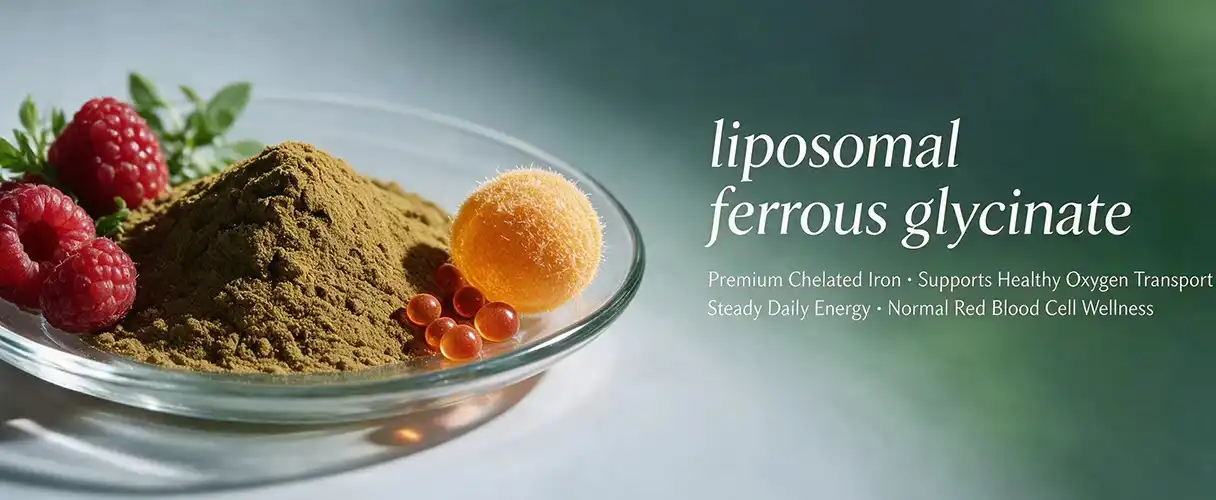
liposomal ferrous glycinate is one of the most sophisticated solutions on the market today if you’re looking to get iron elements for a private label supplement line. This form, unlike any of the conventional iron salts, is ferrous glycinate encapsulated in nanoscale phospholipid vesicles. The outcome is a milder, more bioavailable iron supplement that has demonstrable therapeutic advantages. For B2B buyers, it presents a chance to develop distinctive, high-margin solutions that are science-backed and that end customers truly see and believe in.
Understanding Liposomal Ferrous Glycinate: Benefits and Mechanisms
What Makes the Liposomal Delivery System Different
Not every iron supplement sold over the counter works well or makes individuals feel well. Both of these problems are addressed by liposomal ferrous glycinate. The iron glycinate core is within the phospholipid bilayer spheres (60-100 nm in diameter). The center is formed by two molecules of glycine bound to ions of iron in a stable pentagonal ring. This arrangement prevents the iron from rusting too early and coming free. It reaches the small intestine intact before it is eaten
Absorption Pathway and Bioavailability Advantage
When the liposome shell gets to the gut, it joins with the membrane of the gut. This is called endocytosis. The Fe-bisglycinate core is then taken into the bloodstream by peptide transporters like PepT1. These are also the ways that dipeptides get into the bloodstream. Animal tests have shown that amino acid-chelated iron types, such as bisglycinate, are easier for the body to absorb than ferrous sulfate. They can be up to four times more bioavailable in some cases. It works even better because of the liposomal layer.
Gastrointestinal Tolerance and Consumer Experience
A lot of people who take regular ferrous sulfate get cramps, feel sick, or have trouble going to the bathroom. This is one reason why lots of people don't follow the rules. Liposomal ferrous glycinate delivers iron in a focused and controlled way, which keeps the upper GI tract from getting irritated. People don't have to worry about taking the drug every day. People are more likely to stick with private-label products and buy them again.
Comparing Liposomal Ferrous Glycinate with Other Iron Supplements
Head-to-Head: Bioavailability and Tolerability
Here's how the primary iron forms stack up against each other in practical B2B terms:
- Ferrous sulfate remains the cheapest option, but bioavailability is low, and GI side effects are well-documented. Consumer complaint rates tend to be higher, which creates downstream brand risk.
- Ferrous gluconate is somewhat gentler than sulfate, but its absorption profile remains inferior to chelated forms. It offers limited differentiation for premium product lines.
- Non-liposomal ferrous glycinate (bisglycinate) is already a significant step up. However, without a delivery system, it remains vulnerable to oxidation and variable absorption based on food intake timing.
- Liposomal ferrous glycinate combines the superior absorption of amino acid chelation with the physical protection and targeted release of liposomal encapsulation. Encapsulation rates exceeding 95% and Fe²⁺ retention above 98% are achievable at the manufacturing level.
These differences matter not just for end consumers, but for how brands position and price their products in a crowded market.
Cost-Effectiveness from a B2B Perspective
While liposomal ferrous glycinate carries a higher unit cost than basic iron salts, the cost-per-effective-dose calculation often favors it. A lower active dose is needed to achieve the same iron repletion outcome, which can partially offset ingredient costs. Equally important, products formulated with this ingredient support a premium price point, widening the margin available to brand owners.
Private Label Differentiation Potential
B2B buyers building private label SKUs benefit from the marketing story that liposomal iron technology provides. Terms like "nano-encapsulated," "gentle iron," and "clinically supported absorption" resonate with today's supplement consumers. That positioning is harder to achieve with ferrous sulfate, regardless of how strong the branding is.
How to Choose the Best Liposomal Ferrous Glycinate for Private Label Formulations
Key Quality and Certification Criteria
Technical standards let you know which sellers of liposomal ferrous glycinate you can trust and which are just general element providers. People who want to buy should:
- Particle size and distribution: Average diameter 60–100 nm, PDI < 0.1 for consistent batch quality.
- Encapsulation rate: ≥ 95%, verified by HPLC-UV or atomic absorption spectroscopy.
- Fe²⁺ content: ≥ 98%, confirmed using validated analytical methods such as o-phenanthroline.
- Certifications: GMP compliance, allergen-free documentation, and food/pharmaceutical-grade raw material standards (such as GB 1903.41 for ferrous glycinate).
There are fewer than 0.1 particles in the sample, and the largest particle is about 60 nm in width. This makes sure that every batch is the same level of good.
The rate of encapsulation must be at least 95%, as shown by HPLC-UV or atomic absorption spectroscopy. The sample has at least 98% iron, as shown by tests like o-phenanthroline that are approved by the government.
GMP rules say that the paperwork can't have any allergens on it. The raw materials need to meet standards for food and drugs, like GB 1903.41 for iron glycinate.
Formulation Flexibility and Dosage Options
If private label goods want to sell in a regulated market like the US, they have to follow these rules.
MOQs, Pricing, and Negotiation
A good business should sell many kinds of liposomal ferrous glycinate. Freeze-dried powder for one dose stays stable on the shelf and can be kept at room temperature. Ampules that are ready to drink and full of nitrogen work well together. Powdered bases that don't smell and are very stable are best for useful foods like baby formula, pregnancy nutrition, or sports recovery drinks. Before you place a big order, make sure that your supplier can give you the format that your customers need.
Trends and Innovations Impacting Liposomal Ferrous Glycinate in B2B Markets
Growing Global Demand for Better Iron Supplementation
The World Health Organization says that many people around the world don't get enough iron. The world doesn't have enough food for everyone. Most women in the US don't get enough iron. Pregnant women and women who can have children are more likely to get enough iron. People in these two groups may want to take supplements. Companies that sell liposomal iron products will be able to make money for a long time because people will always need them.
Encapsulation Technology Improvements
There are new ways to make liposomes that have made the product much more stable and extended its shelf life. These include pH gradient active loading, tangential flow ultrafiltration cleaning, and programmed freeze-drying. By making these changes to the process, manufacturers can now make batches where they have better control over the particle size and where the Fe* stays whole at room temperature for longer. The people who buy things should ask the sellers how they clean and make their goods germ-free.
Clean Label and Sustainability Alignment
More and more, people who buy supplements want clear lists of what's in them. Liposomal ferrous glycinate, which is made from chelated iron used in medicine and phospholipids used in food, is effective for putting on clean labels. A lot of supplement brands today care about how their products are made. Instead of harsh chemicals, they use solvents that are better for the environment, such as ethanol or tert-butanol/water mixtures.
Practical Guide to Purchasing Liposomal Ferrous Glycinate for Private Label Products
Identifying and Vetting Reputable Suppliers
For the most part, direct producers have better prices, better customer service, and a more accurate way to keep track of each batch. When you compare liposomal ferrous glycinate suppliers, make sure you have all the details you need. This includes batch records, details on security, and test reports from a third party. Find out how much can be made and how long it takes for everything. If the supplier wants to sell supplements in the U.S., they need to learn about the FDA's rules and be able to show proof that they follow them.
Sample Testing and Quality Verification Steps
Before you make a big order, look at an organized sample first. Check the particle size, PDI, capsule efficiency, iron valence state stability, and clarity of the repair before you buy freeze-dried material. Make sure that the seller's specs match the lab's data. This step gives you peace of mind about the ingredient before you put the product on the market. It also keeps your brand safe from future quality problems.
After-Sales Support and Long-Term Partnership Value
Not only do you get good items, but you also keep getting them. Good suppliers keep track of where each batch came from, give full sets of regulatory paperwork, and answer questions quickly about formulation. This service makes it easy to follow the rules and speeds up the process of making new things. Before you switch suppliers every time you need to buy something, it is better to work with the same one for a long time and make sure they understand your product goals.
Conclusion
Thanks to liposomal ferrous glycinate, research into iron supplements has come a long way. Business buyers can use it to make their own unique, well-working private-label items. The two worst things about iron pills are that they are tough to swallow and can hurt your stomach. But these problems can be fixed with liposomal delivery and amino acid chelation. In the U.S., brands can use this ingredient to attract picky customers because it helps with both high-end branding and measurable results. To get a product to market, it's important to pick the right manufacturing partner. You should be able to get full legal help from this partner, and their quality systems should have been checked.
FAQ
What is the recommended daily dosage for liposomal ferrous glycinate supplements?
Typical daily iron dosages in supplement form range from 15 mg to 45 mg of elemental iron for adults, depending on the target population. Because liposomal ferrous glycinate has higher bioavailability than standard iron salts, effective dosages may be on the lower end of this range. Always confirm dosage recommendations with a qualified formulator based on your specific product application.
Is liposomal ferrous glycinate suitable for use in infant formula or prenatal supplements?
Yes. Liposomal ferrous glycinate is well-suited for sensitive applications including prenatal vitamins and infant nutrition products. Its gentle release profile and low GI irritation potential make it appropriate for populations with higher iron needs and lower tolerance thresholds. Confirm food-grade raw material compliance with your supplier before formulating for these markets.
What certifications should I look for when sourcing this ingredient?
Look for GMP certification, allergen-free documentation, and compliance with applicable food or pharmaceutical raw material standards. For the U.S. market, suppliers should also be able to provide NSF or ISO certifications and full COA documentation with each batch.
How does liposomal encapsulation affect shelf life and storage?
Freeze-dried liposomal ferrous glycinate offers excellent room-temperature stability when properly formulated with cryoprotectants like sorbitol and mannitol. Liquid formats should be nitrogen-flushed and sealed to prevent oxidation. Ask your supplier for validated stability data covering your intended storage conditions and product shelf life target.
Partner With BioSpark for Premium Liposomal Ferrous Glycinate Supply
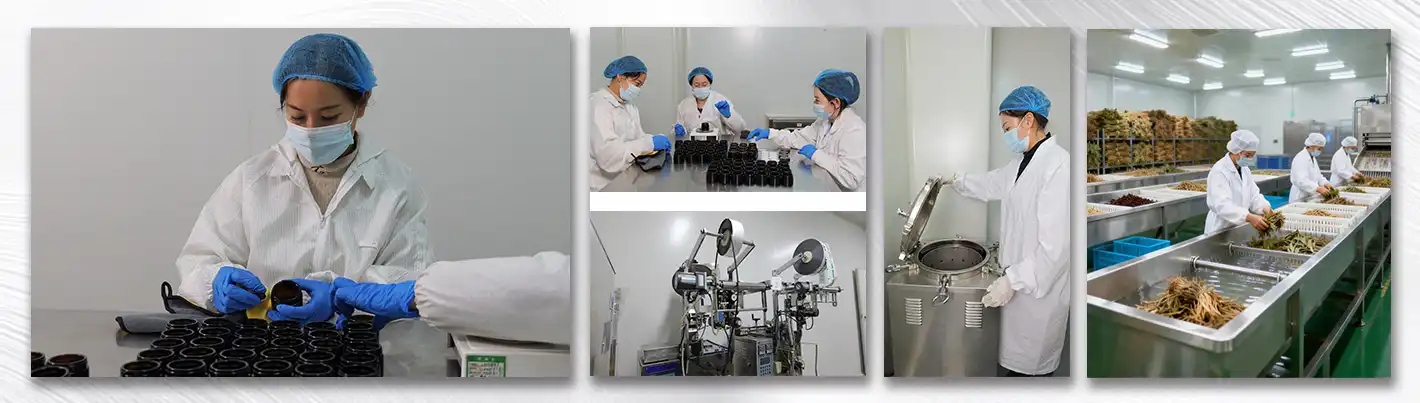
People can trust BioSpark (Xi'an) Biotechnology Co., Ltd. to make liposomal ferrous glycinate and offer GMP-certified OEM and ODM services to supplement makers, dealers, and shippers in North America and other places. Our company can handle any order, no matter how big or small. It helps you follow the rules, has all the paperwork you need, and keeps track of batches. Are you ready to make the next iron pill? Email leao@biosparkcn.com or go to https://www.biosparkcn.com/ to get samples and prices.
References
1. World Health Organization. Worldwide Prevalence of Anaemia 1993–2005: WHO Global Database on Anaemia. WHO Press, 2008.
2. Bovell-Benjamin, A. C., et al. "Iron Absorption from Ferrous Bisglycinate and Ferric Trisglycinate in Whole Maize Is Regulated by Iron Status." The American Journal of Clinical Nutrition, 2000.
3. Layrisse, M., et al. "New Property of Vitamin C and Ferrous Bisglycinate on Human Iron Absorption." Journal of Nutritional Biochemistry, 2000.
4. Allen, L. H. "Iron Supplements: Scientific Issues Concerning Efficacy and Implications for Research and Programs." Journal of Nutrition, 2002.
5. Shao, A., & Hathcock, J. N. "Risk Assessment for Iron." Regulatory Toxicology and Pharmacology, 2008.
6. Tarver, H. "Liposomal Drug Delivery Systems: From Concept to Clinical Applications." Advanced Drug Delivery Reviews, 2012.

Send Inquiry
Related Industry Knowledge
- How Does Walnut Peptide Support Healthy Aging and Vitality?
- Why Are Beauty Experts Turning to Bird's Nest Peptide?
- Natural Blueberry Extract Powder: Anti-Diabetic and Metabolic Benefits
- Does papaya leaf extract powder help support healthy blood function?
- Fulvic Acid Powder in Detox Programs: Does It Work?
- Why Is Broad Bean Powder Trending in Plant-Based Markets?
- Could Liquorice Extract Powder Improve Your Product Formula?
- What Is Rhizoma Chuanxiong Extract Used For?
- Does Hydrolyzed Rice Extract Enhance Product Absorption?
- Can Ganoderma Extract Powder Improve Heart Health?