Why Standardization Matters in Ashwagandha Leaf Extract
Nov 01, 2026
Standardization is not a formality in ingredient sourcing — it is a business-critical requirement. When brands and formulators source ashwagandha leaf extract, they are purchasing a promise: that each batch will perform as expected, contain verified levels of active compounds, and meet international safety benchmarks. Without standardization, that promise breaks down. Derived from Withania somnifera, ashwagandha leaf extract carries a distinct withanolide profile that differs meaningfully from root-based preparations. Getting that profile right — and keeping it consistent — is what separates dependable ingredients from risky ones.
Understanding Ashwagandha Leaf Extract and Its Variants
Botanical Origin and Bioactive Profile
Ashwagandha leaf extract comes from the plant Withania somnifera, which is native to South Asia and some parts of Africa. This plant is an adaptogen. The leaves have many phytochemicals, including withanolide glycosides, withaferin A, and natural antioxidants. When measuring with HPLC-UV, a good leaf extract is usually set at 5% to 35% total withanolides. This gives manufacturers a starting point for formulation that can be measured.
Leaf Extract vs. Root Extract: Key Differences
A lot of people who buy it think that root extract is the only one that works, but leaf extract often has more withanolides by weight. Studies in humans have shown that standardized leaf products may help with adaptogens at amounts as low as 125 mg. On the other hand, most root powders need 300–600 mg to work. Because of this higher potency-per-gram ratio, delivery formats are smaller, and the cost of raw materials per unit is lower.
Physical and Solubility Properties
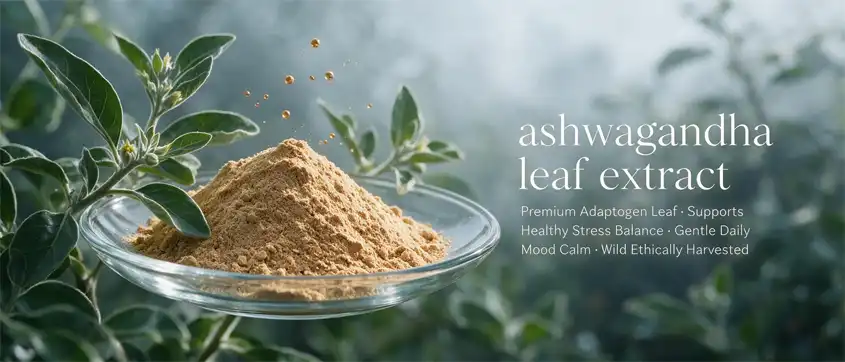
When properly prepared, ashwagandha leaf extract appears as a fine powder that ranges in color from light brown to olive. It dissolves in cold water more than 90% of the time, and it can stay effective for short amounts of time at temperatures up to 80°C. It can be used in ready-to-drink drinks, quick powder mixes, capsules, and even skin care products because of these traits.
The Challenges of Non-Standardized Ashwagandha Leaf Extracts
Variability in Raw Material Quality
If ashwagandha extract powder is not standardized, it can be very different depending on where it is grown, when it is picked, the soil conditions, and how it is handled after it is picked. The amount of withanolide in two groups of plants from different fields could be 40% or more different from one another. This variation makes it hard for formulators to give the right dose, and it also makes it more likely that customers will get products that don't work as well as they should.
Regulatory and Safety Risks
There aren't many botanical products available in many international markets, especially in the US. If you don't identify the extract, it could have different amounts of heavy metals, pesticide residues that aren't recorded, or solvent carry-over. To follow the EU pesticide rules, California Prop 65 limits for cadmium and lead, and USP/NF plant monographs, you need to show proof that they have been tried and proven to be right. Every shipment could be a legal risk if they are not standardized.
Impact on Brand Reputation
If there is a problem with the quality, customers may complain, give bad reviews, or even send the product back. Supplement companies that want to build trust with their customers should stay away from natural ingredients that haven't been tested and proven to work. Most of the time, one failed batch does more damage to a company's reputation than the difference in price between standard and non-standard raw materials.
Core Principles and Methods of Standardization
Setting Benchmarks for Bioactive Compounds
The first step in standards is to set goals that can be judged. The main sign for ashwagandha extract powder is total withanolides, especially withaferin A. These need to be kept in a safe treatment window so they can do what they were made to do. Each active chemical has a minimum and maximum level set by responsible providers. Each production batch is checked against these standards before it is put on the market.
Analytical Testing Protocols
It is important to have very strict tests. With HPLC-DAD, you can get a full chemical "fingerprint" of withanolide to make sure it is real and spot fakes. ICP-MS compares the levels of heavy metals like arsenic, lead, cadmium, and mercury to the limits set by California Prop 65 and the EU. The GC-MS/MS can find over 400 kinds of weed killers. It is safe to use the amounts of water or ethanol that were used for extraction, according to USP <467>.
Here is a clear picture of the main ways that tests were done:
- HPLC-DAD: Confirms withanolide identity, quantifies withaferin A, and detects potential adulteration with synthetic compounds or filler materials.
- ICP-MS Heavy Metal Screening: Measures Lead, Cadmium, Mercury, and Arsenic to satisfy both California Prop 65 compliance and EU import requirements simultaneously.
- GC-MS/MS Pesticide Panel: Screens over 400 individual compounds, supporting organic certification and clean-label claims for retail supplement brands.
- USP <467> Solvent Residue: Verifies that water and ethanol extraction solvents are within accepted pharmaceutical-grade residual limits.
The GC-MS/MS Pesticide Panel looks for more than 400 different chemicals. This helps brands keep up their "clean label" and organic certification claims.
This test checks to see if the amounts of water and ethanol used as extraction fluids are within the accepted ranges for pharmaceutical-grade residue (USP 467).
Certifications That Signal Credibility
These rules work together to make a good record that can be found. This record gives procurement teams the confidence to show it to regulators, store partners, and end buyers.
How Standardization Benefits B2B Procurement
Predictable Formulation Performance
Because the quantity of withanolide is the same from batch to batch, there is no need to adjust the dosage regimens. This consistency reduces the time and test runs required to ready a product for sale. This saves money for both ODM and OEM firms.
Reduced Supply Chain Disruption
The standardized ashwagandha leaf extract passes through customs more easily since all the test results are already done and can be examined. Costs can increase when there are delays in imports because of a lack of certificates of analysis or failed tests at the border. Buyers claim they have more predictable delivery windows and fewer delays when buying from regular merchants. This helps to ensure that production remains on pace.
Lower Total Cost of Ownership
Non-standardized batches often require further testing, re-mixing, or partial returns, all of which cost money. If components are standardized, then quality is already known before they are put into production. This implies less effort and fewer materials for internal quality testing. The increased expense of standard materials is usually offset by the savings in money from not having to reject or re-formulate as many times. You get the savings when you purchase anything for a year.
Choosing the Right Ashwagandha Leaf Extract Supplier
Evaluation Criteria That Matter
Check out their documented qualifications before you hire a provider. Then you should see what they are earning, how tight their quality system is, and how frequently they have provided in the past. Ask for certificates of analysis for each batch. Also inquire about controls for withaferin A and screening techniques for heavy metals. If you ask a provider to be upfront about transparency and they aren’t, remove them from your list.
Matching Product Format to Application Need
Ashwagandha leaf extract comes in a pure powder form, a standardized extract with a specific quantity of withanolide, and unique combinations with other adaptogens that complement each other. Consumers of functional drinks like them to be highly soluble in water and balanced in taste. The nootropic tablet manufacturers strive to include as much withanolide in as few tablets as feasible. Cosmetics businesses need to test that the sort of extracts they use are safe for the skin. When you purchase anything, you choose how to align format with application, which impacts how well something performs and how well it conforms to the standards.
Scalability and Long-Term Partnership Value
It’s very nice to have a supplier that can do small pilot runs and large production orders with the same quality. Brands don't have to find another supplier who can take more orders, so it saves time and money for brands when they get bigger.
Conclusion
Well-functioning supply lines are usually distinct from those challenging to forecast in terms of all sorts of factors. In hard-to-penetrate areas such as the US, the efficacy and regulatory status of ashwagandha leaf extract is influenced by levels of withanolide, safety guidelines, and consistency across batches. People purchase from brands that acquire their goods from conventional sources since they are checked via the regulatory process quickly and there is less danger in purchasing from them. Standardized sources are not an added expense; they are what makes a product robust.
FAQ
1. How does leaf extract differ from root extract in clinical dosage?
Standardized leaf extract typically achieves adaptogenic effects at 125 mg per serving, while root powder generally requires 300–600 mg for comparable outcomes. This is attributable to the higher withanolide glycoside concentration found in the leaf fraction.
2. Is ashwagandha leaf extract suitable for long-term supplement use?
Clinical trials on standardized preparations have confirmed safety profiles for continued use when withaferin A levels are held within validated therapeutic windows. Standardization is precisely what makes long-term safety assessments meaningful.
3. Does the extract carry a strong bitter taste?
Withanolides are naturally bitter, but refined extraction processes can reduce this significantly, making the ingredient more workable in flavored beverage and food matrix applications.
4. Is the extract non-GMO and vegan-compatible?
Professional-grade ashwagandha leaf extract uses non-GMO foliage and aqueous or ethanolic extraction methods, making it compatible with vegan and clean-label certification requirements.
5. What is the standard shelf life?
Properly stored in airtight containers, away from direct sunlight and humidity, standardized ashwagandha leaf extract maintains stability for 24 to 36 months.
Partner with BioSpark for Standardized Ashwagandha Leaf Extract
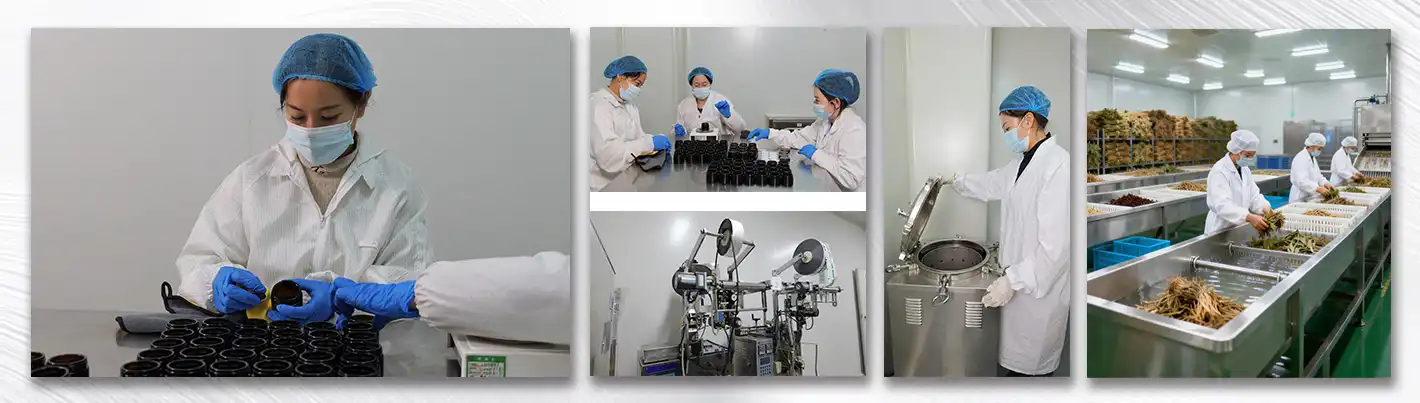
For supplement makers, wholesalers, and OEM/ODM partners all over the world, BioSpark (Xi'an) Biotechnology Co., Ltd.'s Ashwagandha leaf extract has been quality-tested by batch. No matter how big or small the job is, we do it in GMP-approved facilities. We are a trustworthy source of ashwagandha leaf extract, and we offer low prices, full documentation, and flexible requirements. You can email leao@biosparkcn.com to ask for a sample.
References
1. Mirjalili, M. H., et al. "Steroidal Lactones from Withania somnifera." Molecules, 2009.
2. Patel, S. B., et al. "Phytochemical Analysis and Standardization of Withania somnifera Leaf Extract." Journal of Pharmaceutical Sciences and Research, 2015.
3. Pratte, M. A., et al. "An Alternative Treatment for Anxiety: A Systematic Review of Human Trial Results." Journal of Alternative and Complementary Medicine, 2014.
4. Chandrasekhar, K., et al. "A Prospective, Randomized Double-Blind, Placebo-Controlled Study of Safety and Efficacy of a High-Concentration Full-Spectrum Extract of Ashwagandha Root." Indian Journal of Psychological Medicine, 2012.
5. American Herbal Products Association. Botanical Safety Handbook, 3rd Edition. CRC Press, 2013.
6. United States Pharmacopeia. USP-NF Monographs: Botanical Extracts and Residual Solvents <467>. USP, 2023.

Send Inquiry
Related Industry Knowledge
- How Does Cherry Fruit Powder Compare With Fresh Cherries?
- How to Source High-Quality Banana Juice Powder in Bulk?
- Sea Buckthorn Juice Powder vs. Fresh Juice: Which Is Better?
- How to Choose the Best Spinach Juice Powder Supplier?
- Egg yolk fruit powder Applications in Smoothies, Snacks, and Bakery
- Maqui Berry Powder for Eye Health: Dry Eye & Retinal Protection
- Maqui Berry Powder for Eye Health: Dry Eye & Retinal Protection
- Maqui Berry Powder for Eye Health: Dry Eye & Retinal Protection
- Maqui Berry Powder for Eye Health: Dry Eye & Retinal Protection
- Maqui Berry Powder for Eye Health: Dry Eye & Retinal Protection
- Maqui Berry Powder for Eye Health: Dry Eye & Retinal Protection
- Maqui Berry Powder for Eye Health: Dry Eye & Retinal Protection
- Maqui Berry Powder for Eye Health: Dry Eye & Retinal Protection
- Maqui Berry Powder for Eye Health: Dry Eye & Retinal Protection
- Maqui Berry Powder for Eye Health: Dry Eye & Retinal Protection
- What makes gotu kola extract powder a premium herbal nootropic?
- Can Purple Cabbage Powder Improve Beverage Appearance?
- Is Spirulina Extract Tablet Effective for Weight Support?
- Tanshinone Danshen Extract Powder: Natural Vascular Protection