_1764041963888.webp)
How to Source Reliable Broad Bean Powder Suppliers?
Jun 15, 2026
Finding reliable providers of Broad bean powder needs a plan that strikes a balance between checking the quality, following the rules, and being able to change how things work as needed. If you're a health supplement brand, nutraceutical business, or wholesaler looking for plant-based protein ingredients, it's important to find partners who can provide regular product specs, clear traceability, and helpful customer service. This guide shows tried-and-true evaluation frameworks, sourcing methods, and relationship management techniques that help procurement professionals find trustworthy suppliers while lowering common supply chain risks and making sure they're in line with changing market needs.
Understanding the Broad Bean Powder Market Landscape
The market for plant-based proteins has grown incredibly fast as more and more people care about healthy ingredients and labels that are easy on the eyes. Broad bean powder, which is also called Broad bean powder or Broad bean powder, has become a popular choice over whey, soy, and pea isolates as a source of protein.
What Makes Fava Bean Protein Unique?
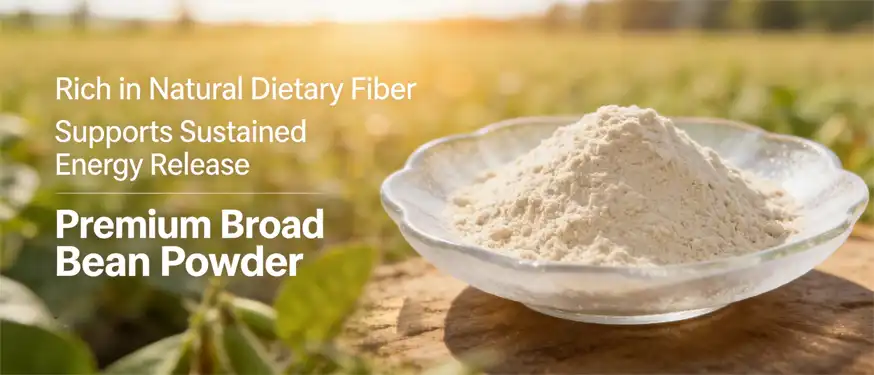
This powder comes from improved methods for extracting Vicia faba. It has a balanced amino acid profile that includes branched-chain amino acids that are important for muscle recovery and metabolic function. Unlike some legume proteins, Broad bean powder has a neutral flavor and a light color that ranges from pale yellow to a light brown. It works well in formulation without needing a lot of taste hiding. The Kjeldahl method shows that the food has about 60% protein. It also has complex carbohydrates, dietary fiber, B vitamins (especially folate and B6), and important minerals like iron, magnesium, potassium, and copper. These nutritional features can be used in a lot of different ways, from sports nutrition and meal replacement recipes to improving baked goods and making useful drinks.
Current Market Dynamics
The need for Broad bean powder is growing quickly in North America and Europe. This is because people are more health-aware, care about the earth, and have to follow certain diets. A recent study of the industry says that the global plant protein market will hit important value goals by 2030, with pulse proteins gaining more market share. Broad bean powder has special benefits for brands that want to appeal to vegan, gluten-free, and allergy-conscious customers. Its PDCAAS (Protein Digestibility Corrected Amino Acid Score) is usually between 0.7 and 0.8, which means it is very bioavailable compared to other plant sources. The ingredient is very useful for product makers who have to work with difficult formulation materials because it dissolves well across pH ranges of 3.0 to 7.0 and can also emulsify well.
Organic vs. Conventional Specifications
Teams in charge of buying things need to think about whether organic approval fits with how the brand is positioned and what the target market expects. Although organic Broad bean powder is more expensive, it can be sold in boutique stores and to health-conscious customers. Conventional choices are cheaper for value-oriented product lines and keep their nutritional value as long as they come from respected manufacturers who follow good farming practices. When you compare Broad bean powder to pea and soy protein, you can see that it has clear benefits. Broad bean powder, unlike soy, doesn't cause allergies or buyer worries about GMOs. Compared to pea protein, it has about the same amount of protein but may be more stable in terms of color and taste, which makes preparation work easier.
Criteria for Evaluating Broad Bean Powder Suppliers
When choosing factory partners, you need to carefully look at them across a number of practical and quality factors. Setting clear evaluation criteria protects the image of your company and makes sure that the supply chain works consistently.
Essential Certifications and Compliance Standards
Suppliers with a good reputation keep a full range of certifications that show they follow international quality systems. Look for companies that have ISO9001 quality management certification. This sets up rules for controlling processes in a planned way and making improvements all the time. Kosher and Halal approvals make it easier for goods to be sold in stores that cater to different cultures around the world. Suppliers that want to sell to U.S. customers must be registered with the FDA and follow GMP (Good Manufacturing Practice). These standards make sure that factories have the right controls to keep things from getting dirty, tested methods that have been proven to work, and record-keeping systems that allow for full batch tracking. With FSSC 22000 and HACCP approvals, you can be even more sure that your providers have strong food safety management systems that deal with biological, chemical, and physical risks all the way through the production process.As worries about cross-contamination affect buying choices, allergen-free approvals become more important. Check to see if factories handle common allergens like peanuts, tree nuts, or shellfish, and make sure there are specific production lines if your product's allergen-free claims are very important to its placement.
Production Capacity and Scalability
Knowing how much a provider can produce will help your business avoid production bottlenecks in the future. Check to see if makers can handle both small-batch orders at first (some good suppliers offer minimum order amounts as low as 1 kg for sample) and large-volume production to support the launch of the product and the growth of the market. When compared to basic grinding processes, factories that use advanced extraction technologies like supercritical fluid extraction and membrane separation usually make products that are more consistent. These ways of making products keep the nutrients intact while getting the right amount of protein and the right particle size distribution (usually 80–120 mesh), which affects how the powder flows and how the finished product feels.
Quality Testing and Traceability Systems
Professional manufacturers and commodity sellers are separated by strict testing methods. High-Performance Liquid Chromatography (HPLC) is the best way to check the amount of protein in a sample and find any possible contaminants. Reliable partners send their products to a third-party lab for testing that goes beyond internal quality checks. The labs then give them certificates of analysis that show the food's nutritional value, bacteria safety, heavy metal limits, and pesticide residue levels. Traceability systems that let producers follow raw materials from where they were grown to the finished product lot numbers show that operations are well-thought-out and risks can be managed well. During regulatory or quality reviews, this openness is very important because it lets people quickly find the damaged goods and keeps business running as smoothly as possible.
Pricing Structures and Payment Terms
Competitive price depends on many things, such as the quality of the raw materials, the difficulty of the handling, the cost of licensing, and the number of orders. Even though comparing prices is still important, the cheapest quote isn't always the best in the long run when you take into account things like consistent quality, expert help, and supply reliability.You can protect both parties and build professional business relationships at the same time by negotiating good payment terms, like bank transfer (T/T) with fair deposit requirements and balanced milestone payments. Experienced providers give a range of shipping choices, such as FOB, CIF, CFR, EXW, DAP, and DDP, to meet the needs of different foreign markets and transportation preferences.
Methods to Identify and Verify Reliable Broad Bean Powder Suppliers
Digital research, industry networking, and hands-on verification are all good ways to find good suppliers and build trust in possible production partners.
Leveraging Online B2B Platforms
Digital markets like Alibaba, Global Sources, and sites that focus on specific ingredients make it easy to find possible suppliers. When looking at supplier profiles, give more weight to makers who show full certification paperwork, clear business histories, and detailed product specs than to generic lists that only give you basic information. Before placing a bigger order, ask for samples of the goods. Good sellers offer samples at fair prices, which lets your technical team do tests on the samples' taste, how well they work with your recipes, and independent lab confirmation. The evaluation of samples shows if the real product qualities, such as appearance, solubility, protein content, and organoleptic properties, match what the Broad bean powder seller says they are. When you first contact a seller, pay attention to how quickly they respond and how well they communicate. When manufacturers answer complex questions quickly and in detail, they're more likely to keep up skilled customer service standards that help partnerships last.
Trade Shows and Industry Events
Going to specific trade shows like SupplySide West, Vitafoods Europe, and the IFT Annual Meetings is a great way to meet suppliers in person. These events give people a chance to talk to technical officials face-to-face, get samples right away, and build relationships that build trust in a way that is hard to do through digital contact alone. Participating in trade shows shows that a seller cares about being present in the market and getting customers involved. Manufacturers who keep their booths looking nice and hire knowledgeable staff usually have a sophisticated business model that supports reliable supply chain performance.
Factory Audits and Site Visits
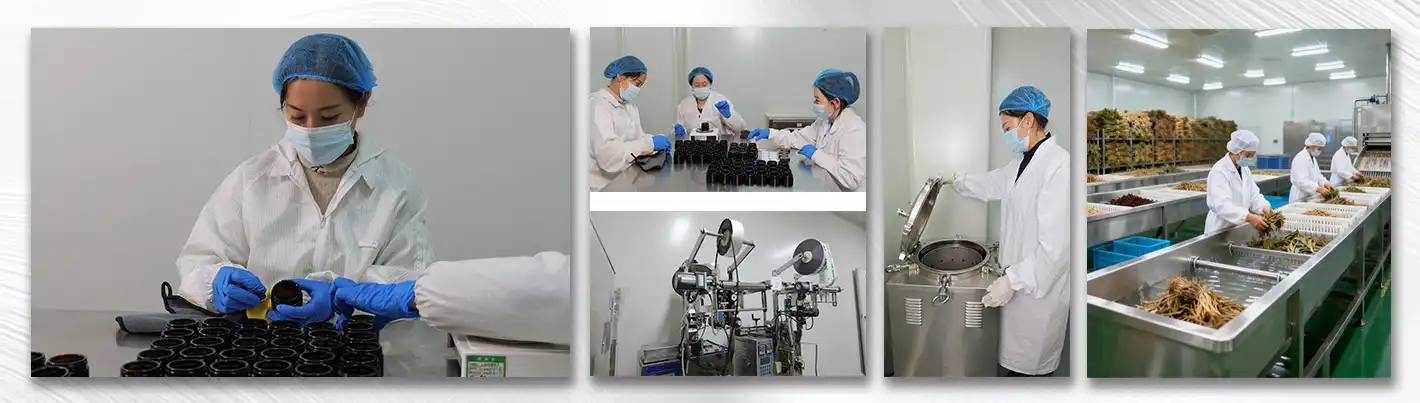
There is no better way to confirm manufacturing skills and operational standards than to visit the site in person. If you can, plan to visit the plant to check on the state of the equipment, the rules for keeping the place clean, how the raw materials are stored, and the quality control methods used. Keeping an eye on production gives you information about technical know-how, capacity usage, and organizational culture, all of which affect the trustworthiness of the supply chain. Ask to look over standard operating procedures, batch production records, calibration certificates for testing equipment, and staff training records when you visit the site. Suppliers who are open and honest welcome these questions because they know that customers who are well-informed become loyal, long-term partners.
Third-Party Verification Services
You might want to hire an independent inspection service to check up on your suppliers and test your products for you. Supplier verification programs from companies like SGS, Intertek, and Bureau Veritas give unbiased opinions on a company's ability to make things, its quality control systems, and its compliance with rules. These services are especially helpful when you can't go to the plant yourself because of distance or because you don't have enough technical knowledge to do your own evaluations.
Case Studies: Successful Sourcing Stories from the Industry
Examples from real life show how choosing the right suppliers can affect business results and lead to new products.
Case Study: Organic Supplement Brand Enhancement
A North American company that makes food supplements wanted to make its plant-based Broad bean powder line stand out from others on the market by adding organic Broad bean powder. The purchasing team looked at a number of Chinese makers and chose one that had all the necessary organic approvals, ISO9001 quality systems, and consistent HPLC testing procedures. During formulation creation, the supplier's expert team worked closely with us, giving us information on how to best process the powder so that it would mix properly. Production went easily from the first 100 kg of test orders to the current monthly shipments of 5,000 kg that support retail distribution across the country. The new product line grew by 34% year over year, in part because of the better taste and clean label placement made possible by the high-quality organic Broad bean powder.
Case Study: Gluten-Free Product Portfolio Expansion
A European company that sells food products noticed that snack and bakery makers were wanting approved gluten-free protein sources more and more. They did extensive due diligence research, including third-party testing and factory inspection, after visiting a trade show where they found a maker offering gluten-free certified Broad bean powder with allergen-free facility promises. Because the seller had flexible minimum order amounts, the distributor could test the market demand with little risk to the inventory. Within 18 months, the product became an important part of the company's business, bringing in a lot of money and making relationships with customers stronger by giving them access to a unique ingredient that met certain technical and certification needs.
Best Practices for Building Lasting Supplier Relationships
Getting suppliers you can trust is only the beginning of a good buying plan. Long-term relationships that work well require ongoing conversation, working together to solve problems, and respecting each other.
Regular Quality Reviews and Performance Monitoring
Set up systematic provider scorecards that keep track of key performance measures like the percentage of on-time deliveries, the accuracy of certificates of analysis, the consistency of product specifications, and the speed with which questions are answered. Set up business reviews every three months to talk about success measures, deal with problems before they become supply disruptions, and find ways to make things better. Re-testing incoming materials on a regular basis by independent labs ensures consistent quality and confirms the accuracy of source testing. This check shows that you did your job properly and gives you an early warning of any possible quality drift.
Open Communication Channels
Set up clear rules for how to talk to each other and name the main people to talk to about technology issues, managing orders, coordinating tasks, and quality issues. Respondent providers give each customer a specialized account manager, which makes it easier to share information and get personalized service. Share your growth and expectations in a clear way so that your providers can plan their capacity, get the raw materials they need, and make the best use of their time to support your business goals. If you let your suppliers know about your planning stages, they may be able to offer better terms, earlier output slots, and proactive solutions when there are supply problems across the whole industry.
Collaborative Product Development
Include expert partners in efforts to improve products and come up with new formulations. Experienced Broad bean powder sellers know a lot about ingredients, how to use them, and the market, which can shorten the time it takes to make a product and make it work better. Working together makes relationships stronger in ways other than just buying things, providing value for both sides and giving them an edge over rivals that is hard to copy.
Conclusion
To find reliable partners for Broad bean powder, you need to find a balance between strict evaluation criteria, useful proof methods, and best practices for relationship management. By understanding how the market works, setting clear standards for choosing suppliers, using multiple discovery channels, and encouraging collaborative partnerships, procurement professionals protect the supply chain and get access to high-quality ingredients that help businesses grow and come up with new products. Investing in a thorough review of suppliers pays off with consistent product quality, trust in regulatory compliance, and the ability to change operations to meet changing market needs.
FAQ
What distinguishes high-quality fava bean protein from lower-grade options?
Premium Broad bean powder has a constant protein content that has been confirmed by the Kjeldahl method, a light look that hasn't changed color, a mild aroma that doesn't have any off-flavors, and particles that are evenly spread out, usually between 80 and 120 mesh. When you buy good items, they come with full certificates of analysis that list the nutritional facts, microbiological safety, heavy metal limits, and pesticide residue tests. Lower-quality materials often don't meet specifications, have darker colors that could be caused by rust or processing problems, and don't have a lot of testing records, which can make formulation difficult and create regulatory risks.
How do I verify supplier certifications are legitimate?
Instead of depending only on what a website says, ask for actual copies of the certificates and then check their authenticity directly with the organizations that issued them. ISO9001 certificates have registration numbers that can be checked in the files of certification bodies. Kosher and Halal certifications should include the contact information for the approving rabbi or Islamic authority so that you can check the information directly. The FDA business search database can be used to check license numbers. Suppliers who are trustworthy are happy to give you this information and see questions about their due diligence as a sign of professional purchasing practices.
What minimum order quantities should I expect?
Minimum order amounts are very different depending on the goods and how the Broad bean powder seller runs their business. Some companies that sell goods in bulk need orders of several tons, while others can handle small orders that are good for trying and developing new products. Suppliers who care about quality and work with the nutraceutical and specialty food industries often offer sample sizes starting at 1 kg and going up to normal business packaging of 25 kg drums. Make sure that the minimum order amount is clear from the start of the conversation so that it fits with the stage of your business and your growth needs.
Partner with BioSpark: Your Trusted Broad Bean Powder Supplier
BioSpark (Xi'an) Biotechnology Co., Ltd. makes high-quality Broad bean powder with 60% protein by using modern plant extraction methods and HPLC testing that has been proven to work. Our wide range of certifications, such as ISO9001, Kosher, Halal, FDA registration, and GMP compliance, make sure that your goods meet strict international standards. We can also produce orders ranging from 1 kg samples to large business volumes. We keep enough in stock to offer fast shipping via express, air freight, or sea freight on the terms that you choose (FOB, CIF, CFR, EXW, DAP, DDP). Our experienced OEM/ODM team also helps with the whole process, from formulating to final packing. Contact us at leao@biosparkcn.com right away to get samples and technical specs and find out how our dedication to quality, openness, and customer relationship can make your supply chain stronger.
References
1. Multari, S., Stewart, D., & Russell, W. R. (2015). Potential of Fava Bean as Future Protein Supply to Partially Replace Meat Intake in the Human Diet. Comprehensive Reviews in Food Science and Food Safety, 14(5), 511-522.
2. Crépon, K., Marget, P., Peyronnet, C., Carrouée, B., Arese, P., & Duc, G. (2010). Nutritional Value of Faba Bean (Vicia faba L.) Seeds for Feed and Food. Field Crops Research, 115(3), 329-339.
3. Karaca, A. C., Low, N., & Nickerson, M. (2011). Emulsifying Properties of Chickpea, Faba Bean, Lentil and Pea Proteins Produced by Isoelectric Precipitation and Salt Extraction. Food Research International, 44(9), 2742-2750.
4. Grand View Research. (2022). Plant-Based Protein Market Size, Share & Trends Analysis Report By Source, By Application, By Region, And Segment Forecasts, 2023-2030. San Francisco: Grand View Research, Inc.
5. Boye, J., Zare, F., & Pletch, A. (2010). Pulse Proteins: Processing, Characterization, Functional Properties and Applications in Food and Feed. Food Research International, 43(2), 414-431.
6. Sosulski, F. W., & McCurdy, A. R. (1987). Functionality of Flours, Protein Fractions and Isolates from Field Peas and Faba Bean. Journal of Food Science, 52(4), 1010-1014.

Send Inquiry
Related Industry Knowledge
- Want a reliable Maqui Berry Powder Manufacturer for Bulk Orders?
- Gotu Kola Extract Powder: What Makes It So Popular?
- What Makes Pomegranate Peel Extract Powder Unique?
- Coconut Milk Extract Powder: Key Nutritional Benefits
- Natural Artichoke Extract: A Natural Solution for Digestion?
- What Are the Key Benefits of Pomegranate Seed Extract Powder?
- White Willow Bark Extract Powder: Benefits for Pain Relief?
- What Is Rhizoma Chuanxiong Extract Used For?
- How Ginseng Plant Extract Boosts Immune Function?
- Ghanaian Seed Extract Benefits: Natural 5-HTP for Mood & Wellness