How to Choose the Best Ashwagandha Leaf Extract Supplier
Oct 29, 2026
One of the most important decisions a supplement brand or a nutraceutical company can make is choosing the right ashwagandha leaf extract supplier. The quality of your raw botanical component impacts product quality, regulatory compliance, and customer trust. As the global demand for adaptogenic botanicals continues to soar, procurement teams are confronted with both opportunities and challenges. In this video, we’ll walk you through everything you should consider before selecting a long-term botanical extract mate.
Understanding Your Procurement Needs for Ashwagandha Leaf Extract
Your team needs to know what they need to do before they call a source. People waste time and money on products that don't work together when requirements aren't clearly defined, and the evaluation process is rushed.
Define Your Application Scope
Think about what this ashwagandha leaf extract will be used for: a stress-relieving pill, a useful drink, a skin care product, or a nootropic stack that is made just for your company. Each use calls for a different number and size of withanolide particles. For example, RTD drinks should use leaf extracts that dissolve in water and have a standard concentration of more than 5% withanolides. High-potency pill forms, on the other hand, might need to be standardized by up to 35% using HPLC analysis.
Determine Order Volume and Batch Flexibility
Customization in small amounts (as little as a few kilograms) works well for new businesses testing out new recipes, but established distributors may need a steady supply of metric tons. You can get rid of sellers who can't change their production schedules by setting an initial minimum order quantity (MOQ). If a supplier can handle both sizes well, it means they are good at what they do and could be a long-term partner.
Identify Required Certifications
The people you want to sell to decide what certifications they need. To sell in the U.S., you need to follow FDA 21 CFR Part 111 and get GMP certification. If you want to reach certain types of customers, you might need organic approval (USDA NOP), non-GMO proof, and Kosher or Halal status. Suppliers save a lot of time during the screening part when they know about these licensing needs early on.
Core Metrics to Evaluate Ashwagandha Leaf Extract Suppliers
It's important to have a plan for how to look at candidates once you know what you need. Tests for quality are the most important step.
Quality Assurance and Third-Party Testing
Certificates of Analysis (COA) from independent labs are given by sellers you can trust. If you're looking for withanolide extract, make sure the HPLC-DAD test confirms the withanolide glycoside profile and measures withaferin A before using it. The levels of arsenic, lead, cadmium, and mercury found by ICP-MS heavy metal screening should be less than what is allowed by California Prop 65 and the EU. GC-MS/MS pesticide residue panels with more than 400 compounds are standard for makers that say their products are clean.
Regulatory Compliance by Market
Anyone who wants to sell to the U.S. market must prove that they follow FDA GMPs. Buyers in Europe need information that works with EFSA. Providers should give full dossiers when asked, not when they are asked for them. Gaps in the rules cause products to come out later, imports to stop, and financial risk. Straight up ask: Could you send me the full file I need to send to the FDA? Are your GMP and ISO 22000 licenses up to date?
Supply Chain Transparency
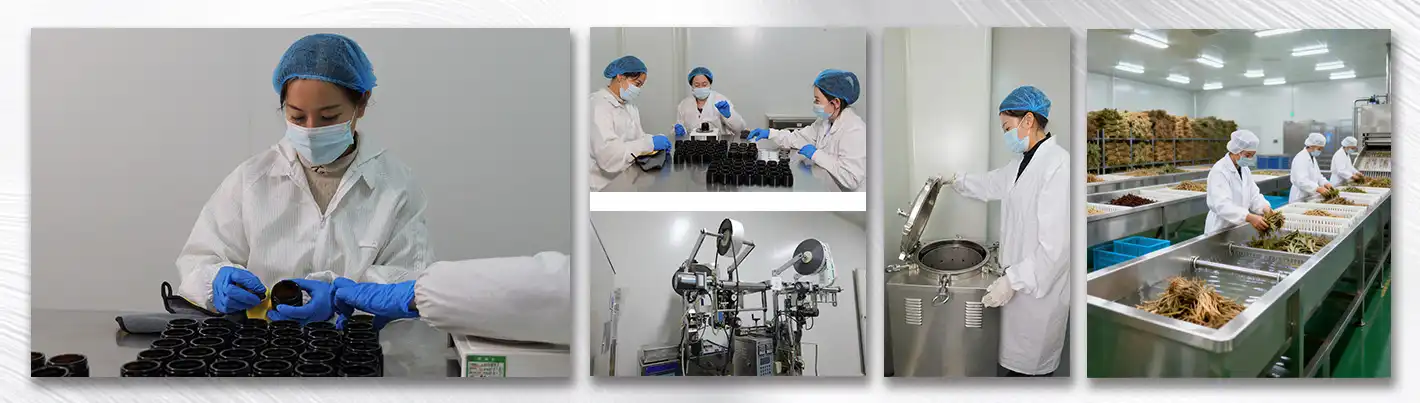
If someone wants to buy Withania somnifera leaves, they should find out where they are grown, how they are collected, and whether they are extracted with water, alcohol, or a mix of the two. A supplier who is honest about the process will have proof of sustainable farming and be able to track products from the farm to the finished extract. It is best to rule out suppliers right away if they can't provide sourcing documents.
Comparing Ashwagandha Leaf Extract Products and Supplier Portfolios
There are several types of withanolide extracts on the market, and not all of them are good. Your recipe investment will be safe if you look at two portfolios next to each other.
Leaf Extract vs. Root Extract vs. Whole-Plant Powder
The amount of total withanolides in ashwagandha extract powder is higher per gram than in regular root powders. Studies have shown that 125 mg of pure leaf extract can have the same adaptogenic benefits as 300–600 mg of root powder. This is very helpful for small-dose types. For traditional recipes, root extract and whole-plant powders are still useful. But leaf-derived withanolide concentrate is becoming more common because it is more effective per gram.
Standardization Levels and Form Factors
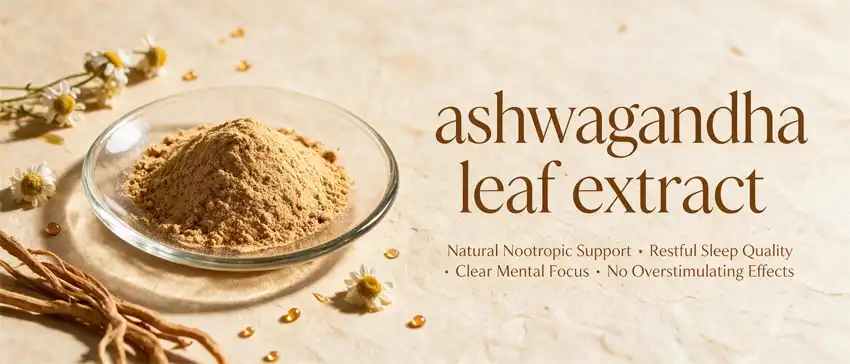
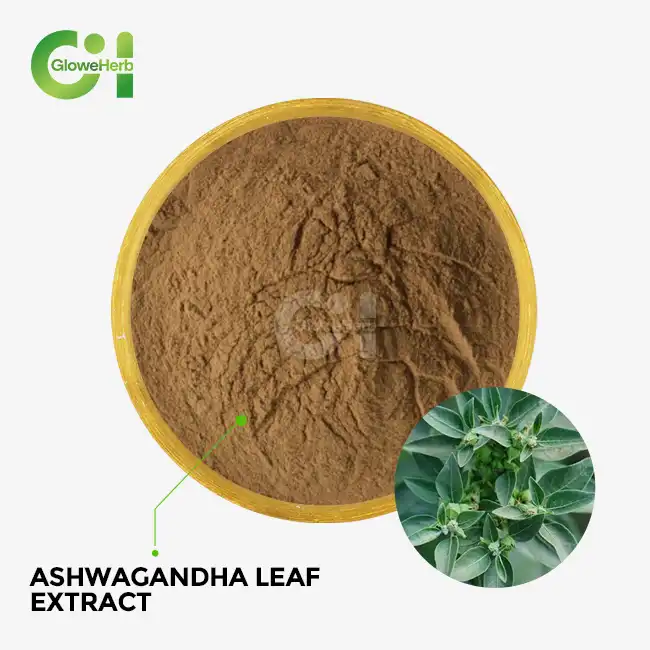
Good ashwagandha leaf extract is a fine, water-absorbing powder that can be light brown to olive green and mixes with more than 90% of cold water. It works well for making drinks because it can handle temperatures up to 80°C. There should be a range of standard options from 5% to 35% total withanolides, and each batch should have proven HPLC fingerprints. When standardization doesn't match up, products don't work the same way.
Supplier Credibility and Customization Capacity
Not only the specs of the product but also the supplier's track record are important. Ask names in your field for testimonials, case studies, and client lists. Find out if they can do both OEM and ODM. Can they handle things like private labeling, custom extraction ratios, or different packaging forms, for instance? If you work with a company that is more than just a catalog seller, they will really add value to your supply chain.
Logistics and Procurement Practicalities for Global B2B Clients
Even a great product can be a problem if the supply chain isn't stable. Going over the logistics is just as important as going over the quality.
International Shipping and Lead Times
Botanical extracts from Asia are sent to the U.S. in large quantities by sea freight in 15 to 30 days. Air freight is available for urgent pilot orders. What’s a buyer to do? They should ask the vendor how long it generally takes to ship an order and make sure the seller has handled U.S. customs documentation such as phytosanitary certifications and HS code classification for plant goods.
Inventory Planning and MOQ Agreements
Planning must be coordinated for manufacturing that never stops. The contract you are negotiating to purchase anything should include explicit minimum order quantities (MOQ), re-order points, wait time buffers, etc. If a supplier can adjust the MOQ from a 1-kilogram test order to a huge shipment of many tons, purchasing teams may scale up without having to replace suppliers for every volume level.
Risk Mitigation and Supplier Audits
You need to monitor your supply chain often to make sure it's secure, either by going to it yourself or by using a third party to do it. Before you place your first purchase of ashwagandha extract powder, make sure you understand how to return and get your money back for any batches that don’t suit your demands. If you have a supplier prepared to be examined and to tell you everything about a batch, then your quality assurance team can perform its job.
How to Make the Final Decision: Matching Supplier Capabilities to Your Business Needs
With data gathered across quality, compliance, portfolio, and logistics dimensions, the final decision comes down to fit.
Prioritize the Right Criteria for Your Context
Cost per kg counts, but purchasing only on price is a typical procurement mistake. A cheaper withanolide extract that fails heavy metal testing or lacks GMP paperwork may cost much more in product recalls or regulatory fines. Rank your requirements in terms of business impact: 1) quality certification 2) regulatory paperwork 3) price and payment conditions.
Sample Testing and Pilot Orders
Request a certified sample (usually 50-200 g) for independent analytical examination before committing to a complete purchase order. Compare the COA with your own quality standards and formulation needs. A good supplier would happily provide samples and give technical data sheets to help your internal evaluation process.
Building a Long-Term Partnership
Long-term supplier agreements may provide price stability, priority production scheduling, and co-development of new formulations. A supplier dedicated to the success of your brand will invest their resources appropriately. Assess the strength of the collaboration over the long term by evaluating timeliness in communications, response times, availability to technical assistance, and readiness to customize.
Conclusion
There are procedures to discover a vendor for ashwagandha leaf extract. You can’t simply click and say I am going to purchase this. See what you need, check the paperwork, browse a few portfolios, check the reliability of the procedures and tests before you pick. If they are excellent at all of these things, not just pricing, they will be able to help your firm expand in a manner that lasts.” Whether you are establishing a new line of adaptogen goods or expanding an existing brand, this framework will safeguard your consumers and your investment.
FAQ
1. How does ashwagandha leaf extract differ from root extract?
Leaf extract typically contains higher concentrations of total withanolides, allowing effective doses as low as 125 mg compared to 300–600 mg for standard root extract. The leaf fraction also carries a distinct withaferin A profile relevant to specific therapeutic applications.
2. How do I verify the purity of a withanolide extract before purchasing?
Request a third-party COA showing HPLC-DAD withanolide profiling, ICP-MS heavy metal results, and GC-MS/MS pesticide residue data. Cross-reference these results against USP/NF botanical monograph standards and California Prop 65 thresholds.
3. What are typical shipping lead times for bulk botanical extract orders?
Sea freight from Asia to the U.S. typically takes 15 to 30 days after dispatch. Air freight reduces transit to 5–7 days. Always confirm the supplier's order-to-dispatch turnaround separately, as production lead time adds additional days.
4. What is the shelf life of ashwagandha leaf extract?
Standardized extract in airtight, light-protected packaging maintains potency for 24 to 36 months when stored in a cool, dry environment below 25°C.
5. Is ashwagandha leaf extract non-GMO and vegan-compatible?
Yes. Professional-grade extracts use non-GMO foliage and aqueous or ethanolic extraction methods fully compatible with vegan, clean-label, and organic certification requirements.
Source Your Ashwagandha Leaf Extract Through BioSpark
Ashwagandha leaf extract is made by BioSpark (Xi'an) Biotechnology Co., Ltd., a company that is GMP-certified. They have standard withanolide extracts that are between 5% and 35% pure. They also have full paperwork from a third party checking the extracts, and the MOQ can be changed from a sample to a big batch. Nutritional supplements, functional drinks, and beauty products can all be made with our help, whether they are OEM or ODM. To get a certified sample and a personalized quote, go to email our team at leao@biosparkcn.com right now.
References
1. Journal of the International Society of Sports Nutrition — 2015
2. Phytomedicine — 2012
3. Evidence-Based Complementary and Alternative Medicine — 2011
4. Journal of Ayurveda and Integrative Medicine — 2019
5. Grand View Research: Ashwagandha Extract Market Report — 2023
6. American Herbal Products Association (AHPA): Botanical Safety Handbook — 2013

Send Inquiry
Related Industry Knowledge
- How Are Purslane Saponins Extracted and Purified?
- Can small molecule peptide from fish maw Boost Collagen?
- Hami Melon Powder OEM: Custom Flavor Solutions for Brands
- Why Is Barley Sprout Powder Used in Green Food Products?
- Maqui Berry Powder for Eye Health: Dry Eye & Retinal Protection
- Maqui Berry Powder for Eye Health: Dry Eye & Retinal Protection
- Maqui Berry Powder for Eye Health: Dry Eye & Retinal Protection
- Maqui Berry Powder for Eye Health: Dry Eye & Retinal Protection
- Maqui Berry Powder for Eye Health: Dry Eye & Retinal Protection
- Maqui Berry Powder for Eye Health: Dry Eye & Retinal Protection
- Maqui Berry Powder for Eye Health: Dry Eye & Retinal Protection
- Maqui Berry Powder for Eye Health: Dry Eye & Retinal Protection
- Maqui Berry Powder for Eye Health: Dry Eye & Retinal Protection
- Maqui Berry Powder for Eye Health: Dry Eye & Retinal Protection
- What Makes Oyster Shell Extract Powder a Premium Calcium Ingredient?
- Is Yellow Peach Powder Perfect for Bakery Innovations?
- Need Fine Mesh Cowpea Powder for Smooth Food Processing?
- Want Wholesale Bitter Melon Extract Powder at Better Prices?
- How Does Ghanaian Seed Extract Support Mental Well-Being?