How to Choose Organic Green Tea Extract Powder Suppliers?
Nov 03, 2026
The first step in selecting the proper organic green tea extract powder provider is to consider certifications, product specs, and traceability. The supplier must be USDA Organic or EU Organic certified and have standardized catechin content (≥70% HPLC) and Certificates of Analysis (COAs) at the batch level. Besides paperwork, check their manufacturing capability, MOQ flexibility, and logistical dependability. For those purchasing green tea extract powder in bulk for nutritional supplements or functional drinks, the supplier’s transparency and quality procedures will directly impact the safety and efficacy of your product in the marketplace.
Understanding the Organic Green Tea Extract Powder Market
The global market for Plant Extracts was USD 7.8 billion in 2023. Grand View Research showed that green tea antioxidants were among the top five most-wanted substances. With more consumers looking to purchase items with clean labeling, more firms are opting for organic green tea extract powder over conventional ones.
What Makes Organic Variants Different
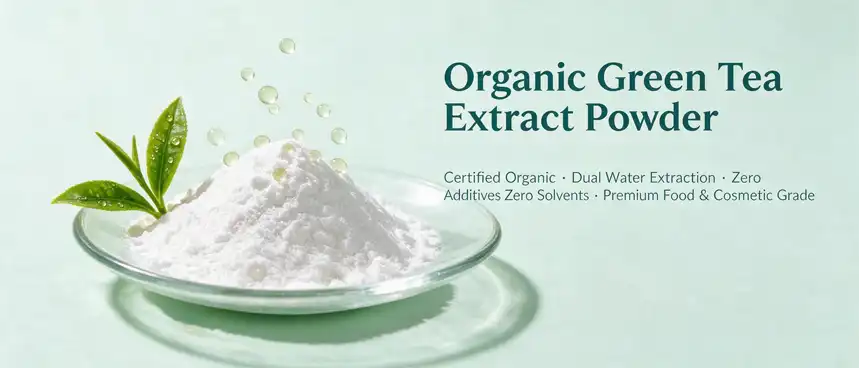
Organic green tea extract powder comes from the leaves of Camellia sinensis. Grown without the use of synthetic pesticides, herbicides or GMOs. The clean-label nature is maintained since only approved solvents are utilized for the extraction procedure. These are ethanol, water, or food-grade solvents. But conventional extracts may be higher than the amount allowed by the EU or FDA for pesticides.
Key Quality Indicators to Know
Good organic green tea extract powder is tested for at least 95% Total Polyphenols (UV technique) and at least 45% EGCG (HPLC method). The powder is a fine, light yellow to brownish-green material that will pass through an 80-mesh screen. It has a specific gravity of 0.40 to 0.60 grams per milliliter and is around 5 percent water. These items make every production run the same level of potency.
Common B2B Procurement Challenges
Buyers commonly confront three problems: inconsistent catechin content from order to order, raw leaves that appear from nowhere, and certification documents that are not verified by a third party. If you don’t do your homework, these gaps might get your items turned down at customs. This is particularly true in the US and the EU, where regulations for pesticide waste are quite rigorous.
Core Criteria for Selecting Organic Green Tea Extract Powder Suppliers
Price is just one part of choosing a green tea extract source. So it’s a multi-tiered review of the paperwork, source transparency, technical standards, and scale of production.
Certifications That Carry Real Weight
A reliable supplier should have a minimum certification of USDA Organic for compliance in the North American market and GMP and ISO 22000 certifications for their production facilities. If you are distributing into European channels, then you need EU Organic certification. These certifications imply that the manufacturing environment, raw material procurement, and end product exceed international standards of purity.
Traceability and Geographic Origin
The main locations of production of leaves of Camellia sinensis are Fujian and Yunnan Provinces in China, Darjeeling in India, and Uji in Japan. Each origin has its own unique polyphenol profile and its own taste characteristics. If your supplier can link their raw material to individual accredited farms, you have a lot more paperwork support for import inspections or store audits.
COA Verification and Technical Specifications
Before deciding on a provider, insist on a third-party lab-certified COA. The COA should confirm: Total polyphenols, Total catechins, EGCG percentage, caffeine (naturally occurring 2-10% or decaffeinated <0.5% by Supercritical CO2 extraction), solvent residue (<5,000 ppm if ethanol-based), and heavy metal limitations. And not just in one sample, but in a number of batch reports. Make sure the numbers line up consistently.
Production Capacity and Scalability
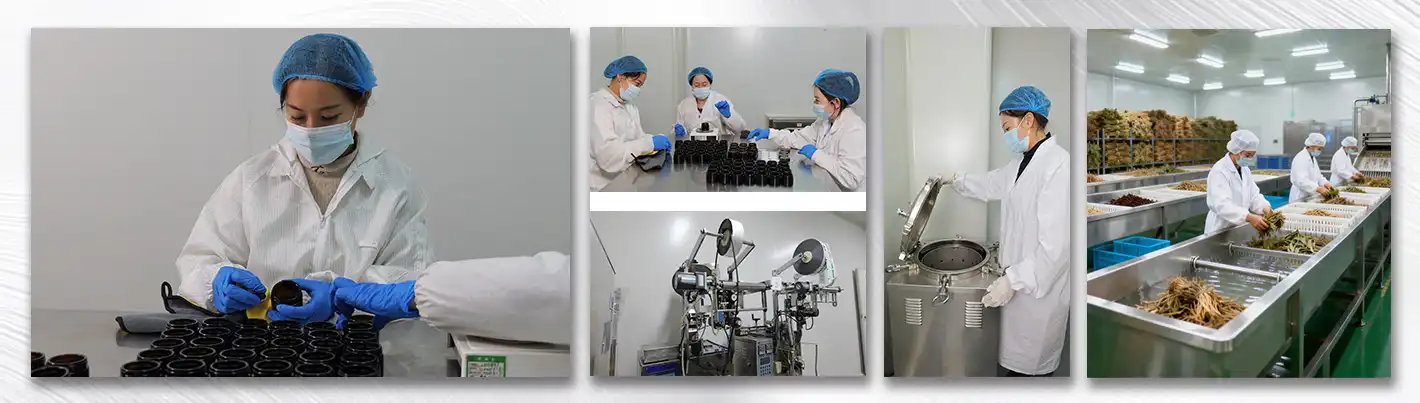
Your supplier’s manufacturing capacity has to match your growth curve. Ask directly whether they can handle small batch orders for product testing stages and big volume runs for commercial launch. A practical benefit for businesses creating bespoke supplement mixes is that suppliers generally have specialized lines for custom formulas, especially those working with OEM and ODM customers.
Comparing Supplier Solutions: How to Evaluate Options Effectively
In recipes, green tea is used in various forms for different purposes. Understanding how bulk green tea extract powder stacks up against other products that perform the same thing will help you choose the best source.
Extract Powder vs. Matcha and Capsules
The organic green tea extract powder contains a certain level of EGCG, often 45-50%. Matcha of ceremonial grade contains 2 to 5 percent catechins by weight. Standardized extract powder is the ideal option if a supplement manufacturer has to be highly precise about the dosage. If you use green tea bags, you have just a few options to brew the tea. Bulk extract powder may be used to produce nutritious snacks, capsules, pills, and beverages.
Balancing Price Against Quality
The wholesale prices of organic green tea extract powder are generally between $30 and $120 per kilogram. The pricing range depends on the level of standardization, batch size, and scope of certification. Many purchasers regret not confirming the polyphenol standardization before getting the cheapest estimate. What if a batch fails your own COA? It would take you years and years of work and money to remake it, and you gained a pricing advantage by buying it.
Evaluating Supplier Reputation
Look at the supplier’s previous exports and request customer references you can verify. Also, notice how fast and clear they respond to your technical inquiries. Openness implies the provider answers queries about how to read a COA clearly and provides sample batches with test results that may be seen. This will be excellent for long-term stability of the supply chain.
Procurement Process Best Practices for B2B Buyers
A structured procurement approach reduces the risk of receiving inconsistent product quality or facing unexpected logistics delays.
Sample Requests and Quality Inspection
Before placing any commercial order, request a 100–500g sample of the bulk green tea extract powder for independent lab testing. Test for Total Polyphenols, EGCG, caffeine, heavy metals, microbial contamination, and pesticide residues. Compare your results against the supplier's COA. Discrepancies at this stage are a clear signal to negotiate corrective measures or reconsider the supplier entirely.
MOQ, Lead Times, and Logistics
Standard MOQs for organic green tea extract powder range from 10 kg for trial orders to 500 kg or more for bulk contracts. Production lead times typically fall between 15–30 days after order confirmation. Confirm cold-chain shipping requirements, as the powder is hygroscopic and requires sealed, moisture-barrier packaging. Customs documentation should include organic certificate copies, COA, and phytosanitary certificates where required.
Private Label and Custom Formulation Options
If your brand requires a proprietary blend—for example, a green tea and L-theanine cognitive support formula—look for a manufacturer that offers full OEM/ODM services. Suppliers with in-house formulation teams can adjust EGCG concentration, combine actives, and develop finished product formats including capsules, sachets, and drink mixes. This reduces your vendor count and simplifies quality oversight across your product line.
Case Studies: Successful Supplier Selection in Organic Green Tea Extract Procurement
Case Study 1: European Distributor Sourcing from Japan
A German health supplement firm was searching for an EGCG standard product with the EU organic designation. They looked at three suppliers in Japan and selected the one that had farm-level organic credentials that could be verified and a clear procedure for extraction that utilized just water as a solvent. One outside lab did three runs in a row and discovered 98% polyphenols and 50% EGCG. This fulfilled the store’s clean label standards. 12 months of COA data showed batch-to-batch consistency, which was the main justification for this decision.
Case Study 2: US OEM Partnering with a China-Based Manufacturer
A California OEM was buying 300 kg per month of decaffeinated organic green tea extract powder for a line of brain health goods. They identified certain suppliers with GMP-accredited plants and the capability to decaffeinate coffee using supercritical CO2. The chosen supplier had test samples with less than .5% caffeine, passed 3rd-party pesticide panels, and private-label packaging with FDA facility registration paperwork. We used to communicate with each other and inspect everything before shipping. The supply chain didn’t stop for 18 months.”
Conclusion
You can't simply go to pricing lists and discover a firm that offers organic green tea extract powder. The efficacy of a supply relationship really depends on how effectively it scales. The validity of the certification, the accuracy of the standards, the traceability, and the ability of the OEM to service. As can be seen, if purchasers take the time right away to conduct things like test samples, cross-check COAs, and conduct evaluations, they may establish supply chains that are able to withstand commercial pressure. This article will teach you what actions you should take to ensure that your brand obtains green tea polyphenols.
FAQ
1. Is organic green tea extract powder safe for mass production in dietary supplements?
Yes. As long as it comes from a GMP-certified facility with verified USDA Organic or EU Organic certification, Organic green tea extract powder meets the safety standards needed to make supplements for sale in the US and EU. The pesticide residue panels and heavy metal tests on the COA should always be looked at before production goes up.
2. How do I verify that a supplier's organic certification is legitimate?
Ask for the certificate's number and the name of the group that gave it. Then, go to the certifier's official website and check it there. Anyone who is interested in USDA Organic can search the database for organic purity. The national authority on the EU Organic certificate is in charge of this.
3. What are typical MOQs and lead times?
For business orders, the MOQ starts at 100 kg, and for trial orders, it starts at 10–25 kg. If you place an order, the production wait time is usually between 15 and 30 days. However, this can change depending on the size of the batch and any customizations that need it.
4. Can organic green tea extract powder be used in clear beverages?
Sure, but you need to specify which grade breaks down in cold water. There may be tannins in standard extracts that separate when the pH is low. Ask for a grade that has been filtered through a barrier and is made to be used in ready-to-drink drinks.
Partner with BioSpark for Certified Organic Green Tea Extract Powder
BioSpark (Xi'an) Biotechnology Co., Ltd. makes organic green tea extract powder for supplement makers, distributors, and OEM partners all over North America. These partners need a trusted company to work with. We have different batch sizes, full COA paperwork, private label services, and products that are USDA and EU organic certified. Email us at leao@biosparkcn.com right away to get a quote for a sample or a lot of them.
References
1. Grand View Research. Botanical Extracts Market Size, Share & Trends Analysis Report. 2023.
2. Kochman, J., et al. "Health Benefits and Chemical Composition of Matcha Green Tea: A Review." Molecules, 2021.
3. Chacko, S. M., et al. "Beneficial Effects of Green Tea: A Literature Review." Chinese Medicine, 2010.
4. European Food Safety Authority (EFSA). "Safety of Green Tea Catechins." EFSA Journal, 2018.
5. United States Department of Agriculture (USDA). National Organic Program: Organic Regulations. 2023.
6. Cabrera, C., Artacho, R., & Giménez, R. "Beneficial Effects of Green Tea—A Review." Journal of the American College of Nutrition, 2006.

Send Inquiry
Related Industry Knowledge
- Why Choose Liposomal Vitamin B9 for New Products?
- How Does Liposomal Ferrous Fumarate Support Daily Wellness?
- How Does Cherry Fruit Powder Support Beverage Innovation?
- Can Bitter Melon Extract Powder Improve Insulin Sensitivity Clinically?
- How Does Chinese Cabbage Powder Benefit Product Developers?
- Could Bitter Melon Extract Powder Support Metabolic Health?
- Is loquat powder safe for daily consumption?
- Rhizoma Chuanxiong Extract Benefits for Blood Circulation
- Ganoderma Extract Powder Trends for 2026 Health Markets
- How Oyster Shell Extract Powder Enhances Product Efficacy?