How to Choose High-Quality Astaxanthin Powder?
Nov 12, 2026
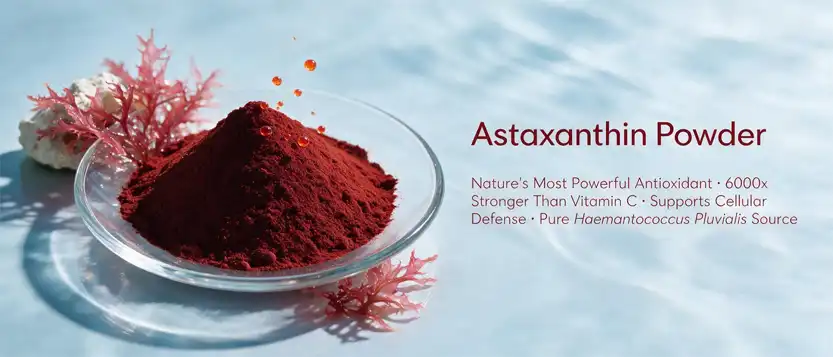
Astaxanthin powder is high-quality if I check five things: where it comes from, how it was made, how well it dissolves in the right solvents for my formula, how stable it is and how it is packaged, and full compliance documents. They are less likely to make a mistake if they have batch data to back up every claim. I also look at the minimum order quantity, the lead time, and the ability to do OEM and ODM work. For this reason, the lowest price per kilogram does not always mean the lowest price per dose that works. This guide explains how I check astaxanthin powder for health products, functional foods, and dietary supplements that are sold in the US.
Check the Source, Production Method, and Potency of Astaxanthin Powder
Natural or Synthetic Source
I'd like to know where the astaxanthin comes from first. A study that came out in 2014 in the journal Marine Drugs discovered that when Haematococcus pluvialis is stressed, it can store about 4–5% of its dry weight in astaxanthin. A different method is to use yeast fermentation with Pichia rhodozyma. Synthetic astaxanthin is made through chemical synthesis and is made up of three different stereoisomers. Another type of astaxanthin is found in algae. It is mostly the 3S,3'S form and is mostly found as esters. These differences have an impact on where the product stands in the market, the language used on the label, and what customers expect. Write down where you want to get your astaxanthin powder before you ask for a quote.
Production Steps and Traceability
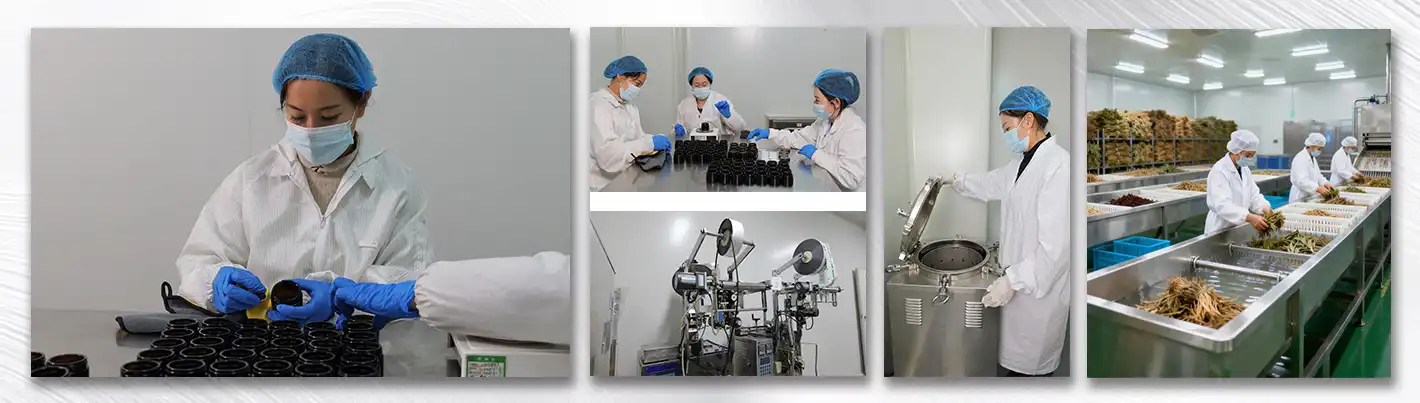
They should be able to explain each step in a way that anyone can understand. To make astaxanthin powder, plants are usually grown, picked, dried, their cell walls broken down, and the powder is extracted, concentrated, standardized, and made. The oily and sticky extract is often turned into a solid that doesn't stick together by spray drying or microencapsulation. The color, strength, and ability to resist oxidation change with each step. Where do the raw materials come from? What are their batch numbers? How can I keep track of each lot from the time it was made to the time it is shipped? If a supplier can't connect a finished lot to the raw materials that went into making it, I look elsewhere for a supplier. That's because I need those records in case there is a recall or an audit.
Potency, Purity, and Testing
Astaxanthin powder quality cannot be judged solely by its color. The powder's dark red or reddish-brown color makes it look like it has carotenoids, but only lab tests can be sure of this. It's important to know what kind of astaxanthin is being talked about because the terms "total," "free," and "esterified" don't all mean the same thing. What method did the lab use for analysis? I also look at certificates of analysis (COAs) from a few different batches that were done recently to see how consistent they are. I also check for heavy metals, pesticide residues, solvent residues, moisture, particle size, and the number of microbes that can live in the material. After that, I don't look at the price per kilogram of powder but at the price per milligram of astaxanthin.
Match Astaxanthin Powder Solubility and Stability to Your Formula
Oil-Soluble vs. Water-Dispersible Grades
It must work with the powder form because astaxanthin dissolves in fat. Sorts that break down in oil work well in beauty oils, softgels, and lipid-based blends. You can get astaxanthin powder in tablet, hard capsule, sachet, gummy, powdered drink, and functional food forms. Most of the time, these are easier to use. Then I do a quick test in the real base, such as the beverage, emulsifier, or excipient blend, to see how the substances break down or spread out. Even if it looks great on the data sheet, your powder may settle or clump. It's also important how the drug is given. For example, a study published in 2003 in the European Journal of Pharmaceutical Sciences found that people could absorb astaxanthin better when it was mixed with lipids.
Microencapsulation and Physical Properties
Some of the things that make up the microencapsulation are gum arabic, modified starch, and cyclodextrin. It helps protect the color from light, air, and water. It also helps the color blend and spread better when the paint is dry. I don't just look at the strength; the carrier also affects how the microencapsulated astaxanthin powder works. The blending and filling process will go faster or slower depending on the particles' size, density, stickiness, dustiness, or lack of color uniformity. Which is why I also ask the supplier what carrier they use. It changes the allergen statements and how things work together. Before the first production run, I check the physical specs because bad flow can make encapsulation take longer and change the weight.
Stability, Shelf Life, and Packaging
Air, light, heat, and water can all break down astaxanthin. It loses its color as it breaks down. I want to know the exact grade of astaxanthin powder I want to buy, as well as how to store it and how long it is said to last. I also need stability data in real time and quickly. How it's packed is just as important as the recipe. To keep the powder safe, it is packed in foil bags, drums that are sealed, and fiber drums. In some supply chains, nitrogen flushing or oxygen absorbers are also used. I also ask the supplier how they handle containers that have already been opened, since things can get less useful after being stored for a long time. Writing down how to store and handle things helps both the production team and the warehouse team.
Verify Astaxanthin Powder Compliance for the U.S. Market
Batch-Specific COA
A COA that is unique to the batch should be sent with every shipment. This is what the astaxanthin powder COA should say: what it is called, how much astaxanthin it has, how much water it has, how much heavy metals it has, how it was tested, when it was made, when it goes bad, and the batch number. It doesn't tell me much if the certificate works for everything. I also need a safety data sheet, a technical data sheet, information on where the goods came from, and a written specification. This way, my team can compare each delivery to the agreed-upon caps. If the supplier's work doesn't meet the requirements, there should be a clear deviation procedure that tells them what to do. A good sign of well-run manufacturing is when records are the same for more than one lot.
Certifications and Quality Systems
The right certificates are picked out based on the product and the customer. Based on the job, I may need documents that are GMP, ISO, HACCP, Non-GMO, vegan, organic, allergen, Halal, or Kosher. There's more to a logo on a brochure than meets the eye. I look at the issuing body, the scope, and the expiration date. Also, I know for sure that the astaxanthin powder does what it's supposed to do in supplements, functional foods, drinks, and beauty products. BioSpark follows quality standards set by other countries and keeps a close eye on all of our raw materials, production processes, and checks of finished goods. If a client needs a certificate that a supplier does not have, I bring it up before the sampling starts.
U.S. Regulatory Basics
Supplements for health must follow the rules set by the FDA when you're in the US. If a company wants to follow good manufacturing practice (21 CFR Part 111), it has to have a Supplement Facts panel that does the same. There is a standard FDA disclaimer that needs to be included with structure and function claims. The brand owner must also tell the FDA within 30 days of putting these claims on the market. Even though a supplier can't do those things for you, they can give your regulatory advisor the correct names, specs, and records of origin that they need. It is also important to know what the product is meant to be used for, since the rules for supplements are different from those for foods and cosmetics. It is my job to make sure that any astaxanthin powder products I make are safe for the use category before I put them on the market.
Compare Suppliers and Match Astaxanthin Powder to Your Application
Manufacturer, Distributor, or OEM/ODM Partner
Sometimes it's easier to keep track of your order and make changes when you buy straight from the factory. Distributors, on the other hand, might have more items in stock and be able to get them to you faster. Before they get hired, I ask each one about their production skills, quality control systems, tools, technical staff, and experience with astaxanthin powder that dissolves in water or is microencapsulated. Health products are researched, designed, made, and sold all over the world by BioSpark (Xi'an) Biotechnology Co., Ltd. Our team helps clients from the time they come up with an idea or plan to the time they deliver the finished product. There aren't as many hand-offs between vendors with that full-process model. Still, I believe you should use the same criteria to compare at least three suppliers. Now it's simple to see how their goods are different in terms of how well they work, how they're packaged, and how much paperwork they need.
Requirements by Industry
There are many different types of businesses that use astaxanthin powder in different ways. They did a lot of work to make sure that all of their gummies, capsules, tablets, and softgels had the same amount of medicine, were stable, and worked well. People who work with drinks and food care about how they look, taste, and mix. They also care about keeping the pH level steady. That the beauty company knows the item is safe, stays colored, and can be mixed with different serums, creams, and emulsions. Private label users want goods that are always on hand, come in regular batches, and can be packed in different ways. Before I get a quote, I write down the three things I need the most for the job. Then I put them in order of how well each supplier's answer fit with the list.
Capacity, MOQ, and Lead Time
When you plan your supplies, you can tell the difference between a good partner and a risky one. I ask what the minimum order size is, how long the lead time is, how to pay, how to ship, and how the supplier handles a sudden rise in demand. When they first start out, start-ups only need small amounts. On the other hand, big brands need regular deliveries of larger amounts. BioSpark can do both small-batch customization and large-scale production through its OEM and ODM services. We can also change the shapes of our products to fit our customers' needs, as long as it doesn't affect how much we can make. Many people in North America, Europe, the Middle East, and South America have bought our goods. From then on, you can plan your stock and avoid costly stock gaps for your astaxanthin powder line once you know the lead time.
Score Suppliers and Avoid Common Astaxanthin Powder Buying Mistakes
Build a Weighted Scorecard
Fair choices can be made with the help of a weighted scorecard. I look at the source, the purity and potency, the solubility fit, the stability and packaging, the price, the lead time, and the minimum order quantity. Next, I give each task a weight that depends on the project. If it were a regulated supplement launch, potency and compliance might be given more weight. On the other hand, dispersion and heat stability might be given more weight in a beverage launch. Every company that sells astaxanthin powder gets a score based on the same documents and sample results. So, when the team gets together to decide, no one will have to guess. For strategic suppliers, I add questionnaires, audits, quality agreements, ways for people to file complaints, and plans for recalls.
Test Samples Before Bulk Orders
It is written down what the powder does, and some of the things it can do are shown. I check that the packaging is still whole before I buy a lot of something. I also make sure that I like how it looks, smells, tastes, spreads, works with other things, and is strong. Then I test the astaxanthin powder as it is, since issues like clumping, color change, or poor mixing usually don't become apparent until it has been stored and used. Several groups test the finished item quickly to make sure it is stable as an extra step. It makes sense to place a pilot order first before a bigger one. At this point, communication, batch consistency, and logistics are all looked at. There are many checks that BioSpark does on each item to make sure it is safe, clean, and the same.
Mistakes to Avoid
Costs go up, and launches are pushed back because of a lot of mistakes. The first mistake is choosing the cheapest one without checking to see how much astaxanthin it has. This usually leads to higher costs per dose that works. You should not believe the word "natural" without looking into the product's history, where it came from, and how it was extracted. The third person believes that all powders can be mixed with water. Some people are accepting generic COAs without looking at the packaging or making sure the container is stable after it has been opened. Here's how I avoid making these mistakes: I get batch data, test with the real formula, and compare the total cost, which includes the cost of shipping, testing, packaging, and formulation losses. This is how you should always buy astaxanthin powder to protect your money and the brand's reputation.
Conclusion
To choose good astaxanthin powder, you should first look at where it came from and how it was made. After that, you should use batch-specific COAs to check the strength of the powder instead of its color. The file format must be correct for the item. Those grades that dissolve in oil work well with lipid systems. On the other hand, those that dissolve in water or are microencapsulated work well with tablets, gel caps, and drinks. The medicine works better because of data on its stability and protective packaging, and compliance documents back up U.S. rules for labeling and production. When you look at different suppliers, you should compare their capacity, MOQ, lead time, and support for OEM/ODM. You can make an objective choice with the help of a weighted scorecard and sample testing. When you lower your risk, you don't do stupid things like buy something based on price alone or believe a natural claim that hasn't been proven. Overall, the best powder is the one that works in your formula, meets your documentation needs, gets to you on time, and doesn't cost too much per dose that works.
FAQ
Is natural astaxanthin better than synthetic?
Not always. Most of the natural astaxanthin comes from Haematococcus pluvialis. Astaxanthin made in a lab is a mix of three stereoisomers. When making your choice, you should think about your market, positioning, and paperwork. Look at both options' sources and see how strong they are and how they can be tracked.
Is astaxanthin powder water-soluble?
Astaxanthin can mix with lipids on its own, but for grades that dissolve in water, you need microencapsulation or something similar. Before you buy the powder, find out how it mixes and use it in a recipe you've made yourself.
How should I store astaxanthin powder?
It's best to keep it sealed and out of heat, light, oxygen, and water, just like it says on the package. After opening a container, put it back in and seal it right away because being exposed to air over and over again makes it less stable.
Contact BioSpark for Astaxanthin Powder Samples and a Quote
Looking for a company you can trust to make astaxanthin powder? BioSpark delivers OEM and ODM projects from the idea stage to the end. They offer different batch sizes and have strict quality control. To get astaxanthin powder, email leao@biosparkcn.com and tell them how much you want to order, how you'd like it packaged, and what you plan to use it for. Visit https://www.biosparkcn.com/ to learn more about what we do.
References
1. Marine Drugs, 2014. "Astaxanthin: Sources, Extraction, Stability, Biological Activities and Its Commercial Applications—A Review."
2. Frontiers in Plant Science, 2016. "Astaxanthin-Producing Green Microalga Haematococcus pluvialis: From Single Cell to High Value Commercial Products."
3. Nutrafoods, 2013. "Synthetic Astaxanthin Is Significantly Inferior to Algal-Based Astaxanthin as an Antioxidant and May Not Be Suitable as a Human Nutraceutical Supplement."
4. European Journal of Pharmaceutical Sciences, 2003. "Oral Bioavailability of the Antioxidant Astaxanthin in Humans Is Enhanced by Incorporation of Lipid-Based Formulations."
5. EFSA Journal, 2020. "Scientific Opinion on the Safety of Astaxanthin for Its Use as a Novel Food in Food Supplements."
6. U.S. Food and Drug Administration, 2007. "Current Good Manufacturing Practice in Manufacturing, Packaging, Labeling, or Holding Operations for Dietary Supplements (21 CFR Part 111)."

Send Inquiry
_1793085563783.jpg "Bulk Creatine Monohydrate Powder")
Related Industry Knowledge
- Organic Pumpkin Seed Protein Benefits for Plant-Based Brands
- What Should Buyers Check Before Buying Eggshell Membrane Peptide?
- How Does Cherry Fruit Powder Support Beverage Innovation?
- Why Choose Polygonatum sibiricum peptide for Supplements?
- Does echinacea extract powder help shorten cold recovery time?
- Can white willow bark extract powder support arthritis discomfort relief?
- Does gotu kola extract powder support healthy blood circulation?
- What Makes Kidney Bean Flour a Smart Gluten-Free Choice?
- Why Choose Yacon Root Extract for Weight & Metabolic Support?
- Can Oyster Shell Extract Powder Improve Immune Function?