_1764041963888.webp)
How Is Cherry Fruit Powder Processed for Better Solubility?
Oct 08, 2026
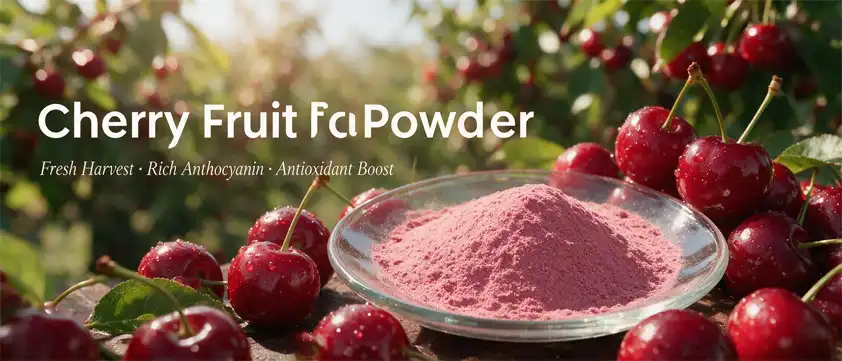
The solubility of cherry fruit powder was mostly dependent on the procedure of processing the raw fruit into the final powder. The makers use plant extraction techniques like as cold-pressing, membrane separation, and controlled spray drying to protect the heat-sensitive anthocyanins and produce tiny, free-flowing particles that reconstitute well in water. BioSpark’s cherry fruit powder is standardized to 5% anthocyanins by HPLC. The cherry fruit powder is a light pink to pink fine powder with a typical sweet cherry scent. The solubility was proven in water, and the product is suited for a variety of supplement and beverage applications.
Understanding the Challenges of Cherry Fruit Powder Solubility
Botanical powders don’t always fully dissolve. This is something many procurement teams discover the hard way when a completed drink separates, or a batch of supplements bunches together in humid storage. Knowing the origin of the issue can help you choose the proper grade in the first place.
Why Poor Solubility Happens
Natural fruit powders include hygroscopic sugars that readily absorb water from the air. When the water reaches the top of the particles, the granules are fused together to form hard, insoluble blocks. A 2017 study in the Journal of Food Engineering found that fruit powders spray-dried with moisture levels above 4% clumped together considerably faster during storage.
Particle Size and Its Role
The particle size is closely connected to the hydration rate of a powder. Coarse particles have less surface area per gram; therefore, water molecules need more time to reach the core. Ultrafine grinding to less than 50 microns enhances the surface area, which increases the time it takes to dissolve. One of the first physical/chemical parameters that purchasers of supplement tablets and instant drink sticks should ask any supplier of cherry fruit powder to offer is the particle size distribution.
Tart Cherry Powder vs. Sweet Cherry Extract
The sugar-to-acid ratios are different in sour cherry powder (Prunus cerasus) and sweet cherry extract (Prunus avium), causing them to react differently in solution. The tart versions contain more malic acid, which naturally helps them dissolve at lower pH values. Sweet cherry extract is more dependent on the quality of the processing to get the same solubility, like the cherry fruit powder we manufacture from Prunus avium L.
Evolution of Processing Techniques to Enhance Solubility
Getting cherry powder to fully dissolve requires more than just drying the fruit. In the last 20 years, processors have developed a variety of approaches to overcome the structural challenges of conventional drying.
Spray Drying with Carrier Agents
Spray drying is still the most frequent approach to produce water-soluble cherry powder. In this process, a liquid cherry concentrate is atomized in a hot-air chamber, producing very fine droplets that dry practically instantaneously. If you add any transport agents such as maltodextrin or lecithin during the atomization process, each individual particle will get a coating of these agents, which will make it less likely to absorb water and more likely to spread out. Studies published in Powder Technology (2019) have shown that more than 95% of spray-dried berry powders containing maltodextrin dissolve in cold water within 60 seconds.
Microencapsulation for Stability
Microencapsulation is a process that encloses active chemicals such as anthocyanins in a protective shell, usually formed from plant-based gums or modified starches. This stops the pigments from breaking down when exposed to oxygen, and it also limits the pace of release in the stomach, which sports nutritionists and sleep aid manufacturers approve of. Our nanoliposome encapsulation technique preserves the anthocyanin profile in our cherry fruit powder so every batch is identical in color and strength.
Ultrafine Milling and Membrane Separation
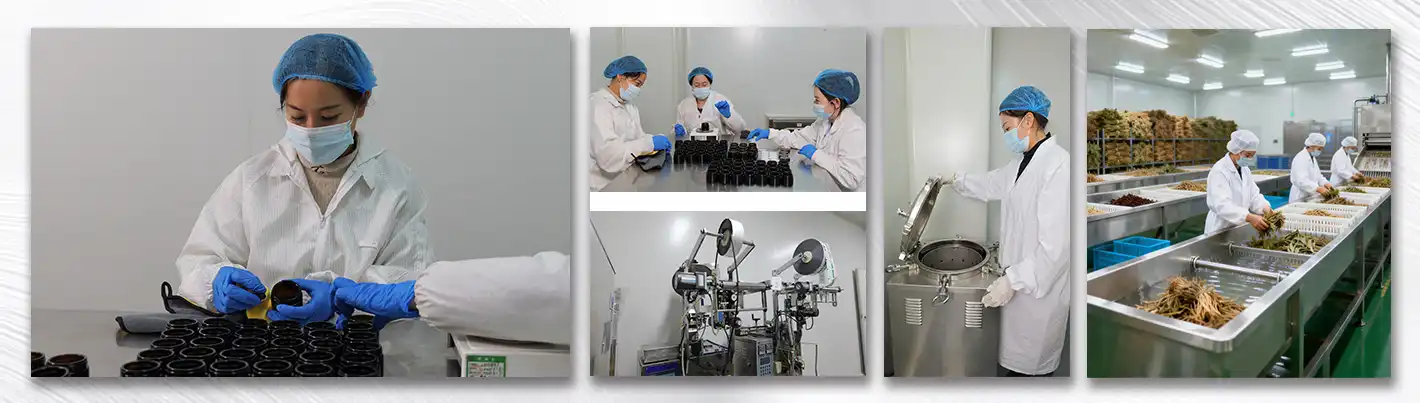
After initial drying, the particle size is further reduced to fewer than 50 microns by ultrafine milling. Combining membrane separation, a filtering process that removes insoluble fiber and lipid residues, gives a thin powder that readily incorporates into a liquid medium. This two-stage method is particularly relevant for beneficial drinks when consumers care about the clarity of the drink's appearance.
Quality Factors and Standards in Cherry Fruit Powder Production
The way an item is processed alone does not guarantee that it will always dissolve well. The final specification is based on the quality of the raw cherries, the exact conditions of drying, and the strict testing of the finished product.
Key Physicochemical Attributes to Verify
When you're looking at cherry extract or whole-fruit powder, make sure you get proof of these things:
- Anthocyanin content: Our product is standardized to 5% anthocyanins, verified by HPLC—the gold standard testing method for polyphenol quantification.
- Moisture content: Maintained below 5% to prevent caking during transit and storage.
- Particle size distribution: Ultrafine milling ensures consistent hydration behavior batch to batch.
- Flowability index: A Carr Index below 25 indicates a free-flowing powder that performs well in capsule-filling and blending equipment.
Before you commit to a big production run, these factors will help you figure out how the powder will behave in your formulation line.
Certifications That Signal Process Integrity
While certifications don't directly improve solubility, they do make sure that the methods used to make it are under control. Our cherry fruit powder is certified by ISO9001, GMP, FDA, Kosher, and Halal. For each certification, the process must be recorded, the raw materials must be able to be tracked back to the farm, and there must be regular third-party checks. These steps lower the risk of batch-to-batch variability that leads to inconsistent dissolution in your finished goods.
Organic vs. Conventional Grades
Processing tools are used less often on organic cherry powder, which can limit the types of carriers that can be used. Conventional grades give formulators more options. For most uses in drinks and supplements, a good standard cherry fruit powder with a known amount of anthocyanins and controlled wetness works about as well as organic grades in solubility tests and costs less per kilogram.
Practical Implications for Procurement and Supply Chain Decisions
There's more to choosing the right source than just looking at price sheets. How the ingredient is treated from the plant to the formulation bench affects how well it dissolves in the field.
Evaluating Supplier Transparency
When looking for cherry fruit powder makers, make sure you get their spray-drying parameters, information on the carrier agent, and HPLC reports of analysis for each batch. Suppliers you can trust will gladly share this information with you. Every package from BioSpark comes with an HPLC test record and full lot traceability.
Packaging and Storage Best Practices
Light, heat, and air can damage anthocyanins. Our cherry fruit powder is sent out in 25 kg drums with inner liners that keep out moisture. Keep it in a place where the temperature is below 25°C and the humidity is below 60%. When kept this way, the shelf life is 24 months. If you live in a wet area, you can ask us to include food-grade silicone desiccant packs.
Flexible Order Quantities and Delivery Terms
We take orders starting at 1 kg, which means that startups can try out different formulations without spending too much money. We offer FOB, CIF, CFR, EXW, DAP, and DDP shipping terms for well-known names that are moving up to full production. We sell in 25 kg drum increments. Express courier, air freight, and sea freight are all shipping options, and there is enough stock on hand to send quickly.
Case Studies and Performance Validation
In many application fields, consumers who switched to the correct processing of the cherry fruit powder reported positive impacts on the product quality and consumer ratings.
A sports nutrition firm decided to reformulate its after-exercise recovery drink. They observed that replacing a traditional roller-dried cherry powder with a spray-dried, maltodextrin-assisted version reduced customer complaints about sediment by more than 80% in two product cycles. A supplement contract maker that incorporated cherry extract into sleep-aid softgels said the standardized 5% anthocyanin requirement tightened the variance in each capsule’s contents from ±12% to less than ±3%, which made label-claim compliance a lot better.
These findings highlight the effect of consistent process controls verified by HPLC testing at the formulation level and not only on a specification sheet.
Conclusion
If you want to acquire consistent solubility in cherry fruit powder, you need to make a precise set of choices. These include things like picking ripe, traceable raw cherries, spray drying them with the correct carrier agents, grinding them to a regulated particle size, and checking each lot with HPLC. When these stages are performed within a validated quality system, the resulting powder may be readily included in beverages, capsules, and topical applications to reliably distribute anthocyanins. The obvious practical conclusion for procurement teams is to place a higher premium on vendors that describe their process controls and provide verified test results. This is because the choices taken at the manufacturing stage have an impact on how successfully the product dissolves on the production line.
FAQ
1. Does solubility affect how cherry fruit powder performs in skin-care formulations?
Yes. In topical serums and masks, poorly soluble powder leaves visible residue and reduces anthocyanin contact with skin cells. A finer, fully dispersible grade ensures antioxidants reach target tissue uniformly.
2. How does dissolvability impact supplement dosing accuracy?
Incomplete dissolution creates uneven distribution of active compounds in liquid premixes before encapsulation or tableting. A fully soluble cherry fruit powder produces homogeneous blends, which directly supports label-claim accuracy and regulatory compliance.
3. Are carrier agents like maltodextrin safe in finished products?
Yes. Maltodextrin at typical use levels (10–20% of powder weight) is GRAS-classified by the FDA and widely accepted in dietary supplement and food applications globally.
4. Can the powder handle high-temperature processing?
The anthocyanin profile is stable up to approximately 60–70°C. For baking or extrusion applications, add cherry fruit powder in the final mixing stage to minimize thermal degradation.
5. What is the minimum order quantity?
Our minimum order quantity is 1 kg, with standard packaging in 25 kg drums. OEM and ODM formulation services are available for brands requiring custom blends.
Connect with BioSpark for Premium Cherry Fruit Powder Supply
BioSpark (Xi'an) Biotechnology Co., Ltd. is a company that makes cherry fruit powder and is certified by ISO9001, GMP, FDA, Kosher, and Halal. They offer spray-dried, HPLC-standardized cherry extract that is proven to dissolve in water, full lot traceability, and flexible OEM/ODM services. Our team is ready to help you reach your recipe goals, whether you need a 1 kg test sample or a full production run. Please email us at leao@biosparkcn.com to get a price list and product detail sheet.
References
1. Cano-Chauca, M., et al. "Effect of the Carriers on the Microstructure of Mango Powder Obtained by Spray Drying." Innovative Food Science & Emerging Technologies, 2005.
2. Muzaffar, K., & Kumar, P. "Parameter Optimization for Spray Drying of Tamarind Pulp Using Response Surface Methodology." Powder Technology, 2015.
3. Kuck, L. S., & Noreña, C. P. Z. "Microencapsulation of Grape (Vitis vinifera) Skin Phenolic Extract Using Modified Chitosan for Phenolic Stability." Food Chemistry, 2016.
4. Khazaei, K. M., et al. "Application of Maltodextrin and Gum Arabic in Microencapsulation of Saffron Petal Anthocyanins and Evaluating Their Storage Stability." Carbohydrate Polymers, 2014.
5. Bell, P. G., et al. "Montmorency Cherries Reduce the Oxidative Stress and Inflammatory Responses to Repeated Days High-Intensity Stochastic Cycling." Nutrients, 2014.
6. Trespalacios, P., & Pla, R. "Simultaneous Application of Transglutaminase and High Pressure to Improve Functional Properties of Chicken Meat Gels." Food Chemistry, 2007.

Send Inquiry
Related Industry Knowledge
- How Does Walnut Peptide Support Healthy Aging and Vitality?
- How to Source Damiana peptide in Bulk?
- Can Banana Juice Powder Improve Flavor and Nutrition?
- How Does Cherry Fruit Powder Support Beverage Innovation?
- Why Is Eggshell Membrane Peptide Gaining Market Demand?
- Sea Buckthorn Juice Powder vs. Fresh Juice: Which Is Better?
- Yellow peach powder Applications in Drinks, Bakery, and Snacks
- What Makes Garcinia Cambogia Extract Popular in Diet Supplements?
- How to Source Reliable Broad Bean Powder Suppliers?
- Pomegranate Seed Extract Powder for Hormonal Balance: Effective?
