_1764041963888.webp)
How Does Bovine Bone Collagen Peptide Improve Formulations?
Sep 28, 2026
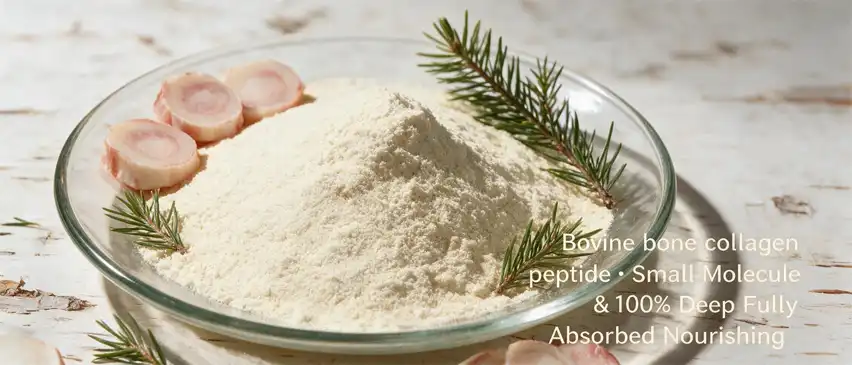
Cow bone collagen peptide is a bioactive protein constituent obtained from carefully chosen cow bones by guided enzymatic hydrolysis. The method breaks down native type I collagen, which is around 300,000 Daltons, into minuscule oligopeptides of less than 1,000 Daltons, leading to absorption rates surpassing 90%. For B2B formulators, this implies the ingredient is compatible in powders, capsules, and drinks without gelling, precipitation, or off-flavors. Bovine bone collagen peptide has a full profile of glycine, proline, and hydroxyproline, making it a scientifically credible option for companies targeting bone health, skin elasticity, and sports recovery.
What Is Bovine Bone Collagen Peptide and How Is It Produced?
Buying teams can check the quality of a product before placing a large order when they know how it was made.
Directed Enzymatic Hydrolysis
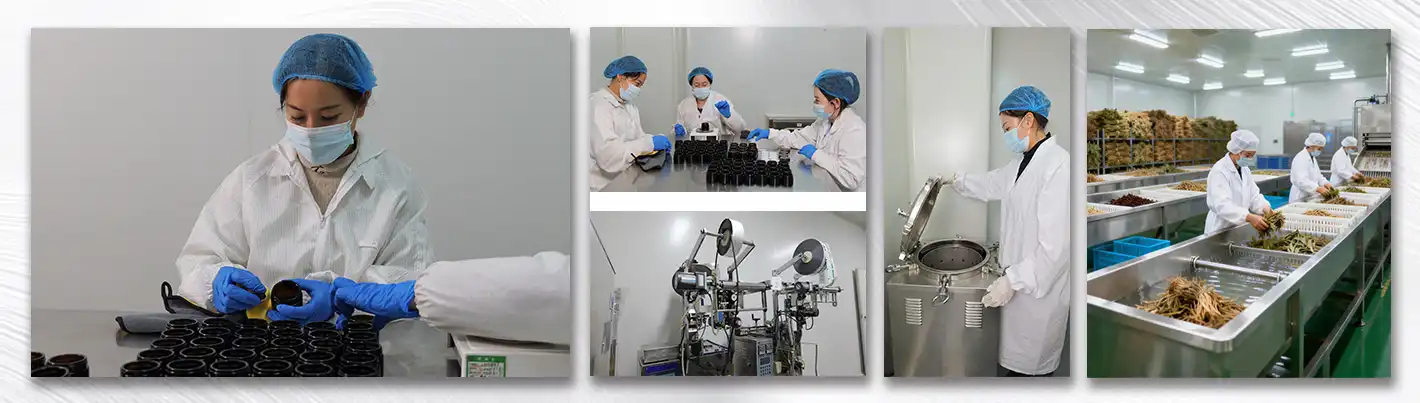
Our bovine bone collagen peptide is obtained by enzymatic hydrolysis of animal protein. This is a regulated process, cleaving collagen chains at precise sites. The net outcome is a stable oligopeptide fraction below 1,000 molecular weight Daltons. This is not the case with acid or alkali digestion processes, where you get fragments of diverse sizes and more contaminants.
Purity and Testing Standards
Each batch is tested for purity of at least 95% by High-Performance Liquid Chromatography (HPLC). This test procedure correctly measures peptide fractions and provides the customer with assurance that requirements have been fulfilled. Upon completion, the result is a fine powder, pale yellow to off-white, with a subtle fragrance of bone protein, and dissolves immediately in hot and cold water.
Certifications That Matter for Global Procurement
The factory is ISO9001, GMP, FDA, Kosher, and Halal certified. These credentials are not just for show; they prove that manufacturing controls have been verified and are safe for companies to use in North America, the Middle East, and Europe, where restrictions exist. Buyers that seek to sell bovine bone collagen peptide in the US market particularly value documentation from FDA-registered facilities.
Key Benefits of Adding Bovine Bone Collagen Peptide to Your Formulations
Formulators often ask if the cost of adding the ingredient is worth it. That is clearly answered by the evidence.
Bone and Joint Health Support
Bovine bone collagen peptide has specific amino acid sequences that operate as signaling molecules to stimulate the activity of osteoblasts and collagen matrix production. A 2021 study in the journal Nutrients found that hydrolyzed collagen peptides improved measures of bone mineral density substantially better in post-menopausal women over the course of a year. For supplement makers that seek to help prevent osteoporosis and support joints, this substance provides them a respect that hide-derived collagen peptides just cannot match.
Skin Elasticity and Hydration
Bovine bone collagen peptides contain several sequences from Type I collagen, which also benefit the health of the skin. A 2019 double-blind clinical trial published in the Journal of Cosmetic Dermatology found that daily collagen peptide supplementation improved skin elasticity and moisture levels after 8 weeks. Nutraceutical firms don't have to stick to ambiguous marketing jargon. They may present their products with claims supported by research.
Solubility and Formulation Stability
Formulators have pH stability, which is commonly forgotten. Bovine bone collagen peptide is clear and sediment-free in acidic beverages with pH 3.0-4.0; therefore, it may be utilized in vitamin C-fortified drinks and sports recovery shots. It has a low hygroscopicity compared to other hydrolysates, which means sticky and powder forms persist longer, a genuine commercial advantage in that it cuts down on the expense of reformulation.
How Bovine Bone Collagen Peptide Compares with Other Collagen Sources
The choice of the right collagen source influences the positioning, pricing, and regulation of the product.
When purchasing teams look at choices for bovine bone collagen peptide, these are the three primary possibilities they look at:
- Marine collagen peptide is derived from fish skin or scales and is mostly Type I collagen. It costs more per kilogram and is restricted in the Halal and Kosher markets. It’s great for high-end cosmetic products, but not so much for bone health-specific claims.”
- Chicken sternum collagen (Type II) works on cartilage and joint health in a different way — principally undenatured collagen. It does not readily dissolve in liquid formulations and is not suited for beverage applications where clarity is desired.
- Plant-based “collagen boosters” are not collagen. They provide precursor amino acids and antioxidants that might assist your own collagen production, but contain no collagen peptides directly. This is critical for companies that need label openness.
- Bovine bone collagen peptide is an excellent middle ground since it is inexpensive to create on a massive scale, it has been clinically evaluated, and can be administered in a variety of ways. For companies in the US, this one performs an excellent job across all categories for adding an element that helps in bone health, cosmetics, and sports nutrition.
Practical Applications Across Product Categories
Because of its physical and biological properties, BBCP can be used directly on a lot of different types of finished goods.
Nutraceutical Tablets and Capsules
Bovine bone collagen peptide is easily crushed, and the powder is easily flowing, so it may be made into high-dose tablets and capsules. Chondroitin sulfate, calcium, and vitamin D are added by firms selling to the elderly and sports. This makes them SKUs with several functional joint and bone health claims.
Functional Beverages and Sports Recovery Drinks
Clarity of protein is required in ready-to-drink beverages. This collagen peptide forms a clear solution with no turbidity, making it easy to add to electrolyte drinks, beauty shots, and post-workout recovery beverages. It helps mend tendons and ligaments by providing particular amino acids. This is what makes sports nutrition products unique from others that merely offer protein.
Nutricosmetics, Gummies, and Functional Foods
It is odorless and tasteless, and may be blended directly with vitamins, plant juices, and sweets without the need for strong masking agents. In high-protein bar recipes, bovine bone collagen peptide helps prevent the “protein hardening” texture issue that certain whey-based bars experience over time. Its sensory character is consumer-friendly and lends itself well to everyday health forms such as collagen-enriched yogurts, jellos, and snacks.
Conclusion
Bovine Bone Collagen Peptide improves formulae with excellent bioavailability, homogeneous purity, multi-category applicability, and formulation stability. These are all things that rival collagen sources frequently can’t achieve simultaneously. This substance is 95% pure and fully Halal, Kosher, FDA, GMP, and ISO9001 approved, with no minimum order size. It can be used by both young firms experimenting and by well-known corporations generating plenty of them. It has been shown to aid with bone health, skin care, and sports rehabilitation. This provides the makers of health goods a scientific foundation upon which to develop distinct commercial health products.
FAQ
1. Is bovine bone collagen peptide safe regarding BSE (Mad Cow Disease)?
Reliable makers only get their bones from areas that are confirmed to be free of BSE. They then treat the bones with an alkaline or acid solution before sterilizing them at a high temperature, which destroys prion proteins. As part of their normal due diligence, buyers should ask suppliers to show proof of where their goods come from and how they sterilize them.
2. What certifications should a supplier hold?
Look for at least ISO9001, GMP, and FDA approval. Certification as Halal and Kosher is important for getting into markets in the Middle East and among Jews. This is the list of five certifications that our bovine bone collagen peptide has.
3. What is the recommended dosage for joint and skin formulations?
Most clinical studies show that 5–10 g per day is good for joint health and 2.5–5 g per day is good for skin elasticity. Formulators should make sure that the dose matches the claims made about the finished product and the rules that apply in the market they want to reach.
4. How should this ingredient be stored?
Keep it somewhere cool and dry, below 25°C. The peptide is slightly water-absorbing, so the standard aluminum foil composite bag packing inside a sealed 25 kg drum keeps it from absorbing water and caking for the 24–36 months that the product is supposed to be stored.
5. What is the difference between bovine bone collagen peptide and gelatin?
Gelatin is made from partly digested collagen and is used to make gels. Bovine bone collagen peptide is broken down to less than 1,000 Daltons, doesn't gel, dissolves in cold water, and is absorbed as di- and tri-peptides instead of adding texture.
Source Your Bovine Bone Collagen Peptide Through BioSpark
BioSpark (Xi'an) Biotechnology Co., Ltd. makes and sells bovine bone collagen peptide that is 95% pure and has full international approval. They also offer OEM/ODM production support for orders from 1 kg samples to large quantities. Our team is ready to talk about your unique formulation needs, price, and shipping at leao@biosparkcn.com.
References
1. Proksch, E. et al. "Oral Supplementation of Specific Collagen Peptides Has Beneficial Effects on Human Skin Physiology." Skin Pharmacology and Physiology, 2014.
2. König, D. et al. "Specific Collagen Peptides Improve Bone Mineral Density and Bone Markers in Postmenopausal Women." Nutrients, 2018.
3. Shaw, G., et al. "Vitamin C–Enriched Gelatin Supplementation Before Intermittent Activity Augments Collagen Synthesis." American Journal of Clinical Nutrition, 2017.
4. Lark, K. L., et al. "24-Week Study on the Use of Collagen Hydrolysate as a Dietary Supplement in Athletes with Activity-Related Joint Pain." Current Medical Research and Opinion, 2008.
5. Asserin, J., et al. "The Effect of Oral Collagen Peptide Supplementation on Skin Moisture and the Dermal Collagen Network." Journal of Cosmetic Dermatology, 2015.
6. Watanabe-Kamiyama, M., et al. "Absorption and Effectiveness of Orally Administered Low Molecular Weight Collagen Hydrolysate in Rats." Journal of Agricultural and Food Chemistry, 2010.

Send Inquiry

Related Industry Knowledge
- Why Is Banana Juice Powder Popular in Functional Beverages?
- Oyster Shell Extract Powder for Osteoporosis Support: Does It Work?
- Spinach Juice Powder in Sports Nutrition: A Smart Choice?
- Why Is Bitter Melon Extract Powder in High Demand Worldwide?
- Is snow lotus powder safe for elderly people to take daily?
- How Effective Is Mimosa Root Bark Extract in Modern Formulas?
- Can Garcinia Cambogia Extract Help Reduce Cravings?
- Angelica Sinensis Extract Powder for Beginners: What to Know?
- Can Cistanche Extract Powder Improve Circulation Naturally?
- Can Hydrolyzed Rice Extract Improve Skin Hydration?
