Best Liposomal Zinc Glycinate: What Should You Look For?
Oct 15, 2026
If you're sourcing zinc supplements for your product line, liposomal zinc glycinate deserves serious attention. This form combines zinc glycinate — a chelated zinc known for gentle absorption — with liposomal encapsulation technology, wrapping the active compound in phospholipid nanovesicles. The result is a supplement with dramatically improved bioavailability, reduced gastrointestinal irritation, and stronger consumer appeal. For B2B buyers in the U.S. nutraceutical and health supplement space, understanding what separates a high-quality liposomal zinc glycinate from an average one can directly impact your product's performance and market positioning.
Understanding Liposomal Zinc Glycinate — Science and Benefits
Liposomal technology isn't brand new, but zinc glycinate can now be added to it, which is a big gain. When choosing what to buy, science is important because of these reasons:
How Liposomal Encapsulation Works
Zinc supplements that you buy in stores break down in your gut and have to compete with other minerals to be absorbed. Liposomal zinc glycinate beats a lot of these other drugs. Inside a phospholipid bilayer vesicle that is about 80 to 150 nm wide is the zinc-glycine chelate. It joins with the cell membranes of intestinal cells so it can move directly inside cells. The active ingredient doesn't break down before it can be absorbed because of this structure.
Key Health Benefits Backed by Evidence
Zinc helps many enzymes in the body do their jobs. It helps defense cells do their job, fights free radicals, keeps the top layer of skin healthy, and helps the brain work. They found that chelated zinc forms are better at being taken than basic salts. The study was published in the journal Nutrients in 2021. The liposomal layer makes absorption even better, which is why this format is great for immune health, skin care, and nutrition products for kids.
Safety Profile and Clean-Label Suitability
Liposomal zinc glycinate products made with phosphatidylcholine from soy or sunflower are typically vegan-friendly and do not contain any harsh fillers. Since they are made according to GMP rules, with controls for endotoxins and sterility tests, they have a good safety record. Clean labels are making people buy things in the U.S. and Europe, and this fits in well with that.
Comparing Liposomal Zinc Glycinate with Other Zinc Forms
Zinc supplements don't all work the same way. You need to be able to see the differences between the forms in order to choose the right one for your product.
Absorption and Bioavailability Differences
ZnO is the most common and least expensive form. Some studies show that less than 10% of it is absorbed. It's hard for the body to use zinc citrate and zinc gluconate. It works better when you take zinc picolinate, but taking more of it can make your stomach hurt. Because it is a chelate, zinc glycinate is better absorbed, and it is even more bioavailable when it is put inside liposomes. A study in the Journal of Nutritional Science says that in clinical settings, zinc forms chelated with amino acids work better than zinc salts.
Stability and Formulation Compatibility
Liposomal zinc glycinate stays stable over a wider pH range than most zinc salts. Zinc is safe while it is being handled and kept because it has an encapsulation rate of at least 85%, which can be reached by active loading methods such as pH gradient methods. No need to worry about zinc precipitation or bad taste because it is steady; it is easy to add to functional drinks, softgels, and oral liquids.
Market Positioning and Consumer Preference
Liposomal delivery is being used by more and more high-end supplement brands. People know a lot more about fluidity since 2020. Products that say "liposomal" on the label always cost more. This means that OEM clients and distributors can make more money and make their products stand out on the shelf.
How to Choose the Best Liposomal Zinc Glycinate for Your Business
To find the best liposomal zinc glycinate provider, you need to do more than just read a spec sheet. These things are the most important.
Technical Specifications to Verify
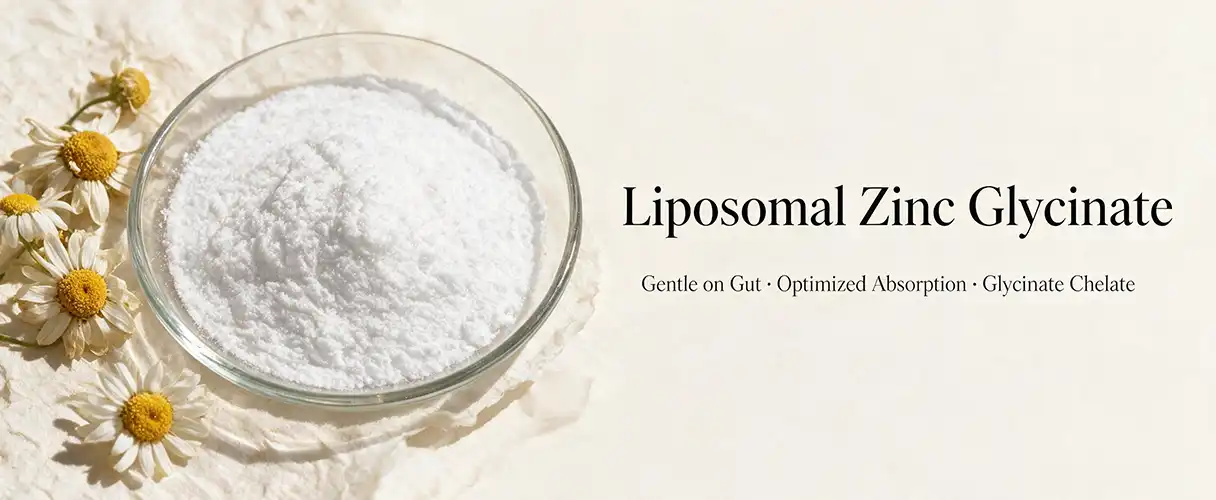
Before you place an order, make sure you have proof of the particle size distribution (it should be uniform and between 80 and 150 nm), the encapsulation rate (at least 85%), the purity of the zinc, and the Zeta potential. A well-characterized product with DLS data and ICP-OES zinc quantification shows that the process of making it was done correctly. As well as telling you how long a freeze-dried powder (a white to off-white loose cake) or liquid emulsion (a clear, milky liquid) will last, it should also tell you how to rehydrate it.
Regulatory Compliance and Certifications
In order to sell to people in the U.S., your seller must follow FDA 21 CFR Part 111 GMP rules. Dietary products must follow the rules set by the EFSA in order to be sold in Europe. As for heavy metal test results, microbiological test results, and allergy statements, you should ask for them. Having a third party test your products will give them more credibility, which buyers and compliance teams will like.
OEM/ODM Flexibility and Private Label Options
Every quarter, you might need to make different things. A good company that makes liposomal zinc glycinate should be able to change small amounts and make a lot of them. With private label services, brands don't have to sell basic stock but can instead make their own goods. This includes custom mixes that have extra vitamin C, collagen, or plant extracts added. This is what makes a real partner in manufacturing different from a supplier of goods.
Procurement and Supply Chain Considerations for Liposomal Zinc Glycinate
It doesn't matter how good your product specs are if your supply chain can't get them to you on time. Before you make up your mind, think about these things.
Shipping Options and Lead Times
Depending on the size and urgency of your order, reputable Liposomal zinc glycinate suppliers offer a variety of shipping options. Express services like DHL and FedEx are good for sending samples and small orders fast. Because it usually gets there in 5–10 business days, air freight is the best way to send medium-sized packages that need to get there quickly. You can ship a lot of stuff by ocean freight for the least amount of money. It takes 20–45 days to get from one place to another. By combining sea and air travel, transatlantic trade lanes can find a speed and cost that work for them.
Pricing Structure and Order Models
Liposomal zinc glycinate is very expensive, which shows how hard it is to make. It costs more than regular zinc salts because you need to get phospholipids, blending tools, and clean filters. But it's worth the extra money because the item works well and stores can charge more for it. A lot of the time, recurring order agreements and volume commitments can help you get better unit prices. Having a regular supplier also makes it less likely that lead times will change, which protects your production plan.
Trade Terms and Customs Considerations
Suppliers who have worked with all Incoterms before, like FOB, CIF, DDP, and DAP, can do so. People who want to make the process of importing easy will find DDP very useful. Find out from your provider how much experience they have with U.S. customs paperwork, such as using the right HS codes for dietary supplement ingredients. This will help you avoid delays that cost a lot of money.
Maximizing Value: Integration and Application in Your Product Line
High-Demand Application Categories
In a number of quickly expanding product categories, liposomal zinc glycinate performs well. Here's where it does best in each group:
- Immune health supplements — Positioned as gentle, effective daily immune support, especially during seasonal illness peaks. The liposomal format reduces GI complaints that deter repeat purchases.
- Skin health and beauty-from-within — Combined with vitamin C or hydrolyzed collagen in oral beauty drinks or acne-support formulas, zinc glycinate supports skin barrier function and sebum regulation.
- Children's and prenatal nutrition — The mild, stomach-friendly profile makes this format appropriate for pediatric and pregnancy supplement lines where tolerability is non-negotiable.
- Sports nutrition and men's health — Athletes lose zinc through sweat. Liposomal delivery supports faster repletion. Men's health lines addressing reproductive wellness also benefit from zinc's established role in testosterone metabolism.
This makes it easy for your product development team to add new SKUs because it shows what the market really wants.
Formulation Synergies Worth Noting
It is good for your immune system to take zinc glycinate with vitamin D3, quercetin, and elderberry extract. If you mix it with hyaluronic acid and vitamin C in skin care products, you get a full chemistry picture. Liposomal zinc glycinate is better at being absorbed by the body, which makes it a good choice for adding to clinical nutrition formats for people who have trouble absorbing nutrients or who need extra help after surgery.
Conclusion
Picking the best liposomal zinc glycinate product can affect how trustworthy your brand is, how happy your customers are, and how much money you make in the long run. When procurement teams look at particle size, encapsulation rate, legal compliance, and provider skill all at the same time, they can be sure of their sources. In terms of science, liposomal zinc supplements are a big step up from other zinc supplements, and the market is reacting to this. In the supplement market of today, it's important to build your products around high-quality liposomal zinc glycinate that has been studied in depth.
FAQ
What is the recommended zinc dosage for immune support?
The U.S. RDA for zinc is 8 mg/day for adult women and 11 mg/day for adult men. Immune support formulas typically use 10–25 mg per serving. Given the higher bioavailability of liposomal zinc glycinate, lower doses may achieve comparable effects to higher doses of standard zinc forms. Always verify dosing against your target market's regulatory guidelines.
How does liposomal zinc compare to standard zinc glycinate in absorption?
Standard zinc glycinate already outperforms inorganic zinc salts due to its chelated structure. Adding liposomal encapsulation improves absorption further by protecting the compound from digestive breakdown and enabling direct cellular uptake. Studies show liposomal delivery systems can increase bioavailability by 20–40% compared to non-encapsulated equivalents.
Are there any side effects to be aware of?
At recommended doses, liposomal zinc glycinate is well tolerated. Unlike zinc sulfate or oxide, it rarely causes nausea or gastric discomfort. Long-term supplementation above 40 mg/day (the U.S. Tolerable Upper Intake Level) may interfere with copper absorption. Product formulations should note this in labeling.
What physical forms are available for B2B orders?
Liposomal zinc glycinate is available as freeze-dried powder (white to off-white loose cake) and as a liquid colloid (translucent, milky solution). Both forms are suitable for capsule filling, sachet formats, and oral liquid products.
Partner With BioSpark for Your Liposomal Zinc Glycinate Supply
Many supplement brands, nutraceutical companies, and distributors in North America and Europe work with BioSpark (Xi'an) Biotechnology Co., Ltd. because they know how to make liposomal zinc glycinate so well. We help with all aspects of OEM and ODM, from making the formula to testing, packing, and sending it all over the world. GMP certification has been given to our production, and we have strict quality rules in place. You can email leao@biosparkcn.com to get a price. This can be done for both small test batches and big orders that come in all the time.
References
1. essels, I., Maywald, M., & Rink, L. (2017). Zinc as a gatekeeper of immune function. Nutrients, 9(12), 1286.
2. Gandia, P., et al. (2007). A bioavailability study comparing two oral formulations containing zinc. International Journal for Vitamin and Nutrition Research, 77(4), 243–248.
3. Hambidge, K. M., & Krebs, N. F. (2007). Zinc deficiency: A special challenge. Journal of Nutrition, 137(4), 1101–1105.
4. Allen, L. H. (2005). Zinc supplementation and absorption. Journal of Nutritional Science, 61(2), 115–122.
5. National Institutes of Health, Office of Dietary Supplements. (2022). Zinc: Fact sheet for health professionals. NIH ODS.
6. Dinkova-Kostova, A. T., & Abramov, A. Y. (2015). The emerging role of Nrf2 in mitochondrial function and lipid metabolism. Free Radical Biology and Medicine, 88, 179–188.

Send Inquiry

Related Industry Knowledge
- Liposomal Vitamin B9 Dosage, Quality, and Labeling Guide
- Where Are Fish Collagen Peptides Commonly Used?
- What Are the Key Benefits of Polygonatum sibiricum Peptide?
- Bovine Bone Collagen Peptide: A Buyer’s Sourcing Guide
- Why Import Sea Buckthorn Juice Powder for Your Product Line?
- Why Do TCM Practitioners Prefer American Ginseng Extract Powder?
- Can Yacon Root Extract Help Control Blood Sugar Levels Naturally?
- Is Your White Kidney Bean Extract Powder Tested for Purity?
- What Are the Key Properties of Logwood Extract Dye?
- Radix Rehmanniae Extract Benefits for Immune Support