Where to Buy Certified Organic Green Tea Extract Powder?
Oct 31, 2026
If you are looking to get certified organic green tea extract powder for supplement formulation, private label manufacturing, or bulk ingredient procurement, the most direct route is to deal with a recognized botanical extract producer that has both USDA Organic and EU Organic certifications. Although Alibaba and other platforms provide suppliers with extensive exposure, working directly with a manufacturer like BioSpark (Xi’an) Biotechnology Co., Ltd allows B2B customers more control over specifications, batch traceability, and price. Products must be third-party tested and conform to standardized grades for sale in the United States and Europe.
Understanding Certified Organic Green Tea Extract Powder
What Is Organic Green Tea Extract Powder?
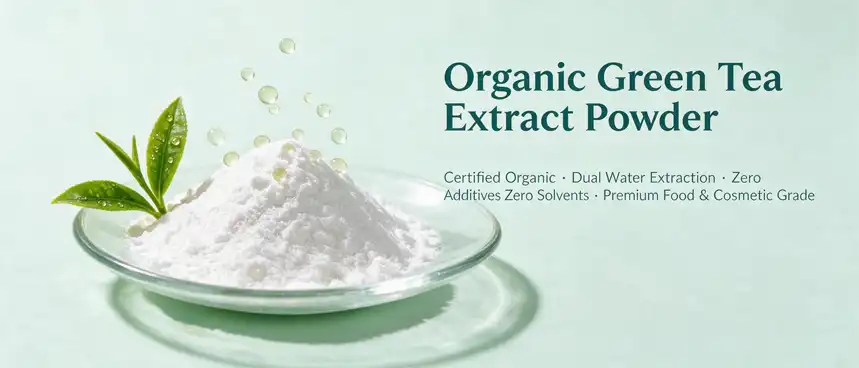
Extract of undigested leaves of Camellia sinensis. A concentrated plant substance. This plant is grown without the use of pesticides or genetically modified organisms. Beneficial compounds such as EGCG, flavonoids, and catechins may be separated and standardized using either pure water or food-grade ethanol. Many decent organic green tea extract powders range from 50% to 98%. HPLC studies indicated that it contains 15-50% EGCG and other flavonoids. That is, it always contains antioxidants that are not present in the raw leaf powder. More than 900 chemicals are being produced that are not allowed on organic crops or on workers who handle them. It’s less probable that customs would reject an imported or supplement brand with pesticide residues that wants to sell in the US, Europe, or both. This is something that those who sell normal tea drinks know. If a buyer is concerned about their health, they want clear labeling. According to Nielsen, this increases the likelihood of a sale in shops.
Why Organic Certification Matters for B2B Buyers
Organic green tea extract powder is utilized in body care products, functional beverages, food supplement tablets and softgels, and nutritional mixtures. According to Grand View Research, the worldwide green tea extract market size was valued at roughly USD 1.7 billion in 2023. Growth is projected to remain at 8.2% per annum until 2030. “There’s an increasing need for plant-based vitamins with clean labels, and buying teams are being challenged to find organic sources that were fine with the business from day one.”--- Follow a few steps, and you will locate the finest locations to purchase organic green tea extract powder. Afterward, select one. First, check that you are qualified. It might be ISO 22000, USDA Organic, EU Organic, or anything like that. Second, request standard COA data of EGCG ≥45% (HPLC) and Total Polyphenols ≥95% (UV). 3. Make sure you can use the liquids. In really organic supply chains, you can only utilize water or organic ethanol. You cannot use hexane or ethyl acetate
Key Applications and Market Demand
This means that each kind of supplier has a distinct ratio of freedom to cost. Give some serious thought to the following: If you purchase directly from the source, you get the greatest value, and you watch the full process from the raw leaf to the final powder. They are great for huge orders, OEM/ODM work, or customers who require products manufactured particularly for them. Why would anybody go to a wholesaler to trial their initial SKUs when starting a new business? Because they have stock available and shorter lead times. There are fewer methods to own it and fewer opportunities to discuss costs.- Private label partners provide comprehensive deals, including producing the recipe, manufacturing the box, and giving confirmation that all the criteria were fulfilled. This is a love-it product if you are a brand that wants to bring its items to market fast and not have to worry about every tiny issue.
How to Choose the Right Certified Organic Green Tea Extract Powder Supplier
The F-1 Criteria Screening Approach
Before shortlisting any supplier of bulk green tea extract powder, apply a structured screening sequence. First, verify certification documents (USDA Organic, EU Organic, ISO 22000, or equivalent). Second, request standardized COA data showing Total Polyphenols ≥95% (UV) and EGCG ≥45% (HPLC). Third, confirm solvent compliance — only water or organic ethanol is permitted in certified organic supply chains; ethyl acetate and hexane are strictly prohibited.
Manufacturer vs. Distributor vs. Private Label Partner
Each sort of supplier has a distinct cost-to-flexibility ratio worth looking at carefully:
- The best price per kilogram is from direct producers, and you can track the journey from raw leaf to end product powder. They are perfect for customers with unique requirements, big volume purchases, or OEM/ODM development.
- Wholesale wholesalers have pre-made inventory and faster lead times, which is good for businesses testing first SKUs. But they are less flexible on price negotiation and customization.
- Private label partners provide a turnkey solution with the formulation, the package design, and the compliance documents. It is perfect for businesses who value speed to market above detailed specification control.
The ideal partner type is dependent on your order volume, level of customisation, and timetable. For nutraceutical businesses that have an ongoing requirement for bulk product, a direct manufacturer connection nearly always provides the superior long-term result.
Product Form Considerations
Organic green tea extract powder is available as pure single-ingredient powder, standardized blends (with L-theanine or vitamin C), or encapsulated formats. Pure powder allows the greatest formulation flexibility for beverage and supplement applications. Blended formats reduce your internal R&D workload. Capsule-ready granulations offer consistent fill weight and flowability, which matters greatly in high-speed encapsulation lines.
Where to Buy Certified Organic Green Tea Extract Powder: Sourcing Channels and Platforms
Online Marketplaces and Trade Portals
You may find hundreds of organic green tea extract powder suppliers on Alibaba, Global Sources, and Made-in-China. These platforms are good for initial market scanning and pricing benchmarking. But you should check the legitimacy of the goods and the validity of the certificate yourself — don’t just rely on the badges on the site. Always ask for copies of the original certificates and verify issue numbers with certifying agencies like CCOF or Oregon Tilth.
Direct Manufacturer Engagement
Buyers who work directly with manufacturers, especially in Shaanxi Province, China, where the manufacturing of botanical extracts has long been concentrated, may benefit from the technical expertise of teams that can provide unique standardization, solvent documentation, and batch-specific test results. Industry standards for procurement show that direct sourcing generally results in a 15% to 30% reduction in cost per kilogram compared to buying via distributors.
Bulk Purchasing and MOQ Planning
The majority of certified organic green tea extract powder producers have minimum order quantities (MOQs) of around 1 kg/sample and 25 kg/commercial batch. Tiered pricing often kicks in at levels of 50 kg, 100 kg, and 500 kg. For international customers, shipping in 25-kilogram fiber drum units (the usual export package) helps with customs paperwork and cold-chain management, as the powder must be kept below 25°C in sealed, moisture-proof conditions.
Pricing, Certification, and Shipping: What B2B Buyers Need to Know
Factors That Drive Price Variation
There are several methods to standardize organic green tea extract powder, and the prices vary widely according to the quantity of EGCG it contains and how it is made without caffeine. A tea that is 50% polyphenols is a lot more expensive than a tea that has 98% polyphenols, 50% EGCG. > In supercritical CO2 decaffeination, 0.5% of caffeine is removed. This method does not cause harm to heat-sensitive catechins. Coffee businesses that are serious about coffee will pay more for it even if it costs more to make. The raw material source will also affect the cost and quality of the goods.
Certification and Third-Party Testing
Official labs like Eurofins, SGS, or Intertek will be able to test for herbicides, heavy metals, microbes, and active chemical amounts. This report must be written by someone else. The bulk green tea extract powder vendors can give you whatever information you need to track your purchase. This comprises agricultural certifications and records of every batch of extraction. The wastewater should not have more than 5,000 parts per million (ppm) of ethanol.
Shipping and Storage Requirements
The powder easily absorbs a considerable volume of water, and upon contact with water or air, it very quickly changes into oxygen. Mostly, the items that go abroad are in food-grade polyethylene bags, double-wrapped and packaged in fiber drums. When you’re transferring freight, remember that you should store boxes at less than 50% relative humidity. Away from direct light, under 25°C and covered and it will live forever. Air freight is the ideal alternative for delivery of small or fast quantities of merchandise. The shipping of heavy things above 100 kg may be cheaper by sea.
Ensuring Long-Term Supplier Relationships and Quality Consistency
Setting KPIs and Conducting Regular Audits
Sustainable buying of organic green tea extract powder is based on set performance objectives. Set batch-level KPIs for Polyphenol potency, moisture content (≤5.0%), bulk density (0.40-0.60 g/ml), and on-time delivery rates. Annually audit suppliers in person or via third-party inspection organizations to verify organic certification renewal and continuous compliance with manufacturing standards.
Private Label and Custom Formulation Value
OEM/ODM suppliers may assist you in co-developing formulae for your brand to stand out. For instance, a U.S. supplement company working with a certified organic green tea extract powder manufacturer may request a bespoke mix including EGCG and L-theanine in scientifically confirmed ratios, then get finished capsules under their own label. Such participation cuts your vendor count and speeds up your product launch timetables.
Building Transparent Communication Channels
Structured feedback loops are needed for long-term collaborations with suppliers. Demand monthly quality reports, supply chain alerts throughout harvest seasons, and dedicated contacts for account management. Brands that see their suppliers as technical partners rather than transactional vendors report lower quality deviations and more consistent pricing in multi-year contracts.
Conclusion
If you want organic green tea extract powder that works, you have to go beyond the keywords. Finding the right suppliers is a lot of work. Take a look at their previous work. Know their tech needs. EGCG levels are consistent at a business with green standards and full process monitoring. You may be certain your product will be a success. This is applicable to a startup with just one SKU, or a huge brand wanting to purchase a ton of them. Plant medication labels that are easy to read are becoming more popular. Always have organic green tea extract powder available for your company. This will give it the edge.
FAQ
1. What is the standard commercial dosage of organic green tea extract powder in supplements?
Most finished supplement formulations use 250 mg to 500 mg per serving, standardized to 50% EGCG. Clinical studies typically reference 400–800 mg of green tea catechins daily for antioxidant benefit. Always align your dosage with applicable regulatory guidelines in your target market.
2. How do I verify that a certified organic product is authentic?
Request the original certification document and verify the certificate number directly with the issuing body (e.g., CCOF, CERES, or Oregon Tilth). Cross-reference the production facility name on the certificate against the supplier's registered address.
3. Can organic green tea extract powder be used in clear beverages?
Yes, but select a cold-water-soluble grade produced with membrane filtration. Standard extracts may precipitate at low pH or low temperature due to residual tannins. Confirm solubility specifications with your supplier before formulation.
4. What is the difference between polyphenols and EGCG?
Polyphenols represent the broad antioxidant compound class in the extract. EGCG is the most bioactive single catechin within that class. A common premium specification is 98% Total Polyphenols containing 50% EGCG, ensuring maximum functional efficacy.
5. Are there any regulatory restrictions on importing organic green tea extract powder into the U.S.?
The U.S. FDA regulates botanical extracts under DSHEA. USDA Organic certification is required to market the ingredient as organic. Pesticide residue and heavy metal limits must comply with FDA guidance and applicable state regulations.
Partner with BioSpark for Certified Organic Green Tea Extract Powder Supply
Nutritional supplement brands, wholesalers, and supplement brands in North America, Europe, and other places trust BioSpark (Xi'an) Biotechnology Co., Ltd. to make organic green tea extract powder. We only use organic goods that are allowed by the USDA and the EU, and we make sure that every batch has a test report from a third party that has been cleared. We also support OEM and ODM in every way. This organic green tea extract powder is from a business that has been around for a long time. Try some right now and see for yourself how reliable the quality is. To begin, email us at leao@biosparkcn.com with your question.
References
1. Grand View Research. Green Tea Extract Market Size, Share & Trends Analysis Report. 2023.
2. Khan, N., & Mukhtar, H. Tea Polyphenols for Health Promotion. Life Sciences, 2007.
3. U.S. Department of Agriculture (USDA). National Organic Program: Regulations and Guidelines. 2022.
4. Eurofins Scientific. Food and Feed Testing: Pesticide Residue Analysis Standards. 2023.
5. Balentine, D. A., Wiseman, S. A., & Bouwens, L. C. M. The Chemistry of Tea Flavonoids. Critical Reviews in Food Science and Nutrition, 1997.
6. Nielsen. The Rise of Clean Label: Consumer Demand for Transparency in Food and Supplement Products. 2022.

Send Inquiry
Related Industry Knowledge
- How Is Polygonatum sibiricum peptide Extracted and Purified?
- Purple Alfalfa Juice Powder vs Green Alfalfa Powder: Key Differences
- Where to Buy Blackberry Juice Powder from Reliable Suppliers
- Hami Melon Powder Benefits for Beverage and Dessert Formulas
- How fast does pomegranate peel extract powder show visible wellness effects?
- Gotu Kola Extract Powder: Benefits for Stress and Anxiety?
- Angelica Sinensis Extract Powder Buying Guide: What to Look For?
- Can Marigold Extract Powder Support Vision Health?
- Rosa Roxburghii Extract for High-Performance Health Products
- Can Tanshinone Danshen Extract Powder Improve Blood Flow?