Who Should Consider Liposomal Ferrous Fumarate for Iron Support?
Nov 18, 2026
If you're an adult who doesn't have enough iron, have stomach issues with regular iron tablets, or are pregnant or nursing, consider liposomal ferrous fumarate. Supplement brands, distributors, and contract manufacturers targeting US customers who want a gentler iron ingredient should also consider it. Consumers should consult a doctor, and businesses should review a supplier's qualifications, testing history, and specifications before agreeing to a formula because "liposomal" does not prove a product is healthy. Lab results, elemental iron dose, individual health, and product-specific evidence all matter. Interest in this format is growing because the World Health Organization estimates that 30% of women aged 15 to 49 have anaemia from insufficient iron, and a 2015 PLoS ONE review found that ferrous sulphate caused 2.3 times more stomach problems than a placebo, which often causes people who cannot tolerate iron to stop taking it. This tutorial covers liposomal ferrous fumarate and how business buyers may learn more.
What Is Liposomal Ferrous Fumarate?
Ferrous Fumarate and Elemental Iron
Iron and fumaric acid are mixed to make this iron salt. Iron sulfate only has about 20% elemental iron by weight, according to the NIH Office of Dietary Supplements. This one has about 33% as much. This difference must be taken into account on labels and dosages. Iron fumarate has about 33 mg of elemental iron per 100 mg. I always change a product's total compound weight to its elemental iron weight before I compare it to another product. This is because buyers and consumers can both be fooled by total compound weight. In the US, elemental iron can be found on the Ingredients list. In other words, the amount per serving should be the same on the specification sheet from each supplier.
How Liposomes Carry Iron
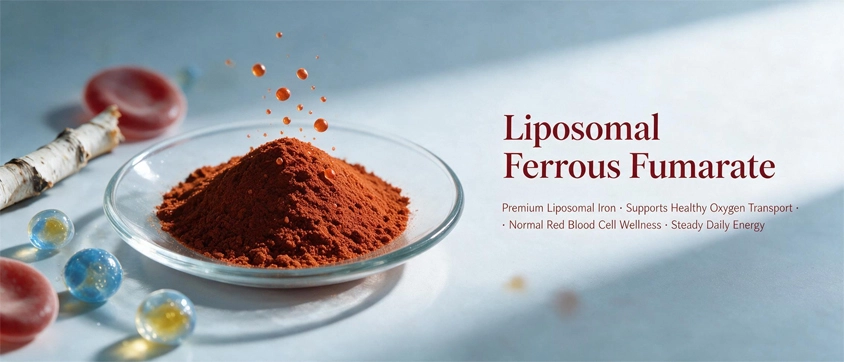
Liposomes are very small bubbles that look like spheres and are made of phospholipids. When liposomal ferrous fumarate is present, the iron compound is found in the middle of these bubble-like structures, where water is present. Food may not come into direct contact with the lining of the stomach because of the lipid layer. This may keep reactions to a minimum. The particles in a liposomal ferrous fumarate product are between 80 and 120 nm in size, and at least 85% of them are encapsulated. At least 95% of the iron is lost, but kept. On the certificate of analysis for each batch, I look for numbers like these. Being "liposomal" doesn't mean that something can be taken in better by itself. The technology used, the particles' properties, the production controls, and the data that backs them up all have an effect on the results.
Common Formats and OEM/ODM Options
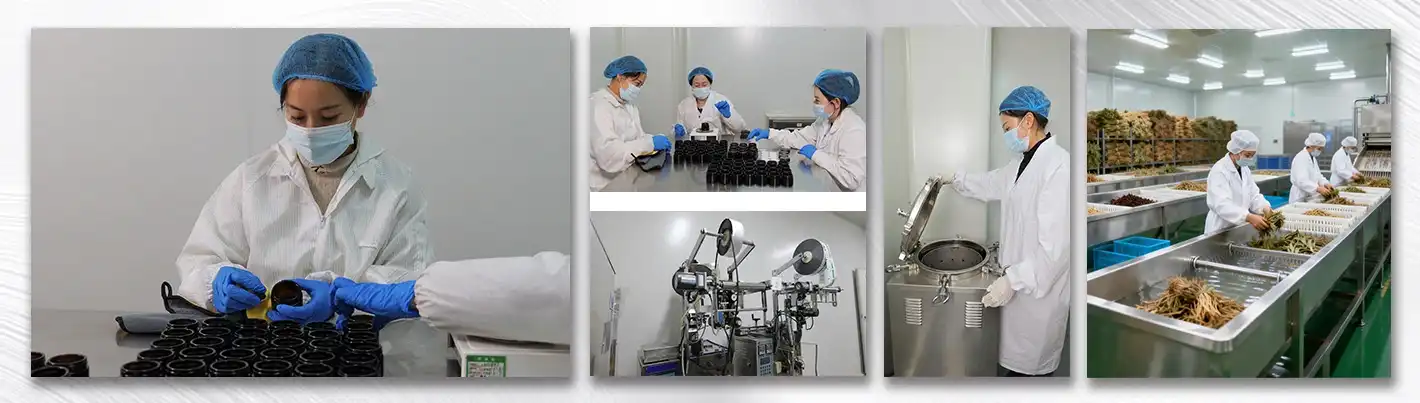
You can buy different kinds of liposomal ferrous fumarate. If it's possible, powder can be pressed into tablets or put into capsules and sachets. It can also be mixed back together to make liquids. You can also get them in liquid or freeze-dried form. BioSpark (Xi'an) Biotechnology Co., Ltd. helps with OEM and ODM projects from the time they have an idea to the time they are made, packaged, and sent out. We're able to handle both small and large orders. A clear specification sheet should list the ingredients, the dosage form, the amount of elemental iron in each serving, how to store the product, and any quality documents that are linked to the product. Without those things, people who want to buy can't compare prices fairly.
Who Should Consider Liposomal Ferrous Fumarate for Iron Support?
Adults With Confirmed Low Iron Status
Most likely to talk to a doctor about this choice are adults whose blood tests show low ferritin or low hemoglobin. It becomes more important when someone stops taking iron because it makes them sick, constipated, or unhappy in the stomach. Men over the age of 19 should get 8 mg of iron every day, and women between the ages of 19 and 50 should get 18 mg. 45 mg of iron is all an adult should take in a day. It is risky to self-diagnose because too much iron can be bad for people with hemochromatosis. I think you should get a blood test and professional help before starting any iron product. It's a real problem when people don't follow through, so a format that someone can use every day should be given a chance when the evidence points to it.
Pregnancy, Breastfeeding, and Children
While pregnant, women should get up to 27 mg of iron every day, and while breastfeeding, they should only get 9 mg. This is why many prenatal formulas contain iron. A doctor still has to decide the right dose for these groups because their needs change based on lab results. Kids need more care. The FDA says that iron supplements must have a label that says kids younger than six are most likely to die from poisoning by accidentally taking too much. That's why I say to use packaging that is hard for kids to open, labels that are easy for them to read, and keep the things out of their reach. Brands that are making lines for kids or pregnant women should work with qualified medical and regulatory advisors before putting them on the market.
Brands, Distributors, and Manufacturers
Liposomal ferrous fumarate is good for supplement companies that want to make premium or gentle iron lines, for distributors who want to add unique products, and for manufacturers who want to make customized nutrition formulas. For US companies, the cGMP rules can be found in 21 CFR Part 111. They must also make claims that are allowed by supplement law. This means they can't say that their goods treat or get rid of anemia. To check if it works, I believe you should look at five things: the essential iron dose, the regulatory pathway, the dosage form, and the supplier's ability to provide it. Marketing language should never be the only thing that decides the case. New businesses often start with small amounts to see how much demand there is. On the other hand, well-known businesses may need a steady supply of large amounts.
Potential Benefits and Uses of Liposomal Ferrous Fumarate
What Iron Does in the Body
Iron is important for the body because it helps use energy and makes hemoglobin, which is what gives red blood cells oxygen. If you don't get enough, you might feel tired and unable to do things. Because of these uses, iron can be found in prenatal, women's health, and sports nutrition products. There is no difference between having and not having a liposomal system when it comes to iron. Any benefit that has to do with tolerance or absorption needs proof that it works with that specific product because it changes how the iron is delivered and packed. People know that iron is good for you, but delivery claims need their own proof. That's why I always tell the difference.
Why Formulators Choose a Liposomal System
Formulators pick liposomal ferrous fumarate for a number of useful reasons. When iron is in a lipid layer, it might not taste as metallic, which is good for both powders and liquids. It might also keep iron from mixing with other reactive substances when it is mixed with them. This could slow down oxidation and color change. There are more capsules, sachets, and drink mixes that can be made with powder. These are just reasons to test the ingredient; they don't mean it will work. It's best to do small pilot tests to make sure the product tastes good, stays stable, works with other products, and is properly packaged before going into full production.
Where It Fits in Product Lines
Sports nutrition, clinical nutrition, multivitamins, and fortified powders and drinks all contain liposomal ferrous fumarate. You can also make things for kids, but you have to be very careful when packing them to keep them safe. Some groups, like vegetarians and endurance athletes, talk to professionals a lot about how much iron they take in. The NIH says that plants don't absorb iron as well as animals do, so vegetarians need about 1.8 times more iron than meat eaters. The person who makes the formula should always check the target elemental iron and make sure the dosage form is right for the people who will be using it.
Liposomal Ferrous Fumarate Absorption, Comparison, and Safe Use
What Shapes Absorption
Labels don't really change how well something absorbs. Some important factors are the amount of elemental iron, how the iron is chemically made, what the phospholipids are made of, how the particle sizes are spread out, when the person eats, and their iron status. It can be hard for the body to absorb iron when it is around calcium, antacids, tea, coffee, and some medicines. Vitamin C, on the other hand, can make it easier for non-heme iron to enter the body. A 2017 study in Lancet Hematology found that women who were iron-deficient got more out of ferrous sulfate if they took it every other day instead of all at once. I check a supplier's data to see if there are any human studies on the final commercial formula, equivalent elemental iron doses, good comparators, and outcomes such as serum iron, ferritin, hemoglobin, and tolerance. In vitro results are helpful for development, but they don't show that the product is better in the real world.
Compared With Ferrous Sulfate and Bisglycinate
A lot of people use ferrous sulfate since it is cheap and has been looked into a lot. The PLoS ONE meta-analysis, on the other hand, showed that it was linked to more stomach problems than a fake drug. In the same way that iron binds to glycine, a chelate called ferrous bisglycinate forms. It needs the same amount of care. Many people think of liposomal ferrous fumarate as a high-end option. There are different kinds of "liposomal iron" technologies, so I compare them to the same kind of elemental iron in terms of clinical evidence, tolerance, stability, dosage form, regulatory status, and cost per effective serving. The teams that are buying should also ask what kind of lipids are used, how well they load, what size particles are used, how they release energy, and how consistent the batches are. It tells you a lot when you change the price from kilograms to milligrams of elemental iron.
Dosage, Timing, and Storage
Every person needs a different dose to work. Adults should get doses that are based on their elemental iron levels and take into account their age, whether they are pregnant, their diagnosis, and the advice of a doctor. The NIH says that adults shouldn't take more than 45 mg per day. If you take more than that, you should talk to your doctor right away. Iron can be hard on the stomach, so some people take it with food. However, food may make it less effective, so you should talk to your doctor. They can tell you how long you should wait between taking calcium and iron, antacids, antibiotics, or thyroid medicine. People who use it for a long time need to be closely watched because it can cause nausea and constipation. Lipid-based liposomal ferrous fumarate powders should not be given to children and should not be moved or stored in a place where they can be damaged by heat, moisture, light, or oxygen.
How to Choose a Liposomal Ferrous Fumarate Supplement or Supplier
Define the Project and Verify Specifications
Start with the need, the place where it will be sold, the dosage form, the person you want to sell it to, and the way it will be regulated. Then, ask for the technical file. This will have details about the elemental iron content and how it was measured, as well as the dosage options, liposome composition, loading efficiency, particle size data, stability results, and any proof that the drug was absorbed or tolerated. Before you sell it in the US, make sure that the language on the label and the recipe follow FDA rules. Also, I need a written copy of the exact business formula and packaging because yours doesn't work with data from another formula. If a buyer is clear about these things from the start, they will get correct quotes and not have to do extra work later.
Qualify the Supplier
If they can, a good partner will give you GMP paperwork, ISO or HACCP systems, certificates of analysis, testing for heavy metals and microbes, allergen statements, records of traceability, and information on stability. Check out more than just the papers. It's also important to check the minimum order quantity (MOQ), lead time, Incoterms, capacity, technical communication, and experience with private label and OEM/ODM. When BioSpark buys raw materials, makes products, and checks finished goods, they all follow international quality standards. It ships goods to Europe, the Middle East, North America, and South America. Small and large orders are both welcome at our business. This means that both new brands and well-known manufacturers can work with the same partner.
Mistakes to Avoid When Selecting Liposomal Ferrous Fumarate
Four mistakes happen a lot. First, people choose a product just because the label says "liposomal." Second, they look at prices without changing the units to iron elements. Third, they don't think about how to package the lipid systems and keep them stable, even though light, heat, oxygen, and moisture can change lipid systems. Fourth, they let claims like "100% absorbed," "side effect free," or "cures anemia" to stand without proof. This can get them in trouble with the government. Before you give the final go-ahead, make sure the commercial formula, dosage form, packaging, testing profile, and shelf-life report are all correct. By going over a short list with the supplier, most of these problems can be found early on.
Conclusion
Liposomal ferrous fumarate, which combines ferrous fumarate with a phospholipid delivery system and has about 33% elemental iron, may help people who have trouble handling regular iron. The article showed that safety depends on knowing the right iron level, the right amount of elemental iron to take, getting professional help, and having proof that the product works. Women who are pregnant, mothers who are breastfeeding, and kids should be extra careful. To make claims about absorption and tolerance, we need more information on the final formula. It is known that iron helps hemoglobin carry oxygen. Ferrous sulfate or bisglycinate? Which is better depends on how much elemental iron it has, how stable it is, how it is controlled, and how much it costs per effective serving. For businesses, quality is based on the supplier's skills, the test records, the packaging, and the specifications. Every iron product doesn't work for every customer or market.
FAQ
Is liposomal ferrous fumarate better than ferrous sulfate?
Not all the time. However, liposomal ferrous fumarate is better at being absorbed and delivered. On the other hand, ferrous sulfate has been used for a long time and costs less. The exact formula and data from people who took the same amount of elemental iron will show which one is better. Someone who works in health care can help someone figure out which choice is best for them.
How do I calculate elemental iron content?
Multiply the compound's weight by the amount of iron it has. Iron fumarate is about 33% elemental iron, so 100 mg gives you 33 mg. Due to the lipid carrier, the amount of iron in each gram of liposomal powder is less than what is written on the certificate of analysis.
Can BioSpark produce private-label liposomal ferrous fumarate products?
Yes. For each project, we confirm the MOQ and lead time. We do OEM and ODM work in several dosage forms. We'll help you find a good option if you tell us your target market, formula, and quality needs.
Contact BioSpark About Your Liposomal Ferrous Fumarate Project
Brands, distributors, and manufacturers of supplements can use BioSpark to find a reliable source for liposomal ferrous fumarate. Our work is based on international quality standards, and we send things all over the world. Even if the order is small or large, we can do OEM/ODM work for it, whether it's a powder, capsule, tablet, sachet, or liquid. To get specifications, samples, MOQ, and lead time, email leao@biosparkcn.com with your quality standards, target market, and formula. Visit https://www.biosparkcn.com/ to learn more.
References
1. NIH Office of Dietary Supplements, 2022: Iron – Fact Sheet for Health Professionals.
2. World Health Organization, 2023: Anaemia (fact sheet).
3. Federal Register, 1997: Iron-Containing Supplements and Drugs: Label Warning Statements and Unit-Dose Packaging Requirements.
4. PLoS ONE, 2015: Tolkien Z, et al. Ferrous Sulfate Supplementation Causes Significant Gastrointestinal Side-Effects in Adults: A Systematic Review and Meta-Analysis.
5. Lancet Haematology, 2017: Stoffel NU, et al. Iron Absorption from Oral Iron Supplements Given on Consecutive versus Alternate Days and as Single Morning Doses versus Twice-Daily Split Dosing in Iron-Depleted Women.
6. Current Medical Research and Opinion, 2013: Cancelo-Hidalgo MJ, et al. Tolerability of Different Oral Iron Supplements: A Systematic Review.

Send Inquiry
You may like