Snow Lotus Fruit Powder Import Guide for Global Buyers
Nov 22, 2026
Importing snow lotus fruit powder starts with three checks. Confirm the botanical identity (Smallanthus sonchifolius, also called yacon), verify the fructooligosaccharide (FOS) content on a batch-specific Certificate of Analysis (COA), and match the packaging and Incoterms to your shipping route. At BioSpark, we supply snow lotus fruit powder with 40–60% FOS, 80 mesh fineness, and a 1 kg minimum order. This guide walks US buyers through product basics, production, supplier selection, FDA checkpoints, and pricing, so you can request samples with confidence and avoid costly delays at the port.
Snow Lotus Fruit Powder Basics: Identity, Nutrition, and Uses
What Snow Lotus Fruit Powder Really Is
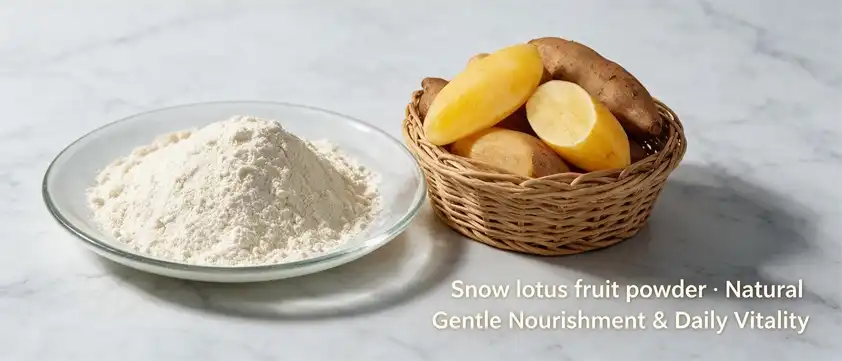
Smallanthus sonchifolius, a perennial plant from the Andes that most people refer to as yacon, is where snow lotus fruit powder is found. Even though it has a different name, the buried root is what it is made of. There is no link between it and lotus root, lotus seed, or the alpine snow lotus flower. When someone buys something, I always tell them to look at three lines: the Latin name, the plant part, and the country of origin. Our powder is a fine, white to light yellow powder that smells a little sweet. It comes from China. Mislabeling leads to unnecessary arguments over botanical imports, so settle on identity before you talk about price.
Nutrition Profile and Prebiotic Evidence
Fructooligosaccharides are the main ingredient that does the work. Our snow lotus fruit powder has about 1.5 kcal/g, which is about 75% fewer calories than sugar, and 40–60% FOS. Its glycemic index is very close to zero. FOS fits the 2017 ISAPP agreement description of a prebiotic, which is a substance that host microorganisms choose to use to provide a health benefit. A 2016 review in Nutrients found that yacon FOS was good for gut health, and a 2009 trial in Clinical Nutrition found that obese women who took yacon syrup had lower body weight and insulin resistance. Since syrup was used instead of powder in that study, I see it more as background information than proof for every product. The normal amount of prebiotics to take every day is 3–8 g.
Where US Brands Use Snow Lotus Fruit Powder
People in the US use snow lotus fruit powder when they want something sweet, high in fiber, and low in glucose. Functional drinks, fiber supplements, meal replacement powders, nutritional bars, sugar-free candies, yogurt and fermented drinks, and bread, cookies, and muffins are all common uses. In dairy, FOS can feed probiotic cultures, which backs up the idea of synbiotics. It can be used instead of some sugar in baking and adds fiber. Because it's only 30–50% as sweet as sugar, most recipes mix it with other sweeteners or flavorings. Before you make a batch, do a bench test in your own matrix. This is because sweetness and texture change from food to food.
How We Produce and Test Snow Lotus Fruit Powder
Plant Extraction Method and Low-Temperature Processing
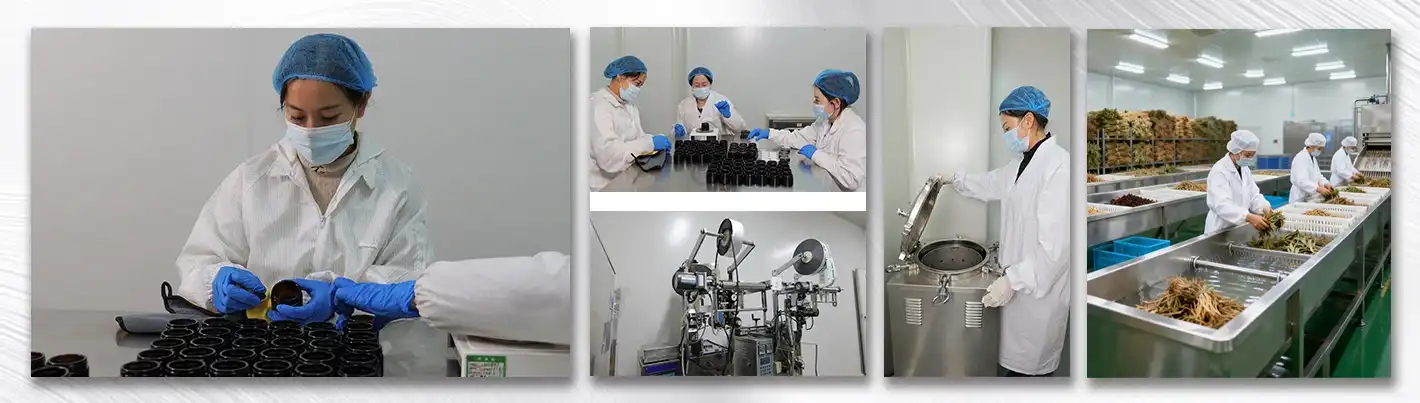
We use a method for extracting plants that is based on supercritical CO2, low temperatures, and membrane separation. Low temperatures help protect the FOS part, and membrane separation concentrates it to the 40–60% range that buyers want. Our better extraction increases FOS yield by 15%, which helps keep output steady for large orders. When it's done, the powder stays white to light yellow and smells slightly sweet. When you check out a supplier, ask them to walk you through each step, from sorting the raw potatoes to drying, milling, and sieving. You should also find out who signs off on each batch release. A clear answer means that the process is going well.
Specification and Testing: What the COA Should Show
The snow lotus fruit powder we sell must be 80 mesh fine, dissolve easily in water, dissolve slightly in ethanol, and have less than 4% wetness. Thin-layer chromatography (TLC) is used to test every batch, and a certificate of analysis (COA) is sent with every shipment. Your buying team should go through the COA and compare it line by line with your written standard. The COA should have a FOS content of at least 40%, be dry, look good, and have particles that are the right size. Also, ask for information on microbes and contaminants, and make sure that the limits you set are in line with what your customers want. COAs that are the same in three or more batches tell you more about a supplier than one perfect report.
Managing Hygroscopicity in Packaging and Storage
FOS grains quickly soak up water, and when wet air gets to the product, caking can begin. We pack in 25 kg drums with desiccant and aluminum composite packaging that doesn't let water in. We can talk about nitrogen-flushed and vacuum-sealed solutions for large sales. Keep drums in a cool, dry, dark, well-ventilated room, and seal up any empty drums right away. If you follow those steps, the shelf life is 24 months. When moving drums from a cold container to a warm plant, keep an eye out for condensation. Also, wait until the drums are at room temperature before opening them. These steps take care of flowability and make sure that the dosing on your filling line stays the same.
How to Choose a Snow Lotus Fruit Powder Supplier
Verify Identity, Certifications, and Documents
Start with the paperwork. A good seller should give you a specification sheet, a batch COA, copies of the certifications, and records of how the goods were made. Our snow lotus fruit powder is certified by BioSpark as ISO9001, Kosher, Halal, FDA, and GMP. If you ask, our team can give you a copy of these certifications. It is important to check the scope, issuing body, and expiration date of each certificate, as one certificate does not immediately cover another building or product. People who buy from you may also ask for Kosher and Halal certificates. Every document should be kept in a supplier file, as auditors and retail partners will need it in the future.
Confirm Batch Consistency and Supply Capacity
Distributors often worry about FOS content that isn't consistent. They should make sure that the FOS level is at least 40% on every batch and be able to show you past COAs to back this up. It's just as important to have capacity. BioSpark has more than 1,000 tons of stock, ships in 25 kg drums, and has a standard lead time of 10 days, which works for both long-term contracts and repeat orders. Ask any supplier about their safety stock, how they plan for seasonal raw materials, and what they do when the harvest is late. If a buyer plans for supply gaps before signing, there won't be any production stops once the contract starts.
Judging Retail Listings Such as NOW Lotus Fruit Powder
A lot of people in the US look for "NOW lotus fruit powder" or similar products in stores before they call an ingredient supplier. Be careful with those listings. It's possible for a store label to say that something is lotus root, lotus seed, or another plant, but it doesn't say much about batch stability, specs, or bulk supply. I think you should use the brand's official methods to check the exact product name, list of ingredients, plant part, and manufacturer. Reviews from customers can help with taste and texture, but they can't take the place of a COA, a name check, or a seller qualification. Businesses that buy drums need to know how many they need, have proof for every order, and be able to ask detailed questions of their suppliers.
How to Import Snow Lotus Fruit Powder into the United States
A Step-by-Step Procurement Process
A clear order saves weeks. First, write a specification that includes the botanical name, the amount of FOS, the particle size, the moisture content, the solubility, the packaging, and the shelf life. Second, order a 1 kg sample of snow lotus fruit powder and use it in your own formula to test how well it dissolves, how sweet it is, and how well it works with probiotics. Third, ask the seller for papers, certificates, and recent COAs to prove they are a good one. Fourth, write down the price, minimum order quantity, lead time, Incoterms, and payment terms that you agree to. Fifth, make a test order. Once the results are good, switch to a yearly contract. Our normal lead time is 10 days, and special projects take about 30 days. This way, you can set start dates that have enough time to be flexible.
FDA and Regulatory Checkpoints
Importing food ingredients into the US is subject to a number of FDA rules. Facilities outside of the US that make food for people in the US need to register with the FDA, and importers need to give notice before supplies arrive. The Foreign Supplier Verification Programs rule, which was finalized in 2015, says that importers must make sure that the food their foreign suppliers make meets US safety standards. If you put the powder in a dietary supplement, the Dietary Supplement Health and Education Act of 1994 controls the claims and labels. Also, depending on how long the ingredient has been sold, a new dietary ingredient notification may be needed. Check your plan with a regulatory expert. Don't make disease claims; instead, stick to facts. BioSpark provides regulatory support for low-GI claims and advice on how to get into new markets.
Shipping Terms, Payment, and Landed Cost
We ship from China by express, air freight, or sea freight under FOB, CIF, CFR, EXW, DAP, or DDP terms. Quickly send out suit samples and small lots. Most of the time, air freight takes 5–10 business days. Ocean freight, on the other hand, takes 20–45 days and is the cheapest for large amounts. When we ship directly to the US and Europe, it usually takes 15 days to get there, and more than 99% of the time, customs clearance goes smoothly. The best way to pay is through a bank transfer (T/T). Find the total landed cost of all the quotes you get. This includes the price of the product, the freight, the insurance, the duties, the testing, the storage, and the customs fees. When making a budget, DDP quotes are easier to use, while FOB or EXW quotes give you more control over freight.
Pricing, Customization, and Risk Management
Pricing, MOQ, and Stock for Snow Lotus Fruit Powder
The price is based on the amount of FOS, the order volume, the packaging, the testing needs, and the Incoterm. You should ask for a price list that includes samples, trial lots, and yearly amounts. Our minimum order quantity (MOQ) for samples and standard orders is 1 kg, and we have enough stock to quickly and safely transport 25 kg drum orders. You can pick the FOS content that your recipe and label claim need, which is between 40% and 60%. Business people are the only ones we serve. You can compare suppliers on the same terms when you get written quotes. These terms include the 24-month shelf life and the COA you will get with each shipment.
OEM/ODM and Synbiotic Formulation
Private-label brands need more than just a raw material a lot of the time. BioSpark offers OEM and ODM services for everything from formulas to powders, capsules, and gummies that come in branded packaging. We can change the amount of FOS between 40% and 60%. Our R&D team works with university joint labs to create synbiotic formulas that combine certain probiotic strains with FOS. For satisfaction goods, we also test for stability, sweetness, and fiber co-formulation. We protect your secret formulas with NDAs, help you make custom packaging that doesn't get wet or harm the environment, and back up OEM projects with a 2-year warranty. It costs 100 boxes, or 1 kg, to make a custom order.
Common Pitfalls and How to Avoid Them
Most problems with imports can be traced back to five mistakes: buying the cheapest quote, not checking the humidity, misidentifying plant material, and making marketing claims that can't be backed up. A few habits stop them. Make sure that every document has Smallanthus sonchifolius on it. Show proof for each claim on the label, like "sugar-free" or "low GI." Along with price, you should look at consistency and service. Always have extra on hand, especially before busy times. When the drums arrive, check them for lumps or torn liners, and write down the lot number before putting them away. There is a 1 kg sample and a trial order that can show you these problems right away, so test your whole process before you go big.
Conclusion
When people want to bring snow lotus fruit powder into the United States, they should first make sure the seller is who they say they are, then check the quality, papers, and procedures. The powder is made from tubers of the Smallanthus sonchifolius plant. It has about 1.5 kcal/g of prebiotic research, 40–60% FOS, and a nearly zero glycemic index. Low-temperature extraction, fineness of 80 mesh, TLC tests, and controlling moisture all help to keep the uniformity. Checks on suppliers look at things like capacity, batch COAs, certificates, and the difference between industrial supply and retail listings. US importers also deal with FDA facility registration, advance notice, supplier verification, and claim rules. They also look at the total landed cost across all Incoterms and make a decision. The major risks can be lowered by sampling, written specs, and claims that are based on facts.
FAQ
Is snow lotus fruit powder the same as lotus root powder?
The tubers of Smallanthus sonchifolius (yacon) are where snow lotus fruit powder is derived. Lotus root and lotus seed come from different plants, Nelumbo nucifera, and taste and are good for you in different ways. Check the Latin name on all of the details.
What are the minimum order and lead time?
For standard orders and samples, the MOQ is 1 kg. Large orders are shipped in 25 kg drums to save space. Most projects have a lead time of 10 days, and custom ones take 30 days. Business people are the only ones we sell to.
Which documents should I request before ordering?
You should ask for a specification sheet, a batch COA that shows the amount of FOS in the product, copies of the ISO9001, Kosher, Halal, FDA, and GMP certificates, as well as information on the packing and shelf life. Find out from your importer or regulatory advisor what the FDA's requirements are for importing.
Request a Snow Lotus Fruit Powder Sample and Bulk Quote from BioSpark
Are you ready to find a snow lotus fruit powder supplier that meets your needs? BioSpark has a MOQ of 1 kg, more than 1,000 tons of stock, and supports OEM and ODM. We will get back to you with samples, a COA, and a price after you email sales@biosparkcn.com with your application, the FOS level you want, and the annual amount. To find out more, go to https://www.biosparkcn.com/.
References
1. Nature Reviews Gastroenterology & Hepatology, 2017
2. Nutrients, 2016
3. Clinical Nutrition, 2009
4. U.S. Food and Drug Administration, Foreign Supplier Verification Programs Final Rule, 2015
5. U.S. Congress, Dietary Supplement Health and Education Act, 1994
6. Codex Alimentarius Commission, General Principles of Food Hygiene, 2020

Send Inquiry
You may like