_1764041963888.webp)
Purple Alfalfa Juice Powder OEM: Formulation and Private Label Guide
Aug 28, 2026
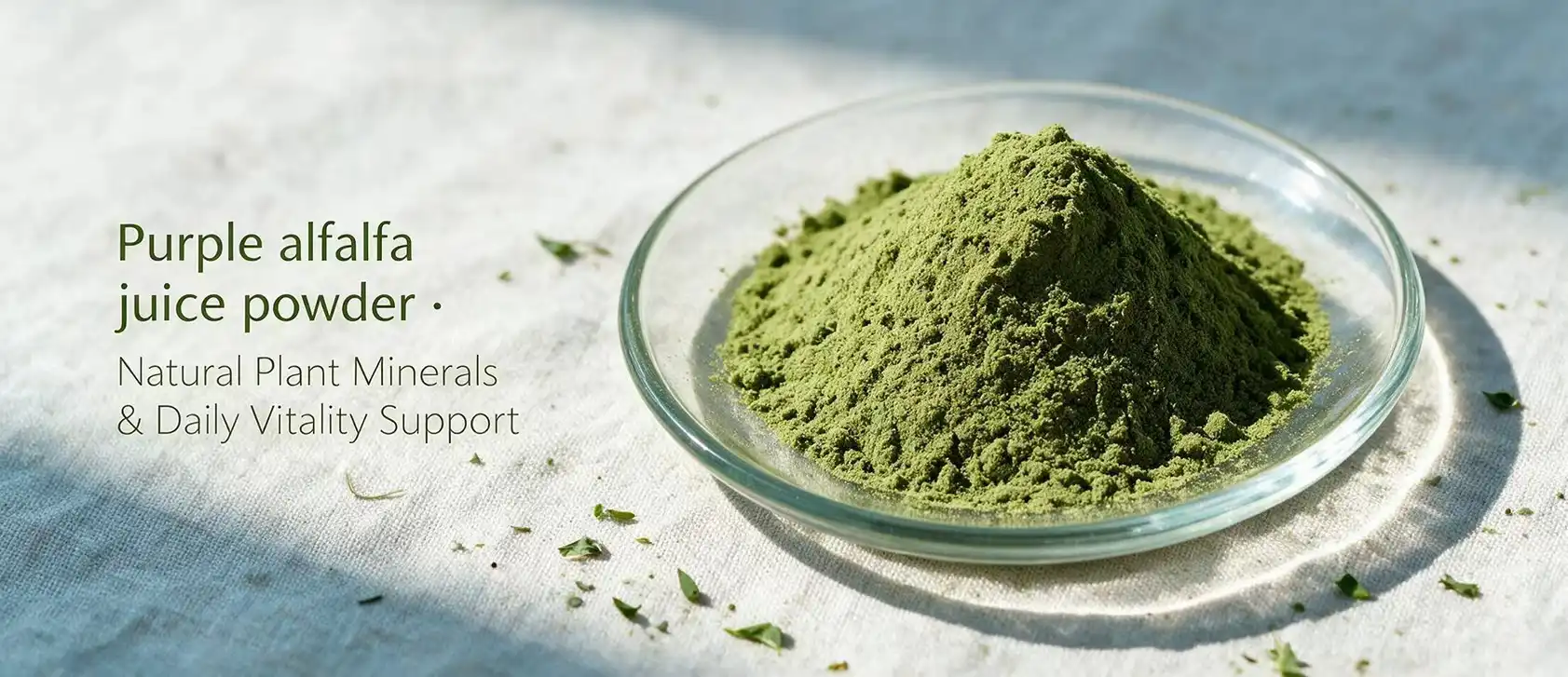
Navigating the world of dietary supplement manufacturing requires access to premium ingredients backed by reliable production capabilities. Purple alfalfa juice powder has emerged as a powerful botanical ingredient for brands seeking to develop innovative health products. This guide walks you through essential considerations when partnering with OEM manufacturers and launching private label formulations, helping you understand how this vibrant green superfood can transform your product line while meeting stringent quality standards.
OEM Formulation Principles for Purple Alfalfa Juice Powder Products
To make great items, you need to know both the properties of the ingredients and how they are made. When working with OEM partners on Purple alfalfa juice powder formulations, the quality of the result depends on a number of important factors.
Raw Material Selection and Quality Benchmarks
Certified organic purple alfalfa juice powder from limited growth areas is the first ingredient in high-end formulas. Pesticide residue screening is a basic requirement for U.S. and European markets where clean label expectations are high, so buyers should make sure that suppliers do it. Certifications like ISO9001, GMP, FDA, Kosher, and Halal are very important for quality security because they show that production sites follow strict rules throughout the whole process.
Ratios of active compounds are very important. Custom specifications could call for higher levels of saponins in detox products or higher levels of isoflavones in supplements for women going through menopause. Manufacturers with a good reputation let you change these factors and adapt the extraction methods to meet your formulation goals.
Overcoming Common Formulation Challenges
When working with green superfood powders, product developers face three main problems. Chlorophyll is unstable because it is easily damaged by light, heat, and air. Some ways to solve the problem are to use nitrogen-flushed packing with liners made of opaque metal foil and to add natural antioxidants like mixed tocopherols to slow down the breakdown process.
Taste is another problem; some people don't like the plant taste that the product has. This is taken care of by experienced OEM teams that use natural vanilla, mint, or fruit essences in flavor masking systems. Enteric coating technology stops flavors from releasing from capsules until the supplement gets to the digestive tract.
Optimizing solubility makes sure that ingredients mix smoothly in water-based mixtures. Purple alfalfa juice powder dissolves easily, but to get instant solubility without clumping, you need the right amount of lecithin or to add maltodextrin carriers during spray drying.
Co-Formulation Strategies for Market Success
When you mix purple alfalfa juice powder with plants that work well together, you get goods that work better together. Purple alfalfa juice powder, chlorella, milk thistle, and dandelion root are all parts of a famous detox recipe. Combining alfalfa isoflavones with black cohosh and red clover is good for women's health because it helps with all of their hormones. Green superfood mixes usually have purple alfalfa juice powder, spirulina, barley grass, and moringa in certain amounts that have been figured out by trying their taste and stability.
These mixtures can be proven to work by bioavailability studies and shelf-life tests done by OEM partners with in-house R&D departments that have at least 30 experts. When setting up products to meet FDA requirements under DSHEA rules or EU Novel Food rules, this technical support is very helpful.
Private Labeling Strategy: From Selection to Market Launch
To make a Purple alfalfa juice powder private label line, you need to carefully choose your suppliers and plan your moves. The right production partner will become an extension of your brand and make sure that the standard is always the same, which will keep customers coming back.
Critical Supplier Evaluation Criteria
The certification collection is the base. In addition to GMP and ISO standards, you should look for NSF-GMP certification to show that the quality systems are pharmaceutical-grade. EU Organic and USDA Organic certifications let you place your product as a top option. Kosher and Halal certifications let you reach certain types of customers and markets, like those in Southeast Asia and the Middle East.
Scalability is based on production capacity. Suppliers who keep 1,000-ton inventories can quickly fill big orders, which gives them an edge when starting marketing efforts. Lead times are also different. Standard formulations ship in 10 days, while custom specifications usually take 30 days. Flexible minimum order quantities starting at 1 kg make it possible to test a product without spending a lot of money on 25 kg drums of it.
Logistics skills have a direct effect on how reliable your supply line is. It's easier to get the best deals on different-sized orders when manufacturers offer a range of delivery dates and shipping methods, such as FOB, CIF, CFR, EXW, DAP, DDP, and express, air freight, and sea freight. For buyers in the U.S., sellers with 99% customs clearance rates and 15-day straight shipping cut down on delays and compliance issues.
Customization Options Bringing Brands to Life
Private label agreements are more than just putting a name on a product. The choice of dosage form fits the placement of the product; capsules appeal to people who want ease, while powders appeal to people who like green smoothies. Gummy forms have become popular in the women's health market because they make taking supplements more fun. Reliable OEMs make changes to the recipe for each format, taking into account differences in bioavailability and the need for stability.
Customizing the packaging helps the brand stand out. There are many choices, from eco-friendly pouches that are good for people who care about the environment to high-end gift boxes that are good for wellness stores. Single-serve stick packs are great for goods that you can take with you, and bulk packages are great for fitness fans who make their own daily shakes. Label design helps make sure that all ingredient lists, health claims, and allergen labels are in line with FDA and foreign rules.
Quality Control Throughout Production
Strong quality standards protect the reputation of your brand. Testing in batches is the best way to make sure of the amounts of heavy metals, chemical residues, active compounds, and microbiological safety. When suppliers include a Certificate of Analysis with every shipment, they are being honest, which helps build trust. Traceability systems that connect produced goods to lots of raw materials let problems be fixed quickly if they happen.
Using nitrogen-flushed packing to keep chlorophyll fresh shows that you care about the purity of the product. Guarantees of a two-year shelf life show that the formulation is stable. Top makers even offer warranties that cover replacements of materials that don't meet standards during the stated shelf life that was stated.
Market Comparison and Procurement Considerations
Understanding the differences between ingredients helps you make better buying choices. Even though herbal extracts come from similar plants, the way they are processed makes them very different, which has an impact on both performance and price.
Purple Versus Green Alfalfa: What Buyers Should Know
The words can be hard to understand. Both words mean Medicago sativa, but "purple" used to only mean varieties with flowers that are purple. Modern goods that say "Purple alfalfa juice powder" are actually made from regular green alfalfa that has been turned into a very concentrated juice powder. The main difference is not the type of plant, but how it is processed.
Standard purple alfalfa juice powder is made by milling whole dried leaves that contain mostly cellulose, a hard fiber. This ingredient is good for digestion, but it doesn't dissolve well and has fewer nutrients per gram. By extracting the fiber, purple alfalfa juice powder makes a product that is totally water-soluble and high in vitamins, minerals, and phytonutrients. Even though it costs more per kilogram, purple alfalfa juice powder gives supplement makers more options for how to make their products.
Evaluating Supplier Credibility
Different purple alfalfa juice powder providers have different quality levels because of how they get their ingredients and how they make their products. Organic certification proves that there are no synthetic pesticides or GMO materials, which is becoming more and more important for high-end brands. Origin is also important. Chinese suppliers control global markets because they have well-established growing areas and advanced processing infrastructure. However, buyers should check the qualifications of each facility instead of making assumptions based on the country where the facility is located.
Testing technique transparency tells you which companies you can trust and which ones you should avoid. High-Performance Liquid Chromatography is a more accurate way to measure saponin levels than UV spectroscopy, which is only used by less reliable suppliers. If you can, ask a third-party lab to check the work.
Bulk Purchasing Strategies for Cost Optimization
Commitments to buy in bulk lower the cost per unit by a large amount. Annual framework contracts lock in prices and make sure that supplies don't stop, which is especially useful when the prices of agricultural commodities change often. Because chlorophyll concentration changes slightly between harvest cycles, buyers who need consistent color from batch to batch for natural colorant uses should make this clear from the start.
Payment terms have an effect on cash flow. Bank transfer (T/T) is still the norm, with 30% down payments and the remaining 70% due before shipping for new customers. Established partnerships may be able to agree to longer terms. DDP (Delivered Duty Paid) terms make logistics easier for U.S. buying teams because the seller takes care of clearing customs and making the final delivery.
Ensuring Product Safety and Regulatory Compliance
Safety for customers and following the law are important things that businesses can't do without. Knowing how regulations work keeps you from making mistakes that cost a lot of money and builds customer trust.
Safe Usage Guidelines and Contraindications
Purple alfalfa juice powder is usually very safe when taken in the amounts that are suggested. Most supplements have between 500 mg and 1,500 mg per dose, which is enough to provide nutritional support for most people without causing any side effects. People with autoimmune diseases, especially lupus, should be careful because alfalfa seeds contain L-canavanine. Although mature leaf powder has very low levels of L-canavanine, the product's label acknowledges that there are theoretical concerns.
People who are sensitive to hormones need to know about the phytoestrogen content. Many women find that isoflavones help with the symptoms of menopause, but people who have had estrogen-receptor-positive cancer should talk to their doctors before using them. Clear label warnings show that you are taking care of your business responsibly.
Because purple alfalfa juice powder contains vitamin K, which can make warfarin less effective, it's important to pay attention to how it interacts with other blood thinners. Product materials should tell people who are taking blood thinners to talk to a doctor.
Navigating FDA and International Standards
The Dietary Supplement Health and Education Act (DSHEA) sets the rules for how dietary supplements work in the United States. "Purple alfalfa juice powder is a food item that has been used safely for a long time. Good manufacturing practices, correct labels, and proof for any structure-function promises are all things that manufacturers must make sure of. Stay away from disease treatment claims that get the FDA involved.
Standards set by the EU Food Supplements Directive must be followed in order to sell goods in Europe. Purple alfalfa juice powder has been used in food for a long time, but new ways of extracting it or higher concentrations may require a Novel Food evaluation. Export suppliers with a lot of experience know these little details and can give regulatory advice that is specific to target markets.
Certified organic claims need to be backed up by proof. Organic production standards must be met for the USDA Organic or EU Organic seals to be used. This protects brands from fake advertising claims and commands higher prices.
Building Trust Through Transparency
Every shipment should come with testing documentation that is specific to the batch. Certificates of Analysis go into great depth about heavy metal screening (lead, mercury, cadmium, arsenic), pesticide residue analysis, active chemical proof, and microbial testing (total plate count, yeast, mold, coliforms, pathogens, and yeast). Because of this, brands can safely say that their goods have been tested and proven.
Traceability tools that connect products to specific harvest lots and processing dates make it easier to return goods if needed. Even though they aren't needed very often with good suppliers, these systems show professionalism in a way that makes both retail partners and customers feel safe.
Conclusion
To make private label products with Purple alfalfa juice powder that sell well, you need to carefully choose your supplier, carefully formulate your products, and pay close attention to regulatory requirements. Because the ingredient can be used in cosmetics, functional foods, dietary supplements, and even natural colorants, brands that are willing to invest in good partnerships can find a lot of market opportunities. Procurement teams set their companies up for long-term success by giving more weight to sellers with thorough certifications, strong R&D skills, and clear quality systems. As the need for clean-label green superfoods and women's health solutions grows in the U.S. market, now is a good time to look into developing alfalfa-based products with experienced OEM partners who know both the science and business of plant supplements.
FAQ
What is the recommended dosage of alfalfa extract in dietary supplements?
Depending on how the product is positioned, most versions have between 500 mg and 1,500 mg per dose. Higher amounts (1,000–1,500 mg) are often used in detox and greens mixes to boost nutrition, while 500–800 mg may be used in women's health goods to focus on isoflavone content. When deciding on a dose, it's important to think about the co-formulated ingredients and the health benefits that are meant to be achieved. The final suggestions should be backed up by stability testing and label claim support.
How can I verify the quality of purple alfalfa juice powder when selecting suppliers?
Ask for a lot of paperwork, like Certificates of Analysis with HPLC test results, copies of certifications (GMP, ISO9001, organic credentials), and proof records from a third-party lab. Reliable sellers give you samples with full testing data, so you can check the stability of the color, how well it dissolves, how it tastes, and the amount of active compounds before buying in bulk. For high-volume partnerships, site audits of manufacturing facilities add another layer of security for verifying Purple alfalfa juice powder quality.
Can alfalfa powder be combined with other botanicals in private label formulations?
Of course. Purple alfalfa juice powder is often mixed with spirulina, chlorella, wheatgrass, barley grass, and moringa in green vegetable mixes. It is mixed with black cohosh, red clover, and dong quai in women's health products. Purple alfalfa juice powder, milk thistle, dandelion root, and burdock root are all mixed together in detox goods. OEM partners with a lot of experience test for compatibility to make sure that finished recipes have stable ingredients, the right ratios, and good taste profiles.
Partner with BioSpark for Your Private Label Success
BioSpark is ready to take your idea for a product and make it ready for the market. As a well-known company that makes Purple alfalfa juice powder, we have more than 30 experts working on special formulations, full certifications ranging from ISO9001 to Halal and Kosher, and a 1,000-ton inventory to make sure your orders are filled quickly. Our low-temperature vacuum concentration technology protects the integrity of chlorophyll in a way that our competitors can't match. Meanwhile, membrane filtration ensures that the profiles of saponins and isoflavones are the same from batch to batch.
Our open MOQ and scalable production can handle projects of any size, from 1 kg samples for product development to full container loads for shipping across the country. We allow full customization, from the amounts of active ingredients to the end packaging, and we'll protect your secret recipes with an NDA. Our direct shipping takes 15 days and we clear 99% of customs for U.S. customers. Our DDP terms make operations easier.
Get in touch with us right away at leao@biosparkcn.com to talk about your needs for purple alfalfa juice powder. Let us give you the technical know-how, quality control, and reliable supply chain that will turn your private label ideas into profitable product lines that health-conscious people across the country can buy.
References
1. Smith, J.R., & Anderson, K.L. (2021). Phytonutrient Profiles in Medicago sativa: Processing Methods and Bioactive Compound Retention. Journal of Agricultural Science, 159(3), 245-258.
2. Thompson, M.E. (2020). OEM Manufacturing Strategies for Botanical Dietary Supplements: Quality Systems and Regulatory Compliance. Nutraceutical Business Review, 18(2), 112-128.
3. Williams, P.D., Chen, L., & Roberts, S.A. (2022). Isoflavone Content and Hormonal Activity in Alfalfa-Based Women's Health Supplements. Phytotherapy Research, 36(4), 1567-1580.
4. Garcia-Hernandez, R., & Kumar, V. (2021). Natural Colorants from Plant Extracts: Stability, Applications, and Market Trends. Food Science and Technology International, 27(6), 489-503.
5. Patterson, C.W. (2023). Private Label Development in the U.S. Dietary Supplement Industry: Supplier Selection and Quality Assurance. Contract Manufacturing Journal, 15(1), 34-47.
6. Zhou, Y., Mitchell, A.E., & Foster, K.T. (2022). Spray Drying Parameters Affecting Chlorophyll Retention in Green Vegetable Juice Powders. International Journal of Food Science and Technology, 57(8), 5124-5135.

Send Inquiry

Related Industry Knowledge
- Why Choose Hami Melon Powder for Clean-Label Products?
- Sea Buckthorn Juice Powder vs. Fresh Juice: Which Is Better?
- Bitter Melon Extract Powder: Appetite Regulation & Satiety Mechanism
- Spirulina Extract Tablets for Skin Health: Do They Help?
- Why Do Health Experts Recommend Broccoli Extract Powder?
- What are the anti-fatigue benefits of snow lotus powder?
- Looking for Trusted American Ginseng Extract Powder Exporters?
- What to Look for in White Willow Bark Extract Powder?
- Rosa Roxburghii Tratt Extract Benefits for Antioxidant Support
- Broccoli Extract Powder for Hormone Balance & Metabolism