Is small molecule peptide from fish maw Safe for Daily Use?
Nov 21, 2026
Is small molecule peptide from fish maw safe for daily use? In most cases, it can suit daily-use products when the manufacturer controls the source, tests each batch, and labels the fish allergen clearly. Safety depends on the supplier's documents, not on the words "small molecule" alone. Species, origin, contaminant results, molecular weight data, and the final dose all matter. People with fish allergies, pregnant women, and people with medical conditions should speak with a healthcare professional first. In this guide, I explain how U.S. brands, importers, and OEM buyers can judge this ingredient with clear, checkable facts.
What Small Molecule Peptide from Fish Maw Really Is
Source and Production
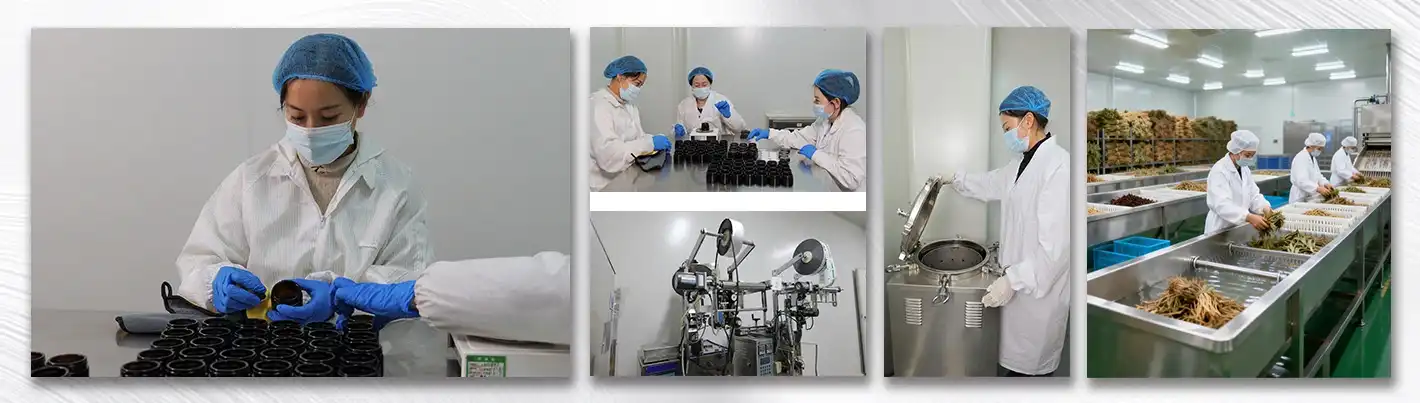
The edible part of a fish that has been dried out is called a fish maw. In the beginning, the makers clean and check the raw materials. These are then broken up into short chains by enzymes. The liquid is then filtered, pressed, dried, and tested after this step, which is called hydrolysis. The process lets you choose how the powder looks, tastes, and melts, as well as how easy it is to swallow. This means that two things that have the same name might not work at all the same way. What kind of fish do they sell? Where did the fish get its food? I also need a flow chart that shows how the raw materials are turned into finished bags for each batch. If this plant has a clean record, it is careful.
Structure and Physical Properties
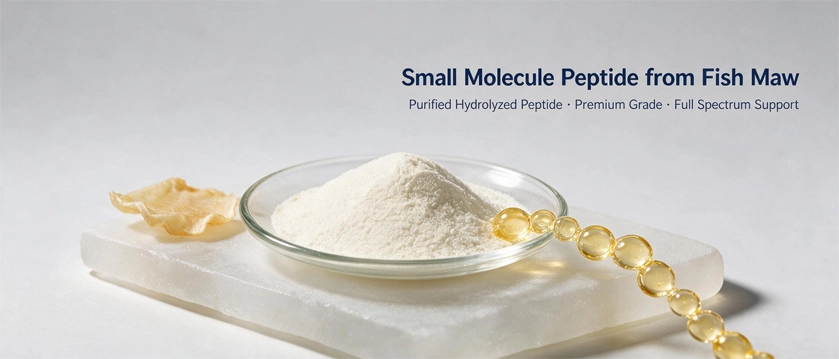
People at BioSpark say that their small molecule peptide from fish maw is a fine white powder that runs easily, doesn't smell bad, and tastes a little fresh. A lot of them are straight oligopeptides with short chains. On the other hand, collagen that is normally made looks like a big snake. It is easier to break apart shorter chains. Our powder mixes with cold water to make a clear solution that doesn't cloud or settle. You can use this for a quick check, but it's not the same as lab results. I do the glass-of-water test for fun. Before taking the batch, buyers should still look at the test results to make sure it is clean and has the right molecular weight.
Molecular Weight Data to Request
"Small molecule" doesn't mean just one thing in the law, so I think you should ask for numbers. You should find out the average molecular weight, the distribution profile, and the percentage of peptides that are less than a certain level for any small molecule peptide from fish maw. We need to know all the amino acids and how they were found, such as through SEC-HPLC. After that, compare these numbers from different groups. That part of the process is safe as long as the tests don't change. A red flag should be raised when reading a source if it makes claims like "ultra-small" that aren't backed up by data. The study can be finished faster if everyone can share open information.
Benefits and Functional Characteristics of Small Molecule Peptide from Fish Maw
What Research Suggests
Studies on people in this area mostly look at collagen peptides in general, not just fish maw. In 2014, a double-blind study showed that collagen peptides made skin more flexible after eight weeks of use. There was another study in 2021 in the International Journal of Dermatology that said skin was more flexible and had more water in it. They're important, but they don't show that all peptides will respond the same way. For brands to trust, the proof needs to match the exact amount and type of ingredient. The words in the tags should also be put together and used in a way that meets U.S. law. Proof that goes with the product keeps both the company and the customer safe.
Solubility and Formulation Performance
Hydrolyzed protein powder is easier to mix, which is good for drinks, foods that come in bags, and foods that are already mixed. A clear solution is made when we mix our small molecule peptide from fish maw with cold water. So it's good for coming up with drink ideas that look good. Still, make sure you test the solubility at the heat, pH, and amount of the real product. It should not foam, have sludge, or have a bad taste or smell. Check to see how stable it is after being stored. In this case, a powder that works well in a lab beaker might not work so well in a sweet, sour drink. In the long run, this saves time and money. So that you can set up again, you should write down all the results.
Where Claims Need Caution
Lower molecular weight doesn't always mean that something will work better or have bigger benefits. There are different types of evidence, such as studies on animals, tests on how well people absorb things, and clinical studies of finished products. It's not all the same weight. Dietary supplements sold in the US can only say that they change the way the body works or how it is built. They can't say that they treat or stop sickness. I tell brands not to use words that talk about joint diseases, wound healing, or other things that are bad for your health. Before pills go on sale, the FDA doesn't check the claims they make, so the brand is to blame. Someone who follows the rules should read every label and web page before the item goes on sale.
Daily Use Safety Checks for Small Molecule Peptide from Fish Maw
Quality and Contaminant Testing
This is the first thing that is done to make sure a batch is safe. I believe you should look at the food's browning signs, moisture, ash, microbe data, and protein or peptide content. You should find out how much solvent is left over if solvents are used in the process. Those that make powder should also make sure that it doesn't have any fillers or cheaper proteins added to it. To make dietary supplements in the US, you have to follow 21 CFR Part 111. There are some rules that goods must follow and be checked to make sure they are what they say they are. A real signature, the batch number, the date, and the real results should all be on every certificate of analysis. What should you do before you place your order if there are blanks?
Fish Allergen Control
From what the Food Allergen Labeling and Consumer Protection Act of 2004 says, fish is a big food hazard in the United States. There must be clear allergen signs on anything made with fish, and hydrolysis doesn't get rid of that job. Write down what you are allergic to, get a list of the species, and ask how the plant keeps people from coming into contact with each other. It's important to keep track of each species because mixed-species lots can have mistakes. If you are allergic to fish, you should stay away from these foods unless your doctor tells you otherwise. Plus, a clear allergen line on the front or back will help people trust you more.
Dose and Sensitive Groups
It is not possible to give a single amount of small molecule peptide from fish maw that works for everyone. The right level depends on the product, the person it's for, the rules in the area, the peptide concentration, and proof that the product is ready to sell. When someone makes drugs, they shouldn't just copy what someone else does. They should test it first to make sure it's safe. Pregnant or nursing women, kids, and people who are already sick should talk to a doctor before taking. Just so you know, I'm not a doctor. But I think brands should make it clear on signs and websites that people need to see a doctor. This way, businesses will be honest, and the government will be less at risk.
Comparing Peptides and Judging Powder Quality
Comparison with Other Peptides
You should use measurable criteria to compare this ingredient to marine collagen peptide and other hydrolyzed proteins. There are many things to consider when buying something: where the ingredients came from, how stable it is, how it tastes, how it was made, the paperwork, and the cost per serve. At times, a lower molecular weight can help with dissolution, but the smallest part isn't always the best choice. Most of the time, pills need a powder that is well mixed and runs easily. I don't believe what the label says when it comes to small molecule peptide from fish maw and marine collagen. They need to be clear and have a fixed pH. Instead, I make sure that the product fits the norm.
Reading a Certificate of Analysis
The source species, where it comes from, how it is made, its molecular weight, its peptide content, its amino acid profile, how well it breaks, how long it will last, how to store it, and how it is packed should all be in a full technical package. On each batch certificate, there should be a list of real numbers, codes, times, limits on what can be accepted, and approvals. All three batches should have the same molecular weight, amount of protein, amount of water, bacteria, color, and smell. Ask the supplier for GMP, HACCP, ISO, Halal, Kosher, or GMO-free papers if they have them. Then talk to the group that gave you those papers and make sure they are correct. There are some things you can do to be cleaner. Read the Codex General Principles of Food Hygiene to get ideas.
Common Buying Mistakes
A lot of mistakes are made. A few of the people who buy it think that "small molecule" means it is safer. Some people choose the cheapest one without questioning why it's so cheap. This is because the prices can be different depending on the raw materials' quality, the tests that are done, the number of peptides that are used, or the way that they are packed. There is no proof to support claims that some things can help people absorb things better or slow down the aging process. Also, they don't read signs that say they're allergic to fish or run test runs. There are many things that matter, not just the chemical weight. It doesn't matter what the purity, identity, traceability, or number of contaminants are. They all get the same amount of weight. Before someone orders the whole thing, they get to try out a test batch of the finished product. It also helps your team figure out what to do next by giving them real information.
Choosing a Supplier and Planning Your Product
Supplier Selection Criteria
For the product you want to buy, you should know its grade, molecular weight, yearly volume, packaging, and certifications before calling sellers. You should also know the market you want to reach. Next, look at these things: the company's capacity, quality control, batch consistency, technical support, response time, minimum order quantity, lead time, experience exporting, and the flexibility to make changes. You should compare the same things when getting quotes: the sample price, the test scope, the packaging, the Incoterms, the payment terms, and the specification. A low price tag might hide tests or papers that aren't very good. As soon as possible, find out about the species, the way the drug is broken down, the tests for contaminants, and the private-label choices. BioSpark doesn't just ship to North America; they ship all over the world. The brands, suppliers, and partners who make the products are the ones we work with.
Formulation by Product Format
Every type of file needs to be tested. One way to check the drinks is to see if they foam, dissolve, or settle. Also, the pH and heat stability, the way the tastes work together, and how well the package fits should all be checked. We need to take a fresh look at capsules and tablets to see how they stack, how they flow, how they compress, how much water they hold, and how well they work with different ingredients. You need to check the pH, see how long it lasts, see how well it works with other ingredients, and see how well it handles heat and cold. Bags, powders, and ready-to-mix drinks are good ways to fit small molecule peptide from fish maw, as long as they have stable data to back them up. We can help OEMs and ODMs with anything, from creating to packing, in small or large amounts, as long as BioSpark can handle it.
Shipping and Approval Steps
It depends on how things work when the shipment starts. Express companies like DHL, FedEx, and UPS are great for getting small things and samples to people quickly. Big things take five to ten business days to ship by air and twenty to forty-five days to ship by ocean. When we trade, we use these words: EXW, FCA, FOB, CIF, CFR, CPT, DAP, and DDP. Before going live, I think there should be a clear list of things that need to be done: describe the product, set standards, narrow down the list of suppliers, test samples, finish regulatory review, and make rules for receiving inspection and batch release. Making sure you stick to that plan helps you keep an eye on delivery times, quality, and government rules.
Conclusion
Small amounts of peptide from fish maw can be in everyday items as long as the seller checks the source, tests each batch, and marks the item as fish allergy-friendly. Because it's not always clear what a "small molecule" really is, customers need to know specifics like how the molecular weight was checked. Collagen peptide research tells us how the skin reacts, but it doesn't prove that all ingredients work. In other words, claims must be backed up by facts, and labels must follow U.S. rules. Toxins' amount, type, name, and dose are checked by the safety review. To compare quality, records of research and batch consistency are used. Formulations are less likely to be a surprise when they are tested and run in sample runs that are made just for that format. In real life, rules that are well thought out and can be used over and over again are what keep people safe, not the name of the thing. Are you interested in the small molecule peptide from fish maw? Is everyone okay?
FAQ
Is small molecule peptide from fish maw safe for everyone?
No, people who are allergic to fish shouldn't eat it. Don't use it if you are sick, pregnant, or have kids. Talk to a doctor or nurse first. It depends on the person and what they've made.
Does a lower molecular weight guarantee better results?
Yes. To prove that it works in humans, we need proof of the exact ingredient and dose, not just the fact that the molecular weight changes how well something dissolves and how it is handled. The number is just one way to judge quality.
What documents should I request from a supplier?
As well as the allergen statement, the molecular weight profile, the tracking records, the results for heavy metals and microbes, and the shelf life information, you can ask for the specification sheet. Check to see if all of the batches are the same.
Can BioSpark supply small batches?
BioSpark does offer OEM and ODM services for both small changes and large-scale production, as long as they don't make too much. We'll help you pick the best style if you tell us your number and the format.
Request Small Molecule Peptide from Fish Maw Samples from BioSpark
You can buy from BioSpark (Xi'an) Biotechnology Co., Ltd. either as an OEM or an ODM. They also pay close attention to quality and can make anything in any quantity, from small amounts to large orders. Seeking a business that creates small molecule peptides from fish maw? You can email sales@biosparkcn.com with your use case, the amount you need, the people you want to sell to, and how you'd like it packed. Our team will get back to you with some examples of specs and information. To find out more, go to https://www.biosparkcn.com/.
References
1. Skin Pharmacology and Physiology, 2014. Oral Supplementation of Specific Collagen Peptides Has Beneficial Effects on Human Skin Physiology.
2. International Journal of Dermatology, 2021. Effects of Hydrolyzed Collagen Supplementation on Skin Aging: A Systematic Review and Meta-Analysis.
3. Molecules, 2019. Hydrolyzed Collagen—Sources and Applications.
4. U.S. Food and Drug Administration, 2007. Current Good Manufacturing Practice in Manufacturing, Packaging, Labeling, or Holding Operations for Dietary Supplements (21 CFR Part 111).
5. U.S. Congress, 2004. Food Allergen Labeling and Consumer Protection Act of 2004.
6. Codex Alimentarius Commission, 2020. General Principles of Food Hygiene (CXC 1-1969).

Send Inquiry
You may like