How to Source Certified Liposomal Zinc Glycinate Suppliers?
Nov 20, 2026
You need to know what you need before you hunt for verified liposomal zinc glycinate providers. Then, you have to check their individual batch test data, certifications, and COAs from every provider. Look at the amount of elemental zinc in the liposomal zinc glycinate, how large the particles are, and how soon they form capsules. You may use a weighted scorecard to see the various vendors before you sign a long-term contract with a supplier. You may also get samples and test them out. Also make sure it is trackable, stable, and suitable for U.S. laws early on. In this approach, your brand, import company, or OEM project may quickly find an appropriate partner. The guide was prepared in plain language.
Define Your Requirements Before You Contact Suppliers
Start With the Finished Product, Not the Quote
When individuals wish to purchase anything, they should put down what they want to buy in an email. You can decide who’s going to purchase it, how they’re going to take it, and how much elemental zinc they’re going to receive in each scoop. Add the target price. Add the minimum order quantity (MOQ). Add the delivery date. Add the claims on the label and the packaging. Then you should mention whether you require bulk supplies, OEM ingredients, or ODM ingredients. You need to observe the safety regulations in the brief for your liposomal zinc glycinate product as well. The NIH Office of Dietary Supplements recommends that individuals shouldn’t take more than 40 mg of zinc a day from diet and supplements combined. If you are clear on your needs, any service provider will be able to aid you. This makes it simple for you to look at other quotations.
Know What Liposomal Zinc Glycinate Really Is
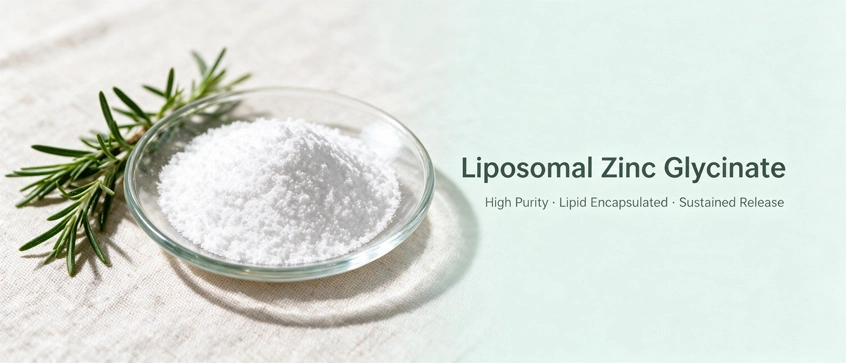
Zinc glycinate is a chelate made up of two glycine molecules and zinc. Liposomal zinc glycinate deposits it inside very small lipid vesicles. Our item has a zinc-glycine chelate that is inside the hydrophilic space of round nanovesicles. The particles are inside at least 85% of the time and are between 80 and 150 nm in size. The vesicles become more stable and attract water when PEG is added to their surface. This is important because some sellers don't take the word "liposomal" very literally. Where the phospholipid comes from shouldn't just be a marketing claim. They should also show information about particle size and encapsulation. If the item is a real liposome, ask for test results to show it. If it is a mix, check to see if it is a real liposome.
Match the Format and Application to Your Market
Format changes how it's sent, saved, and kept for how long. Liposomal zinc glycinate is what we have. It can be a clear, milky liquid or a freeze-dried cake that is white or off-white. The freeze-dried form can be used by brands that mix and fill their own goods. Liquids work well with items that only need one dose. It is often used to make oral care products with vitamin C or collagen, to give kids extra zinc, to make tasty pregnancy food, to help with sports nutrition and men's health, and to support nutrition for special diets. The claim, the amount used, and how it tastes must all be checked for each use. Tell the supplier as soon as possible about your use case so that they can make you a form that works for you instead of one that works for everyone.
Verify Certifications, Compliance, and Traceability
Match Certificates to the Real Production Site
It's only useful if it tells you where the item is made. Check the title of the site, the name of the person who issued the certificate, the address of the site, and the date the certificate failed. People often keep records for HACCP, GMP, ISO 9001, and ISO 22000. A business office certificate doesn't say anything about a factory in a different city. Tell the supplier exactly how they make the liposomal zinc glycinate. Do they hire other companies to do parts of the process? Do they have different sites that do the work? Get them to write down what they think. Also, get their certificates if they are in charge of any steps. Things might be different when the supplier gets a new site or source of raw materials. I also want to know how they handle change.
Understand U.S. Regulatory Requirements
There are more rules you need to follow when you sell in the US. cGMP rule 21 CFR Part 111 from the FDA says that companies that make, package, label, or store supplements must check the ingredients to make sure they are what they say they are. A company that makes things can't trust its COA until it has written a check to the supplier. The FDA needs to be notified by any foreign factories that make food or supplements for people in the U.S. Taxes may need to be paid by importers under the Foreign Supplier Verification Program. Labels shouldn't say anything about diseases, and if they do, they need to have the standard FDA disclaimer on them. People who sell liposomal zinc glycinate might give you paperwork that can help you with your legal work. That being said, you shouldn't use this paperwork instead of getting help from a qualified regulatory consultant.
Check Raw-Material Traceability and Batch Records
You may see what raw materials were utilised to create a batch after that batch has finished. Look for the liposomal zinc glycinate, which will include zinc glycinate, soy phosphatidylcholine, cholesterol, and PEGylated phospholipid. Discuss with the supplier the lot numbering system, batch record-keeping system, and returns process. “A good answer is a list of things to do, not a promise you made on the phone.” And an allergy declaration, too! Soy is a common food allergy in the U.S., so your labelling team has to make it simple. For larger tasks, get a phoney trace. If they can immediately associate a batch number with a lot of different raw materials, then they maintain solid records.
Validate Quality With COAs, Testing, and Stability Data
Read the COA Line by Line
Read everything carefully; only a COA may be utilised. The Certificate of Analysis (COA) for liposomal zinc glycinate must include a quality seal, product name, batch number, date of manufacture, shelf life, test methods, specification limits, and actual results. The powder must have adequate levels of microorganisms, zinc, heavy metals, pH, and water. Then look at the TRS, SDS, TDS, and label next to the COA. All items should have the same name and batch number. A red flag is when the COA does not have a batch number or the report does not have any methods on it. If you’re working on a huge project or a private label, submit the samples you maintain to another lab to verify that the figures are right.
Ask for Tests That Prove the Liposome Structure
Zinc tests do not tell you what liposomal zinc glycinate is derived from. Test their zeta potential, dynamic light scattering, and encapsulation rate to see how large the particles are and where they are. After the disruption of vesicles, we determine the total and free zinc by AAS or ICP-OES. That gives us a clue on how to end things. Other helpful things include pH, sterility, bacterial endotoxin, free glycine, and how well something can be put together. The particles should be of size 80-150 nm and at least 85% of them should be encapsulated in a shell. They will be pleased to explain how they arrived at each figure. It's tough to believe a figure that doesn't have a method of doing things, and tough to repeat a number that doesn't have a batch.
Review Stability, Storage, and Shelf Life
It is vital to know how stable liposomal zinc glycinate is, since it might vary over time. How long is it for? How cold should it be? What do oxygen and light do to it? Liquids: How do they settle, how do they phase, how thick are they, how do they smell, what do they appear like, how well do they freeze and thaw? If you want to purchase powder, you should inspect the cake to see how moist it is and how well it breaks down again. We freeze-dry our items using things like trehalose to preserve them for lengthy periods of time. When they are reassembled, the vesicles keep their structure. The peroxide value is also useful since lipids may be converted to oxygen. Make sure the box you wish to purchase is the same as the one used for the stability test. A bottle or pouch helps.
Compare Suppliers, Test Samples, and Choose a Model
Build a Weighted Scorecard
Low costs can cost more in the long term. Brand name changes, returned shipped products, and delayed launches all add up rapidly. I believe you should have a scorecard that you grade on topics like quality of the product, performance, supplier capability, communication, and how well tested and stable the product is. The most essential things are good work and obeying the regulations. When you acquire bids for liposomal zinc glycinate, be careful to compare the minimum order quantity (MOQ), price breaks, lead time, Incoterms, payment terms, and replacement policy. If you want to know how much zinc is in anything, check the price per serving, not the price per kilo. You may get two different quantities of zinc for the same price. It’s good to have the names and timings for the technical personnel at each supplier who can provide you with speedy answers.
Test Samples, Audit, and Run a Pilot Order
Review the documents, and contact a supplier for liposomal zinc glycinate samples. Compare written instructions to how the product appears, smells, tastes, mixes, flows, is wet, weighs, and is packed. Add third-party lab evidence to delivery system assertions that are extremely solid. Auditors of strategic partners should be able to witness monitoring of raw materials, cleanliness in the workplace, production records, deviations, corrective measures, staff training, etc. The audit may be done on-site or remotely. Then place a trial order. You may verify if the provider can guarantee quality, provide the proper papers, and deliver on time. Better to wait for the pilot to go smoothly before a quality agreement is signed. It should contain standards for revisions, complaints, recalls, and issuing fresh batches.
Choose Between Bulk, OEM, and ODM Supply
Your team will pick the best model. Businesses that can fill, blend, and do their own regulatory work can buy ingredients in large quantities. Brands that want to put their own label on finished goods use OEM. ODM is for brands that need a certain amount, taste, mix, or package. Distributors may offer lower MOQs and local delivery, but you need to know who made the goods, how they were stored, and how to keep track of each batch. BioSpark (Xi'an) Biotechnology Co., Ltd can help you with both OEM and ODM. They can make liposomal zinc glycinate and other health products, package them, and send them out. They can also come up with ideas and formulas. Any size of order is fine with us.
Avoid Common Mistakes and Plan Delivery
Common Sourcing Mistakes
Many of the same mistakes are being made over and over again in different projects. People who buy drugs think that "liposomal" means that the drug will work better in the body. Two different types of zinc were studied in a study with 12 healthy women. It was absorbed better than the bisglycinate. Before you say anything, you need to show that liposomal zinc glycinate works in a different study. Some people forget to check the elemental zinc when they compare prices, accept COAs that are out of date, or don't read what the certificate covers. They also forget to check the temperature of the liquids being shipped. They also forget to ask how many people can fit during busy times. There are not as many of these risks when there are clear instructions, written tests, terms for change control, and a pilot order.
Plan Logistics and Lead Time
Your launch date is safe as long as you plan to hand it off. We can send liposomal zinc glycinate to you quickly through DHL, FedEx, or UPS if you need it right away. Large, important packages that need to get there quickly usually get there in 5–10 business days when they are sent by air freight. It can take 20 to 45 days for ocean freight to move full or less-than-container loads of goods. We don't mind terms like EXW, FCA, FOB, CIF, CFR, CPT, DAP, and DDP. The best term for you will depend on how much logistics risk you are willing to take. Get to know the person in charge of letting goods into the U.S. before you place your order. When we get full payment, we usually ship right away.
What You Can Expect From BioSpark
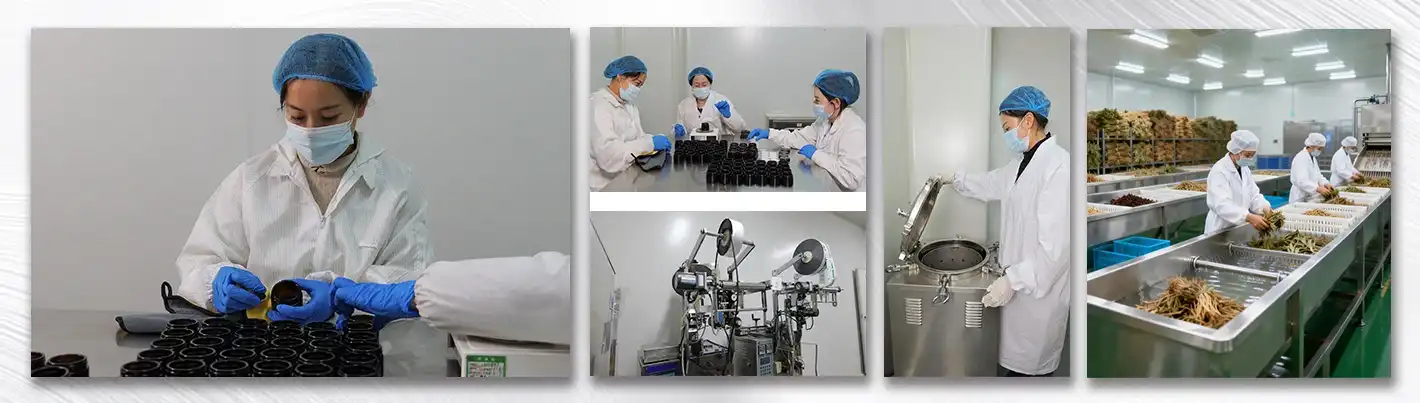
BioSpark (Xi'an) Biotechnology Co., Ltd. plans, creates, and markets health products all over the world, including in South America, North America, Europe, and the Middle East. Soy phosphatidylcholine, cholesterol, zinc glycinate, and DSPE-PEG are the things we use in our liposomal zinc glycinate process. The liposomes are made with thin-film hydration; they are extruded to the right size, they are cleaned with tangential flow ultrafiltration, and they are filtered through 0.45 μm and 0.22 μm membranes. There are strict quality standards around the world, and we make sure that the raw materials, the production, and the testing of the finished product all meet those standards. We test everything to make sure it is safe, pure, and always the same. You can be sure of each claim this way. There are specs, samples, and papers on our team that you can get.
Conclusion
The best way to find certified liposomal zinc glycinate is to do things one step at a time. If someone wants to buy something, they should first choose what it is and how much base zinc they need. Then, they should use information on particle size, encapsulation, and zinc to be sure of what the ingredient is. If someone in the U.S. wants to buy something, they should know about cGMP rules, FDA registration, and duties for importer verification. The certificates must also match the place where the goods are made. Quality data, structure-based tests, and batch-specific COAs can help you figure out if a supplier will be able to keep delivering quality. There is no need to guess when you have a weighted scorecard, sample testing, audits, and a pilot order. How well a launch goes can also depend on the type of supplier, the terms of shipping, and the lead time. Don't forget that a supplier's price doesn't tell you much about them. You should keep good records and keep track of your goods more than anything else.
FAQ
Which certifications should I request?
Find out where the food was made, what it was used for, and when it goes bad by asking for GMP, ISO 9001, ISO 22000, or HACCP records. Finally, make sure the FDA building is registered before you sell in the U.S. You can study with certificates, but you should never take them instead of tests.
How can I tell if a product is truly liposomal?
You can find out how the tests were done and get information about the zeta potential, particle size, and encapsulation. About 85% of the particles in our liposomal zinc glycinate are stuck inside other particles. The particles are between 80 and 150 nm in size.
Should I choose powder or liquid?
If you want to make it easier to carry, store, and blend, pick the freeze-dried form. You can also put things in it yourself. In the event that you only need one dose, a liquid is the best choice. However, you should be very careful about stability, microbial control, and shipping temperature. Every batch of both types needs a COA.
Does BioSpark support small orders?
Yes. We can make many things or just a few that are unique. You can pick OEM or ODM. We'll tell you what to do next after you send us the format and dose you want.
Request Liposomal Zinc Glycinate Samples and Specifications From BioSpark
Are you ready to do something? It doesn't matter how big or small the order is; we can do OEM and ODM projects with liposomal zinc glycinate. BioSpark helps with the whole thing and makes sure it's done right. To find a company that makes liposomal zinc glycinate, email leao@biosparkcn.com with your needs, the number of units you want to buy, and the type of customers you want to reach. We'll let you know more about the product and how to get a free sample when we get back to you. To find out more, you can also go to https://www.biosparkcn.com/.
References
1. Zinc Fact Sheet for Health Professionals, National Institutes of Health Office of Dietary Supplements, 2022.
2. Current Good Manufacturing Practice in Manufacturing, Packaging, Labeling, or Holding Operations for Dietary Supplements (21 CFR Part 111), U.S. Food and Drug Administration, 2007.
3. A Bioavailability Study Comparing Two Oral Formulations Containing Zinc (Zn Bis-glycinate vs. Zn Gluconate), International Journal for Vitamin and Nutrition Research, 2007.
4. Liposomes as Nanomedical Devices, International Journal of Nanomedicine, 2015.
5. Liposome Drug Products: Chemistry, Manufacturing, and Controls; Human Pharmacokinetics and Bioavailability; and Labeling Documentation, U.S. Food and Drug Administration, 2018.
6. Foreign Supplier Verification Programs for Importers of Food for Humans and Animals (21 CFR Part 1, Subpart L), U.S. Food and Drug Administration, 2015.

Send Inquiry
You may like