How to Choose the Best Wolfberry Polysaccharide Supplier
Nov 24, 2026
To choose the best wolfberry polysaccharide supplier, start with a written specification and verify every claim with data. Ask for the botanical source, extraction method, assay method, and a batch-specific Certificate of Analysis (COA). Test samples in your own formula, and check that certificates match the facility that makes your product. Compare quotes by total landed cost instead of price per kilogram. For the U.S. market, confirm that the supplier understands dietary supplement cGMP expectations. Finally, review minimum order quantity (MOQ), lead time, and change control. I wrote this guide to help supplement brands, importers, and OEM buyers decide with confidence.
Start With a Clear Wolfberry Polysaccharide Sourcing Brief
Write a Specification Before You Request Quotes
To do good research, you must first make a plan. Before I get prices, I write down what I want to use the wolfberry polysaccharide for, who I want to buy it from, how it will be packaged, how it will be tested, how it will dissolve, and how much I expect to buy each year. There are different things that a skin serum, a ready-to-drink drink, and a capsule need. Labeling rules, allergen statements, and the need for organic or non-GMO products are also on my list for sales in the U.S.You can compare service providers on the same level if you use the same template. If not, a lower price could hide a worse test, a different product format, or extra paperwork that isn't there. Ask each service to fill out the same form and answer all of the questions on it. This habit makes sure that everyone gets a fair score and avoids weeks of back and forth.
What Wolfberry Polysaccharide Actually Is
Wolfberry polysaccharide, which is also called Lycium barbarum polysaccharide (LBP), comes from the dried fruit of Lycium barbarum L., which is also known as the goji berry. It is a molecule of proteoglycan that breaks down in water. It is thought that the molecular weight is between 10 and 2,300 kDa. Reviews have described it as a mix of highly branched heteropolysaccharides linked with peptides. Monosaccharides are often made up of arabinose, galactose, and rhamnose. This is not the same as goji juice powder or a fruit preparation. There are natural sugars, colors, and other chemicals in these things that are used for different purposes. If you know the difference, you can read a specification sheet correctly. Another thing is that you can't compare a thick carbohydrate part to plain fruit powder.
Why Supplier Quality Varies
There are many ways that two things with the same name can behave in different situations. The powder is different depending on where the plants come from, when they are harvested, how they are extracted, and how clean they are. For every batch of raw berries to be the same, the supplier needs to have a standard way to get them and test them. Some low-cost powders also have maltodextrin or starch in them. A monosaccharide analysis and a molecular weight distribution can help you figure this out. Also, claims about research need to be looked into. A lot of the research on wolfberry polysaccharide is based on cell or animal models, and the outcomes don't support what the product claims to do. Because they have to follow FDA rules, structure/function lines in the US have to include a usual disclaimer. Not promises, but data should be what you ask suppliers for.
Check the Process, Purity, and Performance of Wolfberry Polysaccharide
Extraction Method and Raw Material Control
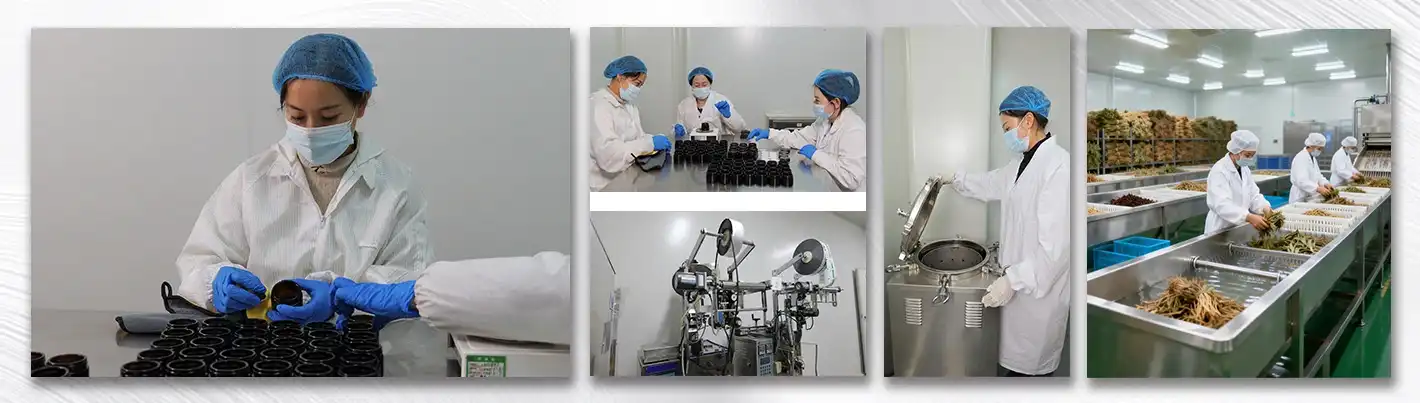
To make most wolfberry polysaccharide, hot water is used to clean the fruit. Some companies use enzymes, ultrasound, membrane filtration, or alcohol precipitation in the steps they offer. For each choice, the yield, color, molecular weight, and viscosity are all different. Ask the service provider to walk you through the steps and show you a flow chart of the whole process. It's just as important to keep an eye on raw products. Discover the name of the plant, where it was grown, when it was picked, dried, stored, and checked for pesticides. Someone who keeps track of every lot, from berries to powder, can quickly answer people who ask about traceability. Ask about small-scale tests and records for each batch as well. They are less likely to make a mistake when they can test something on a small scale and then do it again on a larger scale.
Purity, Assay Method, and Molecular Weight
If you don't know how to get a purity number, what is it? Find out what kind of test was used to get the answer and whether the number is given "dry" or "as is." The UV-Vis phenol-sulfuric acid method usually gives a range of 30% to 50% for the amount of high-quality commercial wolfberry polysaccharide that is present. Most of the time, less than 5% of the powder goes through 80 mesh, and the same amount goes through the ash. The phenol-sulfuric acid method can only find total carbs. It can't tell the difference between real polysaccharide and added starch or maltodextrin. That's why I also want to know what the monosaccharides are made of and how the weights of the molecules are spread out. There isn't just one best molecular weight range. What you want to use it for, how thick it is, and how well it melts will help you decide which range to use.
Solubility and Formulation Fit
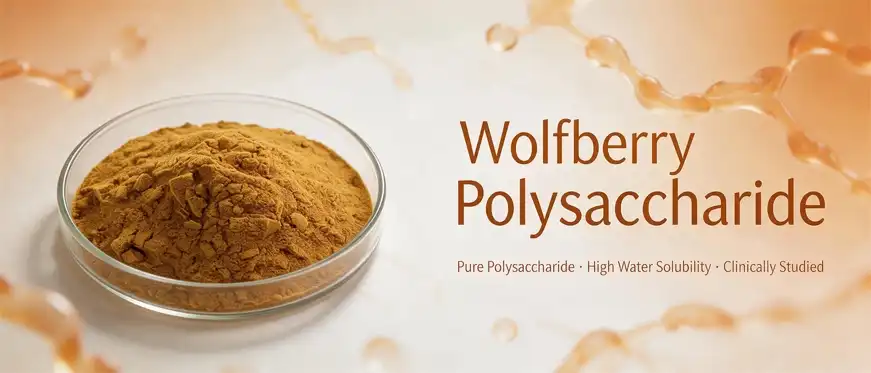
Try the powder in your own recipe first. The powder is hygroscopic, ranges in color from brownish-yellow to brownish-red, and has a mild taste. It can be used in drinks because it mixes well with water. When mixed with acidic drinks (pH 3.5 to 4.5), it doesn't settle to the bottom. When making pills, the powder usually needs to be broken up into small pieces. This is because powder that absorbs water can stick or cap when it's pressed quickly. If you put a chelating drug on your skin, it might help the color stay the same over time. Find out how stable the pH is, how long it takes to dissolve, and how well it works with minerals, acids, proteins, and sweeteners. Also, find out about packaging that keeps water out. Any booklet won't be as useful as the results of your own test study.
Verify Documents and Compare Wolfberry Polysaccharide Suppliers
Batch-Specific COA and Testing
Some of the things that a COA should tell you about wolfberry polysaccharide are the type of polysaccharide, its batch number, the date it was made, the assay, the moisture level, the microbiology level, the heavy metal levels, and any other contaminants. The lot you get should match the batch number on the COA. A blank or old COA won't work. Find out what tests were done to get each answer. If you want to be sure of the number the seller gives you, you might want to send a sample to a separate U.S. lab before you buy anything. There will always be short breaks because of the different ways they are done. We need to know why the gaps are so big. Find out how long the supplier keeps samples for as well. This is useful if there is a problem with the quality of the goods months after it was sent.
Certifications and U.S. Regulatory Documents
The FDA's cGMP rule for food supplements in the US is 21 CFR Part 111. Brand owners are still in charge of the quality of the things they sell, even if the parts are made by someone else. I need to know about allergens, specifications, COAs, origin statements, and stability data from each supplier. After that, I use my own program to make sure they are qualified. Based on what you want to say, look for organic, Halal, Kosher, non-GMO, GMP, ISO, or HACCP certificates. There should be valid proof for each lot of wolfberry polysaccharide that can be linked to the named location and the product in question. A badge on a website doesn't prove anything. If you need to, ask for the paper and look at the group that gave it back.
Manufacturer, Distributor, or Trader
Every kind of provider has a job to do. A direct manufacturer lets you watch the process, make changes, and decide what needs to be done. Some distributors keep goods in stock in the U.S., take small orders, and ship items quickly. A trade company lets you choose from more places to get your goods, but they need to check more on where the goods came from and the paperwork.Wolfberry polysaccharide extracts should not be mixed with whole extracts, juice powders, or drinks because they are used for different purposes. Making a weighted report is a good way to measure things. Rate the design, the technical information, the papers, the capacity, the uniformity, the support from regulators, the landed cost, and the design. Figure out what's most important to you. A report writes down what people think so that your team can look it over and defend itself.
Weigh Commercial Terms and Qualify Your Wolfberry Polysaccharide Supplier
Price, MOQ, and Supply Continuity
It's best if the specs for wolfberry polysaccharide are the same when you compare prices. There are many things that should be added to your landing cost, such as assay, format, packing, Incoterms, target port, testing, licensing costs, and freight. Then, go over the MOQ, sample policy, pilot orders, lead time, and payment terms one more time. Concerns need to be raised about the reliability of the supply. Find out if they have exported before, if they keep extra supplies on hand, if they plan their output, and if they have extra capacity in case of an emergency. The people who buy things in the U.S. should also find out who handles export paperwork and how long it takes to get to them. Last but not least, find out how the service provider deals with problems, delays, and batches that don't meet your needs. The group has thought about how to fix issues before they happen since they have a written plan for this.
A Practical Qualification Process
These are the four things I do before I sign a deal to give wolfberry polysaccharide. First, look over the papers, like the specs, COAs, certificates, origin statements, allergen data, and stability data. Second, test samples using the same protocol to check their identity, assay, solubility, contaminants, microbiology, and how well they work in your formula. Third, for projects with more risk, do either an on-site audit or a quality review from afar. Look around the labs, check change control, get raw materials, remove them, dry them, package them, and send them out. Fourth, write down what the deal says. Set rules for when to release batches, how long you need to give for process changes, how to handle deviations, and the steps that need to be taken for approval. A test order before a long-term deal is like one last check in real life.
Match the Supplier to Your Business Model
It relies on who you are. Brands of functional foods and vitamins often need to meet food-grade standards, have accurate tests, be able to scale, and have private-label backing. People who make makeup care about how things look, smell, and stay stable. People who sell and bring goods into the country need to be able to buy in bulk, fill out export paperwork, and use flexible packaging. When OEM clients buy a product, they may need help with privacy, labels, formulation, pills, powders, sachets, liquids, and making the product. Businesses, brands, and wholesalers can work with BioSpark (Xi'an) Biotechnology Co., Ltd on OEM and ODM projects. We help you come up with ideas, make things, package them, and ship them. We can customize a small batch of items or make a lot of them, and we can make different kinds of goods to meet our customers' needs. We send our goods to the Middle East, North America, Europe, and South America.
Common Mistakes and a Final Checklist
Most problems start when people compare things that aren't the same. That low price might mean a different style, a smaller assay, or more carrier. Something being "high purity" doesn't mean it's real, that it disappears, or that every batch is the same. Do not believe claims that goji can cure diseases. Also, keep in mind that a case report has linked goji use with a problem with warfarin. You should pay close attention to labels and how they tell you what to buy. Before you choose a wolfberry polysaccharide supplier, make sure you look at their plant name, specifics on how they extract the polysaccharide, test method, solubility, contaminant limits, shelf life, and batch-specific COAs. Look over the export papers and certificates. Check out the minimum order size, wait time, landing cost, packing, capacity, and the ability to make changes. Sometimes the more expensive choice isn't the best. They are the best source of proof of quality and fit.
Conclusion
A structured, evidence-based process is the best way to pick a wolfberry polysaccharide supplier. It's okay to compare this ingredient to juice powder or whole extract because they are different. The goal is written down. Because of their molecular weight, solubility, and how they extract and test their raw materials, different products with the same name work in different ways. COAs that are specific to a batch, certificates that have been checked, and independent testing are all signs that a supplier is telling the truth. People in the U.S. must also follow the FDA's cGMP standards and claim rules. The only way to understand price is to look at it in terms of the landing cost for the same specs, minimum order quantity, wait time, and supply consistency. There is less risk when there are audits, sample tests, and clear rules for change control. It's best to work with a supplier whose quality, ability to fit your needs, and willingness to be open all come together with your product plan.
FAQ
Is wolfberry polysaccharide the same as Lycium barbarum polysaccharide?
Yes, that's correct. This is what most people call the polysaccharide part of the Lycium barbarum plant. Each seller may use a different name for the plant source, the assay method, and the range of products they offer.
Which documents should I request first?
Ask for the specification sheet, a COA for each batch, test methods, valid certificates, an origin statement, information on allergens, and data on how reliable the product is.
How do I compare purity claims?
Check the way the product was measured and how it was tested. Also, ask the seller if they can tell you about the monosaccharide composition and molecular weight distribution.
Can I order a small batch for testing?
A lot of sellers let you test their products or get samples. Small-batch customization and large-scale production are both possible with BioSpark. This means that you can test a formula before making it bigger.
Request a Wolfberry Polysaccharide Quote From BioSpark
Are you ready to find a company that makes wolfberry polysaccharide? We at BioSpark (Xi'an) Biotechnology Co., Ltd can help with OEM and ODM orders from the start of the process all the way through delivery and packaging. In addition, we can make small or large amounts. Send an email to sales@biosparkcn.com with your application, desired assay, format, packing, and yearly quantity. Our team will give you options soon. Visit https://www.biosparkcn.com/ to learn more.
References
1. Food Research International, 2011. A review of botanical characteristics, phytochemistry, clinical relevance in efficacy, and safety of Lycium barbarum fruit (Goji).
2. Food Chemistry, 2018. Lycium barbarum polysaccharides: Extraction, purification, structural characterisation and evidence about hypoglycaemic and hypolipidaemic effects. A review.
3. Planta Medica, 2010. Goji (Lycium barbarum and L. chinense): Phytochemistry, pharmacology and safety from the perspective of traditional uses and recent popularity.
4. Aging and Disease, 2017. Lycium barbarum: A traditional Chinese herb and a promising anti-aging agent.
5. Annals of Pharmacotherapy, 2001. Possible interaction between warfarin and Lycium barbarum L.
6. Federal Register (U.S. Food and Drug Administration), 2007. Current Good Manufacturing Practice in Manufacturing, Packaging, Labeling, or Holding Operations for Dietary Supplements (21 CFR Part 111).

Send Inquiry
You may like