How to Choose a Green Plum Powder Supplier for OEM
Nov 23, 2026
To choose a green plum powder supplier for OEM, I recommend checking five points in order: written specifications, laboratory data, the extraction and drying process, documentation and certifications, and a pilot order. Start by defining your application, because green plum powder for beverages needs different solubility and acidity than powder for capsules or sauces. Then compare suppliers on batch consistency, MOQ, lead time, and total landed cost, not on price alone. This guide covers each step and shows how BioSpark approaches OEM green plum powder projects for brands and distributors in the United States and other markets.
Define Your OEM Green Plum Powder Sourcing Requirements
Start With the Finished Product and Application
Before I call any wholesalers, I write down what I want to make. It might be a juice mix, a capsule to help the liver, a sugar-free candy, a salad dressing, or a cake filling. For each format, green plum powder must be customized. A drink mix should be easy to mix and have a sour taste. There should always be the same amount of acid in a capsule blend. Acids like lemon juice or vinegar are good for sauces because they aren't too bitter or sharp. If you tell the supplier what you're going to use it for first, they can send you a sample that is more closely matched to your needs in terms of grade, particle size, and pH range.
Set Powder Format and Purity Targets
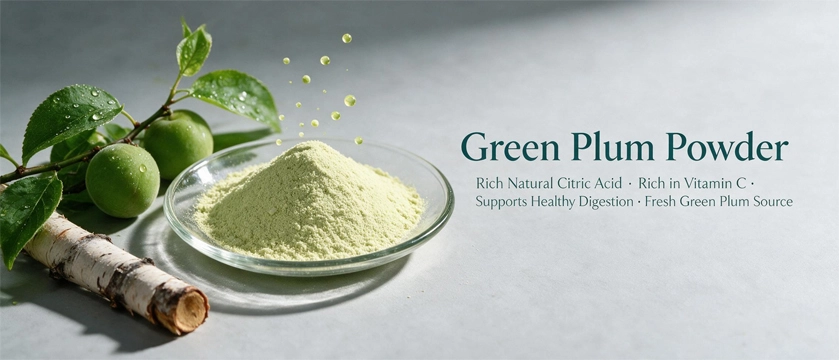
Next, pick out the kind of powder you need. Prunus mume extract powder comes in different forms, like juice powder, spray-dried powder, and freeze-dried powder. Each type works in a different way and costs a different amount. Find out if the item contains any fillers or sweeteners and if it needs to say that it is pure. This is our normal green plum powder. It is an 80-mesh fine, light yellowish-green powder that is as strong as citric acid. Its pH level is between 3.0 and 3.8, and more than 60% of it is citric acid. Writing down these goals in a brief makes it easy to compare quotes.
Confirm Destination Market and Labeling Rules
The forms you need depend on where you want to go. This law from 1994 tells us what vitamins should say on their packages and how they should be made. It is called FDA 21 CFR Part 111. How food is used is covered by FDA rules about food safety. Tell your seller right away if you sell in the Middle East, Europe, the US, or other places. Where you sell can change the documents that say something is Halal or Kosher, the safety labels, and the names of the ingredients. I also tell buyers to talk to a lawyer about the health claims before the packaging is made because claim rules are different in each country.
Evaluate Green Plum Powder Quality and Product Specifications
Read the Specification Sheet and COA
The supplier should send you a technical specification sheet and a certificate of analysis (COA) right away of being honest. Check the particle size, pH, solubility, moisture, and microbiological limits, as well as the active marker. It should be a Prunus mume plant. A test called thin-layer chromatography (TLC) is used on BioSpark's product. The mesh size is 80. Organic acids, which are thought to be citric acid, are what make it work. You can mix the powder with water and ethanol, but not all the way. The COA numbers and the specification sheet should not be more than one line apart. That's a red flag if there are any.
Judge Sensory Quality: Color, Aroma, and Taste
Numbers don't always tell the whole story, so I always smell and taste the sample. Good green plum powder is a light yellowish-green color and smells like sour green plums. If something is dark, it might be because of heat damage or rust. In this case, the smell might have been lost during processing or storage, making it smell flat. Add some water and mix it up. Make sure it's clear, has the right amount of sourness, and has little to no sediment. The color and smell are kept safe by low-temperature steps and non-thermal sterilization in our process. That's why I tell buyers to put our sample next to any other lot from a competitor and compare them.
Test Consistency Across Batches
It doesn't prove much to have one good sample. To make a comparison, get COAs from at least three recent lots and look at the wines' pH, organic acid content, and appearance. Brands that make drinks or pills need to make sure that the acidity stays the same because changes in pH can affect taste and shelf life. The pH range we use is 3.0 to 3.8, and making sure everything is the same is one of our main checks. It's easy to find out where each drum came from and keep lots of drums in the same range by asking any seller. An old, good method has answers that are easy to understand.
Compare Green Plum Powder Manufacturing Processes
Why Extraction Temperature Matters
Green plums have smelly chemicals that go away when they get hot and are very acidic. They turn brown quickly. What makes the green plum powder different depends on how hot the plums are when they are picked. BioSpark gets the stuff out of plants by drawing them at low temperatures, between 40°C and 45°C. In this range, you can store organic acids like citric, malic, and succinic acid, as well as phenolic compounds like chlorogenic acid. At the same time, it keeps substances that are bitter from leak out. As a supplier, find out what the temperature and solvent used for extraction are. So, a provider should make it clear what the pros and cons of high heat are. High heat can make more food, but it can also make the color darker.
Drying, Milling, and Sterilization Choices
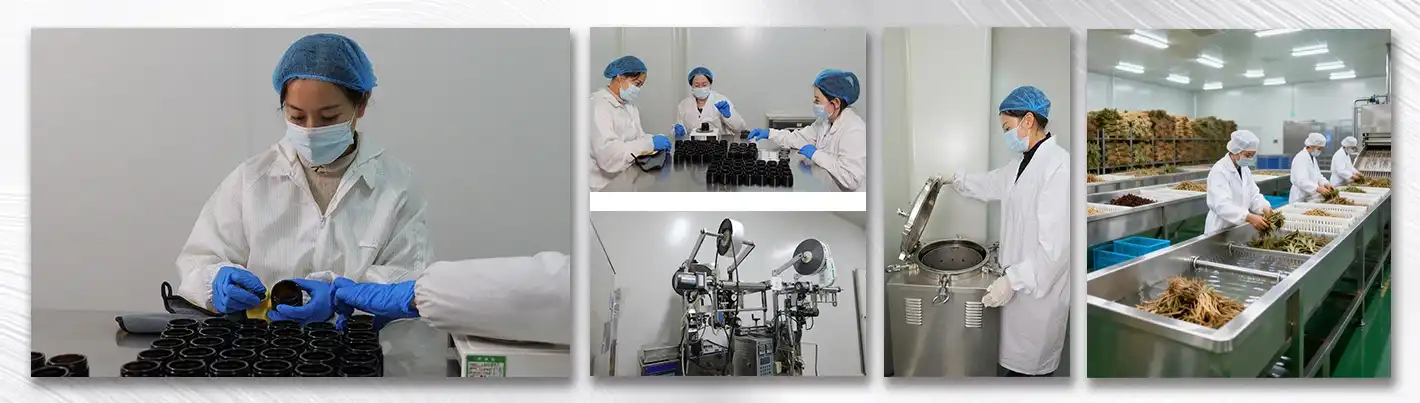
After the liquid is taken out, it is dried, milled, sieved, and concentrated. Spray-dried, freeze-dried, and ground food are all used for different things and cost different amounts. Even more important is to clean. We process the food under high pressure (HPP), which doesn't use heat and helps keep the flavor and organic acid activity that turn off when heated. Before they pack your order, you should ask the supplier what kill step they use, how they test for microbes, and if they do metal detection. That person can show you exactly where color, smell, and acidity are safe if they keep records of every step.
Our Four-Core Approach
Our process has four main goals: to keep the acid, keep the color, make the smell better, and get rid of the sour thing. You can see that each goal is aimed at a similar problem: acid loss, green going brown, taste fading over time, and strong bitterness. Ask each service to explain how they handle these four problems as you compare them. Green plum powder that works better in beverages, vitamins, and spices is typically produced through a process that targets the plums directly. We store it safely in 25 kg drums or aluminum composite bags with desiccant that have been flushed with nitrogen.
Use a Practical Supplier Evaluation Scorecard
Build a Weighted Scorecard
A scorecard makes sure that everyone has a fair chance to choose. Some of the things that need to be thought about are the product quality, the regulatory paperwork, the production capacity, the OEM's flexibility, the minimum order quantity (MOQ), the wait time, the transportation, and the communication. For each one, give it a value that makes sense for your company. Then, use the same questions to rate each seller. You should find out if the business makes things, trades them, or works with other companies to make products. This will change how you manage the formula and find out when it changes. BioSpark has more than 1,000 tons of stock, which means we can handle repeat orders and plan to supply you every year. The FDA, GMP, Kosher, and ISO9001 have all given us their seals of approval.
Compare Quotations and Landed Cost
A professional offer tells you the price, the terms of payment, the wait time, the grade, the type of ingredients, the packing, the net weight, the minimum order quantity (MOQ), and the type of ingredients. Don't just look at the prices at the store. To get the total landing cost, add up the freight, import fees, holding costs, and the value of the damaged packaging. We use FOB, CIF, CFR, EXW, DAP, and DDP terms when we quote. Also, we like bank transfers that are T/T. The seller has to do more work when you choose DAP or DDP. DDP also pays the import fees. It doesn't matter how cheap something is at first if it costs more in the end.
Check Lead Time, Shipping, and Packaging
When you launch will depend on how much time you have to get ready. For most jobs, you have to wait 10 days. For some jobs, you have to wait 30 days. It's fast and safe for us to ship by express, air freight, or sea freight, and we always have enough in stock. It takes about 15 days for our direct shipping to reach places in the US. Learn about the moisture-barrier packaging, lot numbers, when the food was made and when it goes bad, and how to store it. If you store our green plum powder somewhere cool, dry, and dark, it will last for 24 months.
Validate the Supplier Through Samples, Audits, and Pilot Orders
Request Representative Samples
Do not ask for a lot that was picked out just for you. Instead, ask for a sample that was made the same way as your commercial supply. Samples from BioSpark start at 1 kg, which is enough to check for taste, acidity, solubility, and how well it works with other ingredients. Mark down the color, taste, smell, sedimentation, moisture, and how the packaging looks when it gets there. It should be sent to a different lab if the number on the label or claim depends on it being tested. This lets the seller know exactly what you want if you need to change the pH or acid strength.
Run Application Trials
Look at the powder inside your real thing. Check how quickly it dissolves, how clear the drink is, and how sour it is when you reach your goal amount. Look at how much salt it has and how much lemon juice or vinegar it has in a sauce or dressing. That's possible because of the organic acid makeup. Check to see if the gummies or chewable pills are stable and have the right feel. Green plum powder is also used in baking and to make sugar-free sweets. Write down the results of the test; they will help you with your plan and any future talks you have with suppliers.
Audit and Pilot Order
As the title says, factory checks should look at getting raw materials, output, labs, warehouses, packing, and tracking. They can be done in person or from afar. If everything looks good, you should put in a pilot order. How the team solves problems, the real lead time, and the accuracy of the documents are all shown. Even more so for special projects, privacy is important. Before giving out a secret recipe, get an NDA. Along with NDAs, our R&D team helps make gummies, capsules, and powder with plants that are good for the liver, such as curcumin and silymarin.
Identify Common Risks and Select the Best Green Plum Powder Supplier for Your OEM Project
Spot Identity and Additive Risks
Having the wrong name is the first risk. Not European plum, flavor powder, or a drink mix with extra sugar should be used. Instead, the item should be made from Prunus mome. In the ingredient list, you should see sugar, carriers, flavors, colors, stabilizers, and anti-caking agents. Unusually low pricing can signal high carrier content, weak traceability, or limited testing. Find out how to test the code and get the full code. People are more likely to trust a seller who explains why their green plum powder costs what it does than one who just offers a deal.
Control Claims and Contract Terms
There should be a lot of thought put into health claims. Some of the others in green plum have been studied, such as oleanolic acid. The rules in your market say that your sign should only say things that you can back up. There should be clear rules about delivery standards, non-conformance methods, recall tasks, and how to notify of changes in a written quality and supply agreement. BioSpark backs OEM projects for two years and can talk about regulatory issues, such as making sure liver health claims are met, during project planning.
Match the Supplier to Your Business Model
BioSpark's minimum order quantity (MOQ) is 1 kg, which is low for small brands that need help with creation and low MOQ. Importers care about how long the goods can last and whether they can be exported. Food makers, on the other hand, need a steady supply of large goods and batches that are all the same. Larger OEM clients may want contracts and checks that last for a long time. Brands that cost a lot should think about what's on the clean label and how valid the certification is. Then, choose the supplier that meets all of your technical needs as well as your needs for compliance, total cost, delivery, and communication. Give each supplier a score based on your own weights. As part of our OEM and ODM services, we come up with the recipe, pack it up, and send it to the customer.
Conclusion
Taking things one step at a time is the best way to pick a green plum powder provider for OEM. First, choose the market you want to reach, the use, and the form of the powder. Then, use the specification sheet, COAs, sensory tests, and multi-batch data to check the quality. You should compare the temperature, drying time, and sterilization methods for both extraction and sterilization because they all have an impact on the acidity, color, and smell. When you use a weighted scorecard that has arrived cost, wait time, packaging, and certifications on it, you can compare things fairly. This is followed by tests, checks, samples, and a pilot order to see if the claims are true. Last but not least, watch out for identity theft, carriers that aren't disclosed, health claims that can't be backed up, and contract terms that are too weak. If buyers follow this order, they can find a supplier that works with their size and product goals. This way, buyers can avoid batches that don't match up or launches that aren't on time.
FAQ
What is the minimum order quantity for OEM green plum powder?
One kilogram is the least you can order from us. This amount is good for small projects and test samples. A normal order takes 10 days to make, while a special order takes 30 days. For production, 25 kg drums are sent out, and the powder can be stored for 24 months.
How can I verify a green plum powder supplier?
You should get the COA, the specification sheet, and the certificates. After that, you should compare a few of the newest batches. You can use your own formula to test applications, set up an audit that can be done in person or from afar, and place a pilot order. These steps make sure that the paperwork is correct and that the green plum powder works as it should.
Which shipping terms and payment methods do you offer?
FOB, CIF, CFR, EXW, DAP, and DDP are the terms we offer. We can ship fast, by air freight, or by sea freight. We'd rather have you send us money through a T/T loan. Our sales team makes sure you make the best choice based on your order size, shipping date, and area.
Request a Green Plum Powder OEM Consultation from BioSpark
Get in touch with BioSpark if you need to buy green plum powder for OEM projects. Send an email to sales@biosparkcn.com to get a coupon, a sample of 1 kg of green plum powder, and a price quote for 25 kg drums of the powder. BioSpark can help with both OEM and ODM projects, from making recipes to putting them in boxes. To learn more, visit https://www.biosparkcn.com/ and let us know what your product, sales, and market goals are. This will help our team make a clear plan.
References
1. Code of Federal Regulations, Title 21, Part 111 (Current Good Manufacturing Practice for Dietary Supplements), 2007
2. Code of Federal Regulations, Title 21, Part 117 (Preventive Controls for Human Food), 2015
3. Dietary Supplement Health and Education Act, 1994
4. FDA Guidance for Industry: Dietary Supplements: New Dietary Ingredient Notifications and Related Issues, 2016
5. Codex Alimentarius, General Principles of Food Hygiene (CXC 1-1969), 2020
6. Pharmacopoeia of the People's Republic of China, 2020

Send Inquiry
You may like